Birds
-
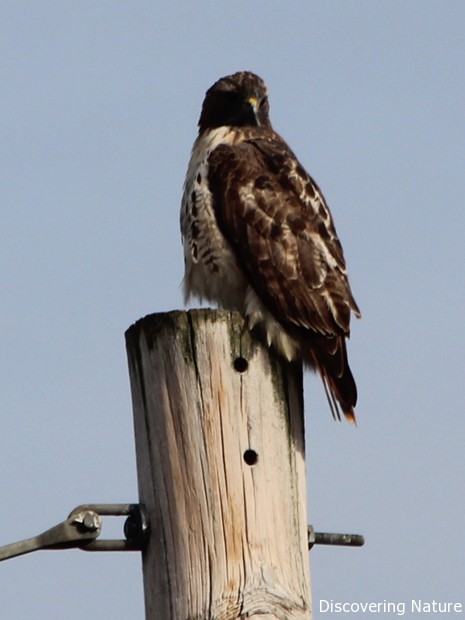
Fall Redtail
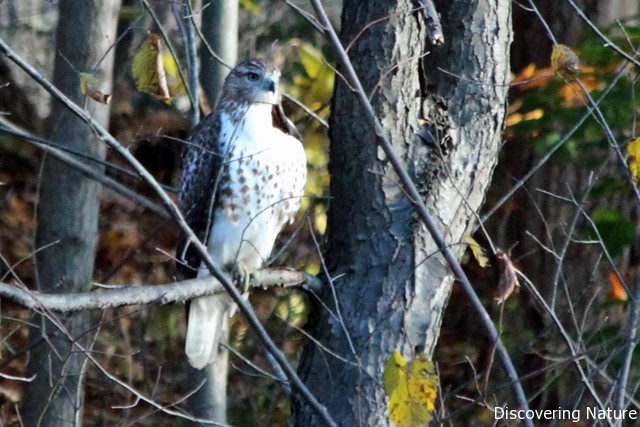
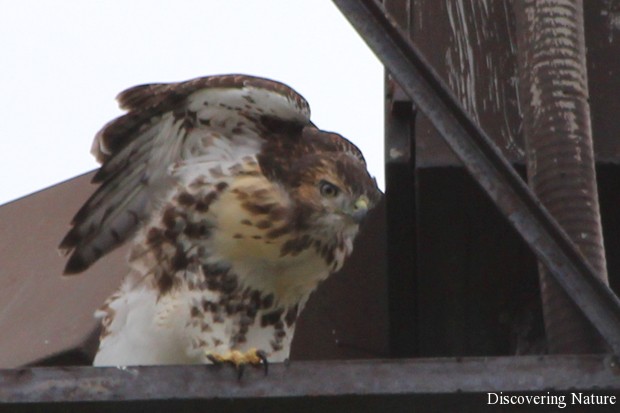
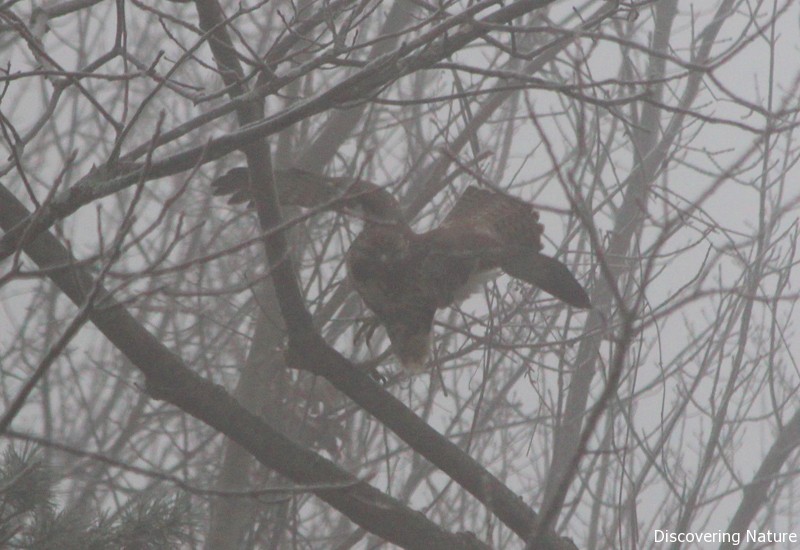
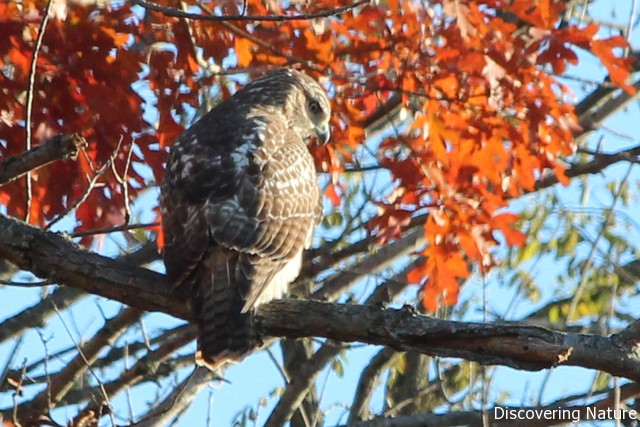
I was driving home from an early morning walk, feeling a little disappointed that I hadn’t seen any warblers, when a large, light-colored hawk swooshed up from one side of the road and landed in a tree on the other side. I think it’s a female, because it was quite large — especially with those feathers fluffed out for warmth. It’s a young redtail with a first-year tail, and I watched for awhile as it hunted.
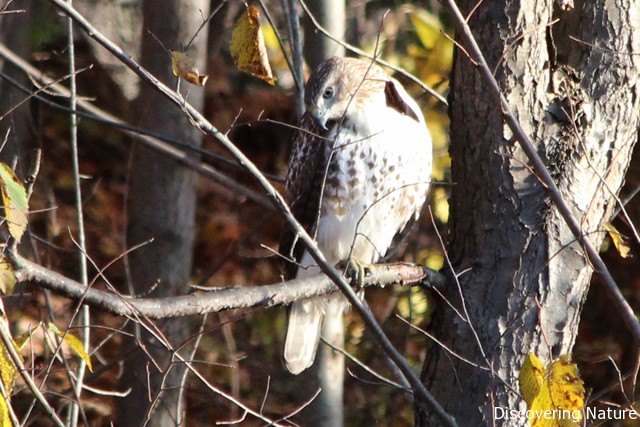
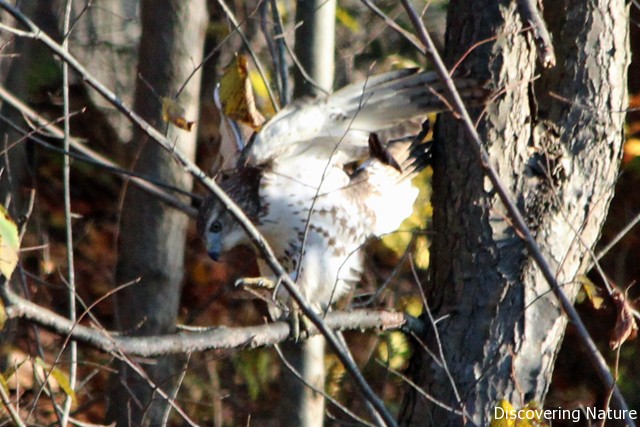
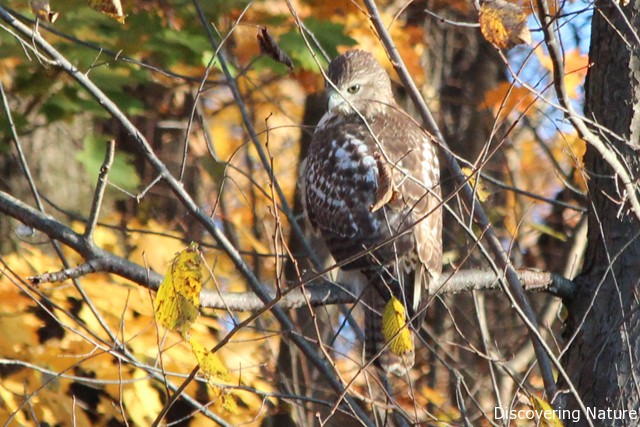
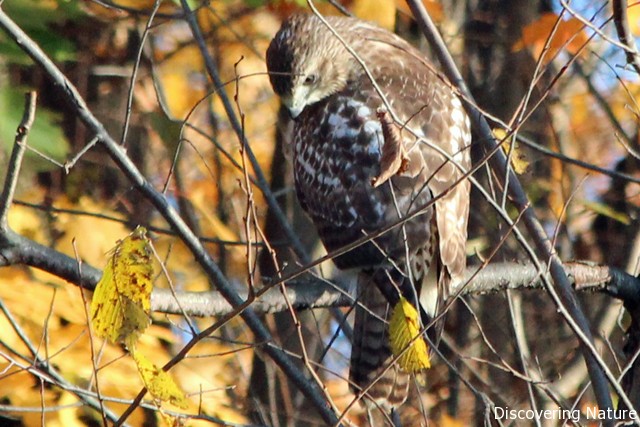
Such concentration. I never saw it catch anything, but I wished it the best. Beautiful, powerful bird.
-
Lunch is served
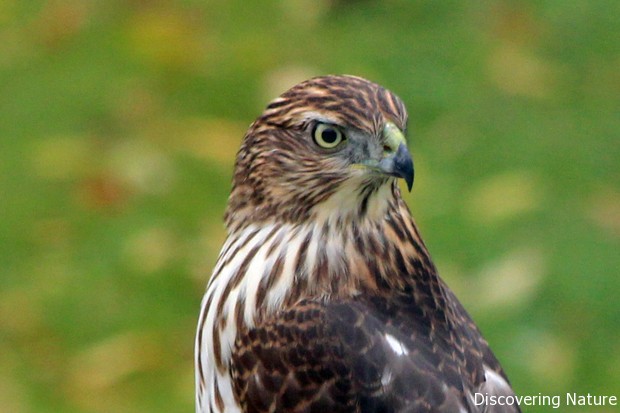
This morning we counted eight male cardinals at once at our feeder out back. Countless other small birds fluttered around along with them: house finches, goldfinches, female cardinals, nuthatches and chickadees, red bellied and downy woodpeckers. “If a Cooper’s hawk showed up right now, he’d be on overload,” I remarked.
Obligingly, he appeared on the swingset.
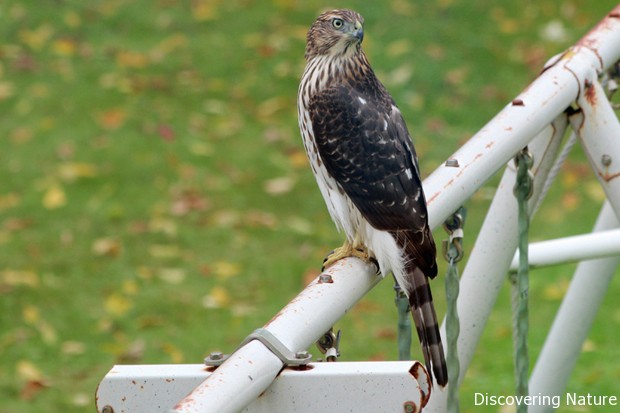
He didn’t get anybody while we watched. After snapping these pics, I let Younger Daughter go outside and he startled and flew away.
How can I be so fascinated by both the songbirds and the hawk that hunts them?
-
Autumn state of mind
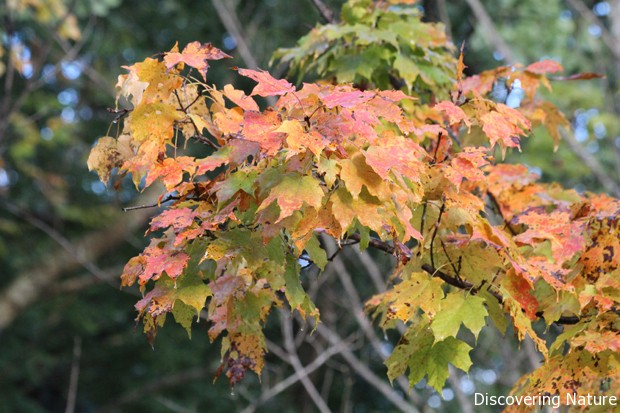
The woods are so much quieter now than they were in the spring and early summer that it’s easy to lose the sense of expectation. But it’s a good exercise in faith to remain attentive; invariably we are rewarded with wonders large and small.
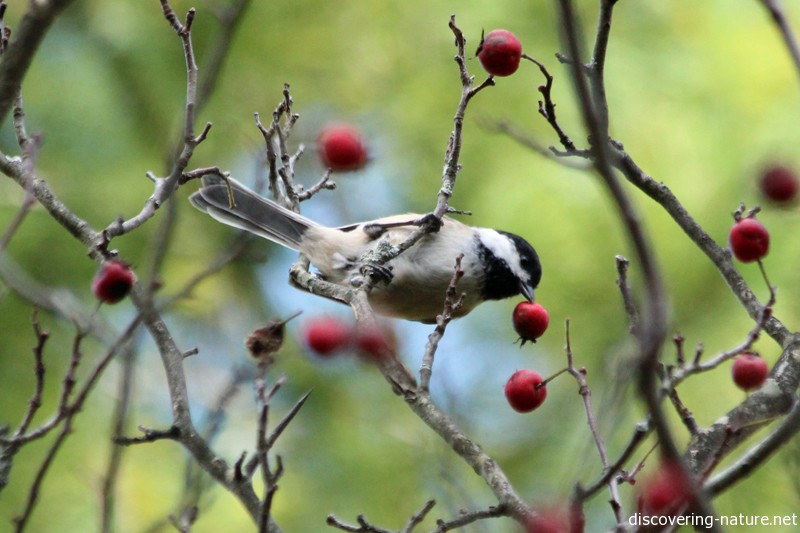
It was a little eerie on a recent walk in Ithaca. My husband and daughters and I were coming to the end of a stroll on an overcast day when our paths intersected with some characteristically cheerful sounding chickadees. My daughter, the bird-whisperer, sounded her chickadee call to attract them, and it seemed they were responding with more and more vocalization. Then we rounded a corner and saw the silent silhouette of a hawk.
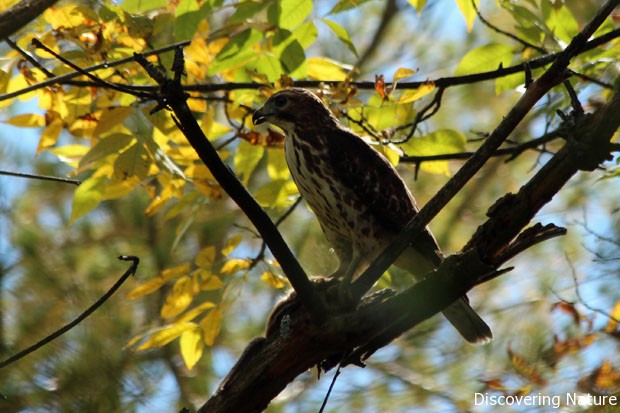
No doubt the chickadees were sounding the alarm. It may have been the redtail that haunts Sapsucker Woods, but it seemed a little small for a redtail. My guess is it was a broadwing. It clutched a chipmunk in its talons.
How typical of us humans to think that we were controlling the scene, when all along a life and death drama that had nothing to do with us was playing itself out.
Another hawk has been making unwelcome appearances in our area: a Cooper’s hawk. Our feeder is situated next to an evergreen so that the birds have cover, but I think this hawk is attracted by the busy chatter of the goldfinches and the two or three chipmunks who feed on the ground beneath. We haven’t seen it successfully catch anything yet, but here it is perched in the middle of the food court.
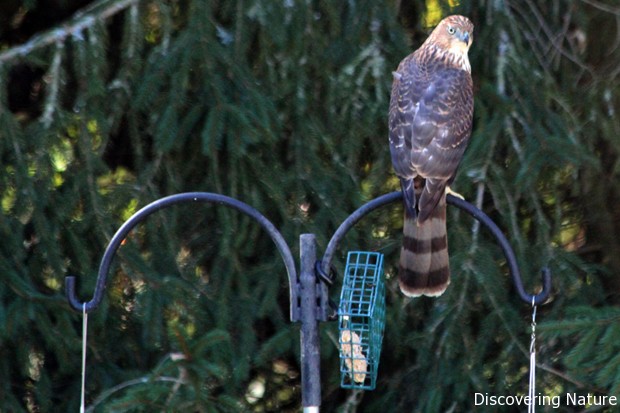
No wonder the chipmunks hide!
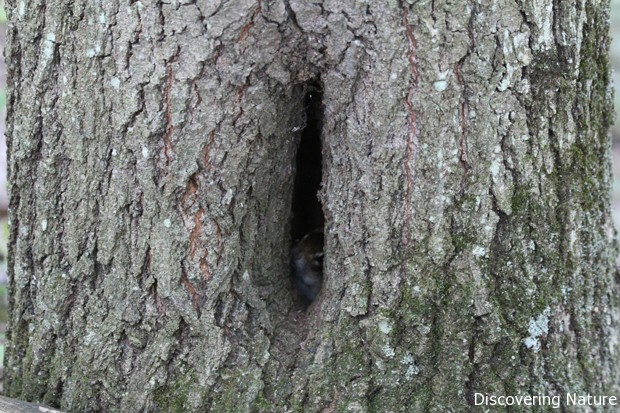
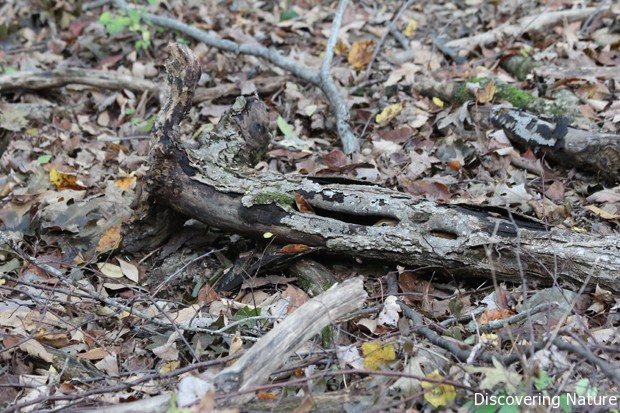
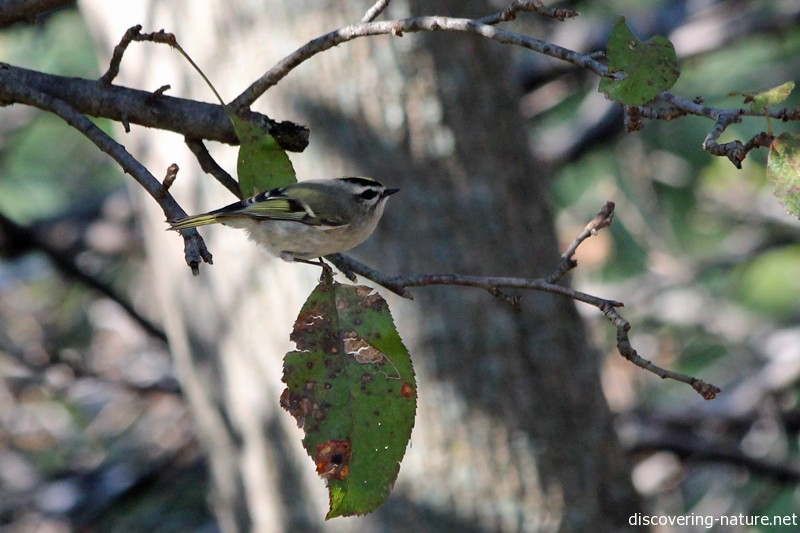
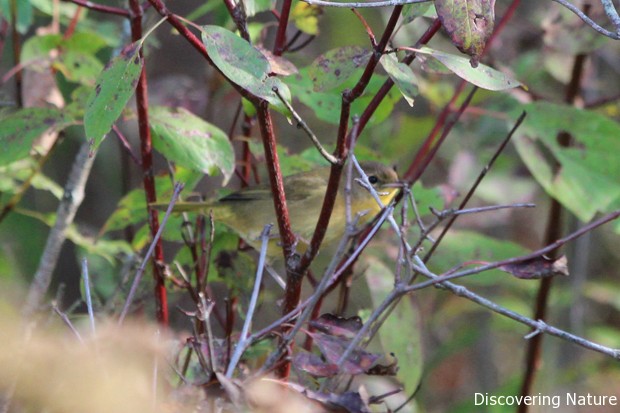
See it in the log? I’ve seen some tiny warblers in recent walks in the woods, but few have rewarded me with photo-ops. I did manage to get a shot of this one, tentatively identified as a Nashville warbler.
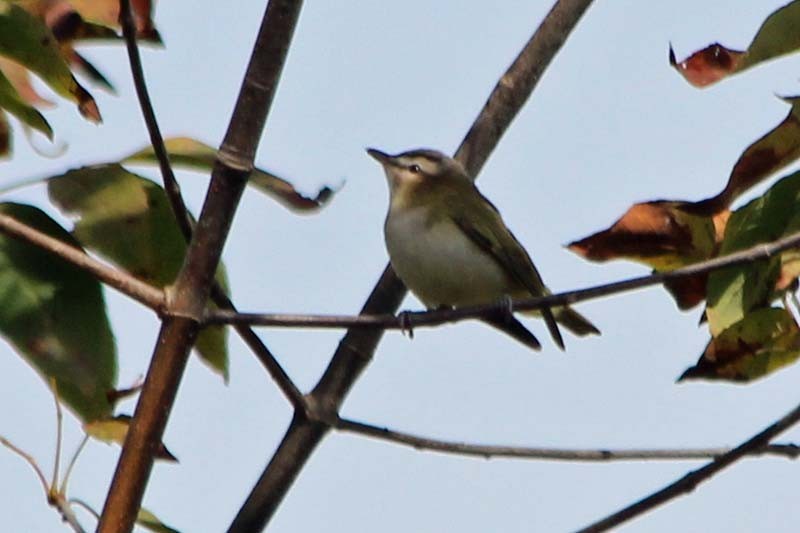
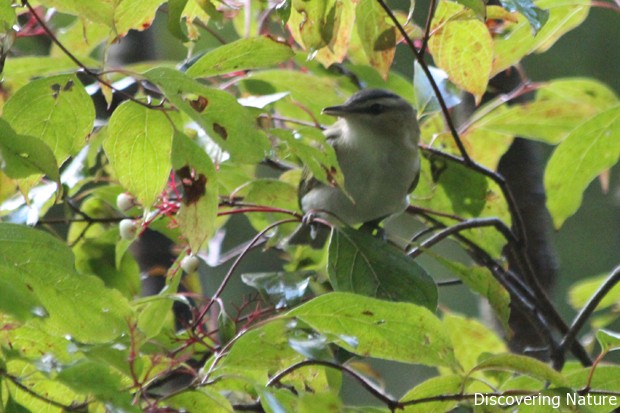
It was a treat to see this red-eyed vireo feeding with some chickadees, too. Vireos are so much more easy to hear than to see; they are so like the leaves themselves.
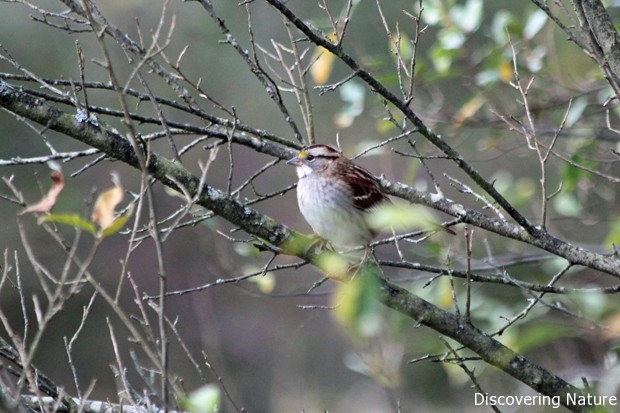
The white-throated sparrows are coming through on their way southward. We have four or five of them hanging around our yard this week, but this one was spotted in a nearby preserve.
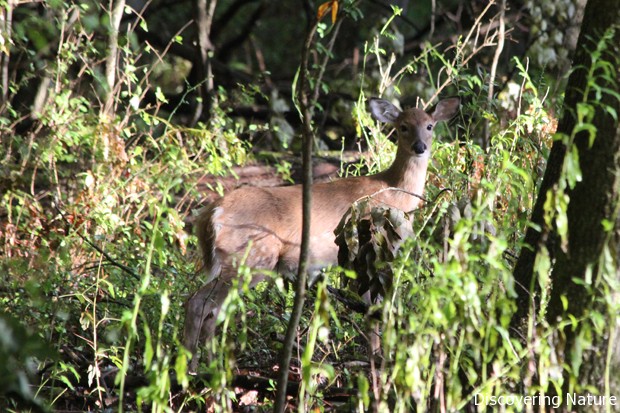
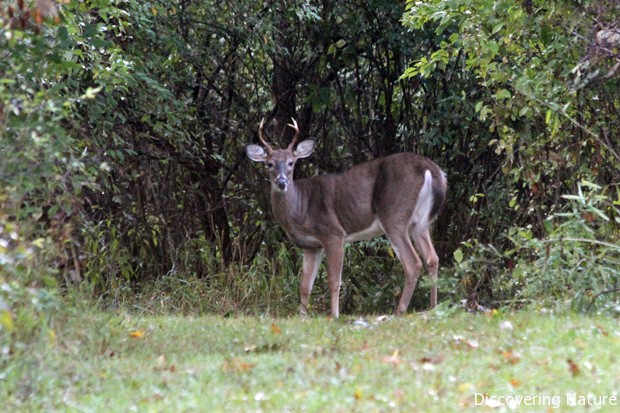
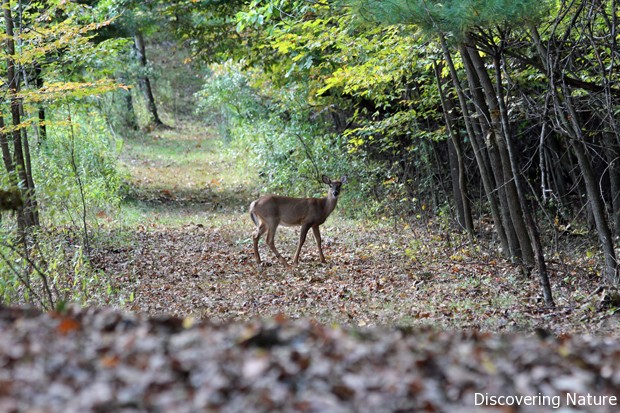
Last but not least, the deer have been everywhere, and they have actually seemed to pose for me.
-
Green herons
It’s been pretty quiet around here lately. I’ve reduced my screen time quite a bit this summer and experienced corresponding benefits. But I’ve continued to observe and enjoy some favorite haunts during this all-too-brief (here in the Northeast) warm season.
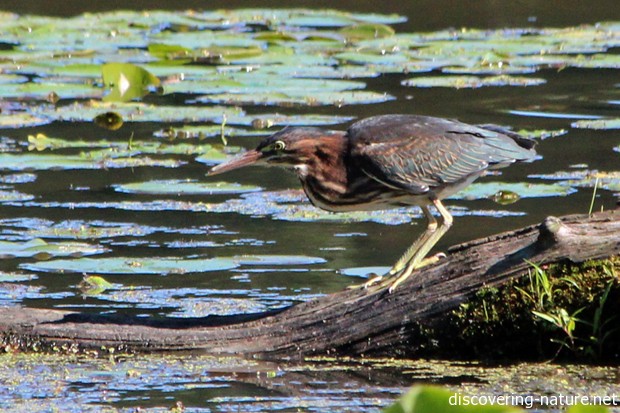
One bird I started really noticing last summer is the green heron, and I’ve had some good opportunities to photograph some this year. At one pond here locally, there must have been a successful nesting pair, because young herons have been marauding together, discussing everything and everyone. In the process they’ve posed nicely for some pictures.
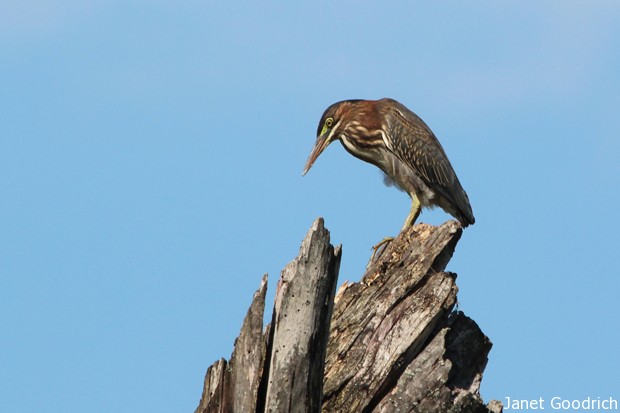
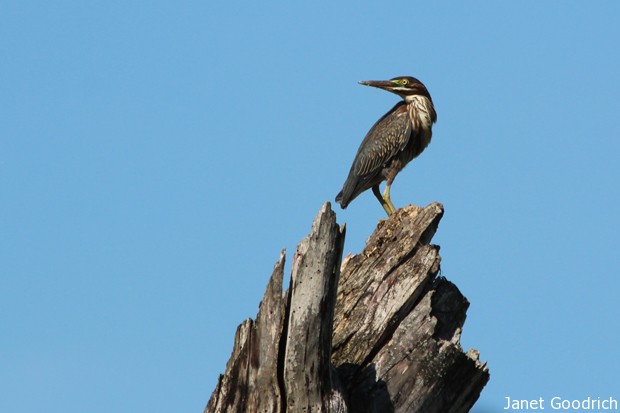
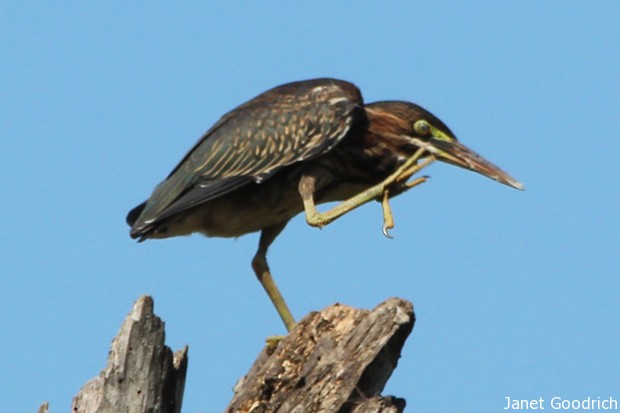
This bird took a break from looking lordly atop its snag, and scratched an itch. You can see its nictitating membrane in this pic.

Then it flew away. It looks awkward in flight, maybe because its tail is so short.

Another bird that posed for photos was this next green heron, which the girls and I watched through the windows at Sapsucker Woods. It seems almost too easy, this kind of nature study. In this setting, the bird’s small size next to the crowd of talkative ducks was striking. It was hunting with great concentration.
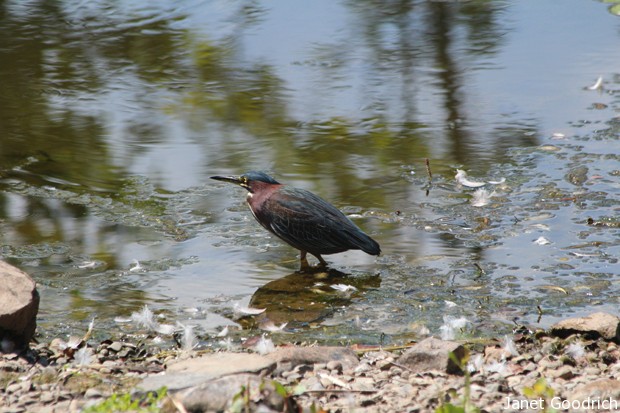


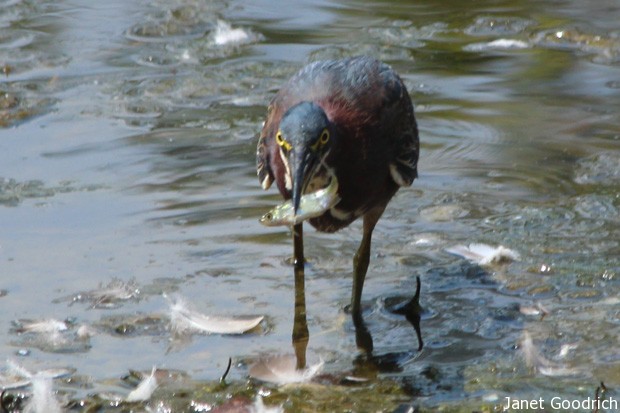
Like any good fisherman, it posed for a moment with its catch. Then it turned the minnow neatly and swallowed it, head first. It was interesting to me to see the disturbance in the water’s surface increasing as the heron waited and then snatched. I’m not sure if the minnows were reacting to the heron, or if the heron was merely watching the minnow activity as the group approached it under the water.
So much of “nature study” involves watching animals simply eating or taking care of young. They are just surviving, doing the same ordinary things we humans do. But they have the intrigue of being different species, highly skilled and adapted.
-
Contradictions
I realize it’s lame to take pictures at the zoo. It’s not exactly “wildlife photography.” It’s “captive creature photography.”
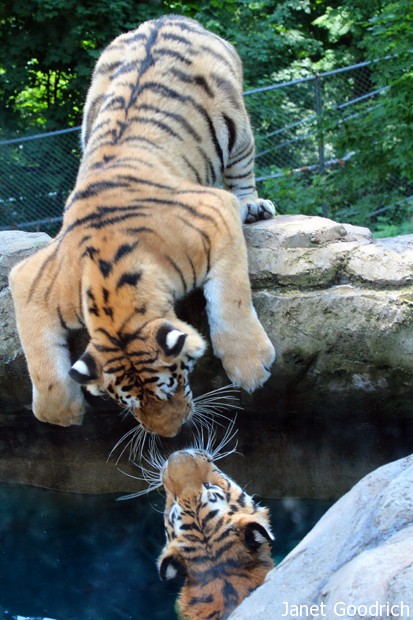
But still, it’s a way of taking the experience home with you. Last week, we went with some home schooling friends to the Syracuse Zoo. It’s a great zoo, full of happy and healthy animals. Some were playing “King of the Pool” on a hot day.
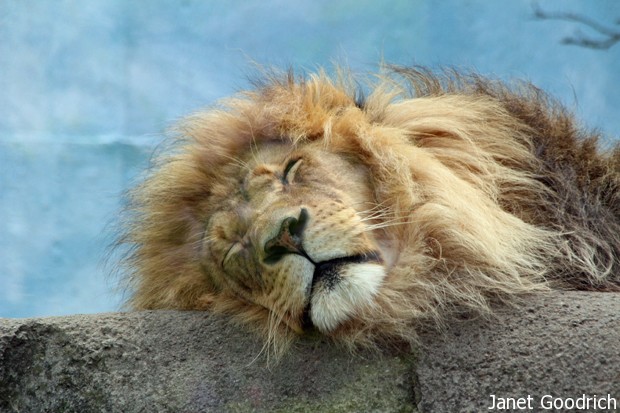
And even the inevitable sleepers looked contented.
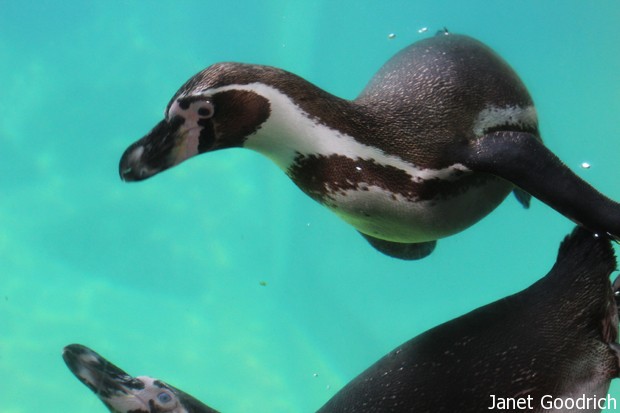
Most of the penguins were shooting nimbly around in the water.
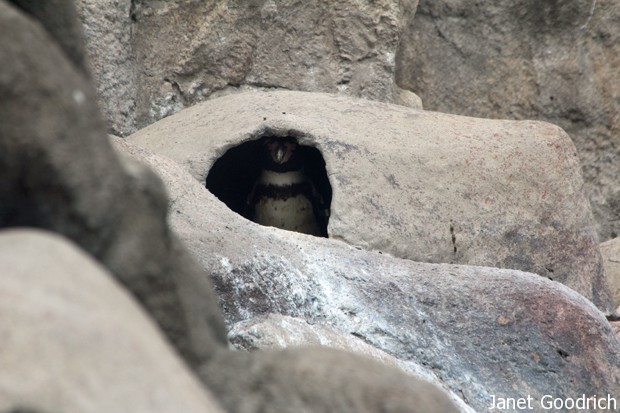
But this one taught me that even in the sociable penguin community, there are introverts.
Naturally, we visited the aviary twice. Not only are we bird people in general, but the exotic bird room provides a less bounded experience of the wild than the rest of the zoo. We walked through the tropical habitat and enjoyed the whoosh of wings over our heads and the sight of avian wonders unfamiliar to us, close enough to touch.
Some of them found us pretty amusing.
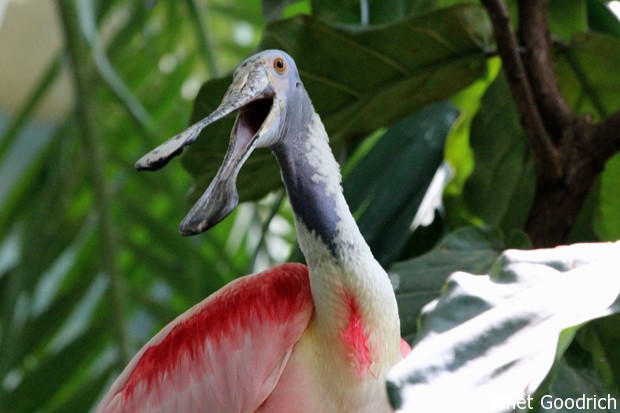
Roseate Spoonbill 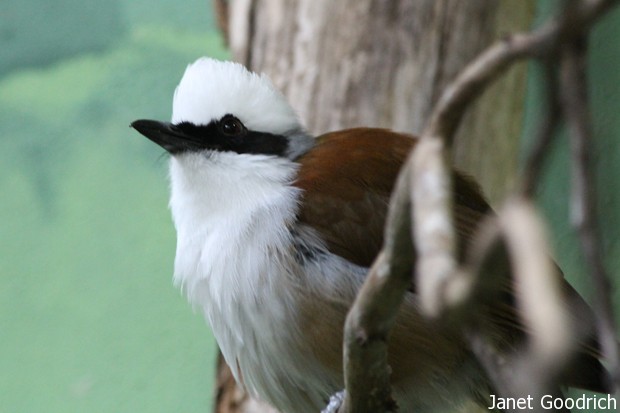
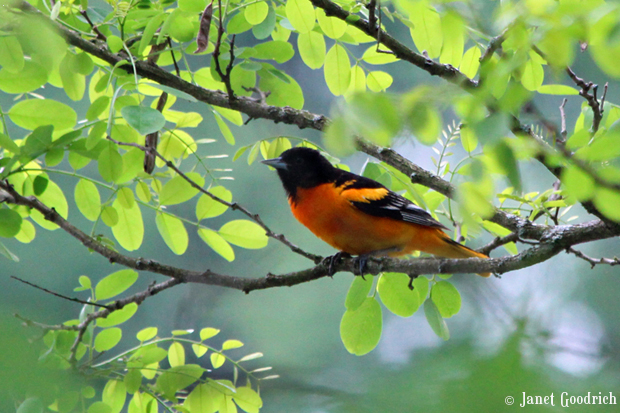
White-crested Laughing Thrush Others seemed like super-vivid dream versions of local birds. This Troupial reminded us of a Baltimore oriole, but bigger and brighter.
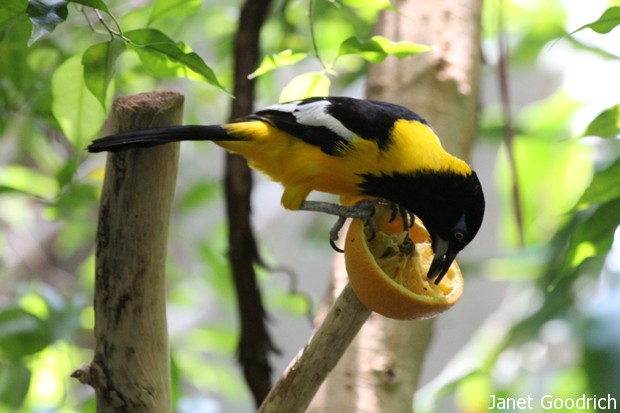
Troupial And this Luzon Bleeding Heart Dove faintly suggested a rose-breasted grosbeak on steroids.
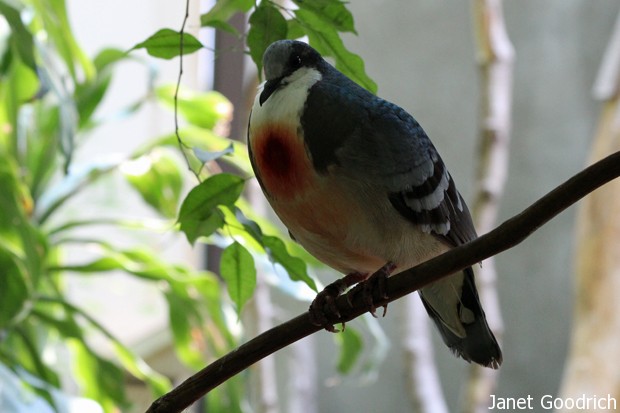
Luzon Bleeding Heart Dove There were lots of gorgeous birds, but Simon the macaw’s personality stood out. At first, he seemed to like us.
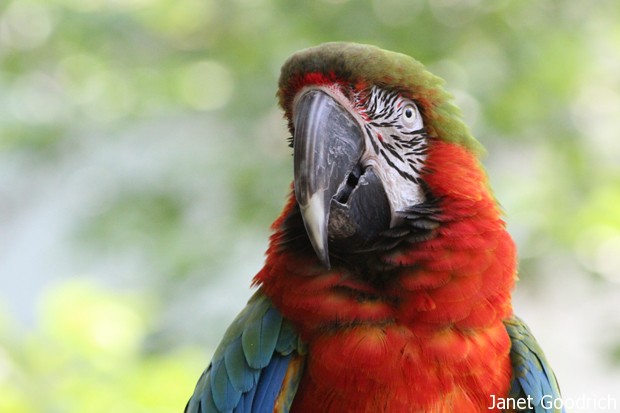
“Hey baby! Come here often?” But suddenly…
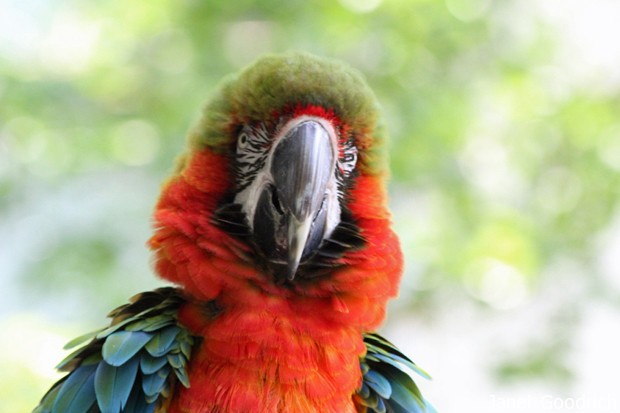
“What are YOU staring at???” On the way home, in a congested section of highway, a pigeon was wandering, disoriented, in the shoulder. It was toddling in the wrong direction, out into traffic. It may have been hit, and dazed. I swerved a little to avoid hitting it, but the last I saw of it in my rearview mirror, it was in direct line with the front tire of the car behind me. I looked away, wincing.
It’s happened several times lately. I’ve seen animals in desperate straits on roadways, and I’ve been unable to do anything about it. What would I do if I could? I’m not sure. At the least, I’d move them out of harm’s way, or try to get them to help. But on a highway with both lanes full, there is no stopping.
I was struck — am struck — by the contrast between the carefully kept and fenced-in beauties we had seen at the zoo, and the common pigeon mowed down on the roadway on the way home. There is a degree of unavoidable brutality built into our systems at times.
I imagine a world in which birds on the road and birds in the zoo — and all the other living things, human and nonhuman alike, that surround me — could be taken into account and respected. Yet I’m sure that the contradictions of the present system run all through me, in ways I’m aware of and ways that are hidden to me.
-
June 23, 2012 Morning Sights
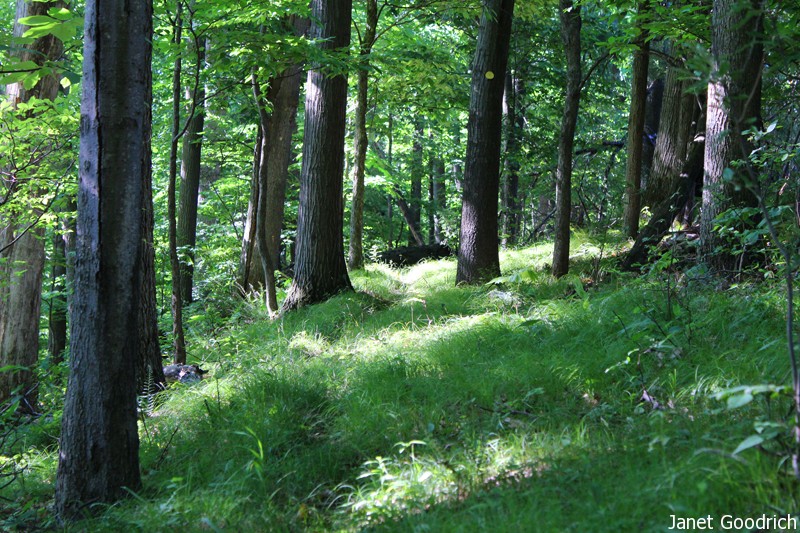

Red eft 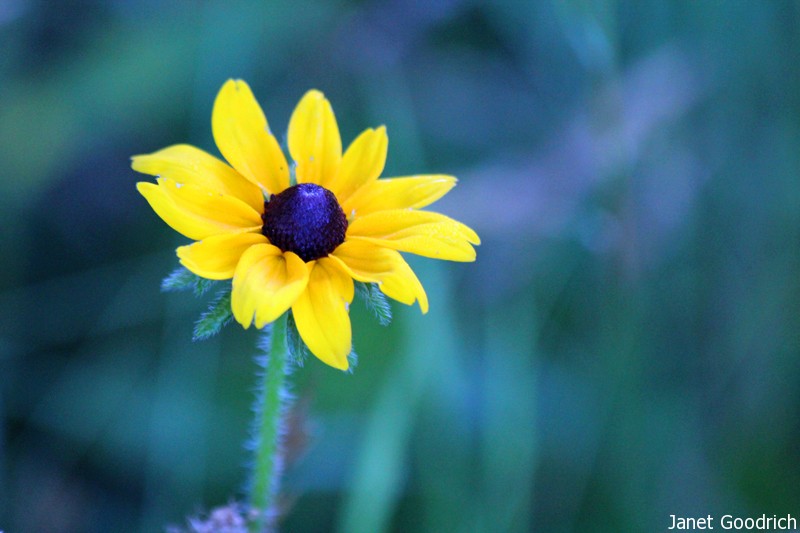
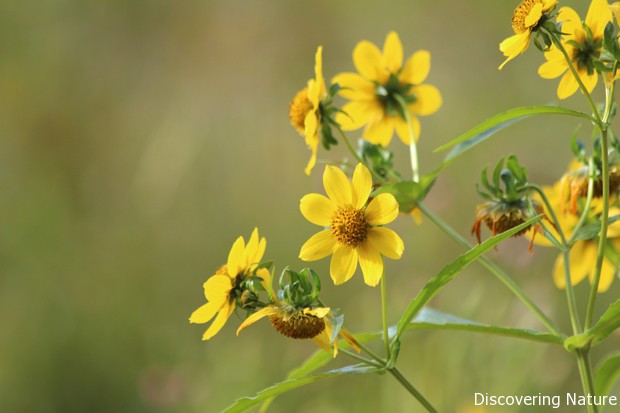
Black-eyed Susan 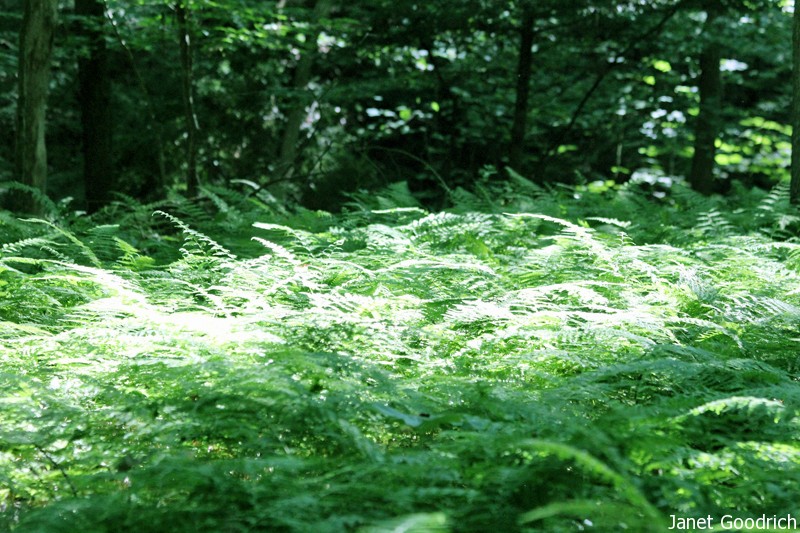
Fern fairyland 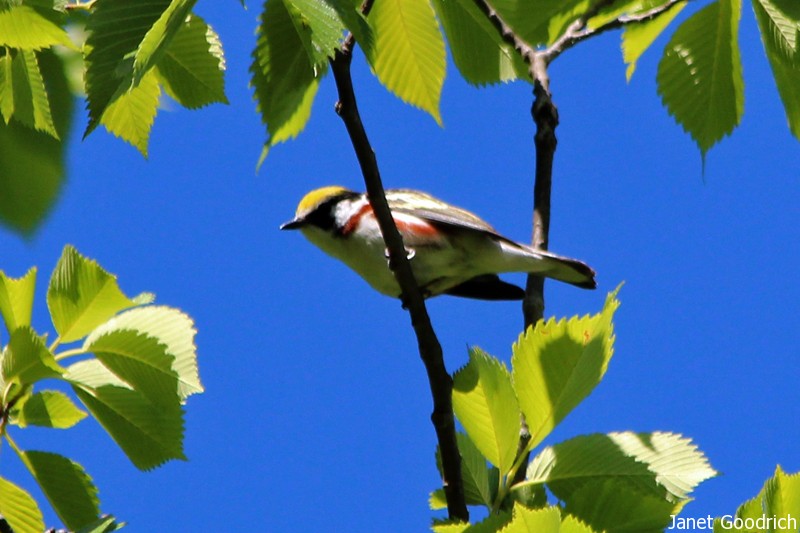
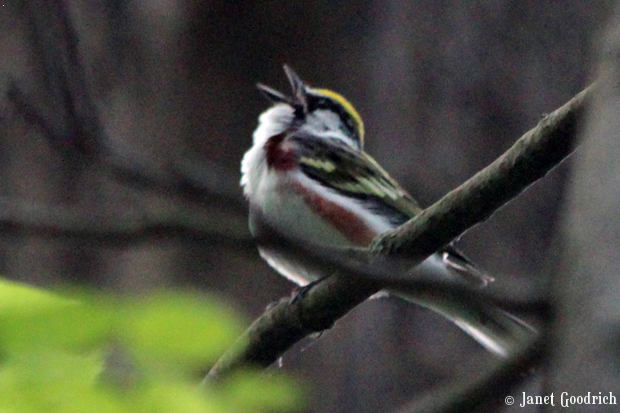
Chestnut-sided warbler 
Female yellow warbler? 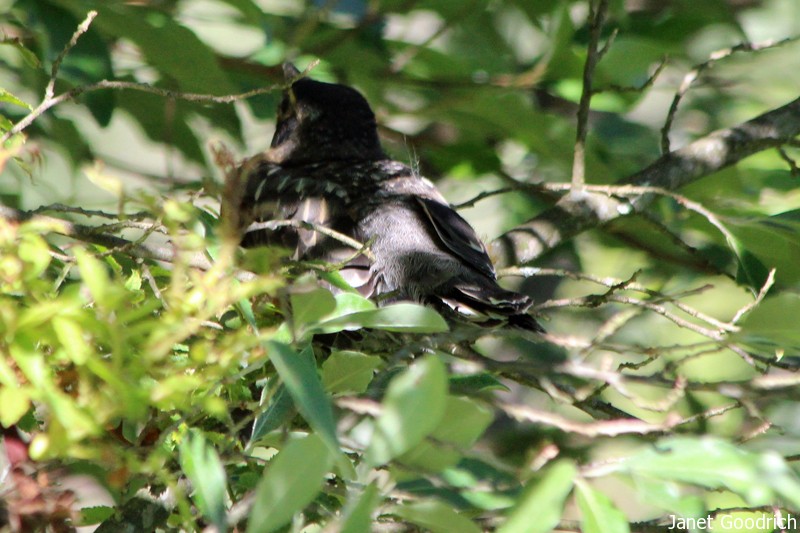
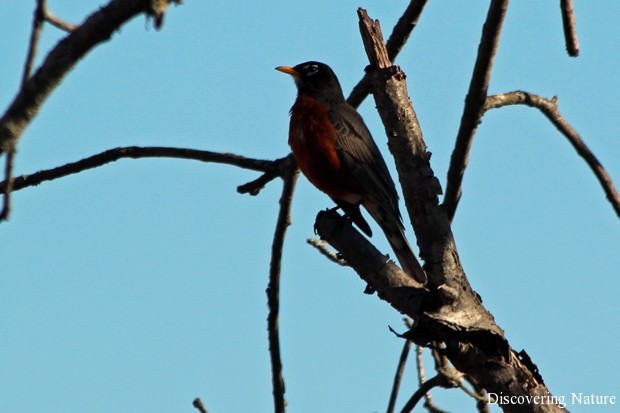
Robin, nesting quietly 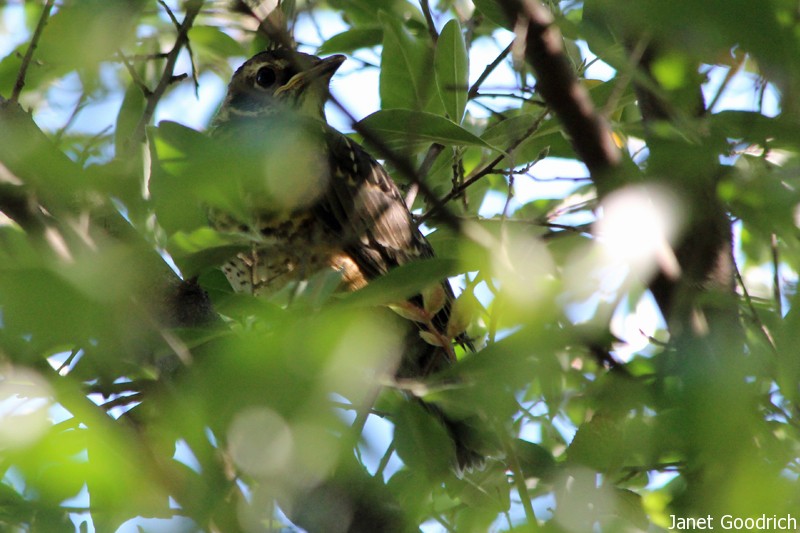
Robin fledgling in the same bush 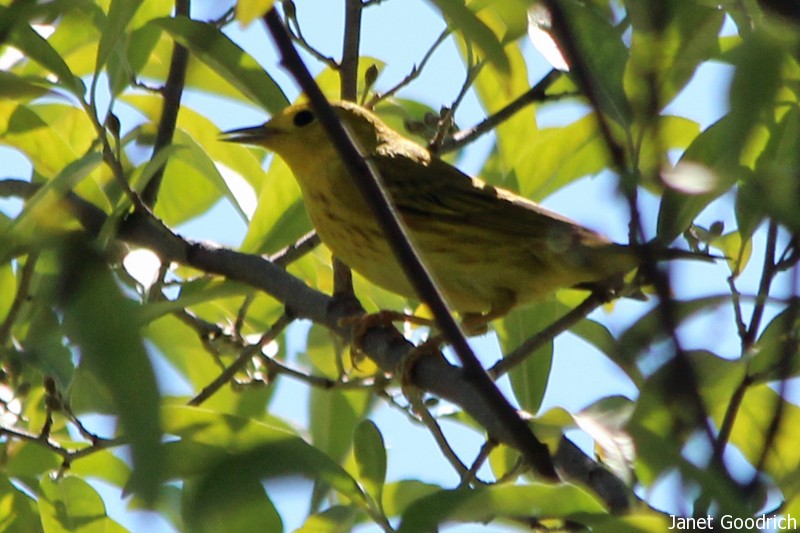
Yellow warbler 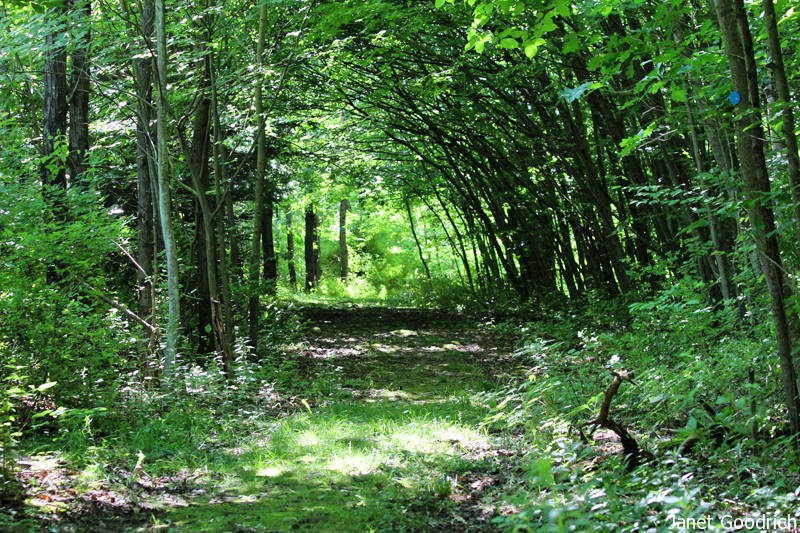
Tree tunnel Also seen: Eastern towhee, Baltimore oriole, house wrens, blue jays, oven birds, deer, chipmunks, common yellowthroats, rabbits, woodchucks, toads, pearl crescent and least skipper butterflies.
Heard: Deer, woodthrushes
-
Songbird Scepter

-
Another delightful find
An American redstart nest!
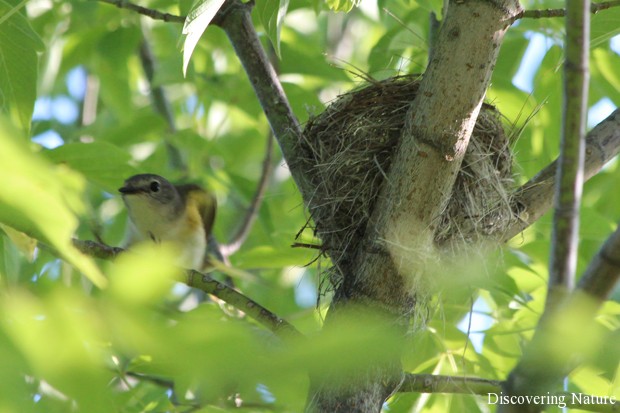
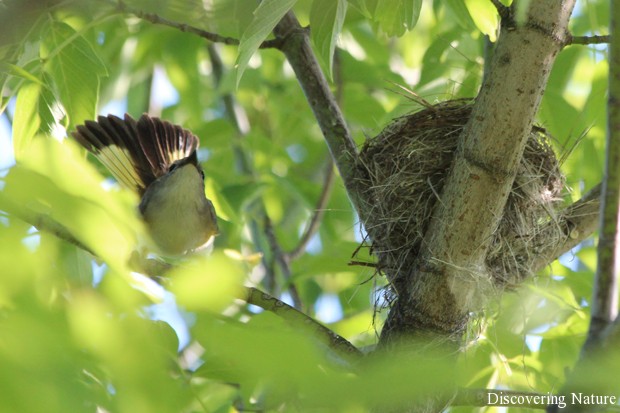
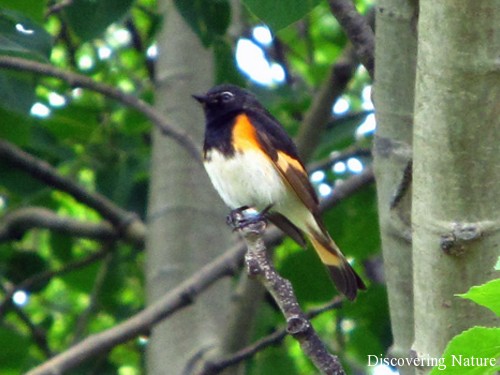
American redstarts and yellow warblers are both gorgeous little birds I’ve noticed for the first time over the last year. They’re also resourceful. Both are often targeted by brown-headed cowbirds, who lay their eggs in the nests of other birds. Redstarts and yellow warblers, when they notice a cowbird egg, counter by building another layer of nest over the top.
I’d love to see the male redstart, which is more colorfully marked. I saw my first one last year, not far from the site of this nest. This seems like a promising vicinity to see another one!
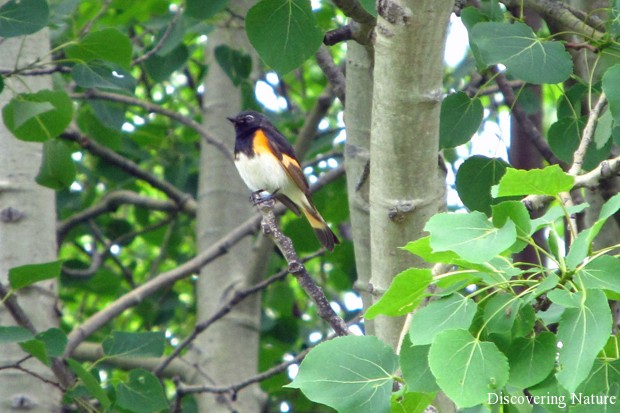
Last year’s redstart sighting -
Bathing Beauties
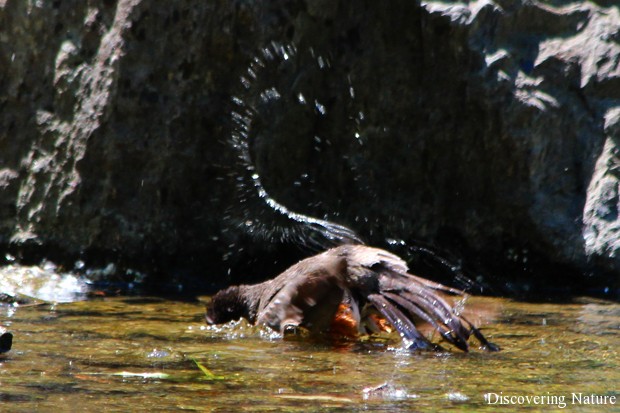
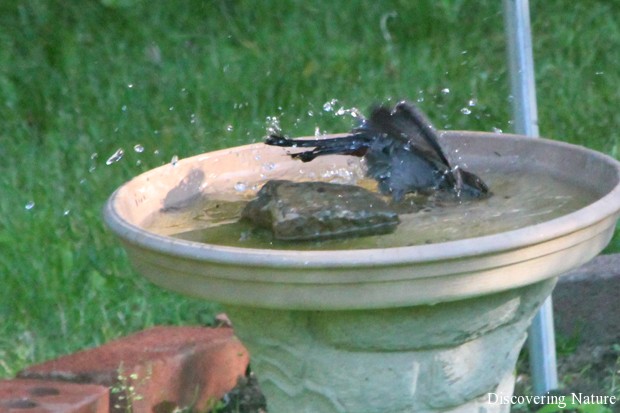
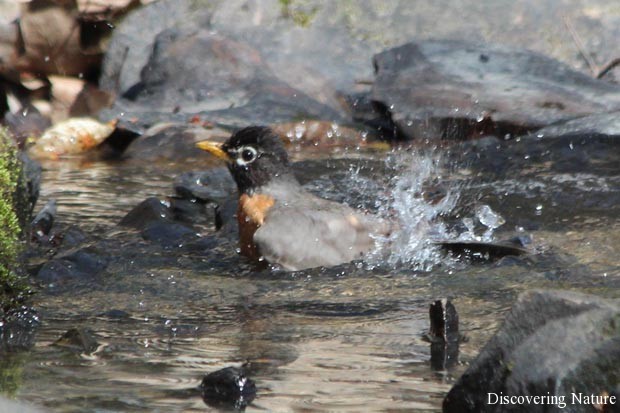
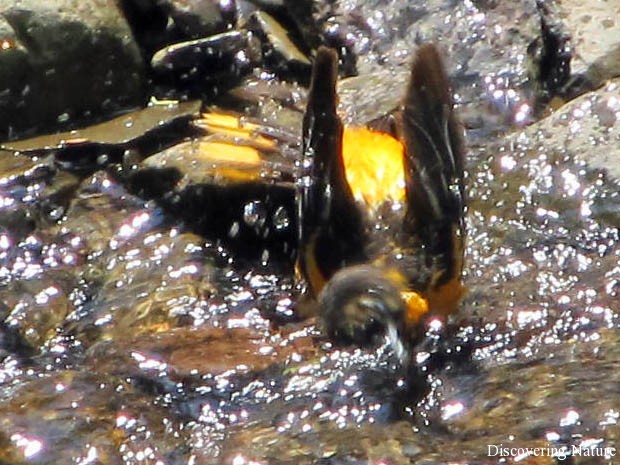
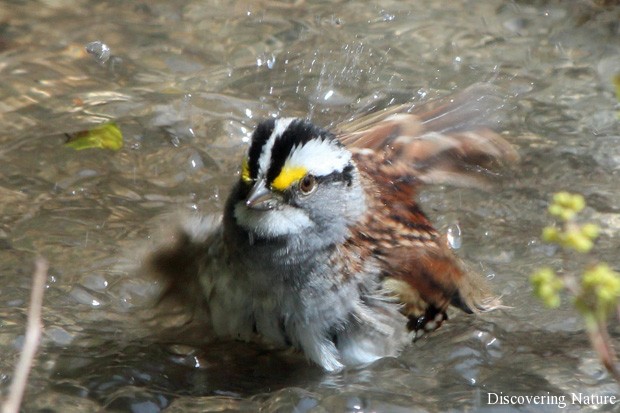
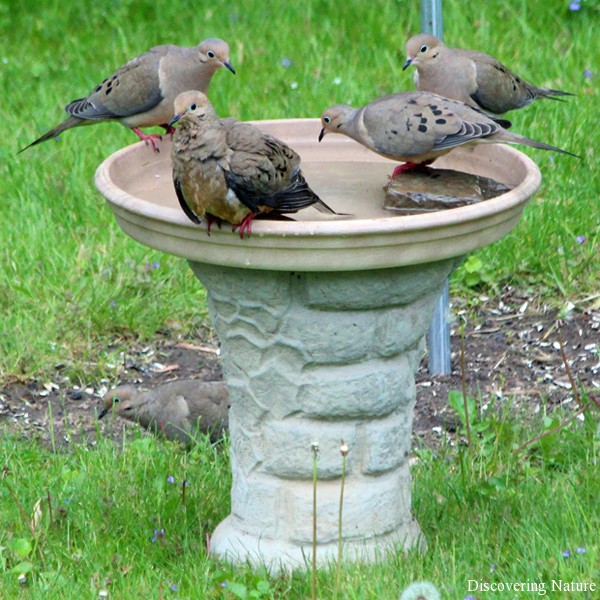
There is debate about many things related to bird behavior: how, and whether, they “teach” their young; how they chart their migratory courses; why they do this or that. But when I see a bird taking a bath, there’s no question in my mind that they are having a blast! The only creatures who like to play in the water more than my daughters are the birds.

-
Hidden
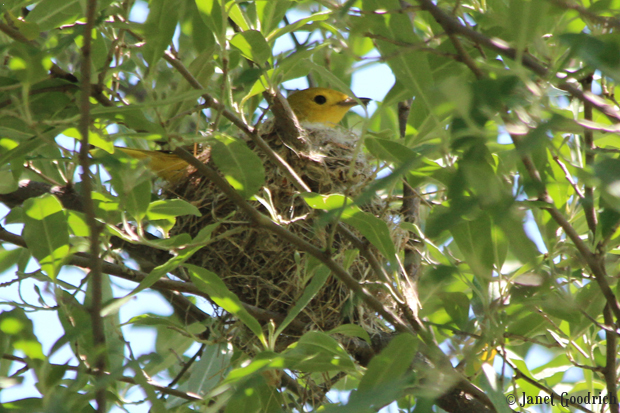
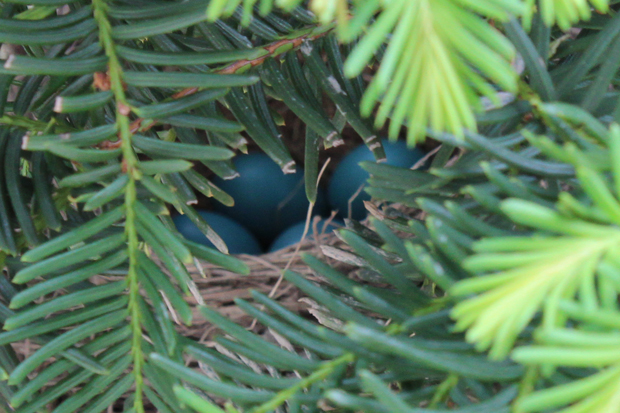
My daughter spotted this yellow warbler nest on a walk we took this morning. It’s a great example of something I’ve marveled about before: more eyes = more wonders. It seems like you would see more going alone into the woods because it’s much quieter and less disruptive. But you never know what you miss for the lack of additional eyes. I’ve seen some neat things by myself, but this one I’d have missed entirely!
The girls are excited about going back each week to investigate the nest activity.