-
Fall Redtail
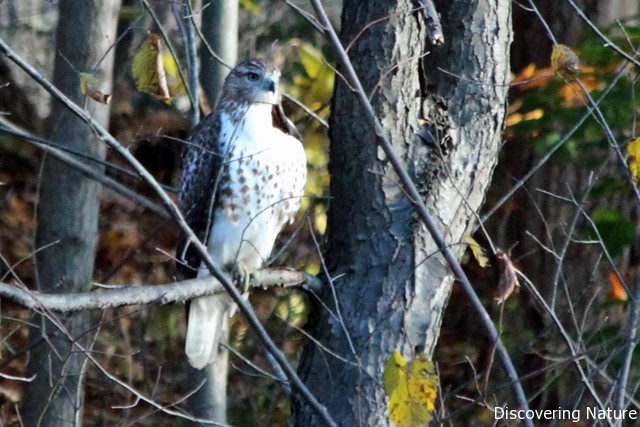
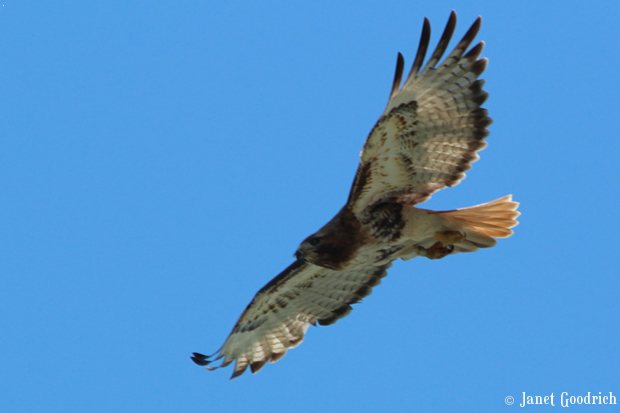
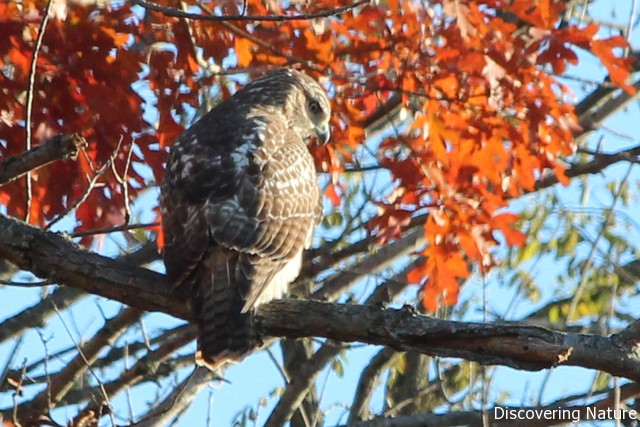
I was driving home from an early morning walk, feeling a little disappointed that I hadn’t seen any warblers, when a large, light-colored hawk swooshed up from one side of the road and landed in a tree on the other side. I think it’s a female, because it was quite large — especially with those feathers fluffed out for warmth. It’s a young redtail with a first-year tail, and I watched for awhile as it hunted.
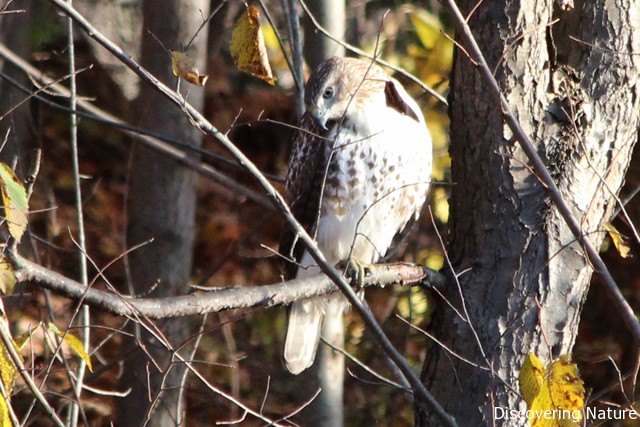
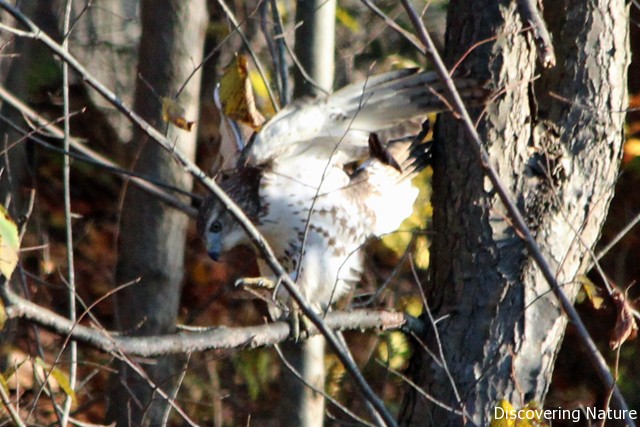
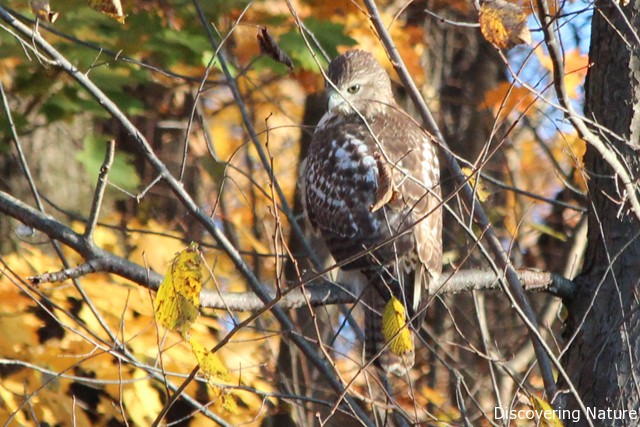
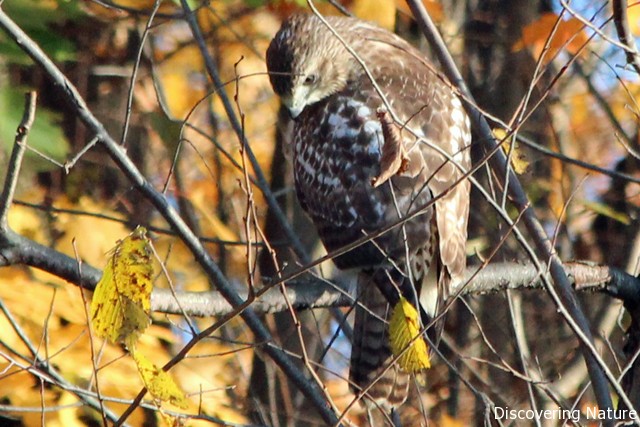
Such concentration. I never saw it catch anything, but I wished it the best. Beautiful, powerful bird.
-
Scavenger Hunt
Yesterday we finished our book work early, so we took a woodland scavenger hunt from this book and headed out into a sunny fall day to see what we could see.
The first task was to find “something older than yourself.” Not too difficult in a forest! There were numerous good-sized trees around, as well as plenty of snags and blow-downs.
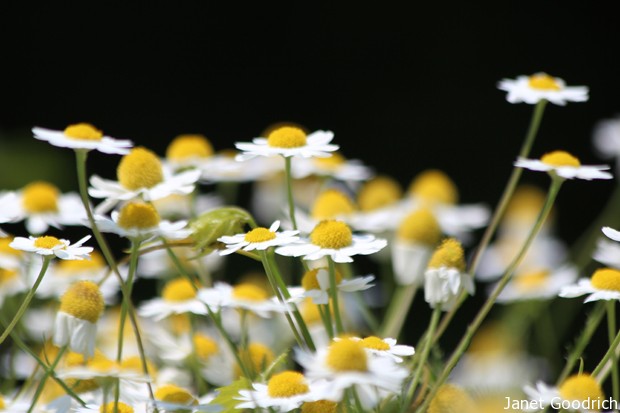
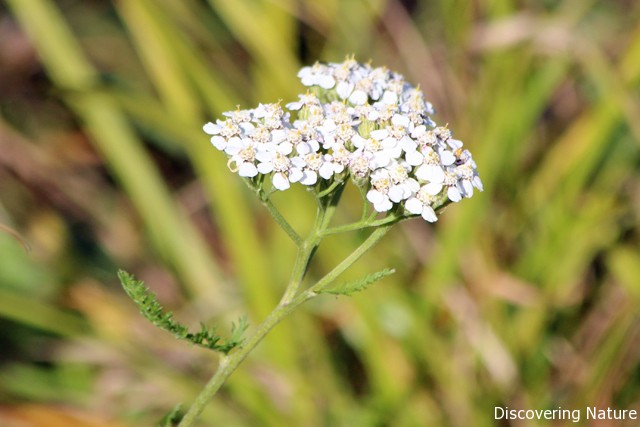
How about “something smaller than your thumb”? The blooms on this white flower (yarrow?), one of the few hardies to have withstood the recent frost, fits the bill.
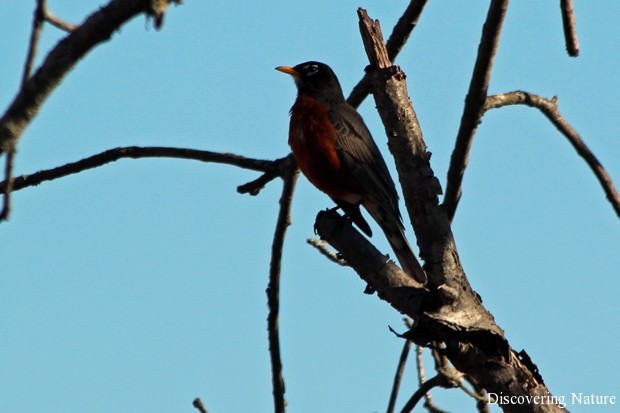
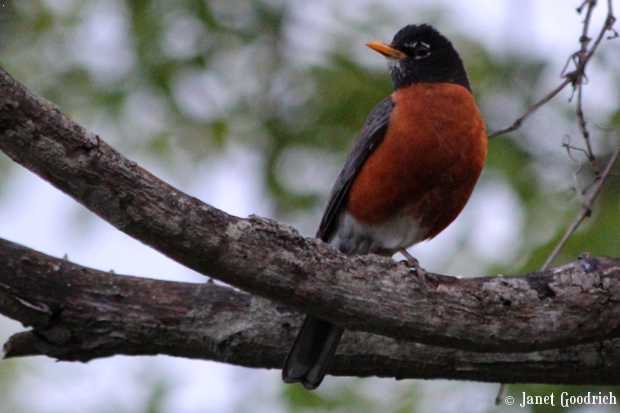
Older Daughter also thought of berries, which a flock of migrating robins were munching on.
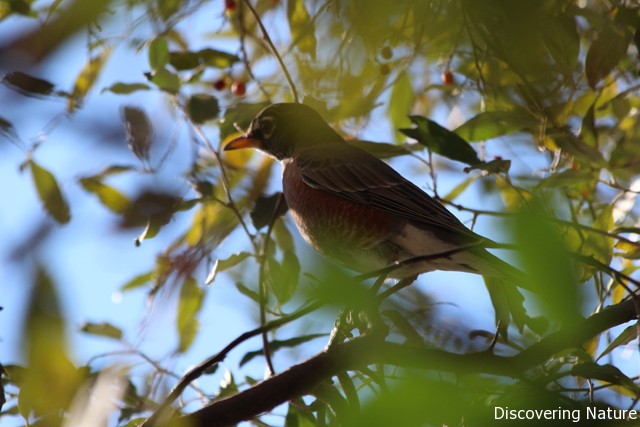
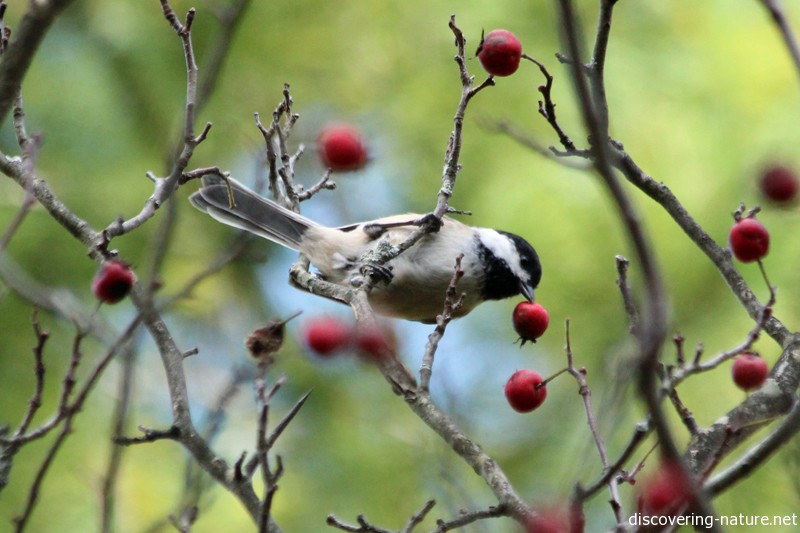
Along with the dragonflies, white-throated sparrows, red-bellied woodpeckers and chickadees, the robins satisfy the third challenge: “something that flies.”
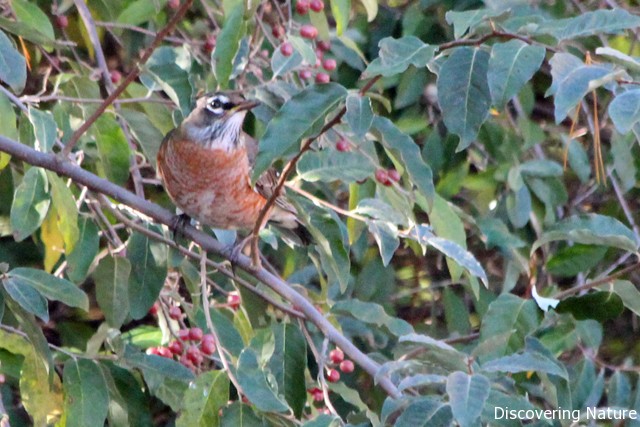
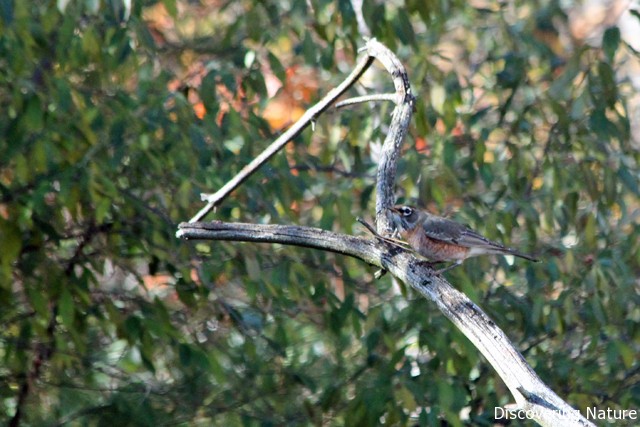
I saw the first robin of spring at this preserve, and I’m guessing these may be the last robins of fall. All were dull-colored, and travelling together in a group. At one point we counted seven in the same bush — though it was hard to get a clear view. They flapped and fluttered and clucked and shook the leaves, and generally gave every impression of wary and purposeful activity.
Next comes “something taller than you.” Easy enough: trees, as well as the hillside.


“Something that needs air.” Hmm. It would be harder to find something that doesn’t need air! How about humans for this one?
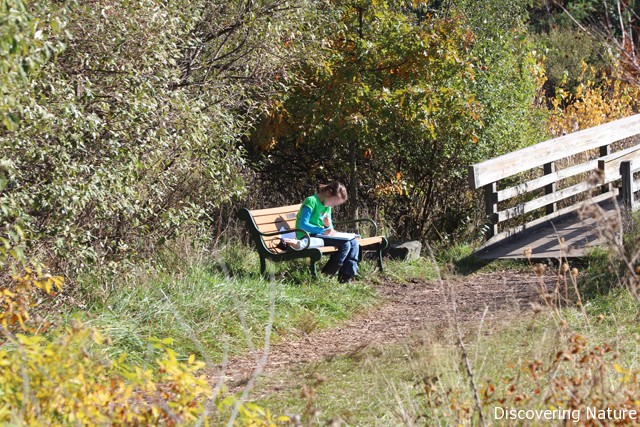
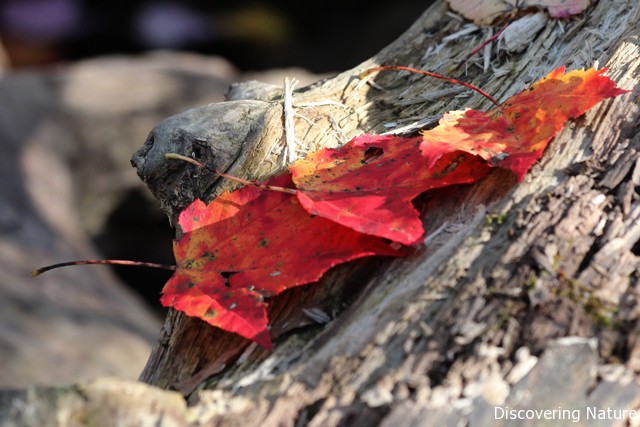
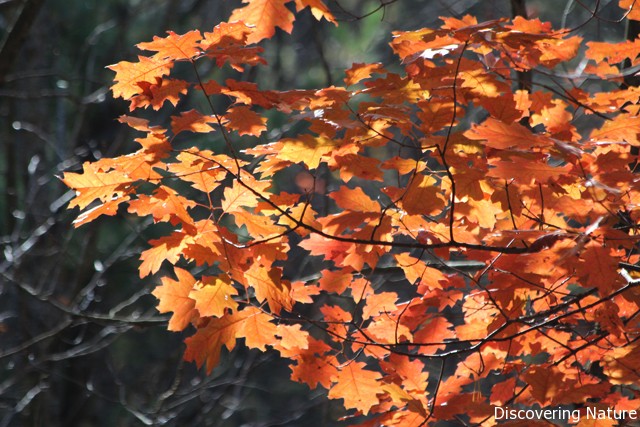
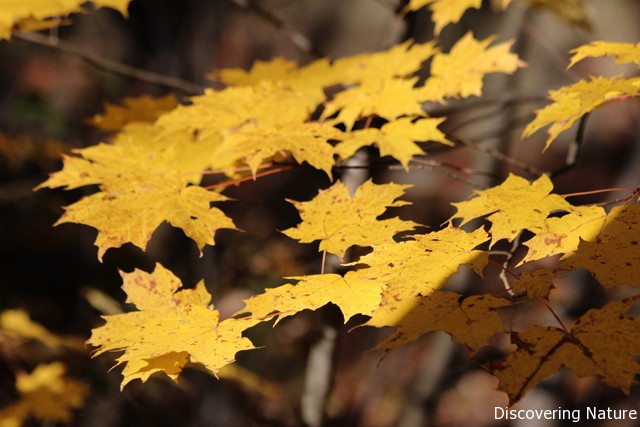
“Something younger than yourself.” Virtually all the leaves, dying in a blaze of glory after a few months…
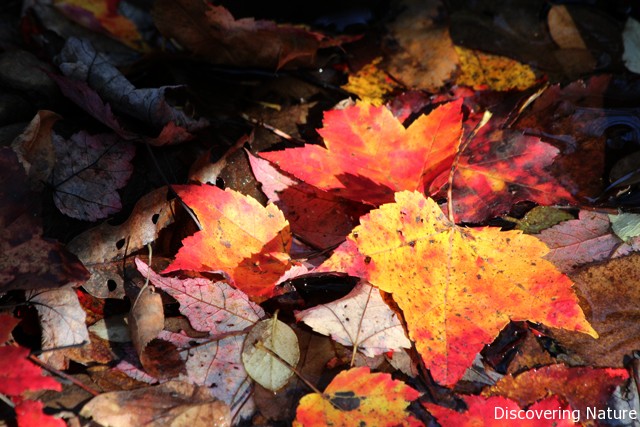
“Something that makes you laugh.”
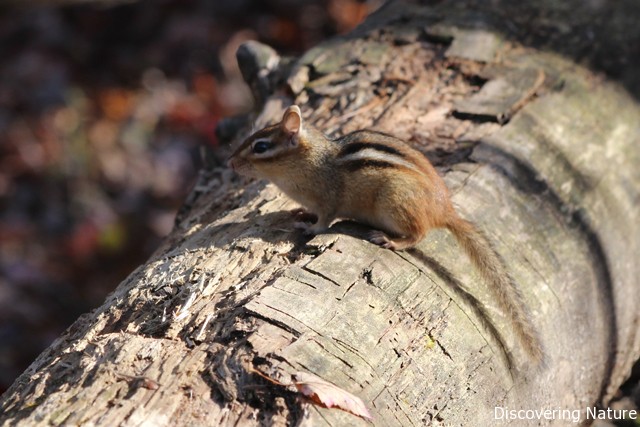
This guy squealed and ran from my daughters, only to find himself a yard from me before freezing in horrified indecision.
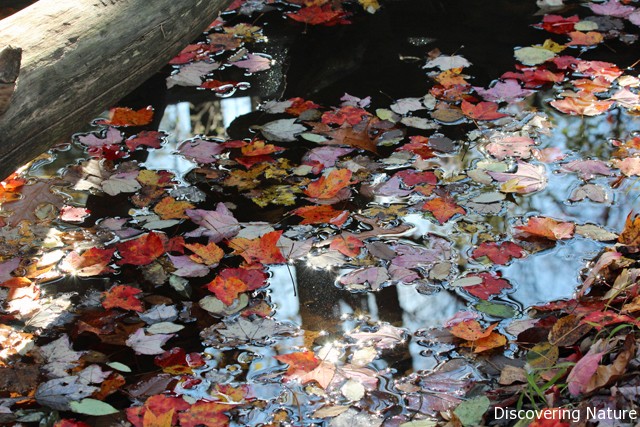
“Something that is important.” Water…
“Something that you have never seen before.” A new path, though I have no pics. It delighted us all.
“Something with a smell.” Again, no pics, but autumn has a smell all its own. I suppose it must be decay, but I think of it simply as “fall smell.”
Last, “something with spots.”
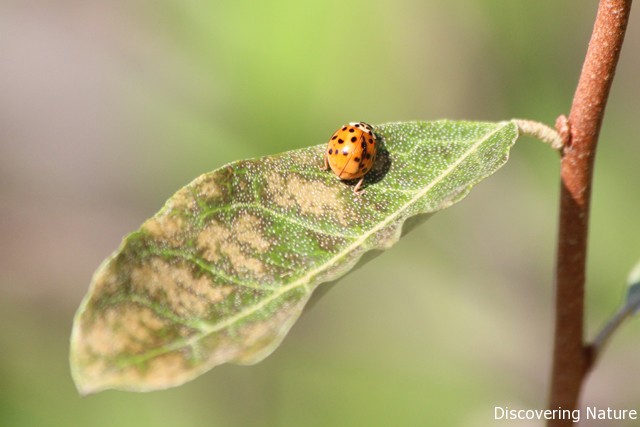
Gorgeous day, satisfying sights, time together.
-
October’s bright blue weather
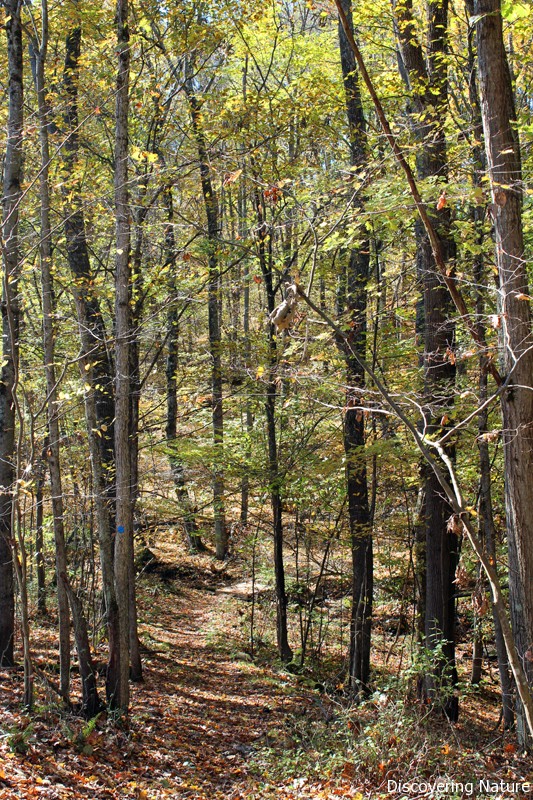
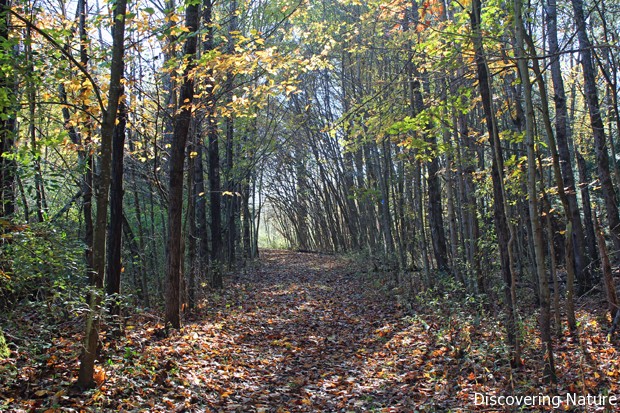
This morning it was in the mid-twenties after the first serious frost. The beauty of the woods warranted quoting a line from this poem in my title. The only line I dispute is the one about “leaves sinking noiselessly.” They rattle ceaselessly, actually, making it sound like the woods are trying to flutter up and away en masse before the snow falls.
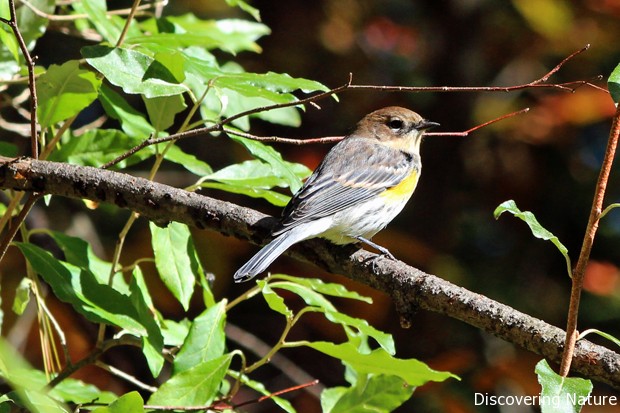
The yellow-rumped warblers were coming through, snatching bugs from leaves and branches.
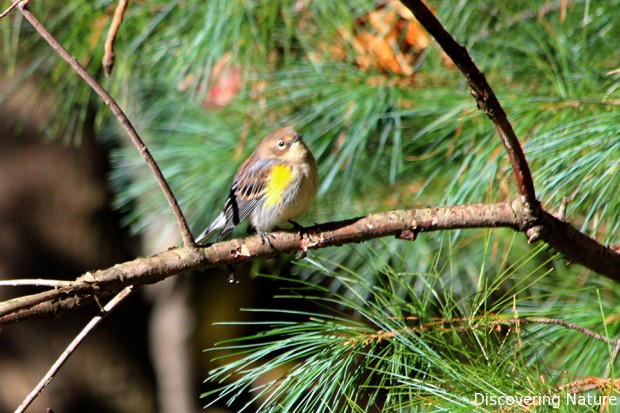
I heard a whole flock of crows sounding the alarm about something, but aside from the warblers and a few chickadees, I didn’t see much.
I investigated a trail I haven’t walked in awhile and discovered it was almost impassable because of the uprooted trees, courtesy of a strong storm maybe a month ago. It was interesting to try to trace the path of one particularly large oak that had torn limbs off one tree and knocked over another on its way down. It lived a life of influence — and died the same way.
There’s a certain quality of brightness to the fall sunshine that I look forward to. I think of Wendell Berry’s line of poetry in “Clearing” about vision with “severity at its edge.” That’s what the light reminds me of this season — it makes things starker and reveals the contrasts.
I need the seasons.

-
Lunch is served
This morning we counted eight male cardinals at once at our feeder out back. Countless other small birds fluttered around along with them: house finches, goldfinches, female cardinals, nuthatches and chickadees, red bellied and downy woodpeckers. “If a Cooper’s hawk showed up right now, he’d be on overload,” I remarked.
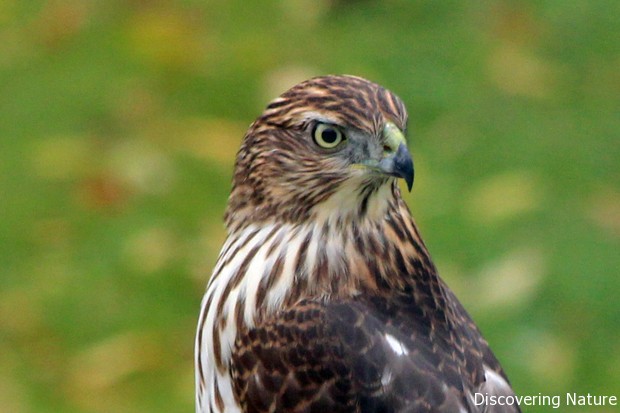
Obligingly, he appeared on the swingset.
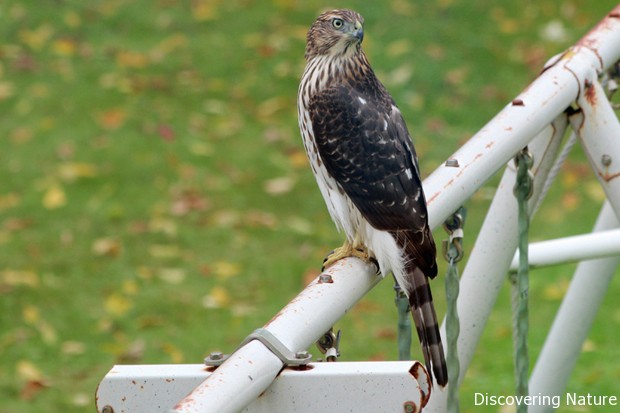
He didn’t get anybody while we watched. After snapping these pics, I let Younger Daughter go outside and he startled and flew away.
How can I be so fascinated by both the songbirds and the hawk that hunts them?
-
Autumn state of mind
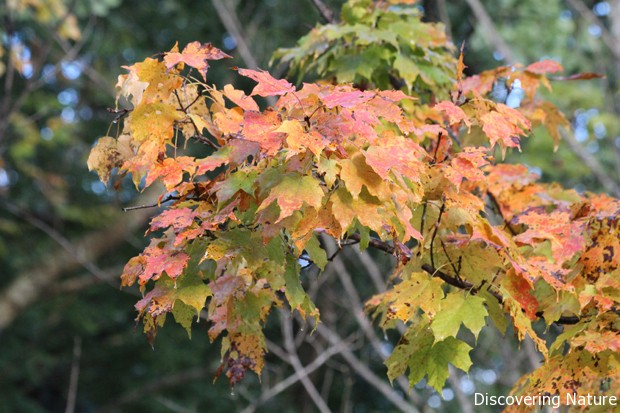
The woods are so much quieter now than they were in the spring and early summer that it’s easy to lose the sense of expectation. But it’s a good exercise in faith to remain attentive; invariably we are rewarded with wonders large and small.
It was a little eerie on a recent walk in Ithaca. My husband and daughters and I were coming to the end of a stroll on an overcast day when our paths intersected with some characteristically cheerful sounding chickadees. My daughter, the bird-whisperer, sounded her chickadee call to attract them, and it seemed they were responding with more and more vocalization. Then we rounded a corner and saw the silent silhouette of a hawk.
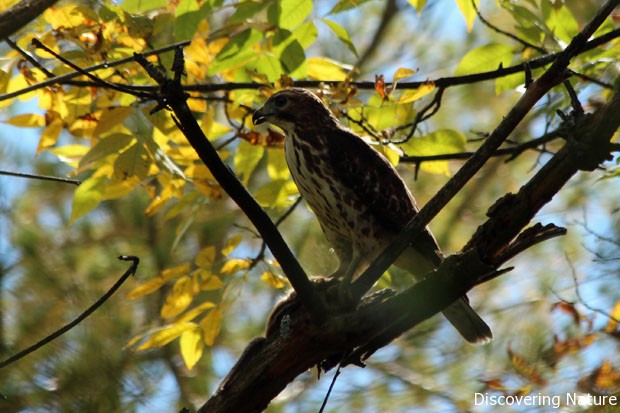
No doubt the chickadees were sounding the alarm. It may have been the redtail that haunts Sapsucker Woods, but it seemed a little small for a redtail. My guess is it was a broadwing. It clutched a chipmunk in its talons.
How typical of us humans to think that we were controlling the scene, when all along a life and death drama that had nothing to do with us was playing itself out.
Another hawk has been making unwelcome appearances in our area: a Cooper’s hawk. Our feeder is situated next to an evergreen so that the birds have cover, but I think this hawk is attracted by the busy chatter of the goldfinches and the two or three chipmunks who feed on the ground beneath. We haven’t seen it successfully catch anything yet, but here it is perched in the middle of the food court.
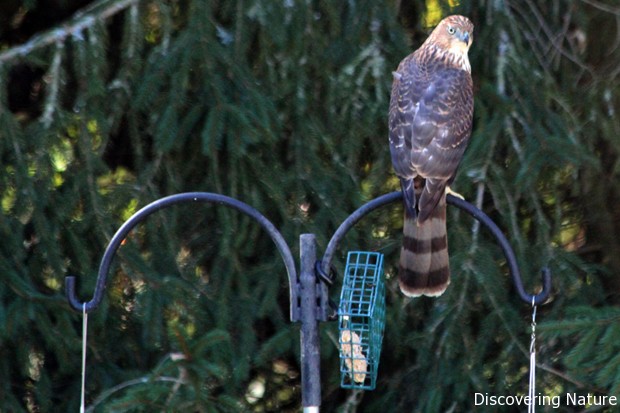
No wonder the chipmunks hide!
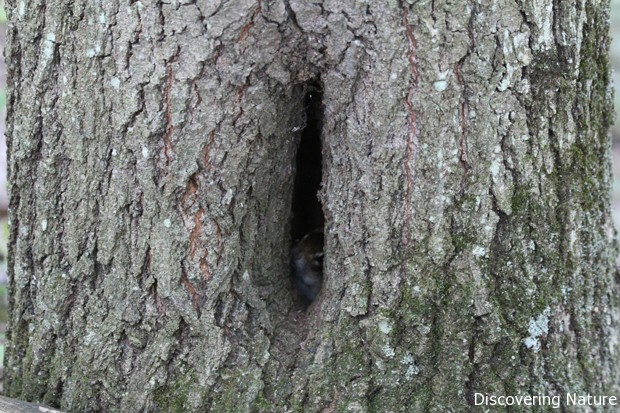
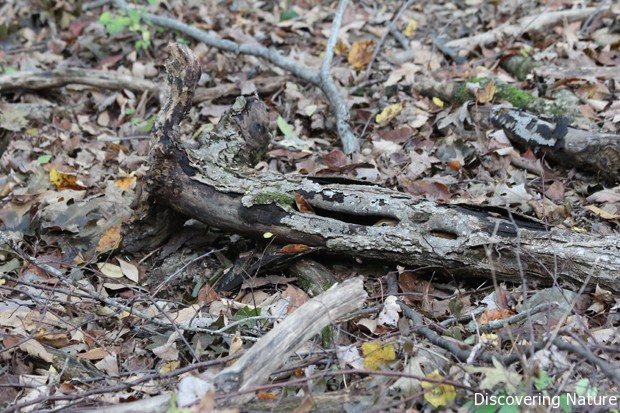
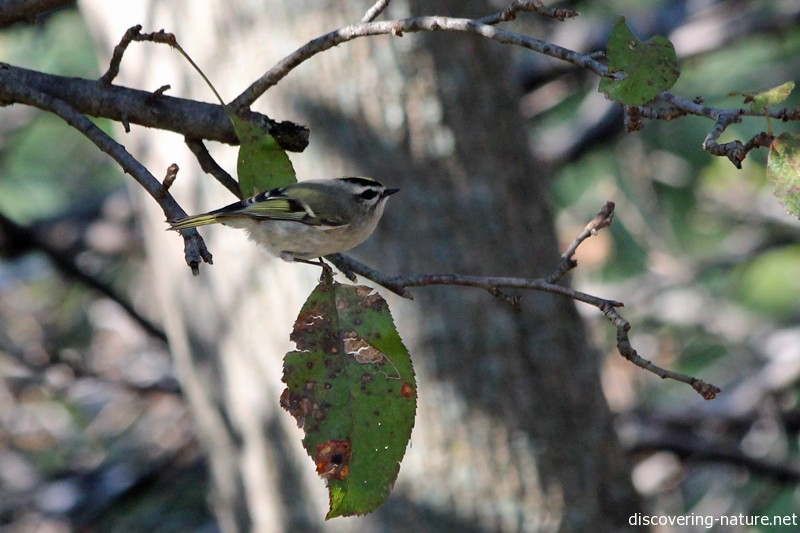
See it in the log? I’ve seen some tiny warblers in recent walks in the woods, but few have rewarded me with photo-ops. I did manage to get a shot of this one, tentatively identified as a Nashville warbler.
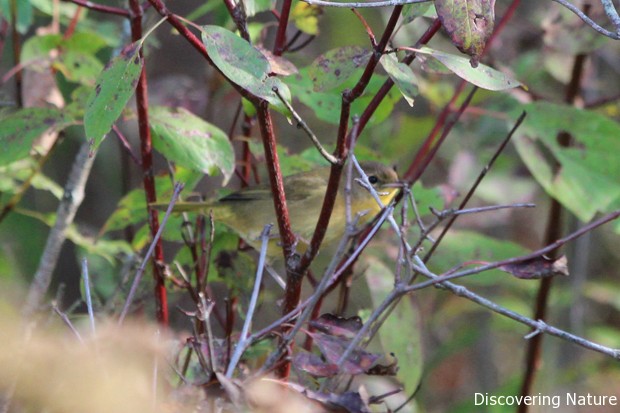
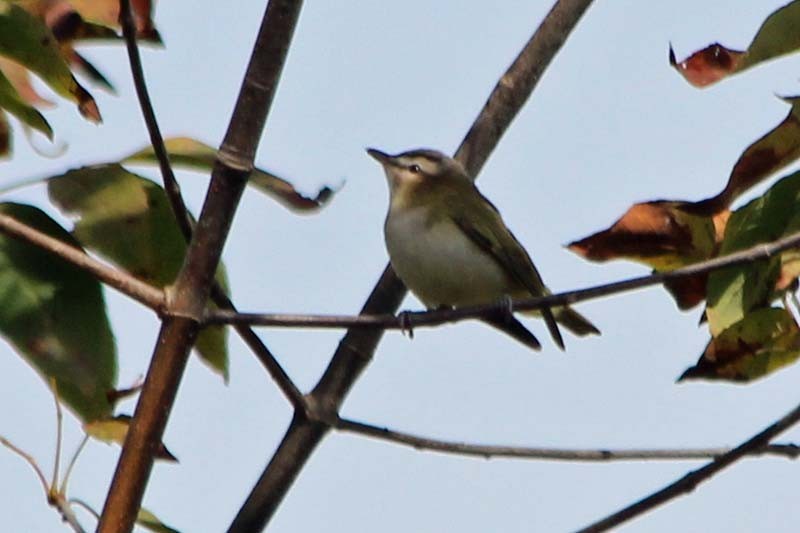
It was a treat to see this red-eyed vireo feeding with some chickadees, too. Vireos are so much more easy to hear than to see; they are so like the leaves themselves.
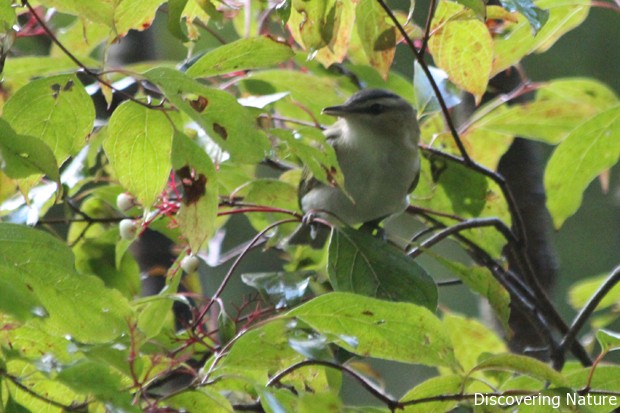
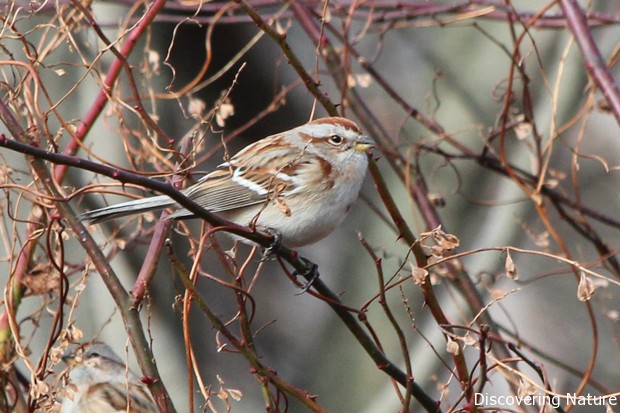
The white-throated sparrows are coming through on their way southward. We have four or five of them hanging around our yard this week, but this one was spotted in a nearby preserve.
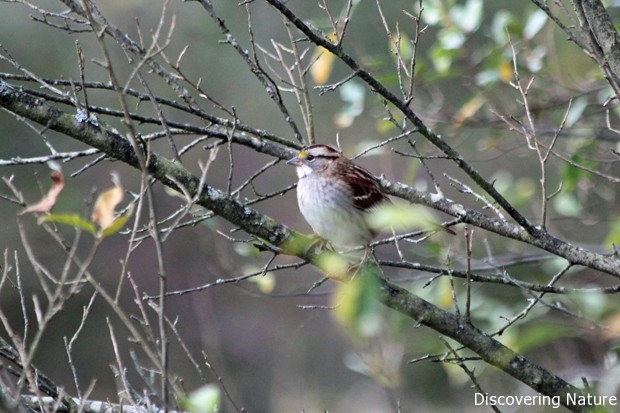
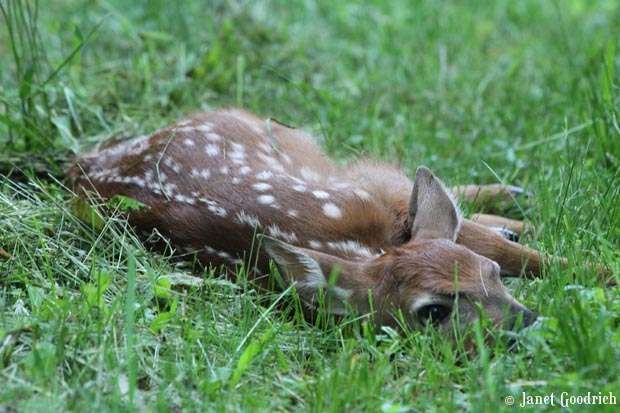
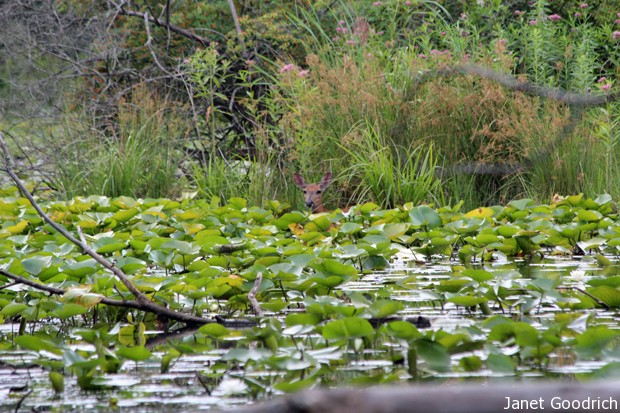
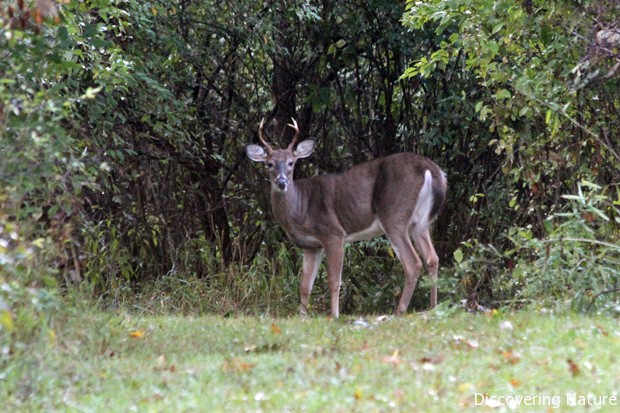
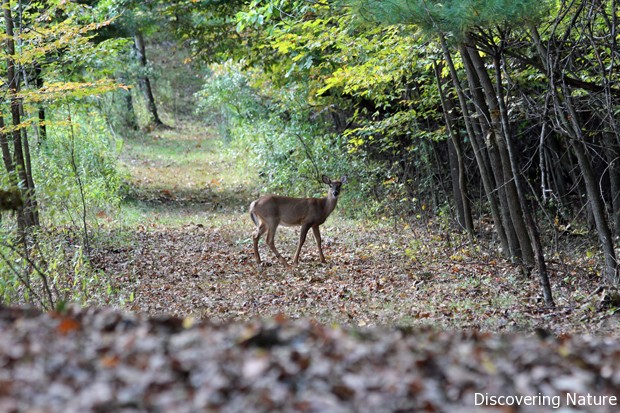
Last but not least, the deer have been everywhere, and they have actually seemed to pose for me.
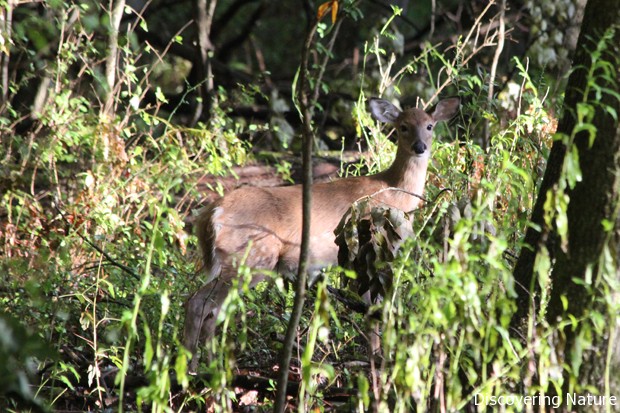
-
And so it begins
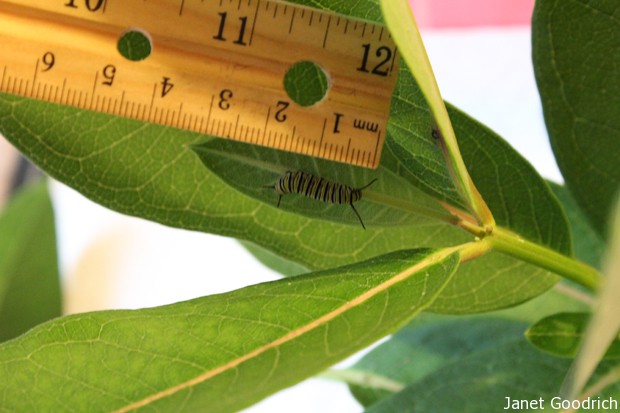
Last year, we got seriously into monarch caterpillar observation. I wrote about it here.
This year, I’ve seen a few caterpillars, but we’ve held off on bringing any home, thinking we’d wait till they get bigger. It makes for easier maintenance. But since we’re seeing far fewer than last year at this time, and since there’s no guarantee the little ones will be there if we wait and go back, I yielded last night to Younger Daughter’s pleas and brought this little fellow home. It’s quite sluggish; I think it may be ready to shed this skin.
*Edited to add: I wrote about the conclusion of this story at my other blog, here and here.
-
Green herons
It’s been pretty quiet around here lately. I’ve reduced my screen time quite a bit this summer and experienced corresponding benefits. But I’ve continued to observe and enjoy some favorite haunts during this all-too-brief (here in the Northeast) warm season.
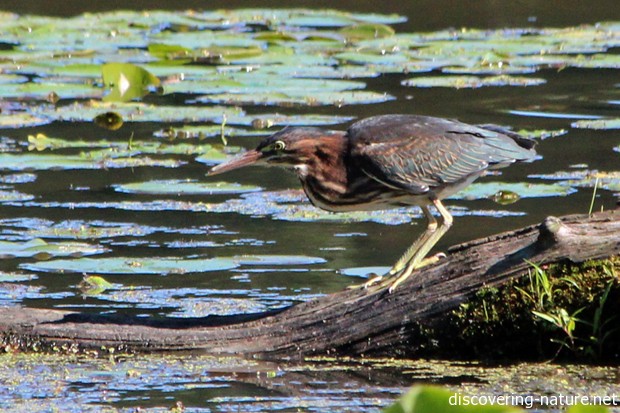
One bird I started really noticing last summer is the green heron, and I’ve had some good opportunities to photograph some this year. At one pond here locally, there must have been a successful nesting pair, because young herons have been marauding together, discussing everything and everyone. In the process they’ve posed nicely for some pictures.
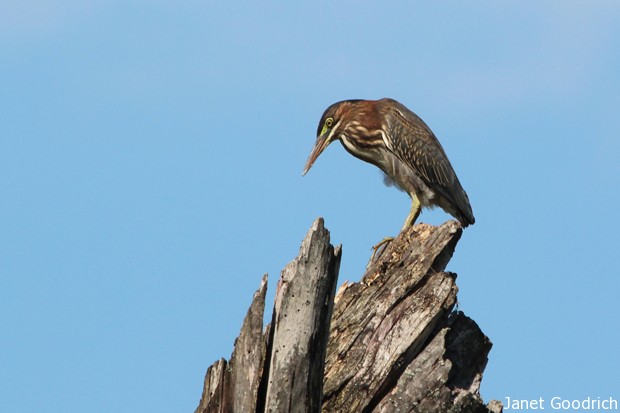
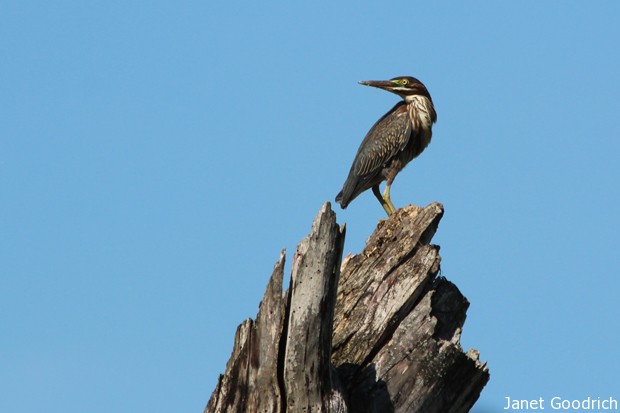
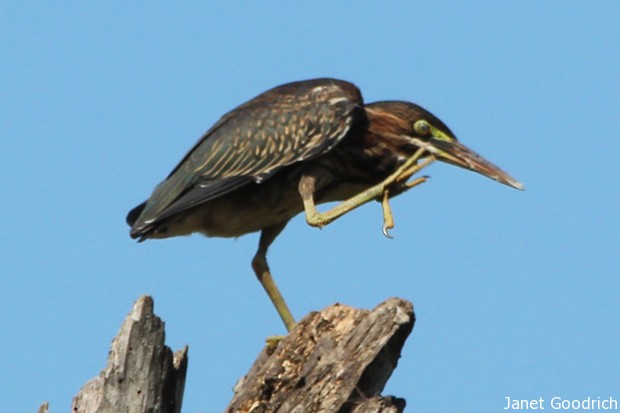
This bird took a break from looking lordly atop its snag, and scratched an itch. You can see its nictitating membrane in this pic.

Then it flew away. It looks awkward in flight, maybe because its tail is so short.

Another bird that posed for photos was this next green heron, which the girls and I watched through the windows at Sapsucker Woods. It seems almost too easy, this kind of nature study. In this setting, the bird’s small size next to the crowd of talkative ducks was striking. It was hunting with great concentration.
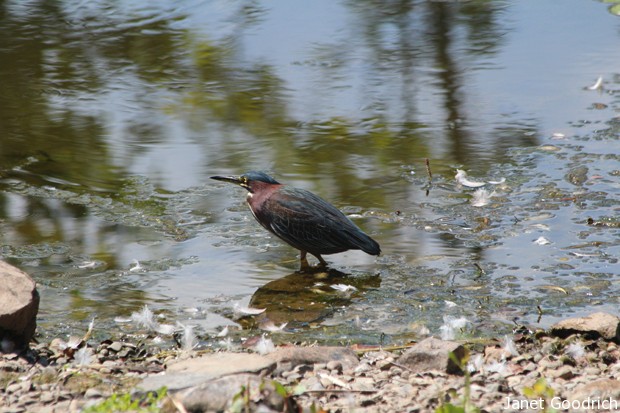


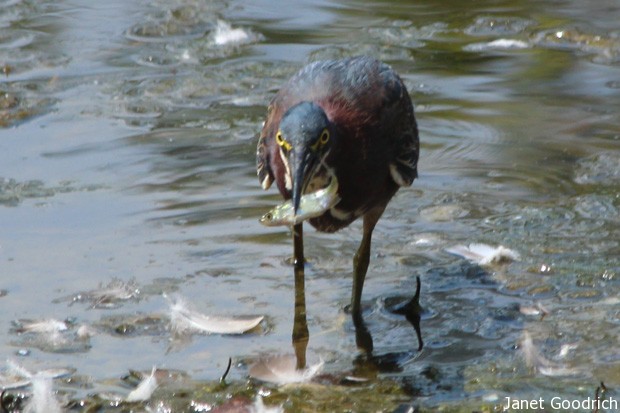
Like any good fisherman, it posed for a moment with its catch. Then it turned the minnow neatly and swallowed it, head first. It was interesting to me to see the disturbance in the water’s surface increasing as the heron waited and then snatched. I’m not sure if the minnows were reacting to the heron, or if the heron was merely watching the minnow activity as the group approached it under the water.
So much of “nature study” involves watching animals simply eating or taking care of young. They are just surviving, doing the same ordinary things we humans do. But they have the intrigue of being different species, highly skilled and adapted.
-
Sapsucker Woods Walk
I saw only one other person on the trails at Sapsucker Woods on Wednesday, and I saw more birds than I photographed. It was brutally hot, but I was in town and couldn’t resist a quick walk.
This fellow was fishing — and scratching an itch.
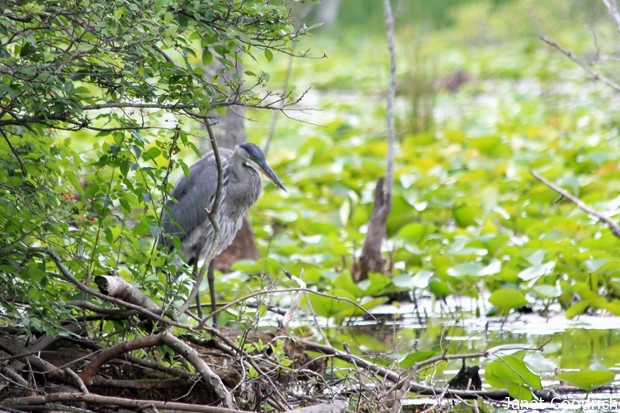
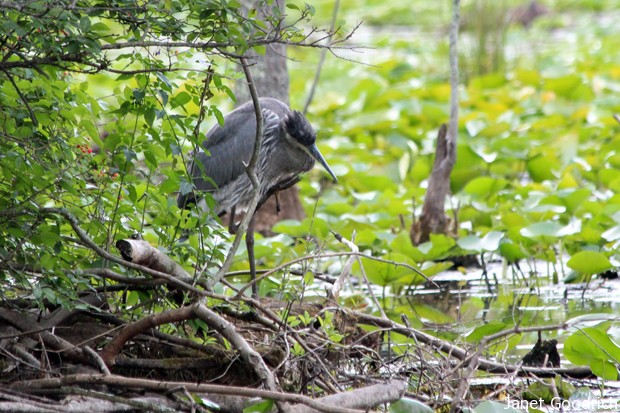
Immediately across the small bay was an unexpected sight — a deer cooling herself in the water, the first of two I saw.

There were bees busy in the wildflowers.
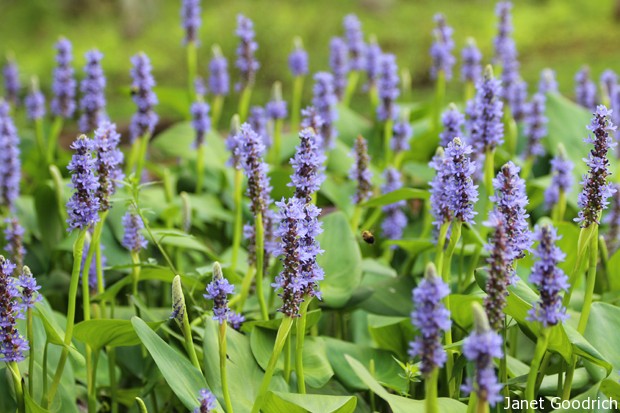
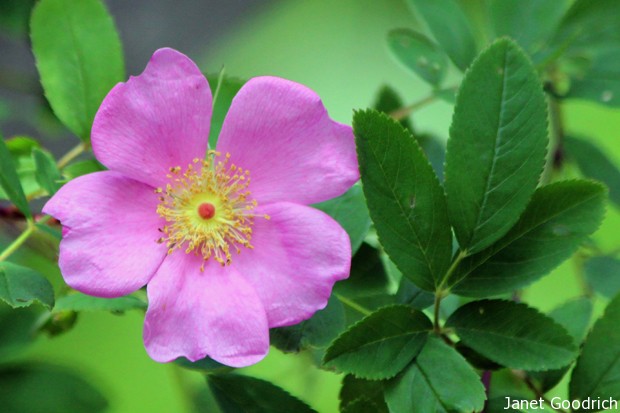
Quite a number of these pretty flowers poked through the rails of the first boardwalk. I believe it’s called pasture rose.
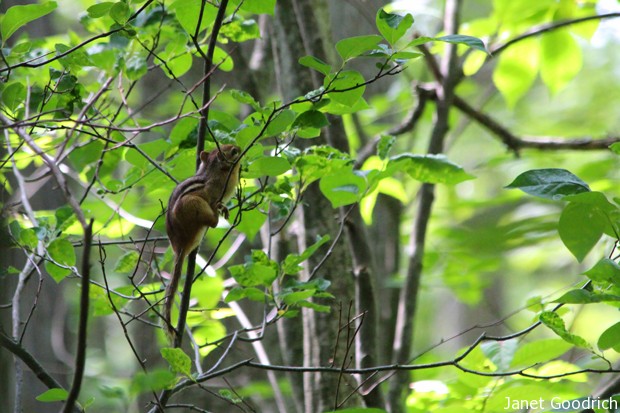
As usual, there were many chipmunks to be seen. This one was climbing rather than scurrying across the trail, squeaking.
I haven’t been out and about much this week due to a bout with what I believe was tularemia, a disease transmitted through a deer fly bite. It was an unpleasant experience involving a bull’s-eye like irritation around the bite, a high fever, and achiness. Thankfully antibiotics did the trick.
-
Cliff Swallows
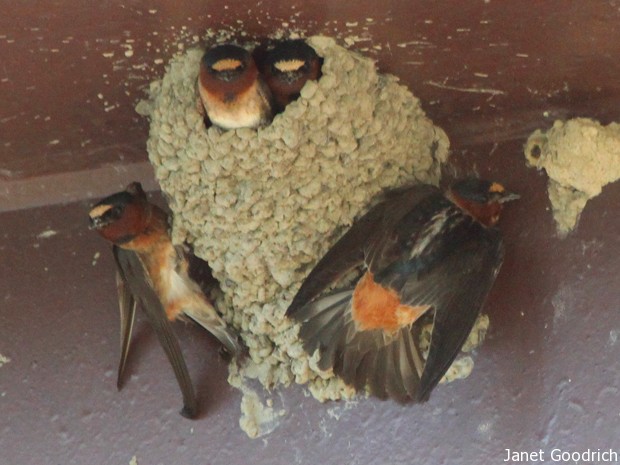
These birds are described as “gregarious.” We watched them for ten minutes or so this morning and they were busy catching insects and taking them back to their young in the mud nest.
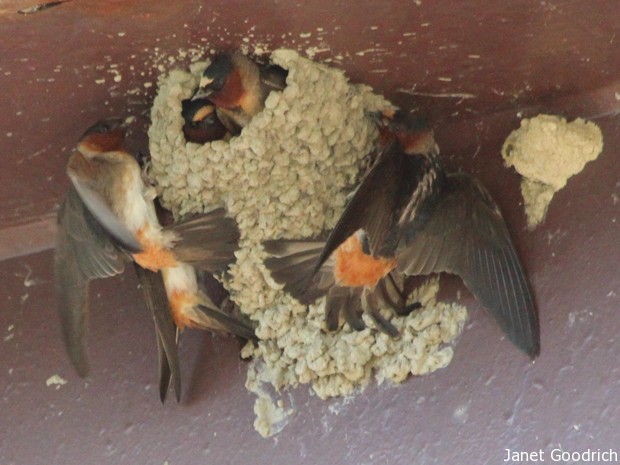
I love their white eyebrows and curious faces. All the while they worked, they made a cheerful sounding chittering noise.
There are three nests along the bridge, the middle one appearing to be a swallow duplex.
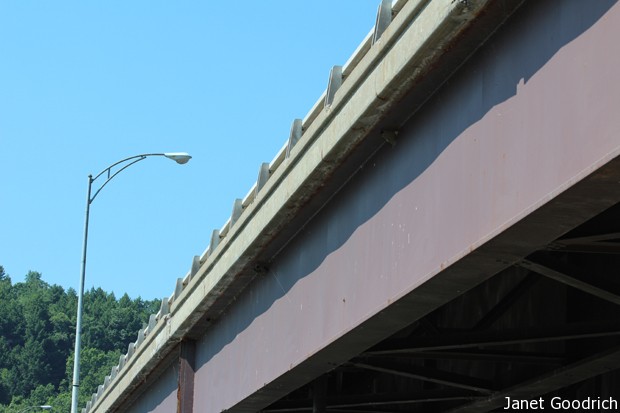
I’m enjoying learning about these new-to-me birds.
-
Summer sightings
Today on the way out of a park, Younger Daughter and I stopped to scrape a dead oriole off the road and place it in a shady bed of clover off to the side. It was our small acknowledgment of beauty utterly wasted.
But as Ma in the Little House books is fond of saying, there’s no loss without some small gain. Glancing up as we walked back to the car, we spotted some cliff swallow nests on the bridge over the river.
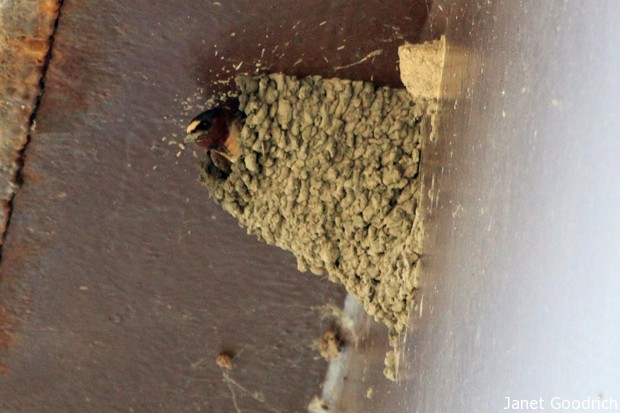
There were several of them along the bridge’s eaves. We’ll have fun watching their story unfold.
Younger Daughter loves streams, and while she played in the water I puttered on the edge with my camera.
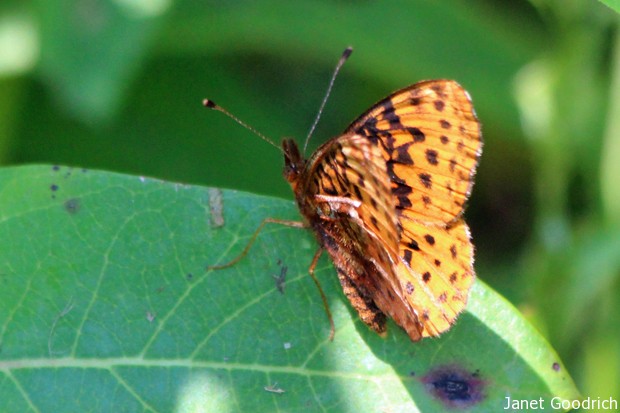
A meadow fritillary, I think — about 2 inches across with wings open. 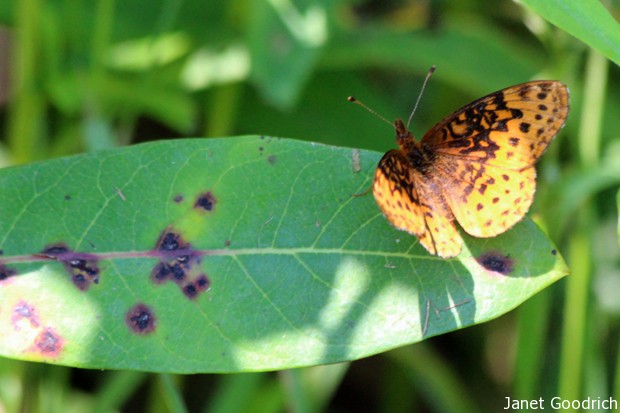
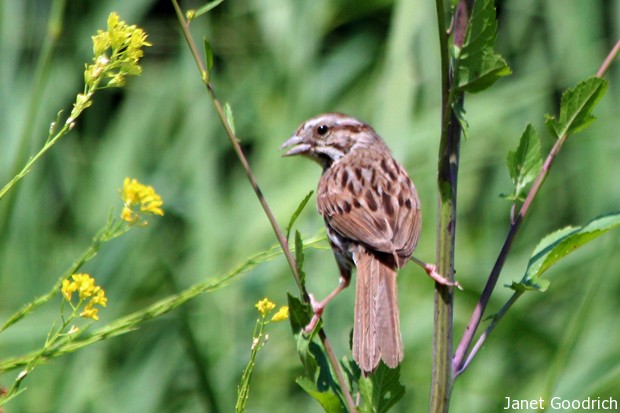
One of several watchful song sparrows. 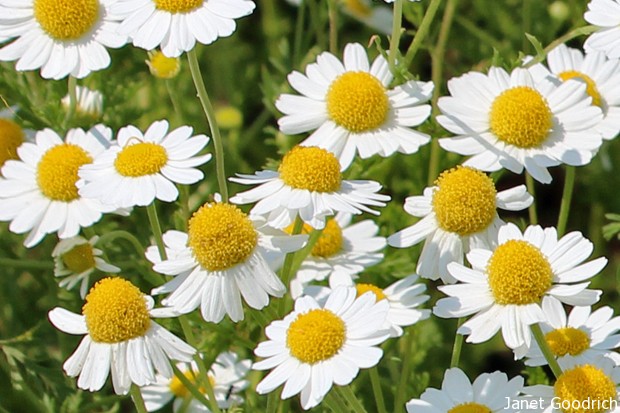
I believe this is mayweed, based on the leaves thin “yarrow-like” leaves. All in all a very nice time together. Younger Daughter caught minnows and threw rocks for the dog while I wandered and sweated. I’m not at my best when it’s in the nineties out, but I felt rewarded by these beauties.