-
Returning to the Outer Banks
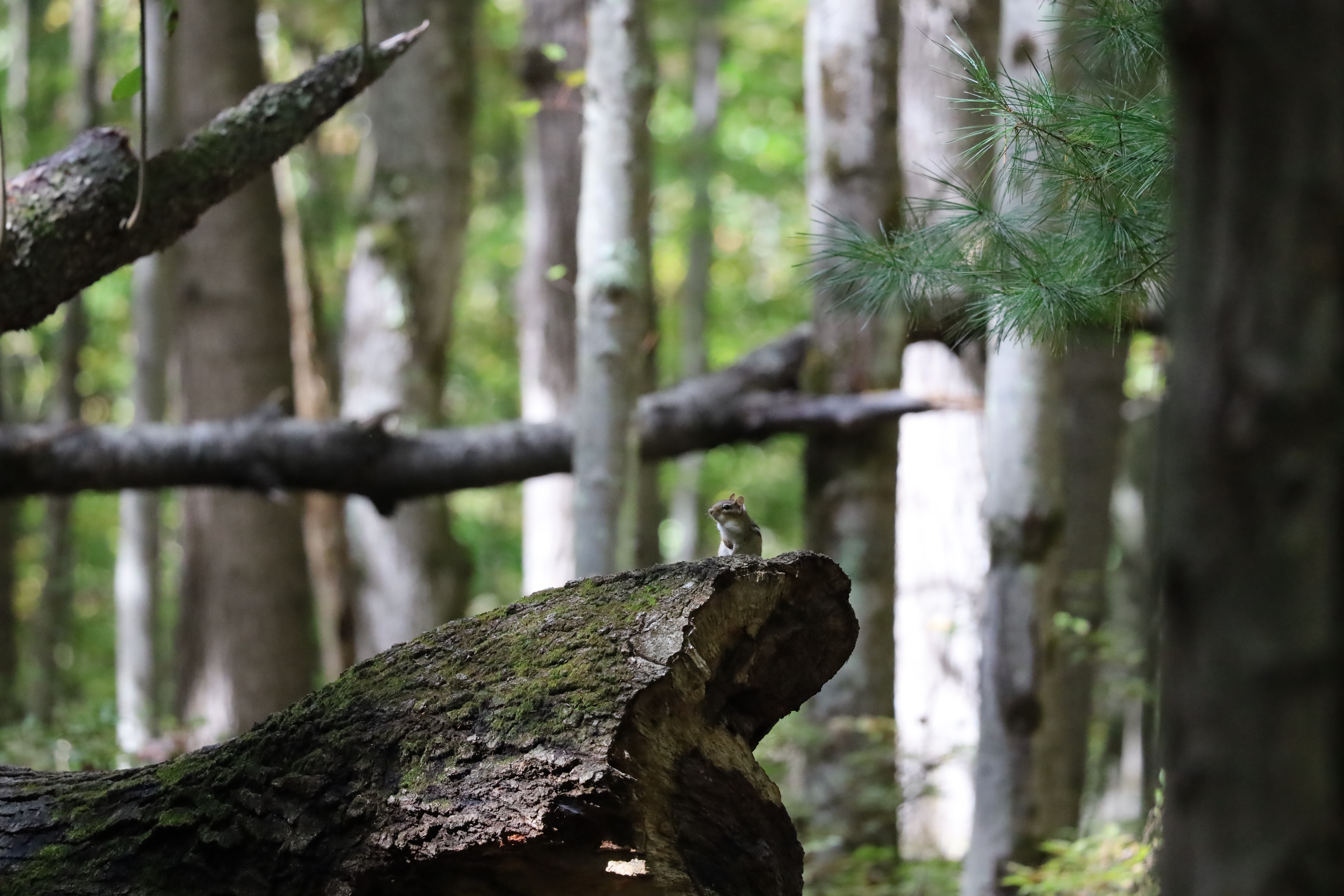
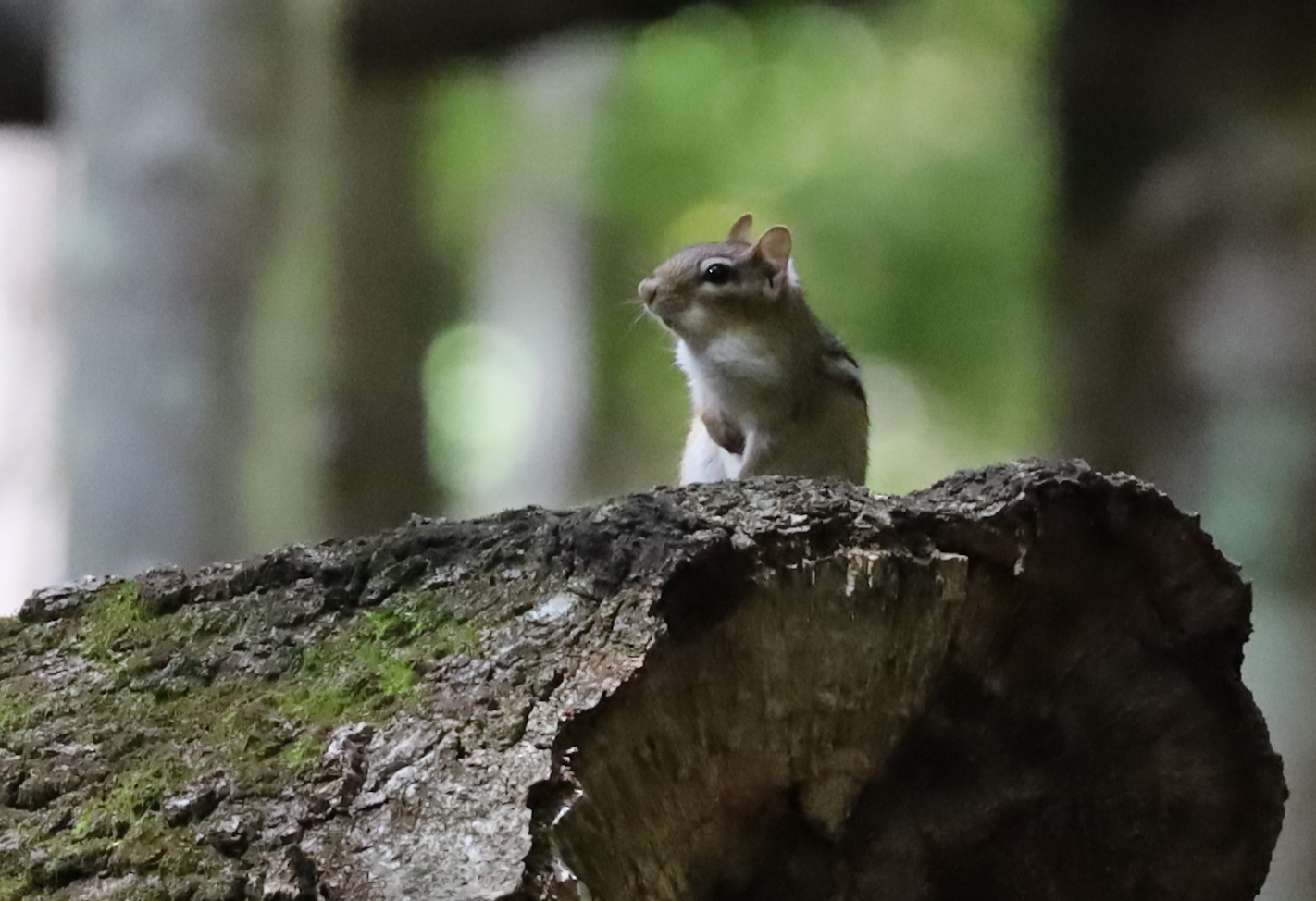
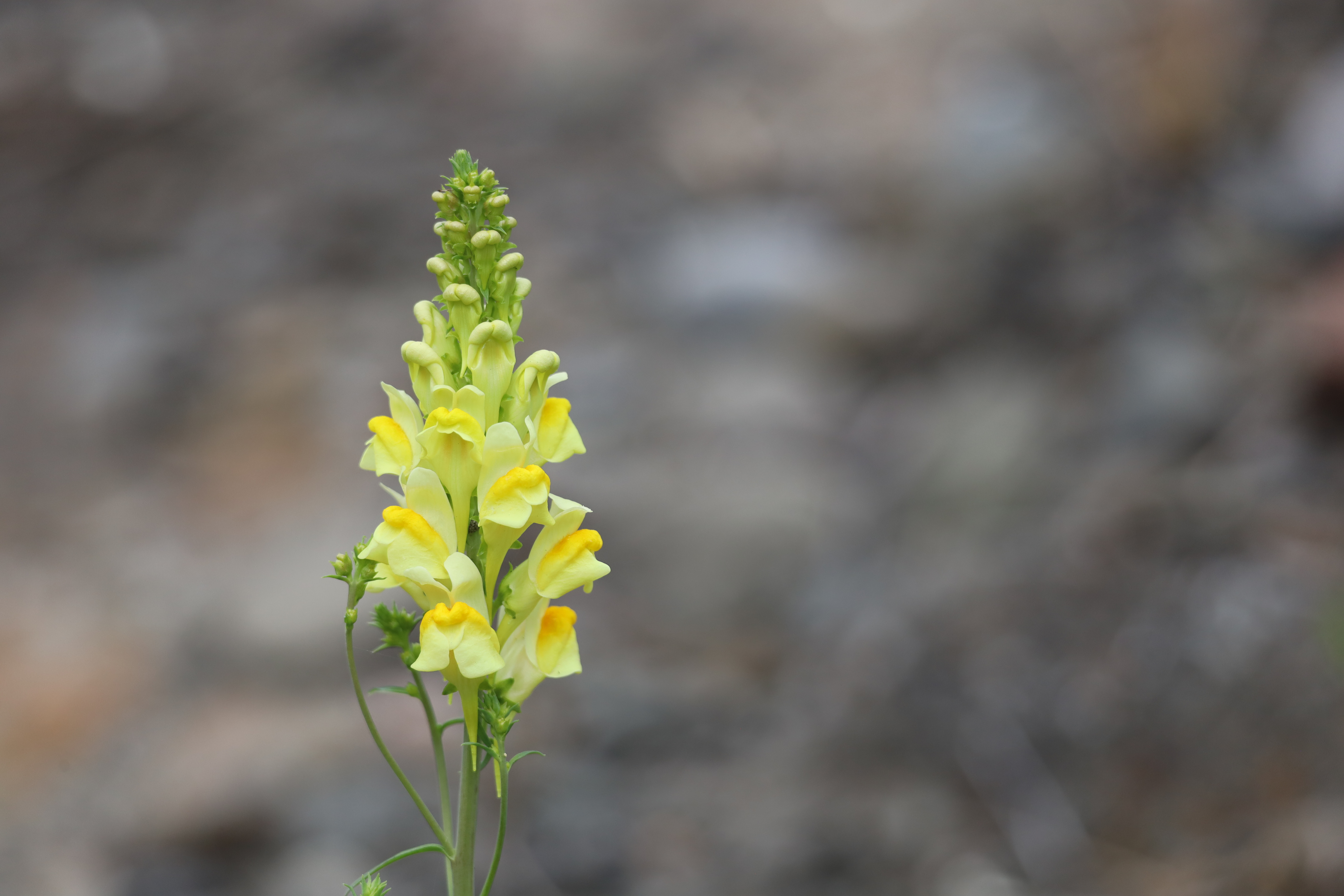
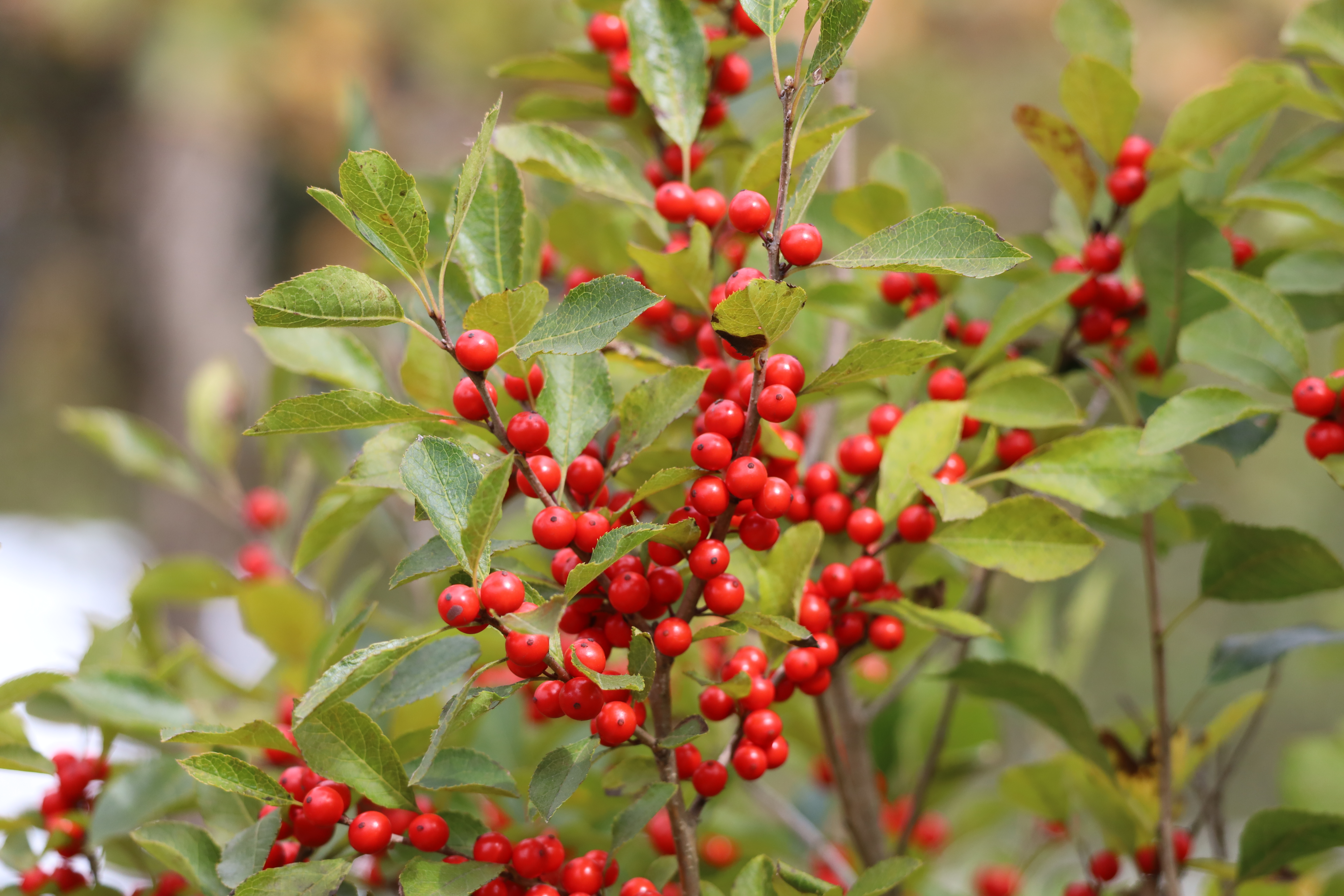
The ocean with its awesome scale and mystery, the Elizabethan Gardens in Manteo with their cultivated beauty, and the eerie tropics of Kitty Hawk Woods (visited for the first time) all contributed to our enjoyment of the variety the Outer Banks environment has to offer.


-
Visiting the Brick Pond: Take 2

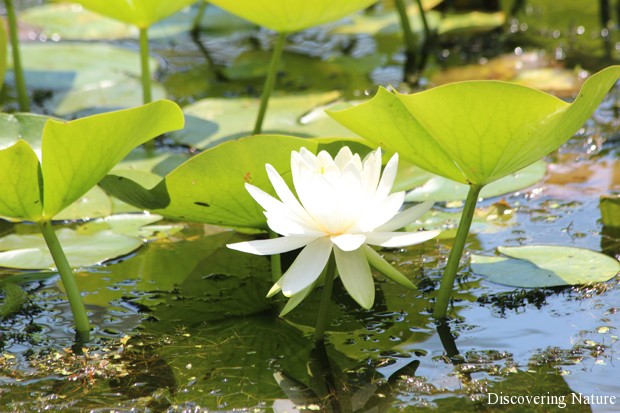
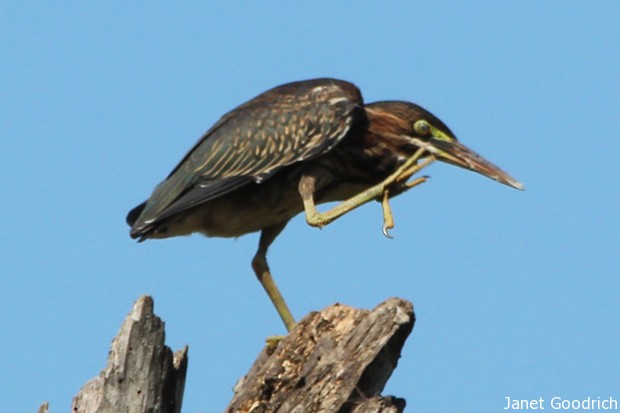
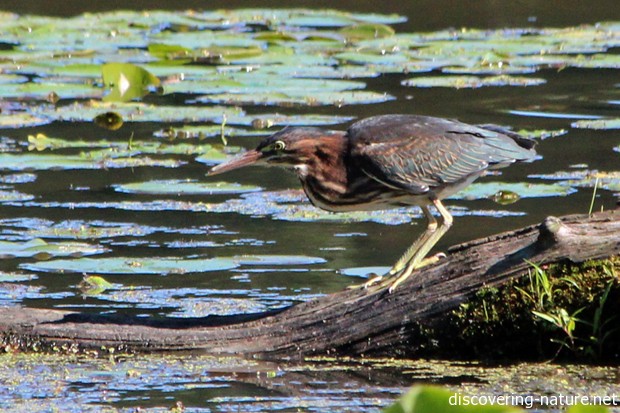
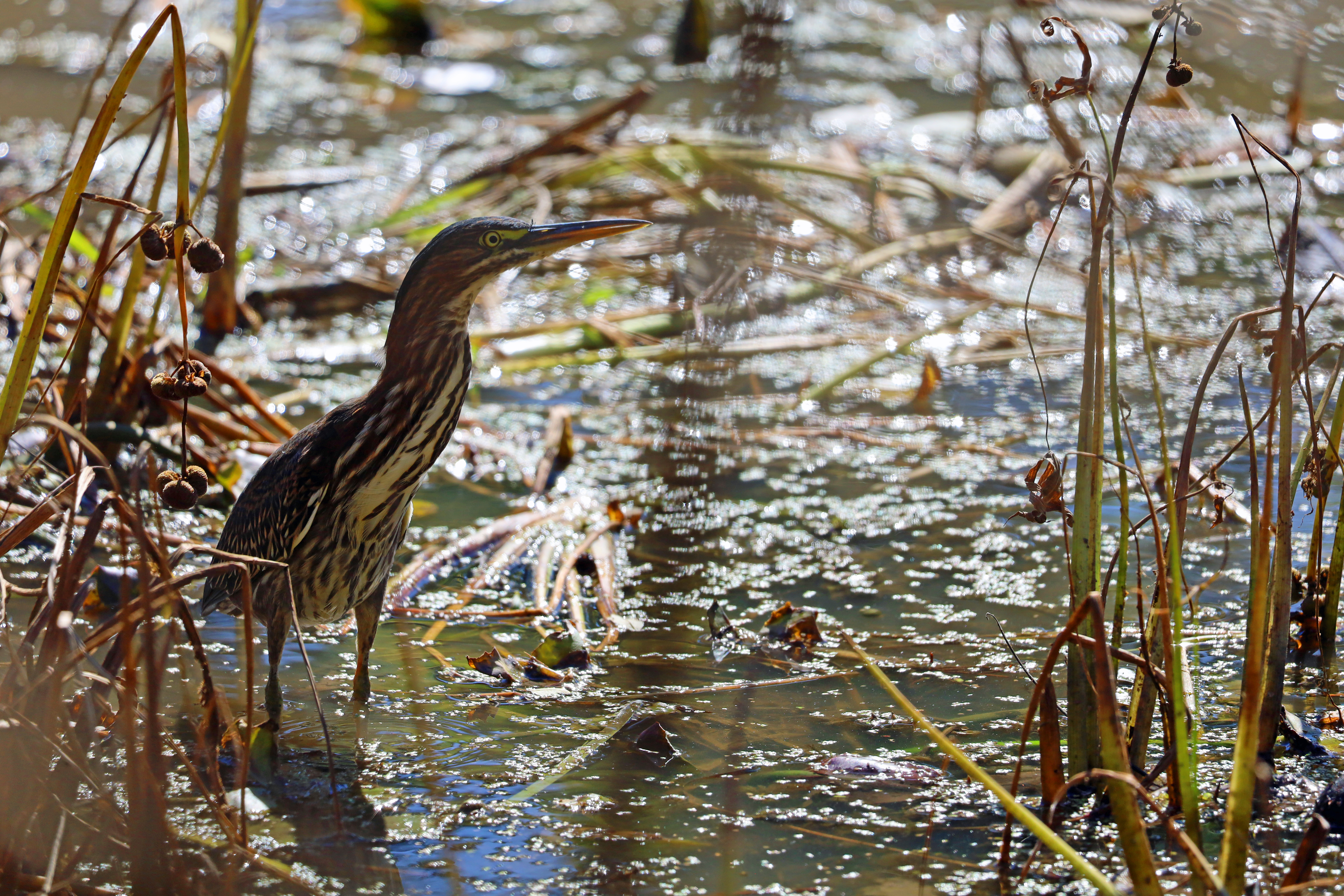
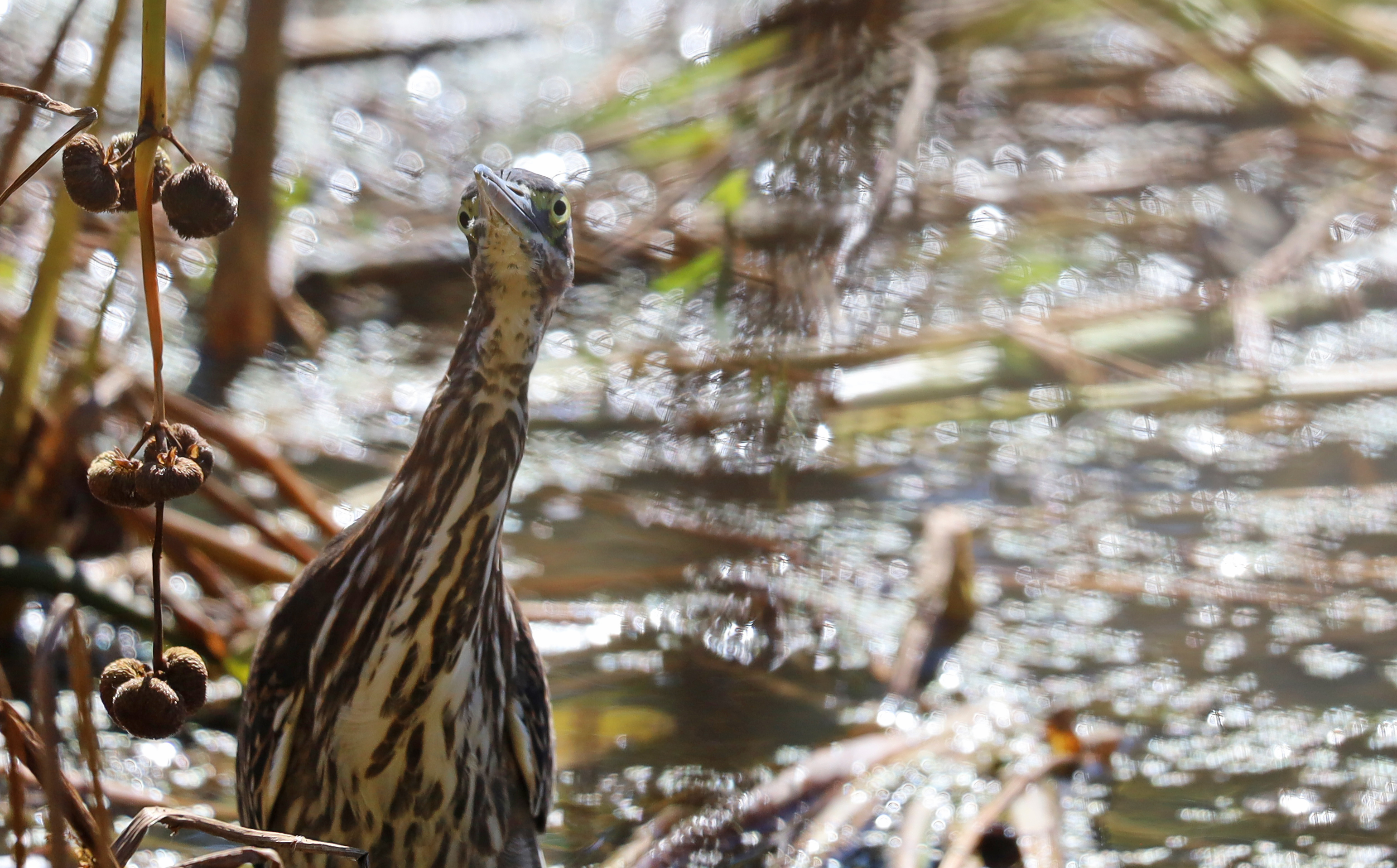
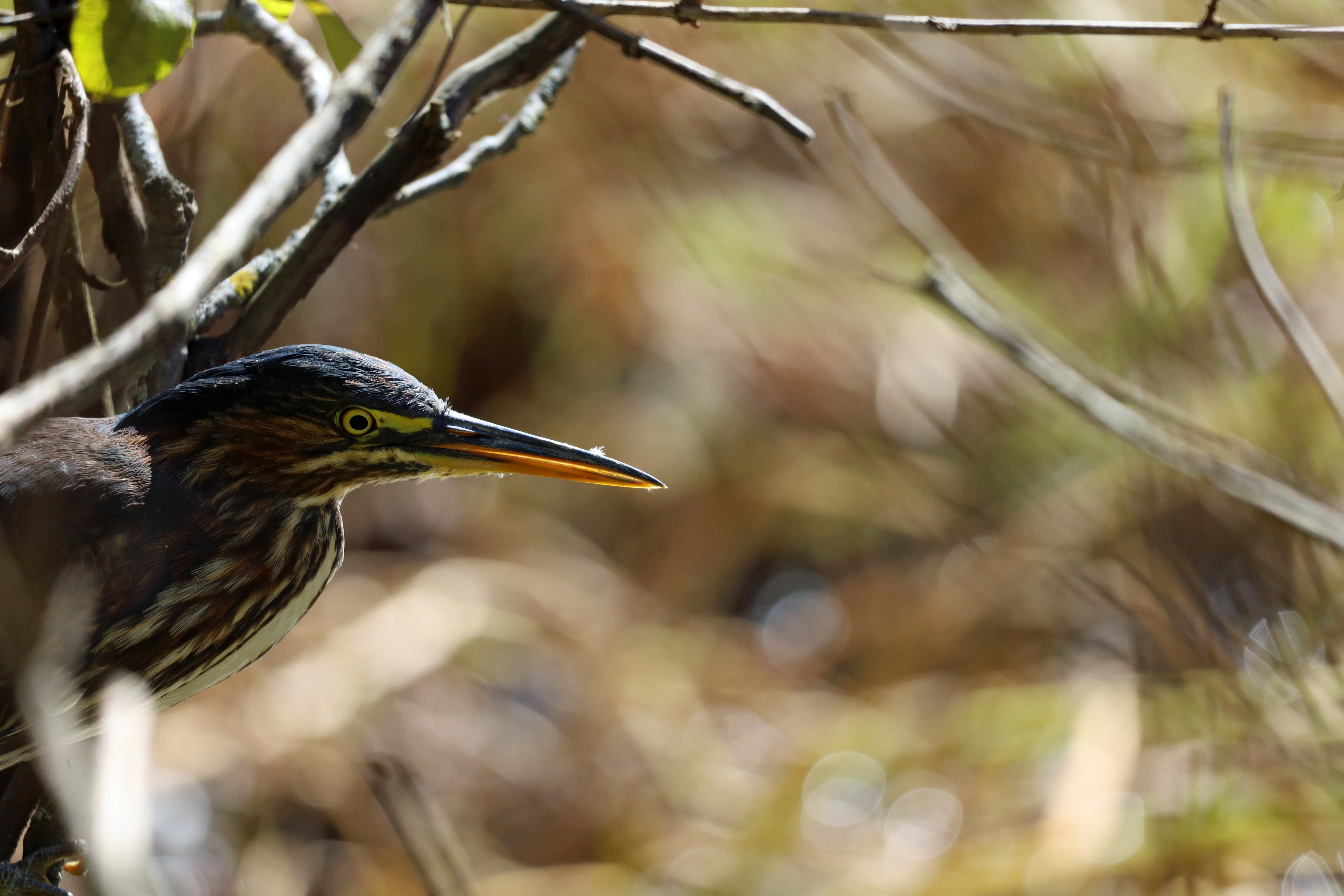
A couple of green herons posed for my daughters and I on our second Brick Pond visit. They’re so beautifully colored, yet also inherently comical with their brash call, short tail, and eager dash from one end of a log to the other.
I brought my Panasonic Lumix this time, a bridge camera instead of the heavier mirrorless Canon RP, to refresh my memory of its zoom. The resolution isn’t as sharp as I’d like, and I was reminded that it takes longer for the zoom lens to extend automatically than it does to zoom in with the Canon’s telephoto. But the zoom does take you in closer, so the object you want to photograph fills the viewfinder.
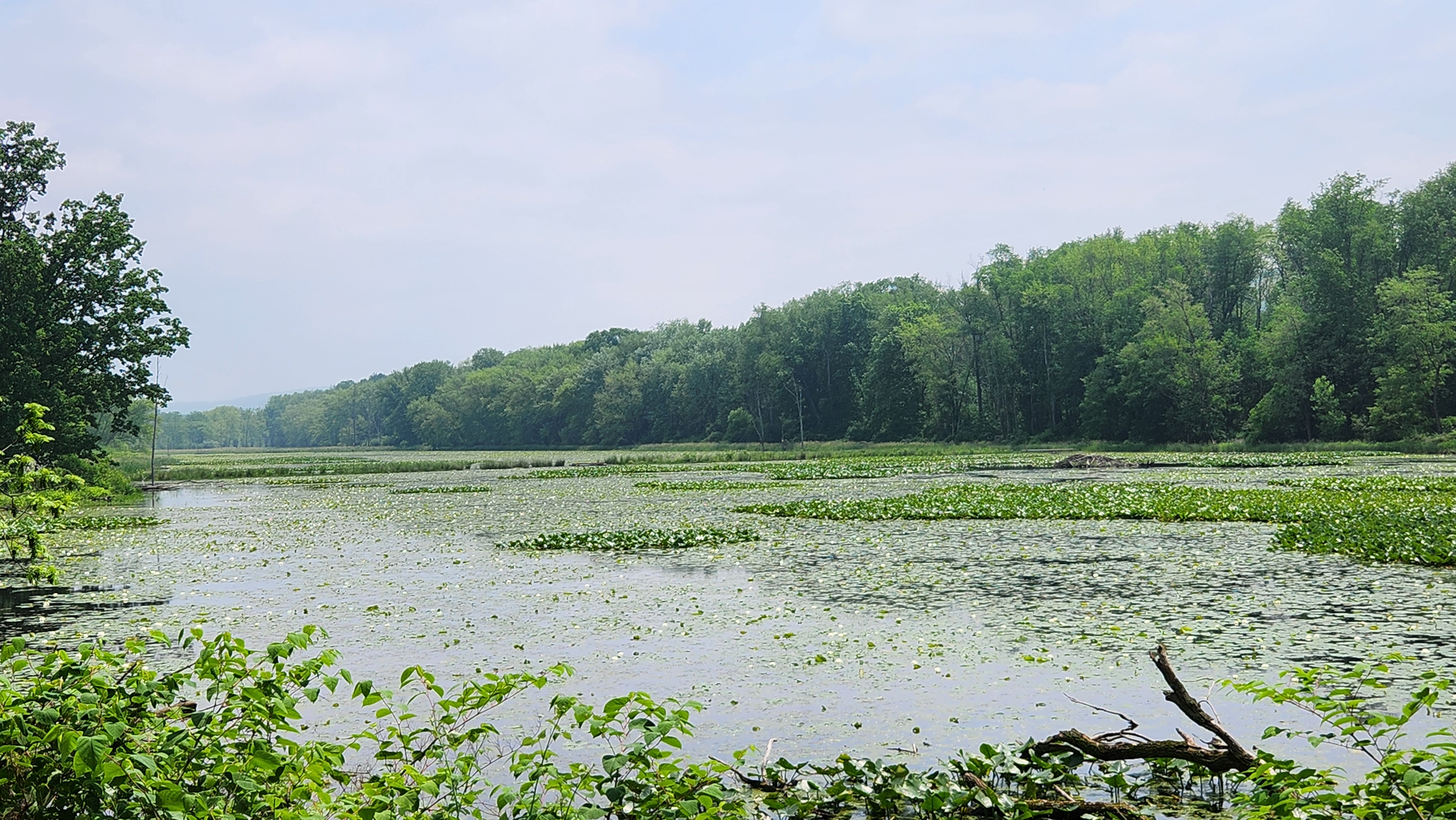
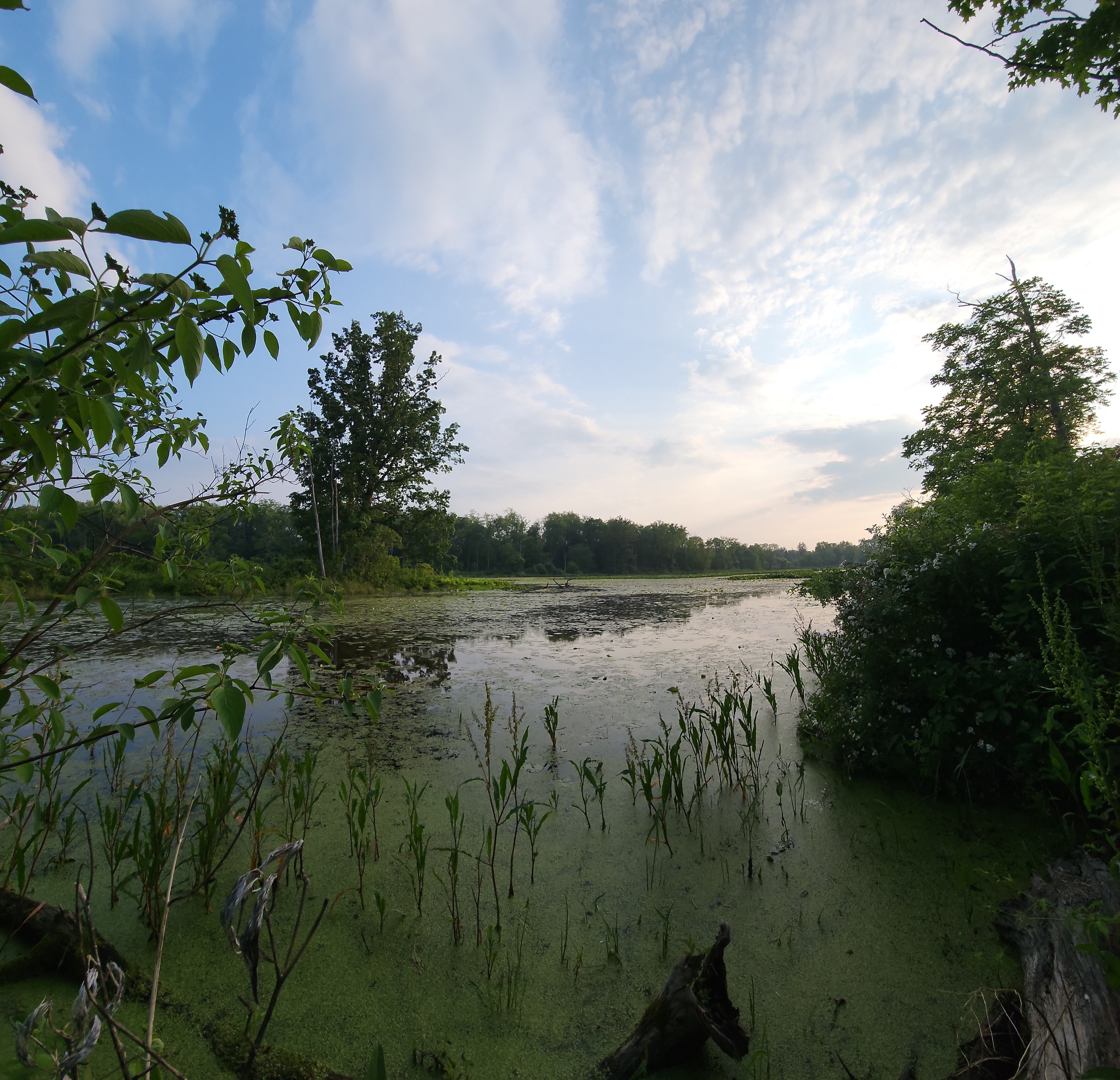
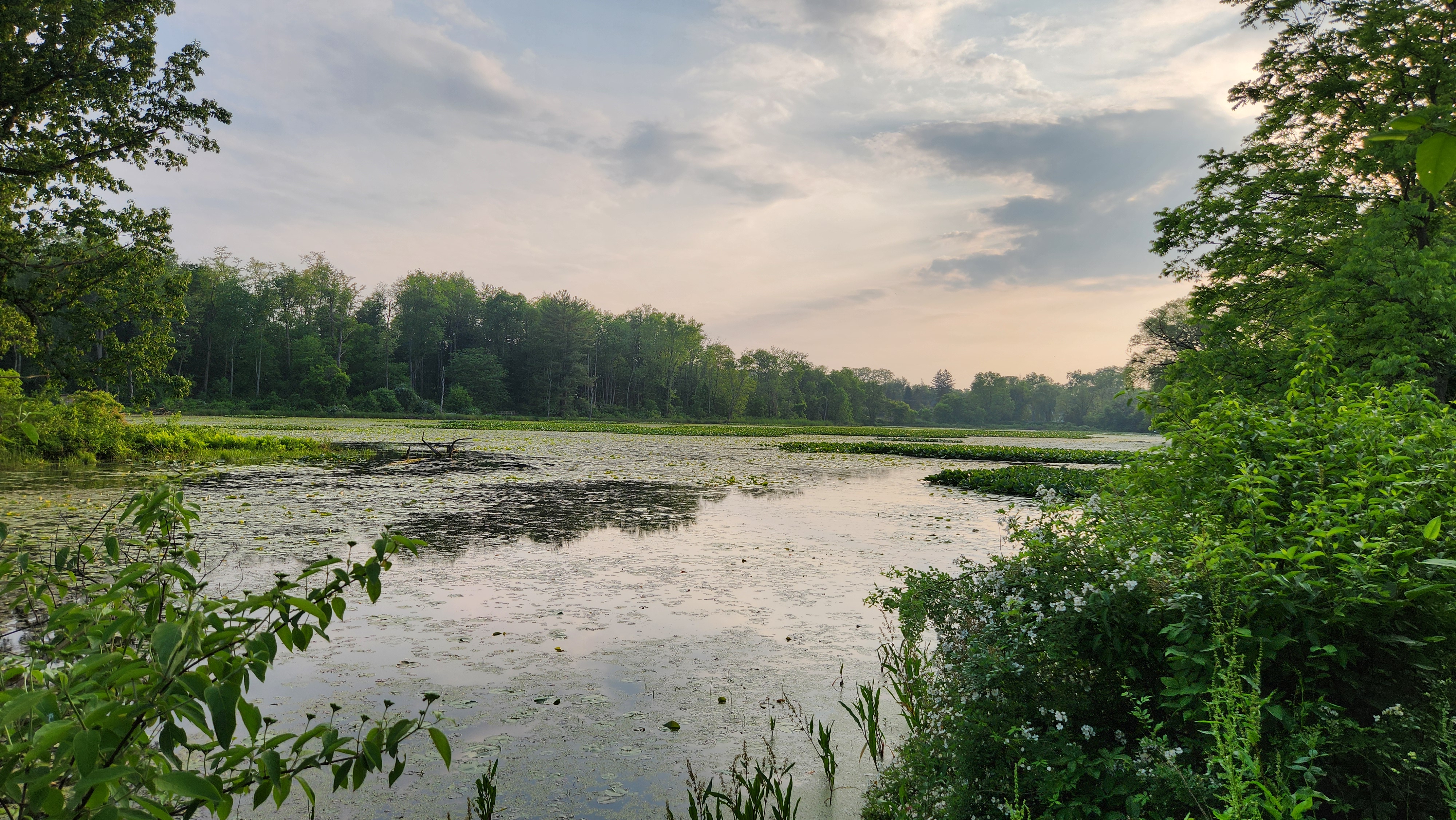
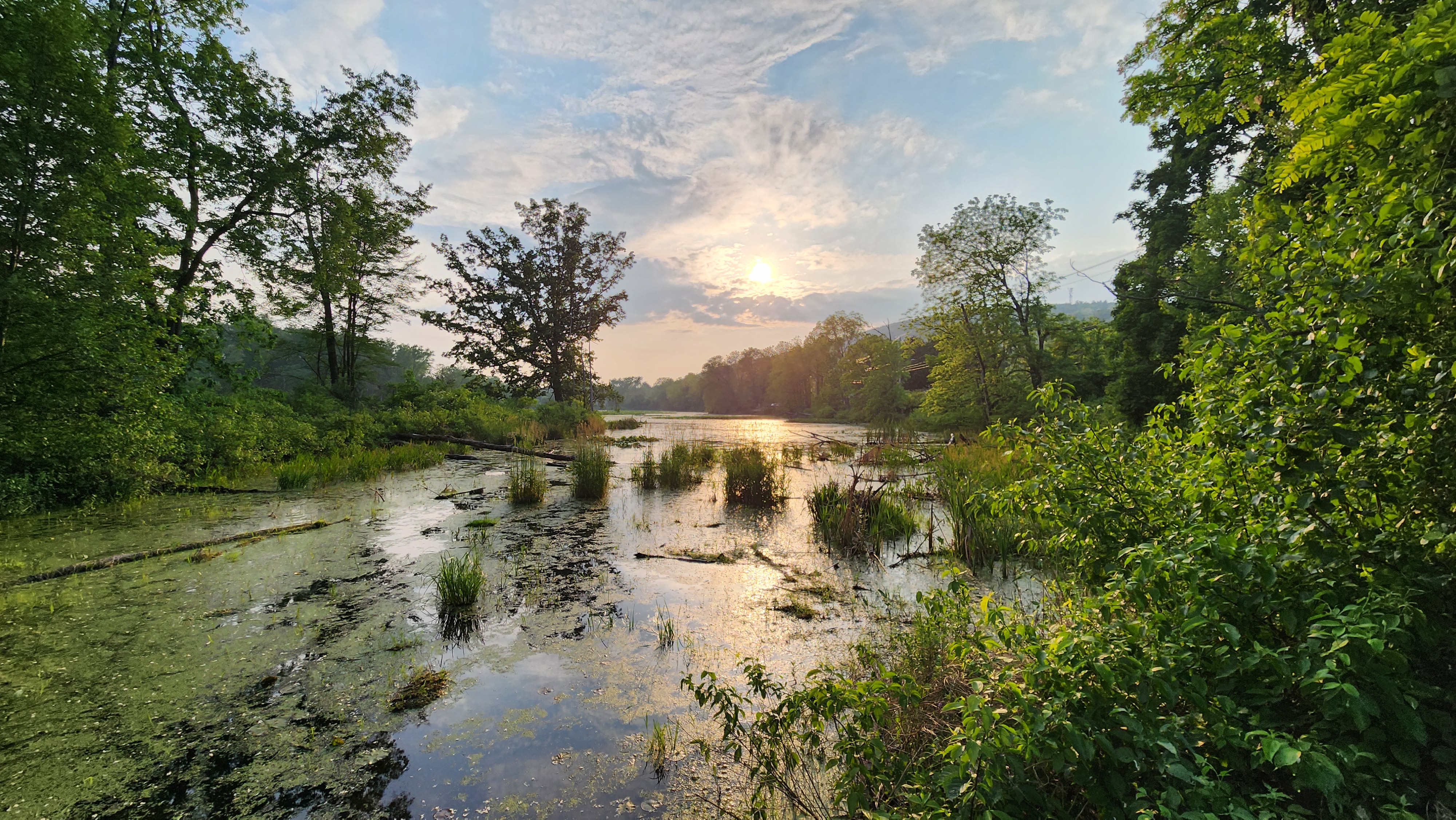
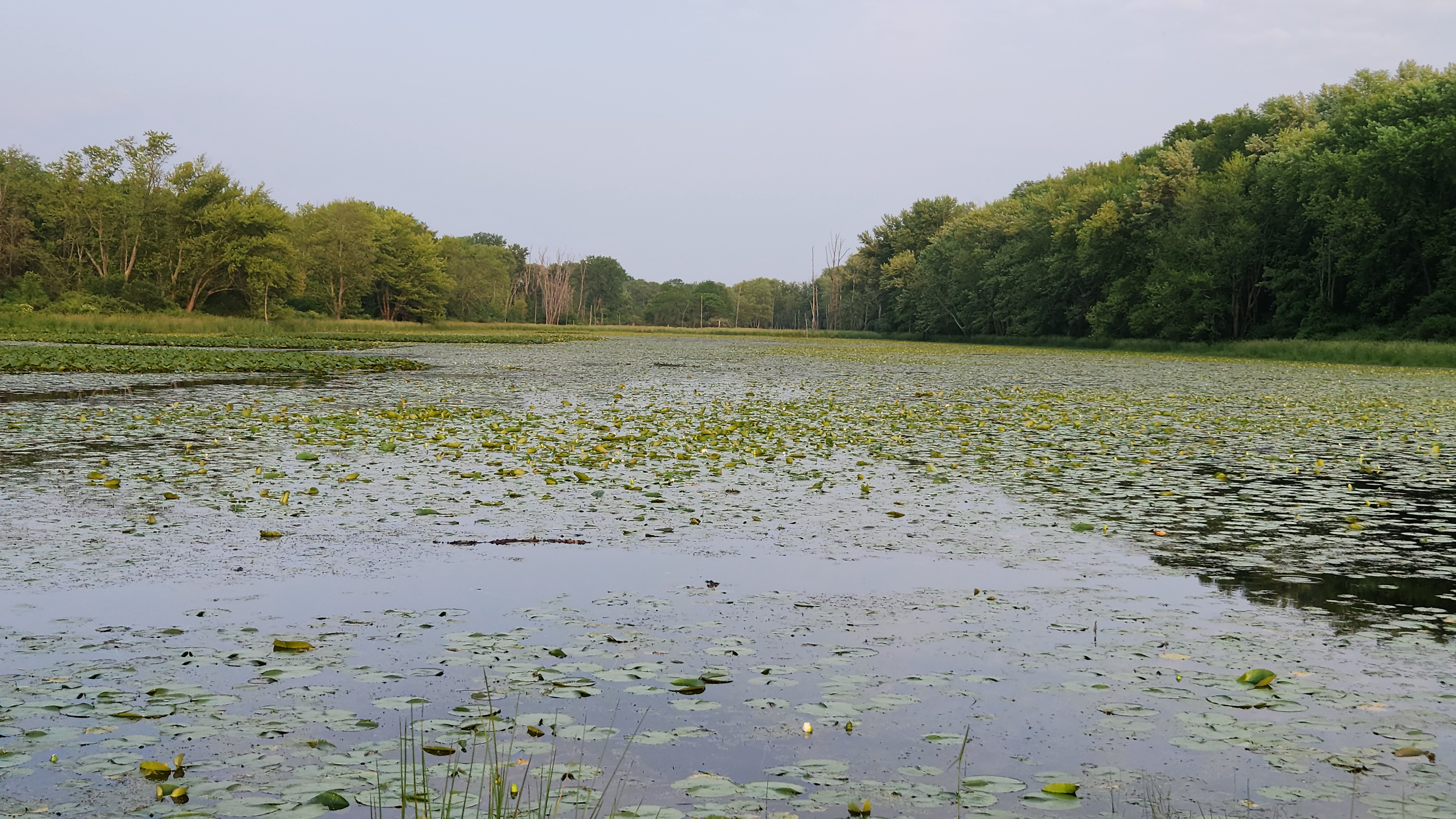
Camera comparisons aside, we reached the pond at midday on a mostly sunny day, though it was dimmed somewhat by the Canada wildfire smoke lingering in our area. Along with the herons, we saw some box turtles sunning themselves, as well as two giant snappers doing the same atop the beaver lodge across the pond. The other night we saw some beavers, but that was at dusk. No sign of them today.
Another giant snapper was impersonating a lily pad near the path back, and when we reached the parking area some men building a new observation deck showed us some snapper eggs they’d come upon earlier in the day. That was certainly a bonus!
All in all we left reminded of lives going on all around us, lives that don’t depend on us and make up a complex web of relationships in the pond. They’re about their business whether we take the time to look or not, but we were glad to get a glimpse of it.


-
Visiting the Brick Pond: Take 1
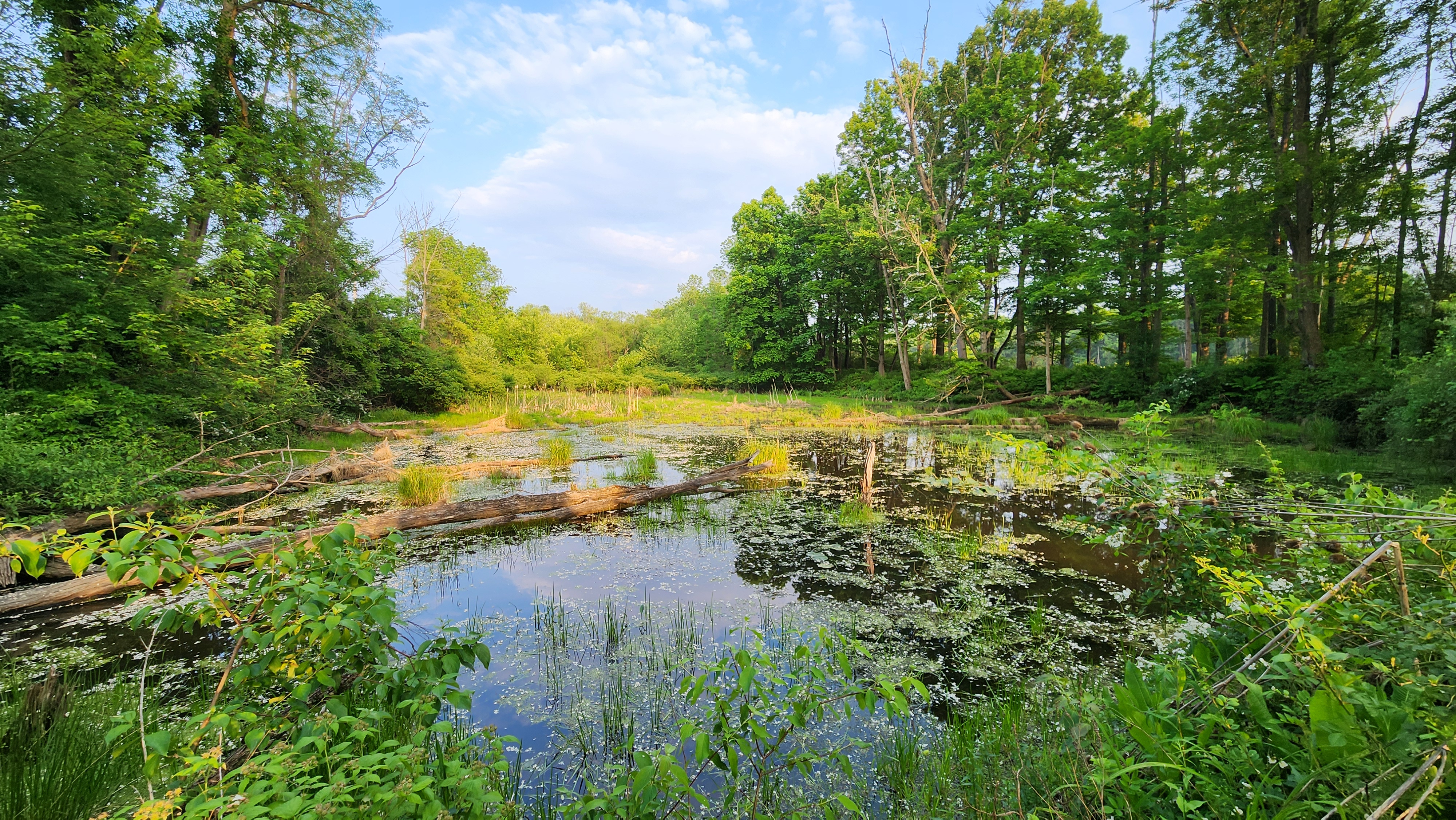
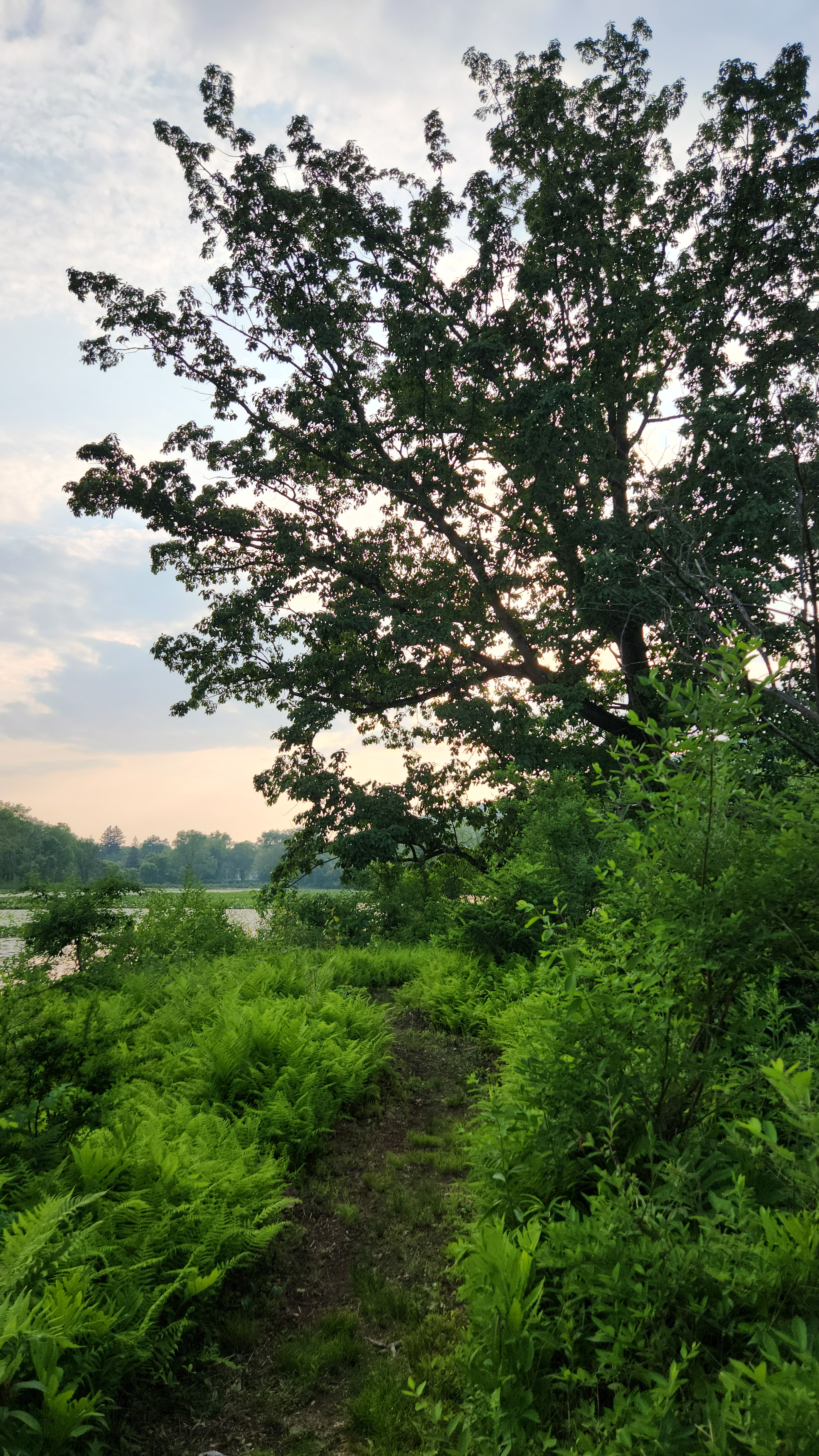
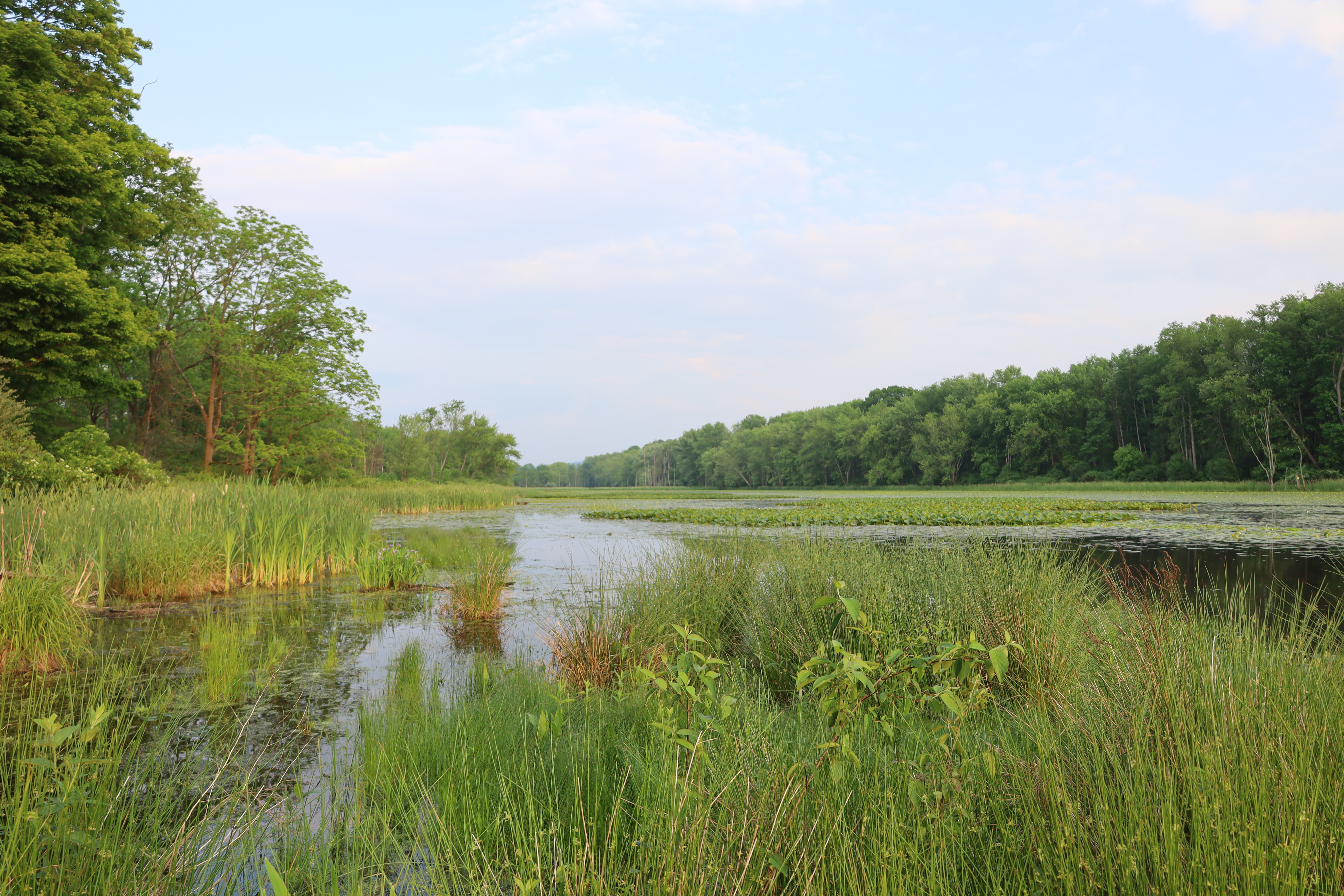
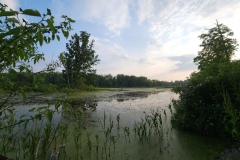
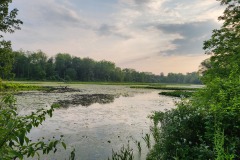
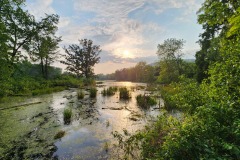
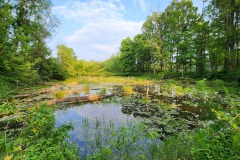
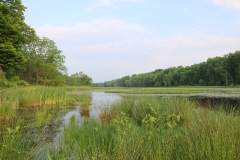
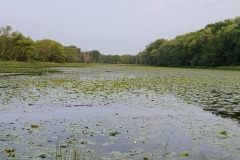
It’s been the rainiest spring I can remember, and it felt good to get out yesterday and today to visit a favorite local wetland. I wasn’t prepared for photos, so most of these were taken via my phone.
My daughter and I took our walk in the early afternoon, and we enjoyed so many sights and reminders of natural wonders that we returned in the evening with my husband and other daughter.
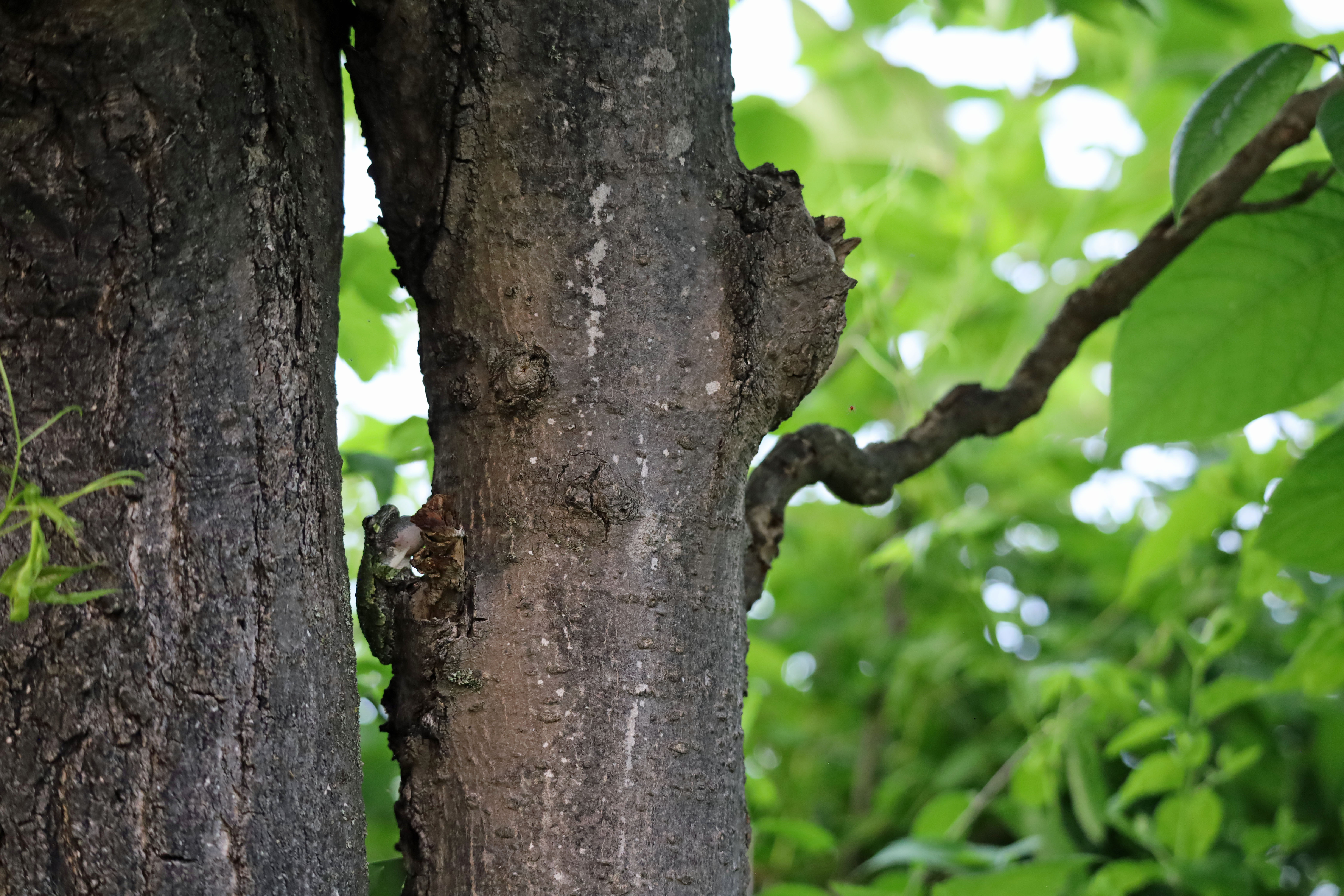
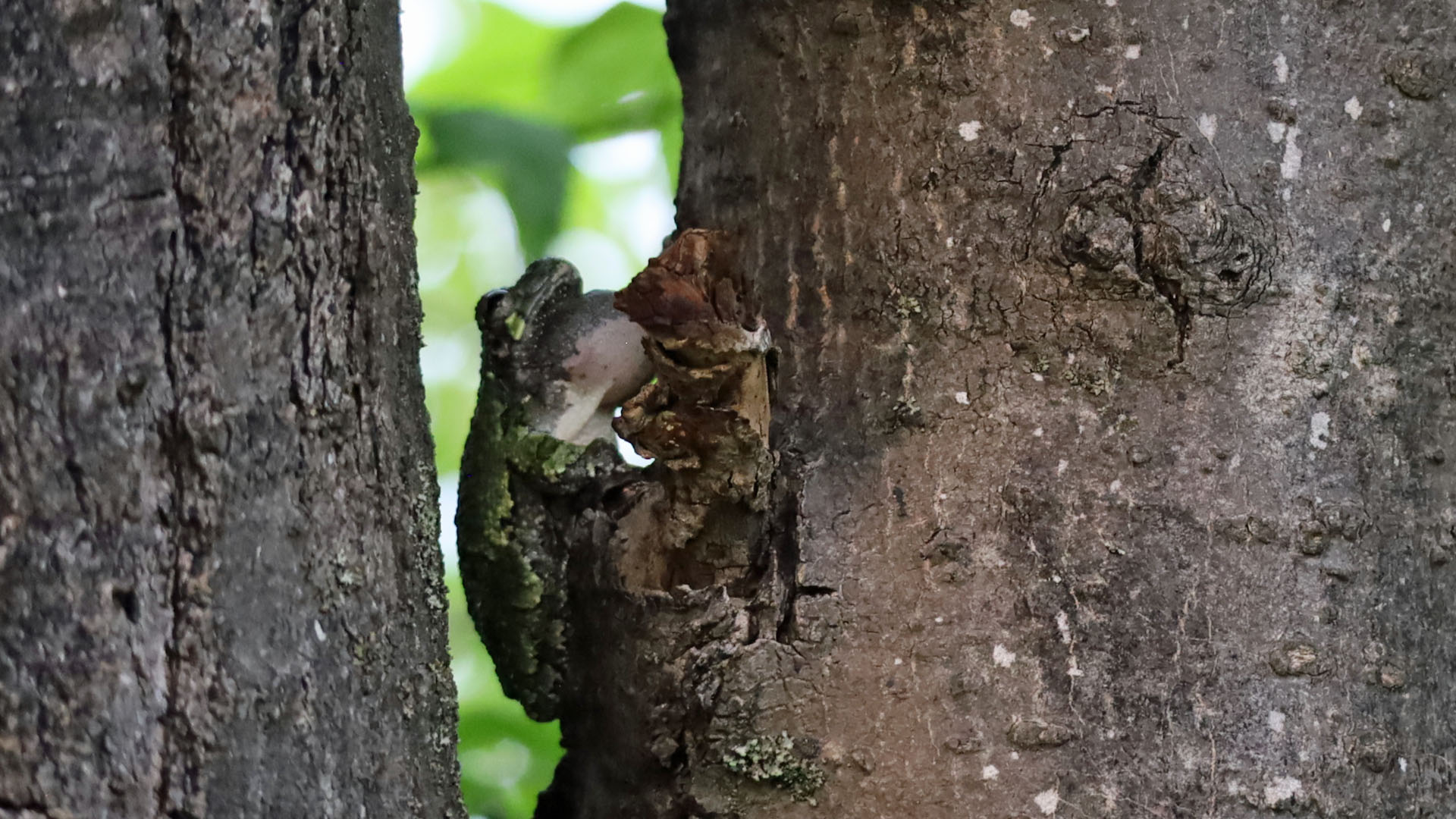
It may sound strange, but the “jackpot” sighting for me was a tree frog! I’ve heard them many times but never seen one. As we were heading back in the evening, the frogs were holding forth, and I just managed to sneak up on one and actually get a glimpse of one of these amazing croakers.
This album captures some of the sights. My daughters and I actually found ourselves back there today, but those pics will be for another post.
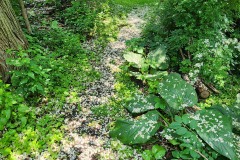
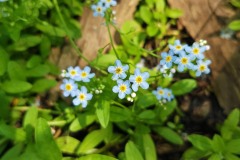
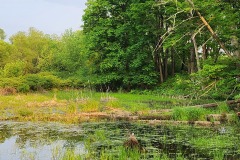
-
Birds in the News
From time to time, I’ve bookmarked several articles related to birds and birdwatching. Revisiting them today, I notice a couple of trends.
Technology can help raise awareness.
Granted, this isn’t a new discovery for anyone who uses binoculars, a camera, or digital photo editing and sharing tools — or for that matter, anyone who’s used something like All About Birds to help with identification. But the AP posted this article recently about a newer development, the smart bird feeder, which was apparently a popular gift this Christmas. The story illustrates how when people install a feeder with a tiny camera that captures up-close views of their backyard visitors, they quickly become fans and develop a greater inquisitiveness and concern for them.
We love our feeders and witness many dramas and behaviors that reinforce the desire to support them in their day-to-day needs. I can imagine how captivating these smart feeders must be – the videos they can capture are amazing!
If I could make one small suggestion, though, for the designers of such things, how about adding tiny cat patrol cams you can install on feeders as well – perhaps ones that make a loud barking or growling sound when a cat comes within a 20-foot radius of the feeder?
I don’t dislike cats, but I choose not to own one, and I choose to feed the birds. Why should it be okay for other people’s cats to come into my property? They don’t need to kill to eat. They hunt, torture and kill things, then go home to a balanced meal of Fancy Feast. I don’t think they should be released to prowl freely, but since I don’t see the practice ending. I’d love to have an effective repellent that would keep them away from my own small territory.
Birds seem to be having navigational problems.
The migration that some species undertake each year is one of their most mysterious and amazing traits. How do they manage it? How do they know when to do it? How do such tiny, fragile creatures survive it?
From time to time, though, an outlier seems to get lost. This article describes a blue rock thrush sighted for the first time in the U.S. back in the spring. And this one tells of a Stellar’s sea eagle that has taken a wrong turn — two years in a row — and ended up in Canada instead of Japan. It’s a little sad that “Stella,” as she’s been named, builds a nest despite there being no males in her chosen habitat.
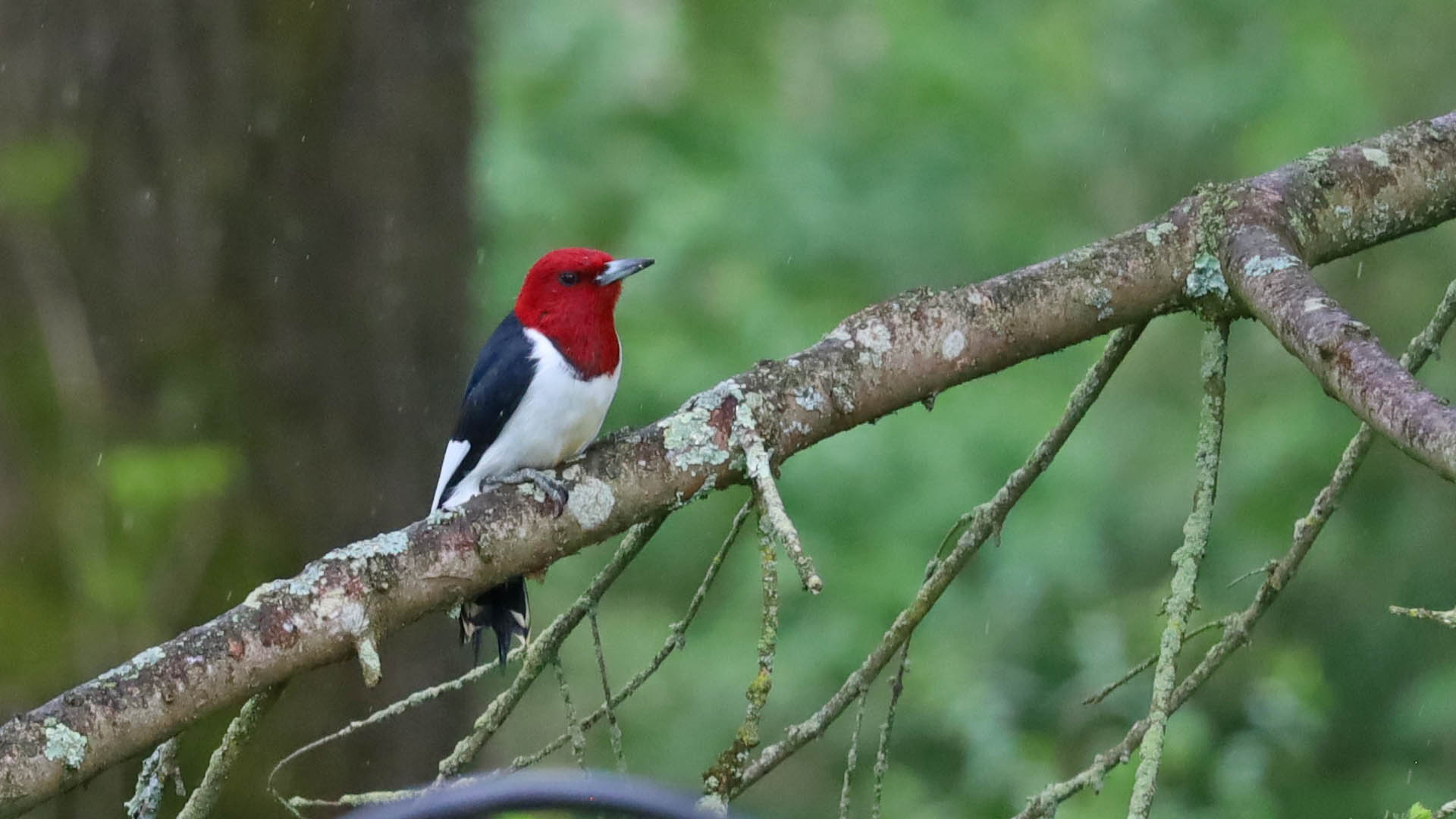
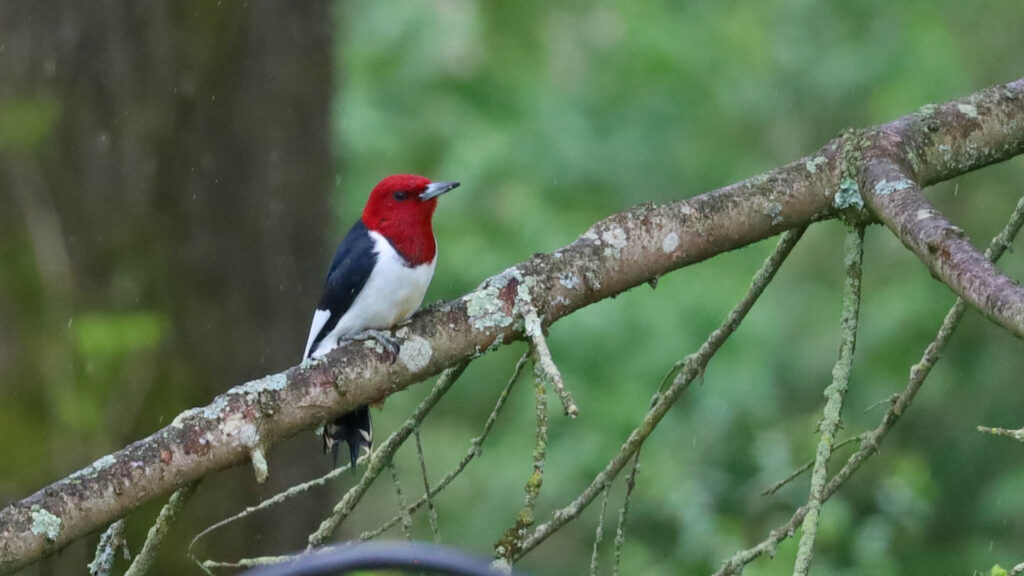
Is this a new thing? Or is it just that more people are noticing, and the news travels more efficiently? I remember once we had a yellow-headed blackbird in our area — far, far off course. And the red-headed woodpecker that was in our neighborhood briefly earlier this year is not thriving as a species, but its habitat is usually south of us. Maybe there have always been outliers, but it makes one wonder if there might be something going on. We read about the disorientation whales experience when offshore wind installations introduce new noises and disrupt shipping routes, and some think it’s related to the spike in dead whales over the last few years. In the bird world, windmills and tall, many-windowed buildings have greatly increased deaths. I can think of factors — noise, air pollution and smoke, etc. — that might influence bird migration, though I haven’t seen any info so far.
Sometimes the innovations intended to help nature carry unintended costs to nature, and we don’t know the consequences right away. But it bothers me when consequences are known and suppressed because they raise questions about developments that are supposed to be positive. Nature is complex, and all unexpected consequences should be shared as openly as the good intentions that might trigger them.
All of which is to say, I like that major news sources write about birds, from the backyard songbird to the intercontinental traveler — and I love to see the community of ordinary backyard nature observers growing. The more we look, the more we see.
-
Walking the Gorge III: To the Top & Back Down
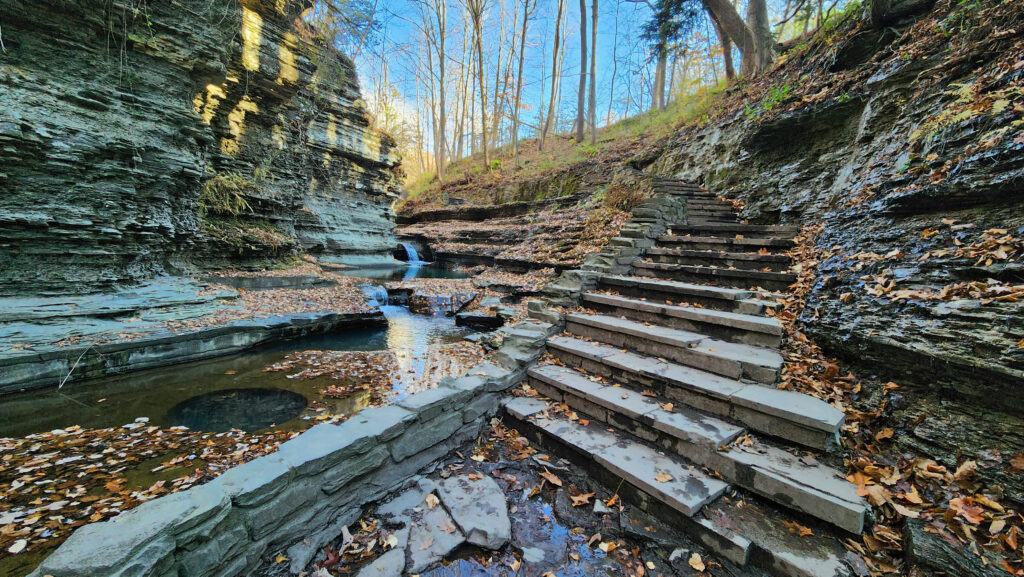
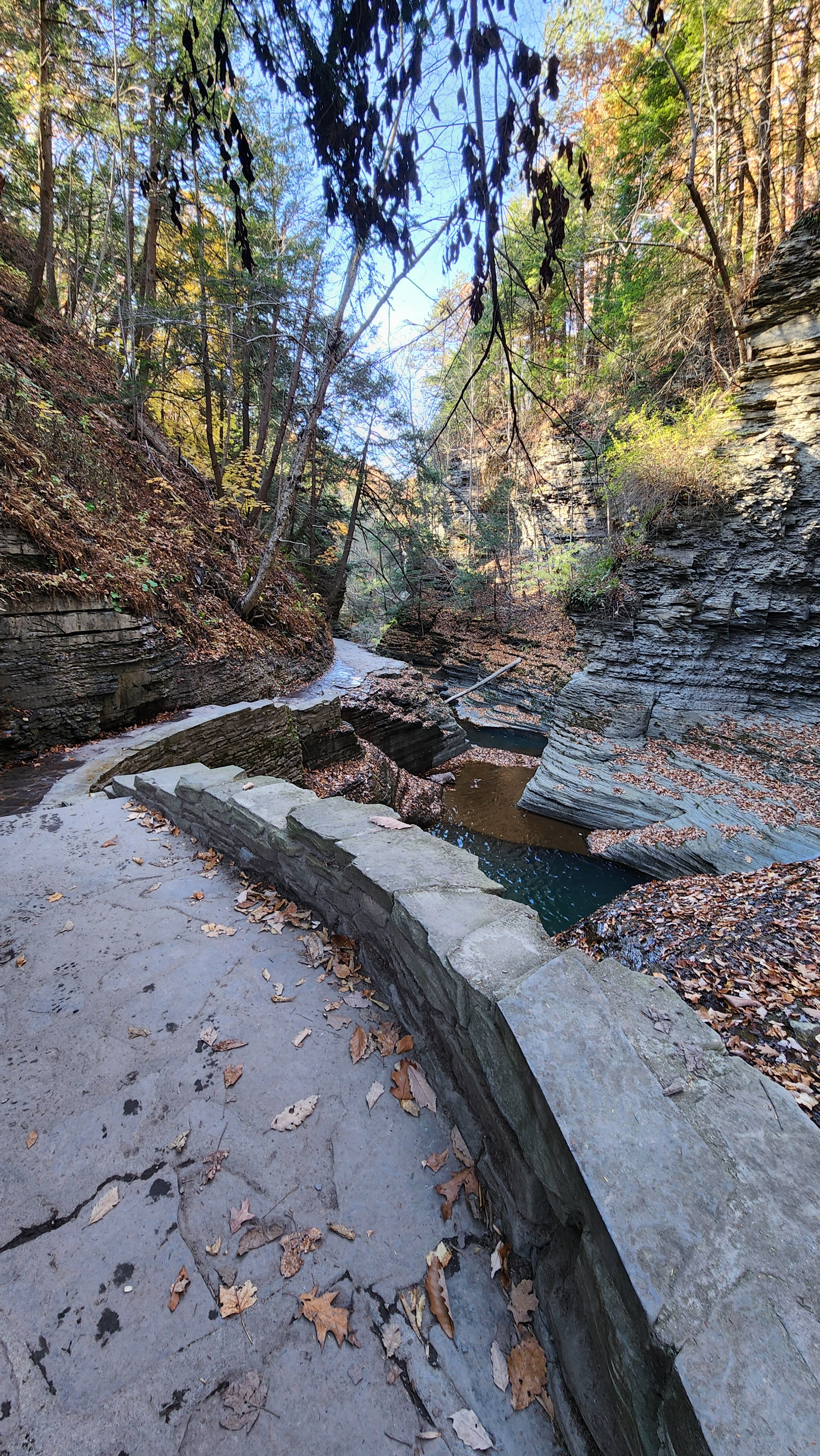
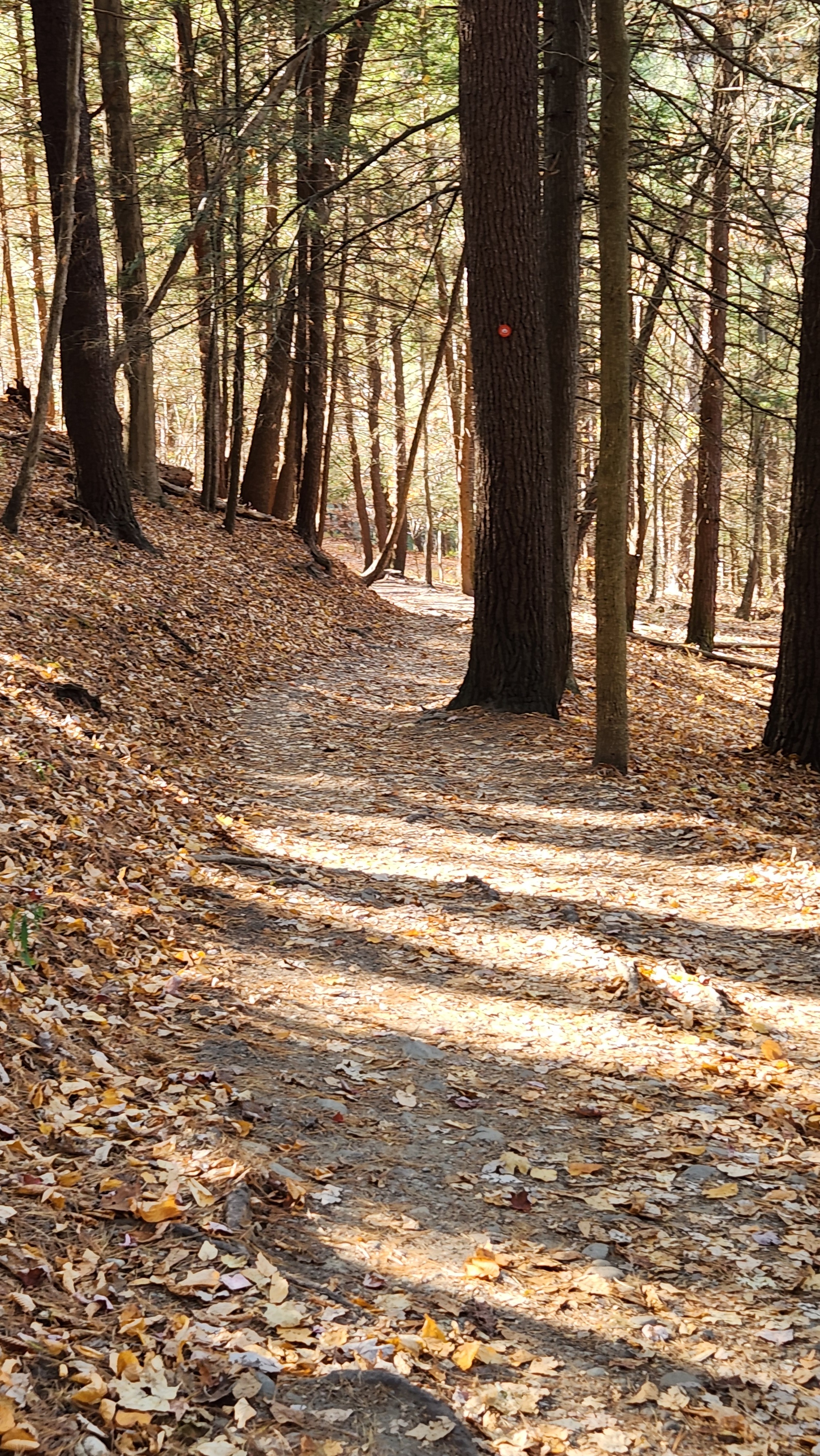
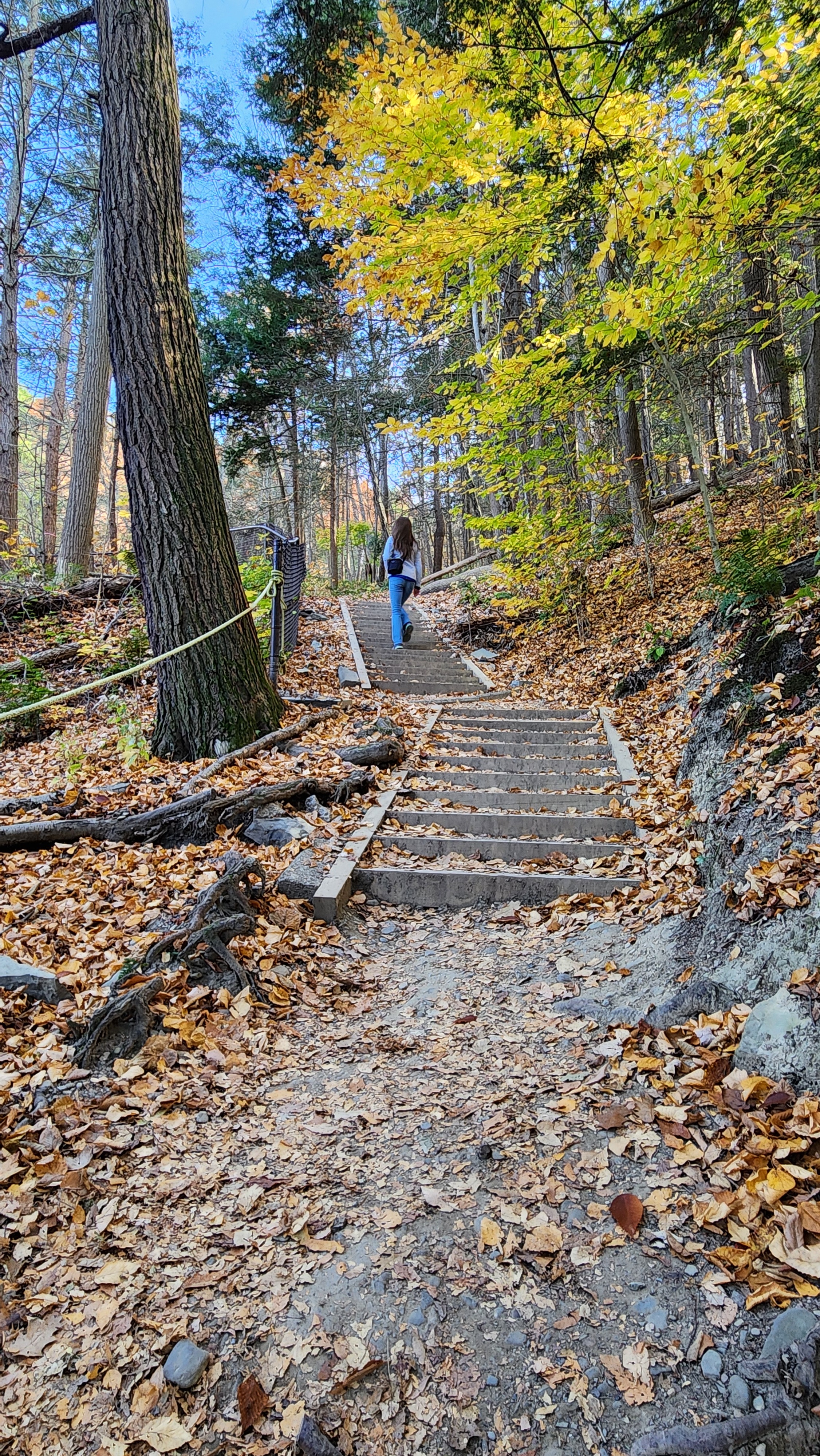
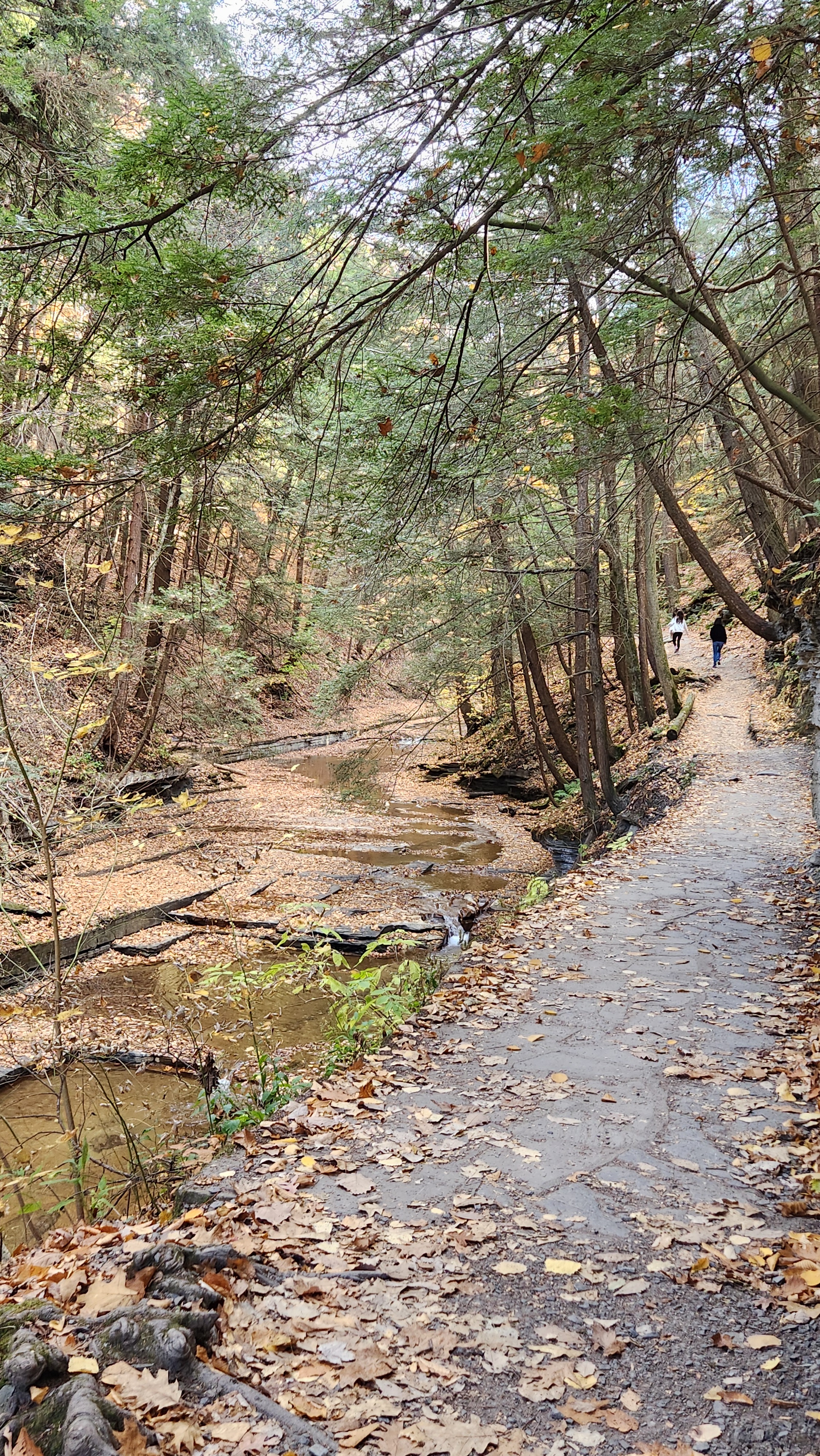
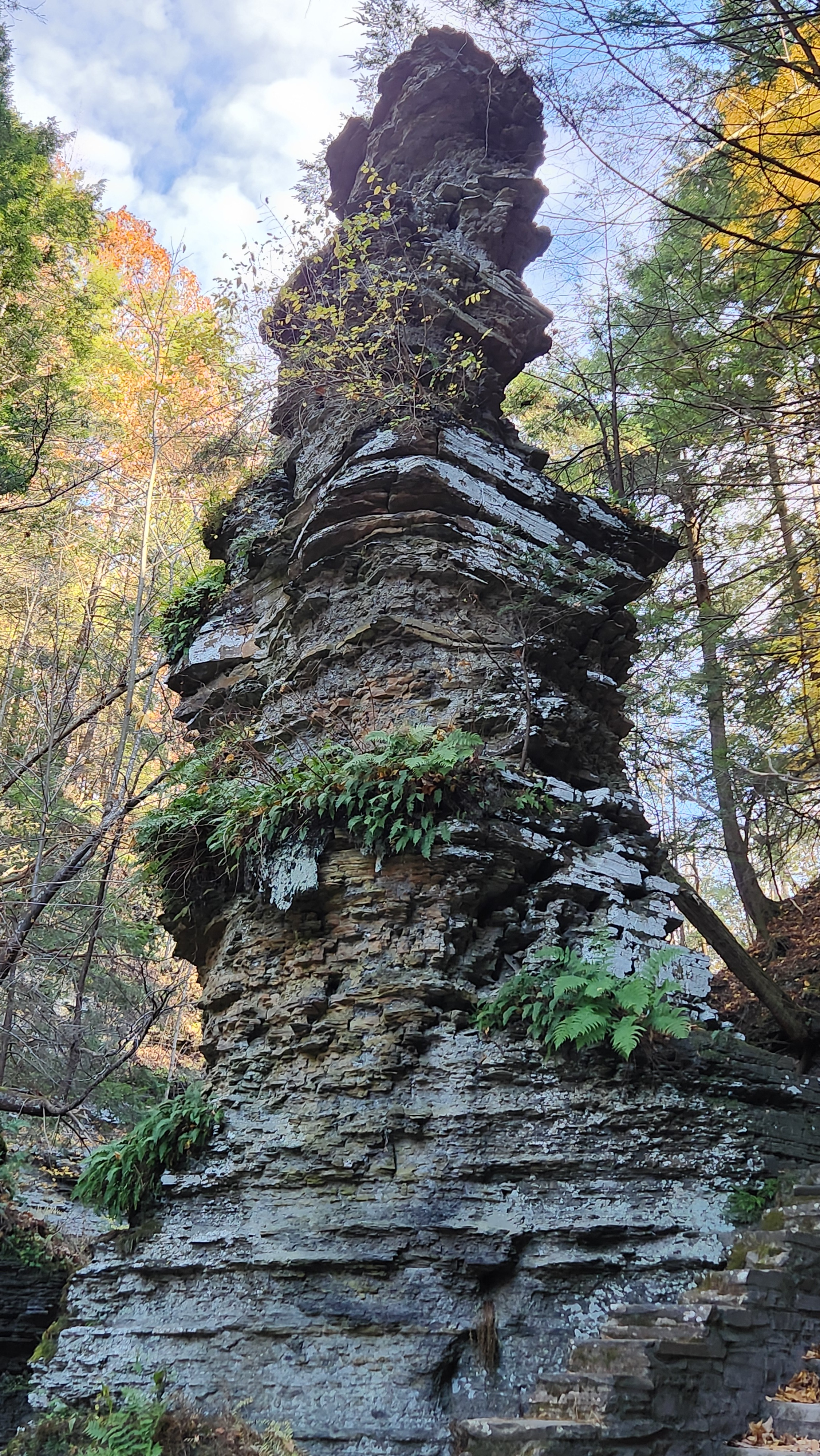
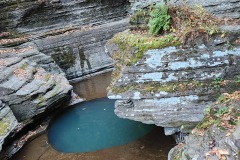
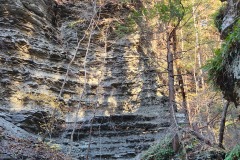
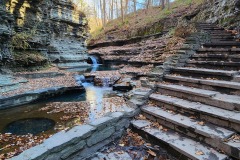
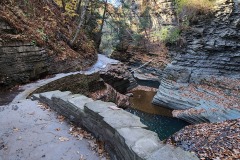
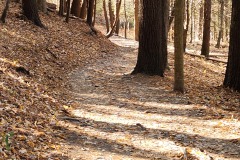
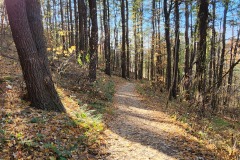
Some of the prettiest parts of the climb come between the Pinnacle Rock and the top of the trail. At that point, we cross the stream and descend a wooded trail with few glimpses of the gorge. The backs of our legs were feeling it by the end for sure, but there’s something fitting about the long descent and time to reflect.
-
Walking the Gorge Trail II: To the Pinnacle
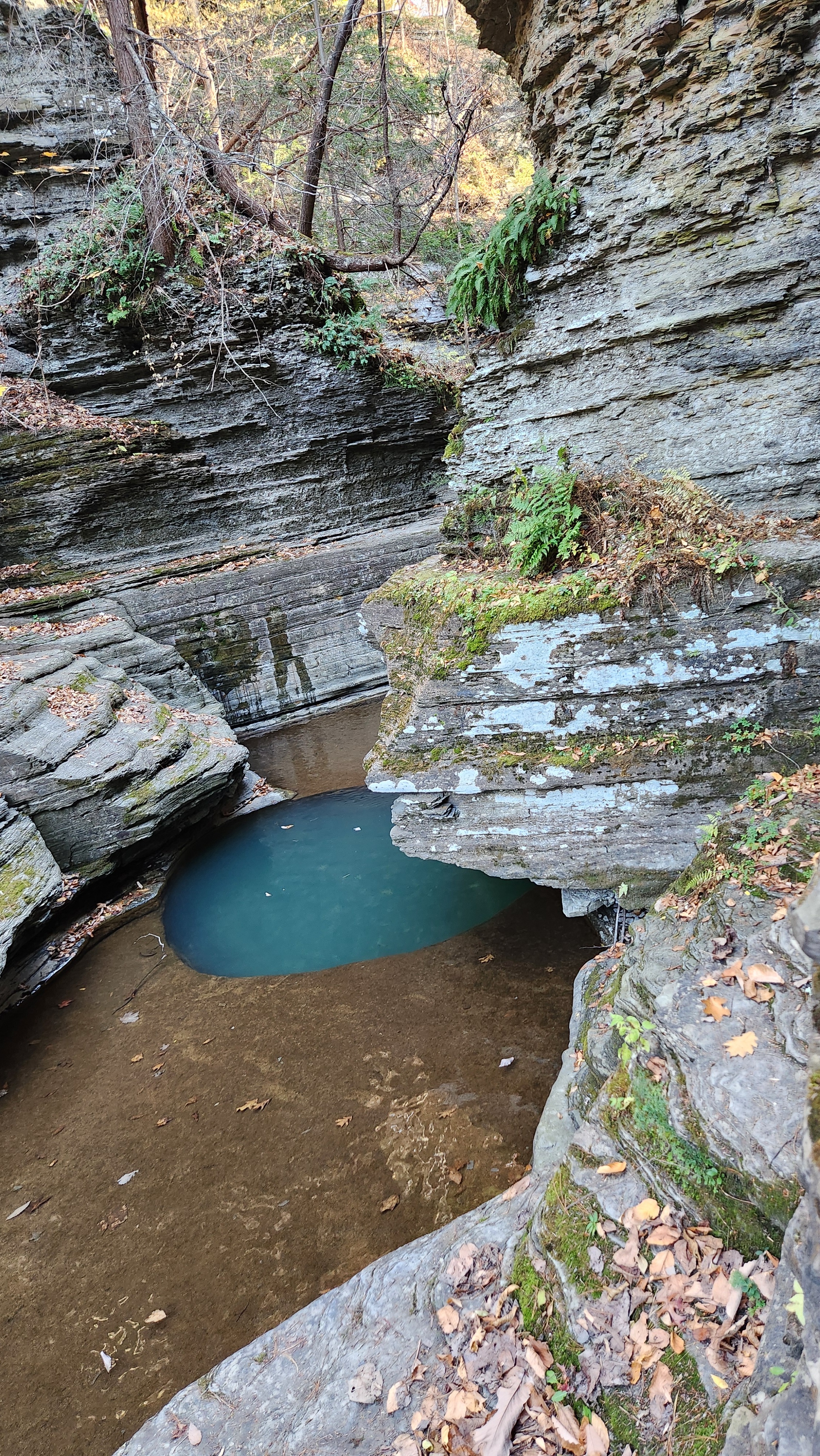
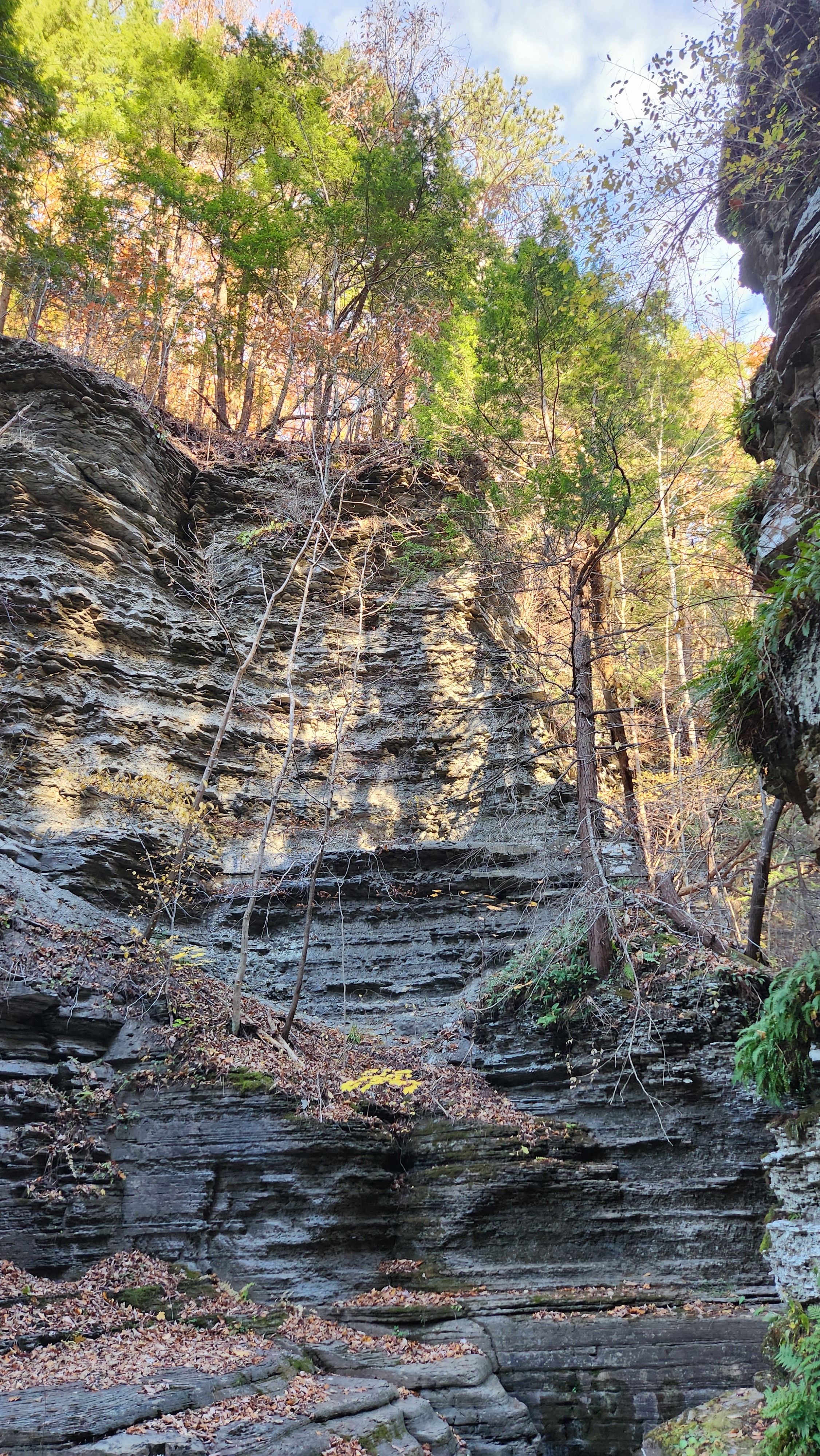
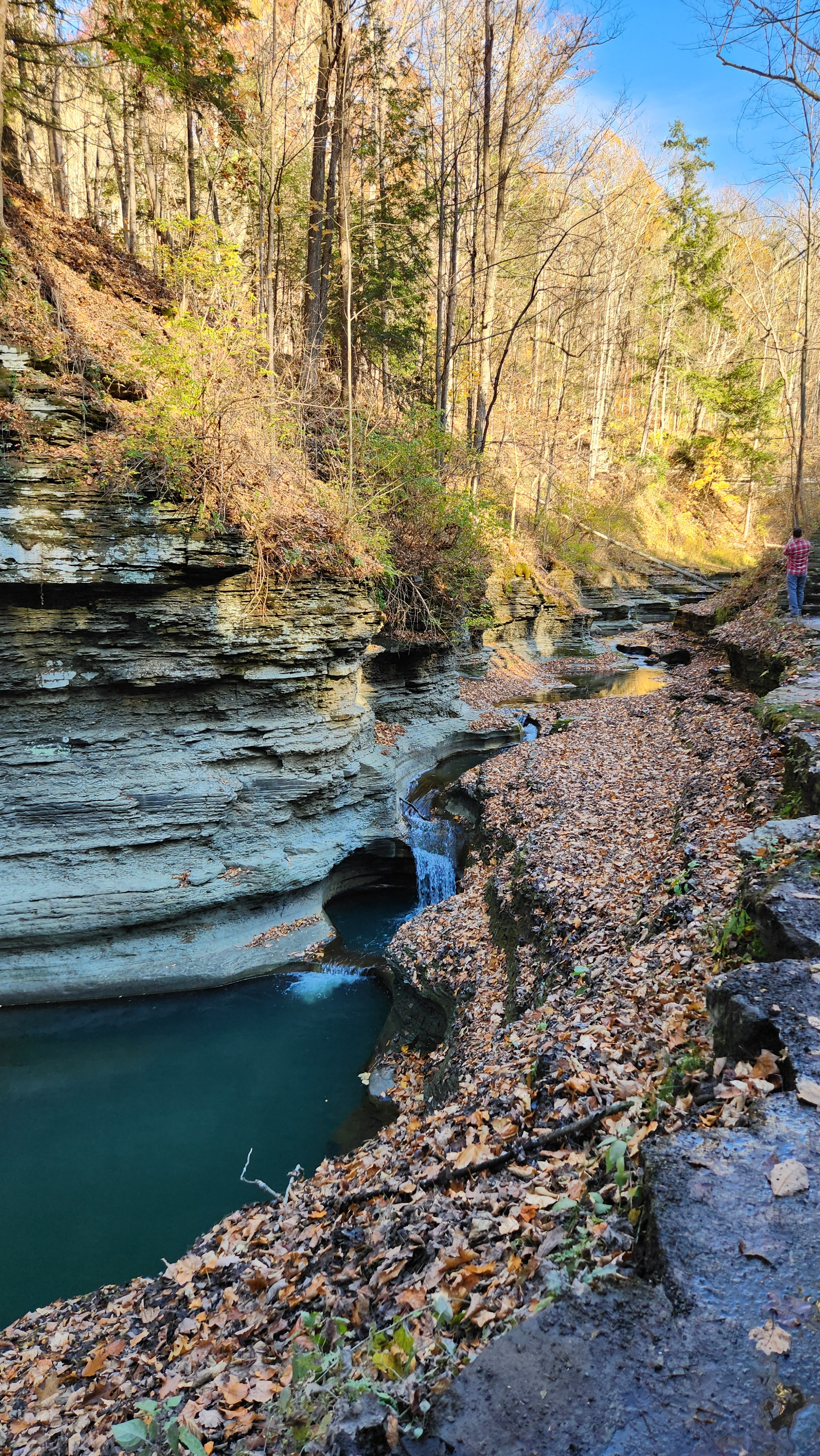
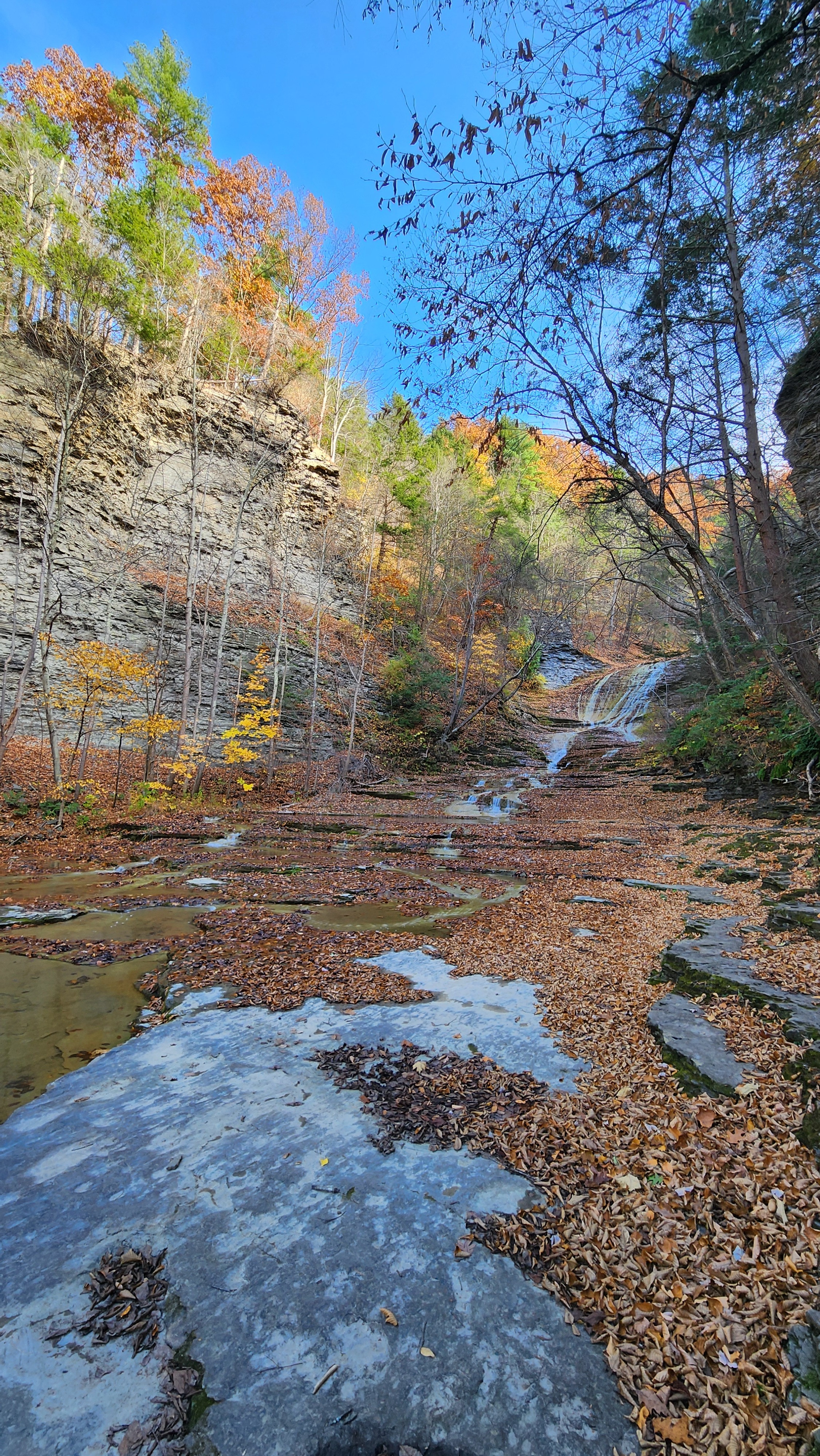
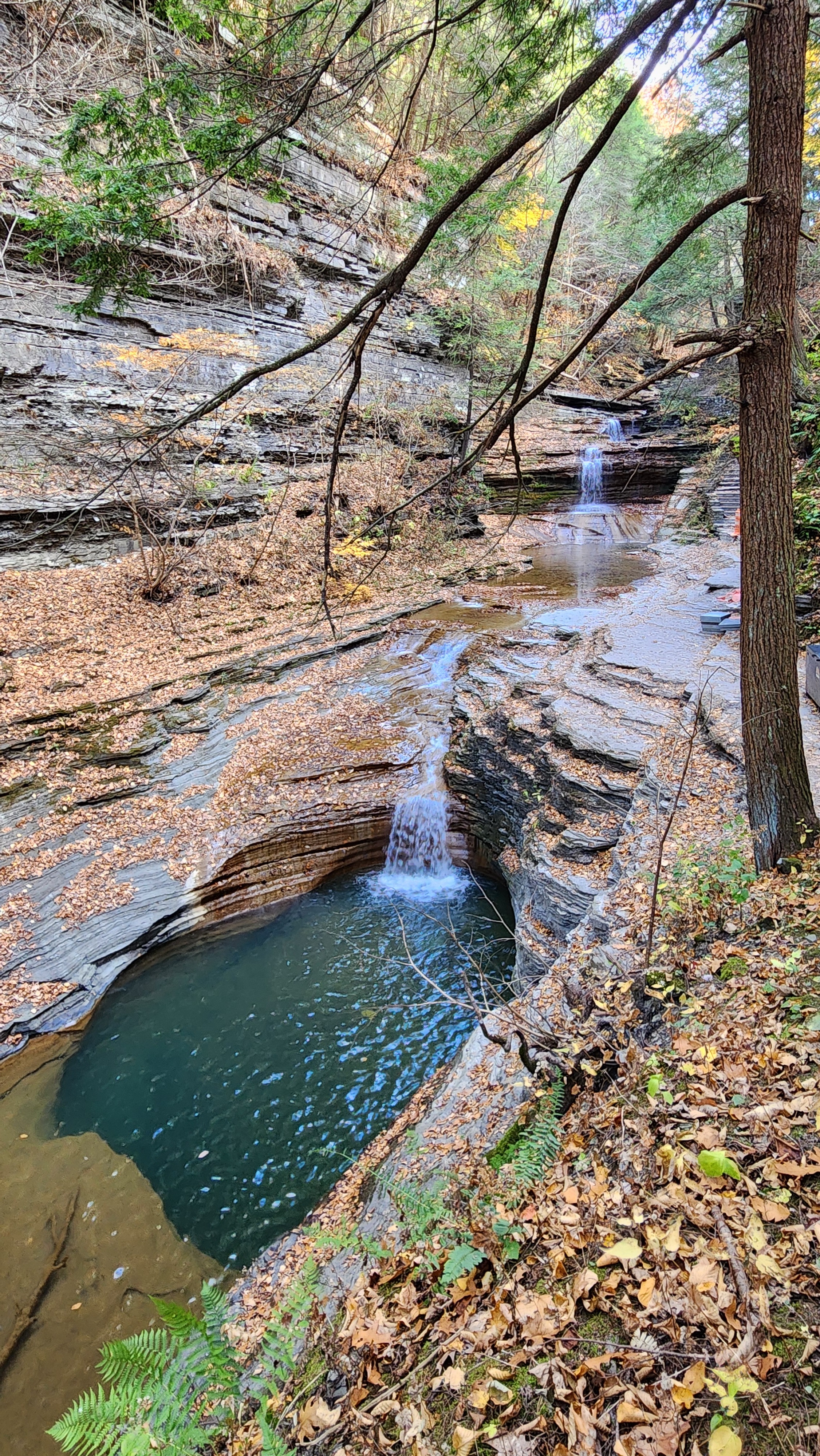
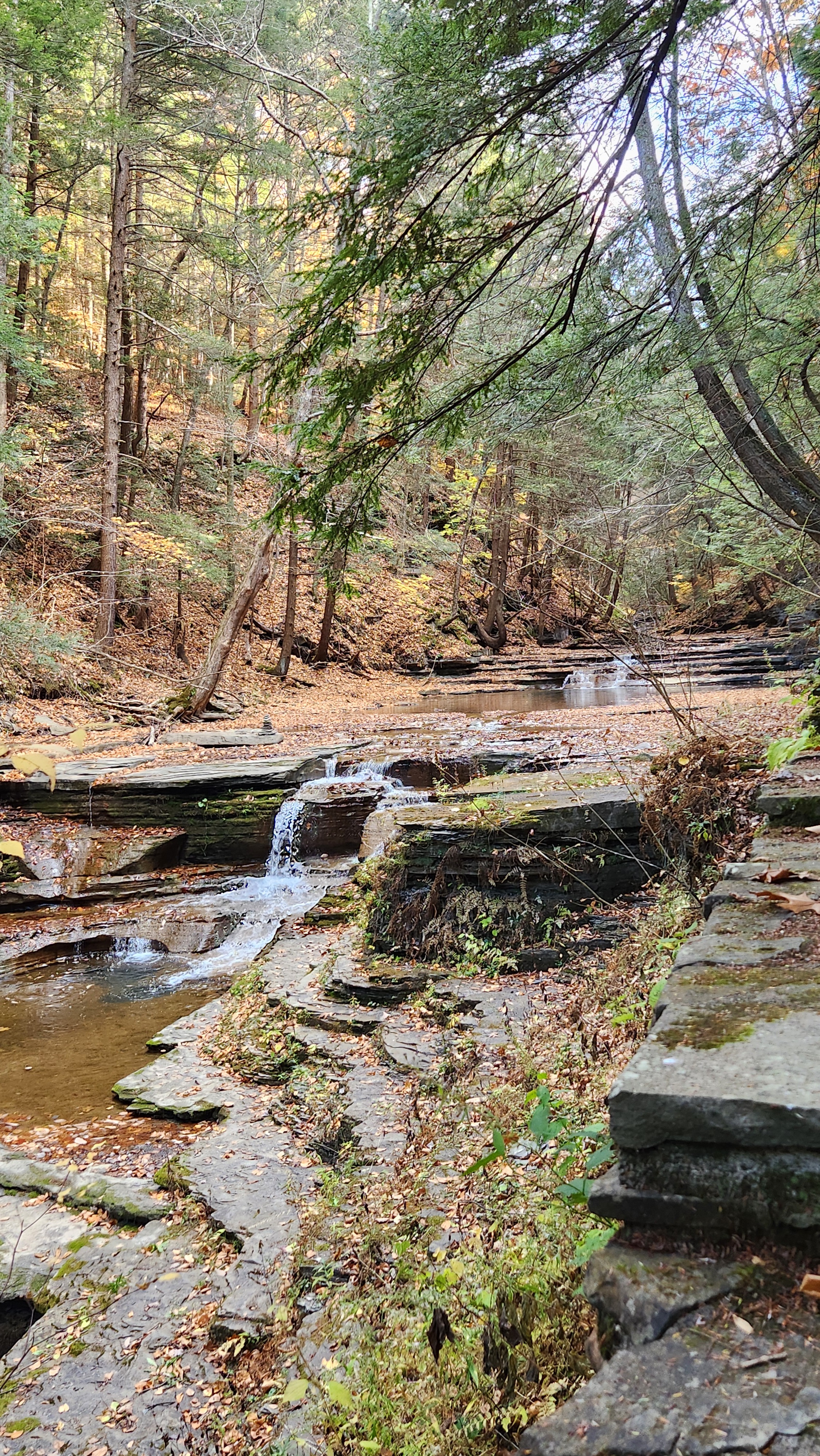
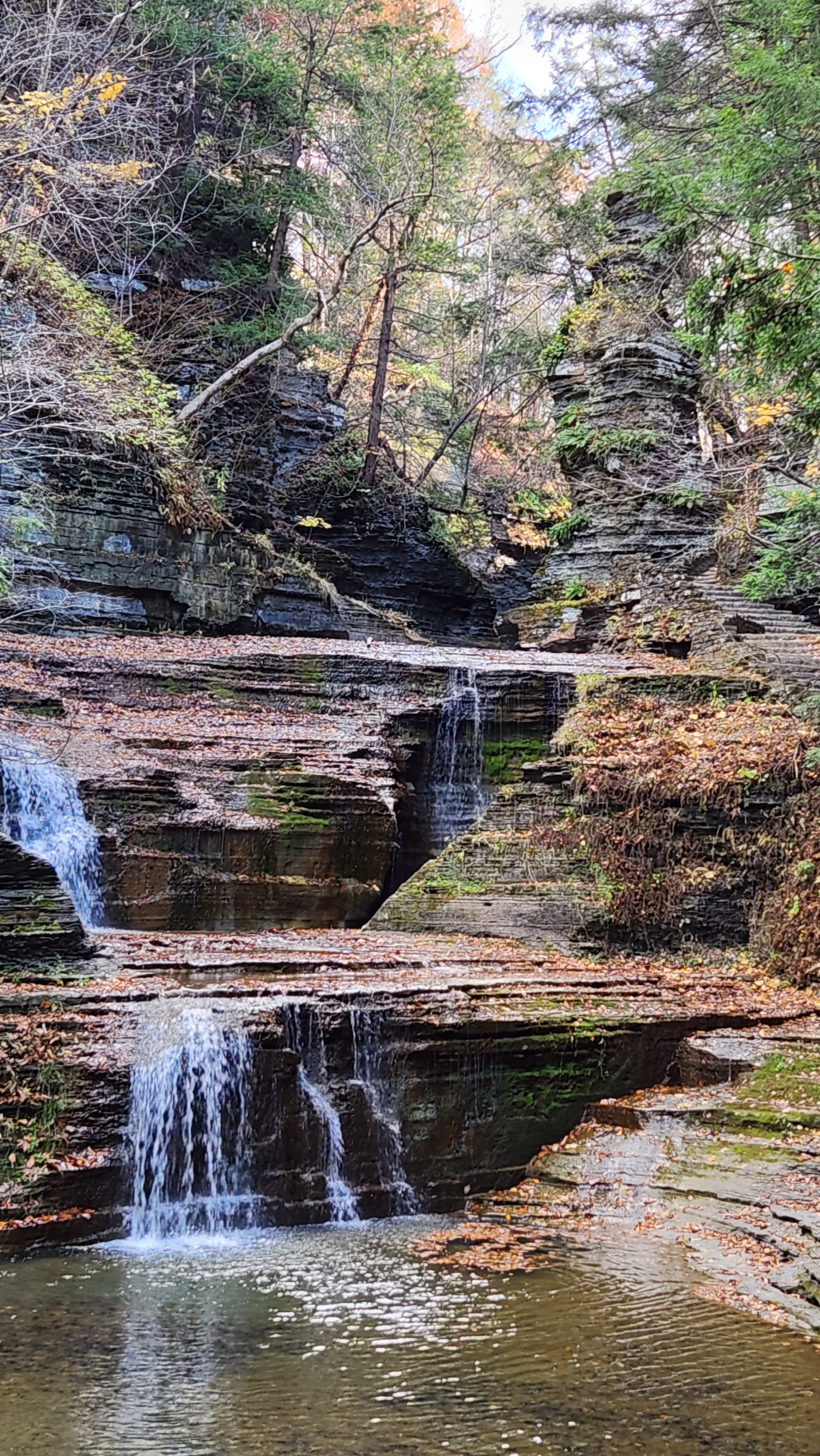
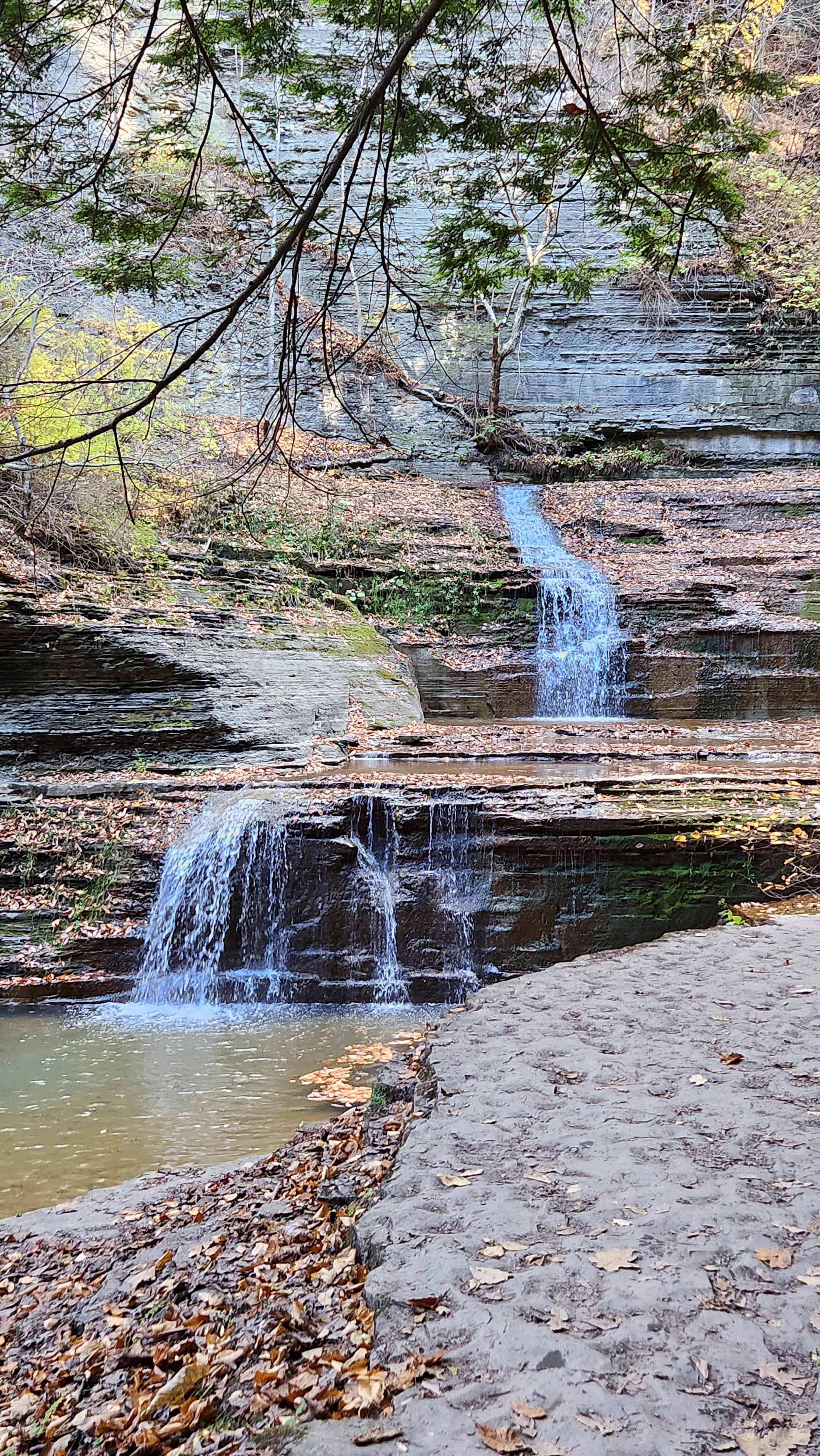
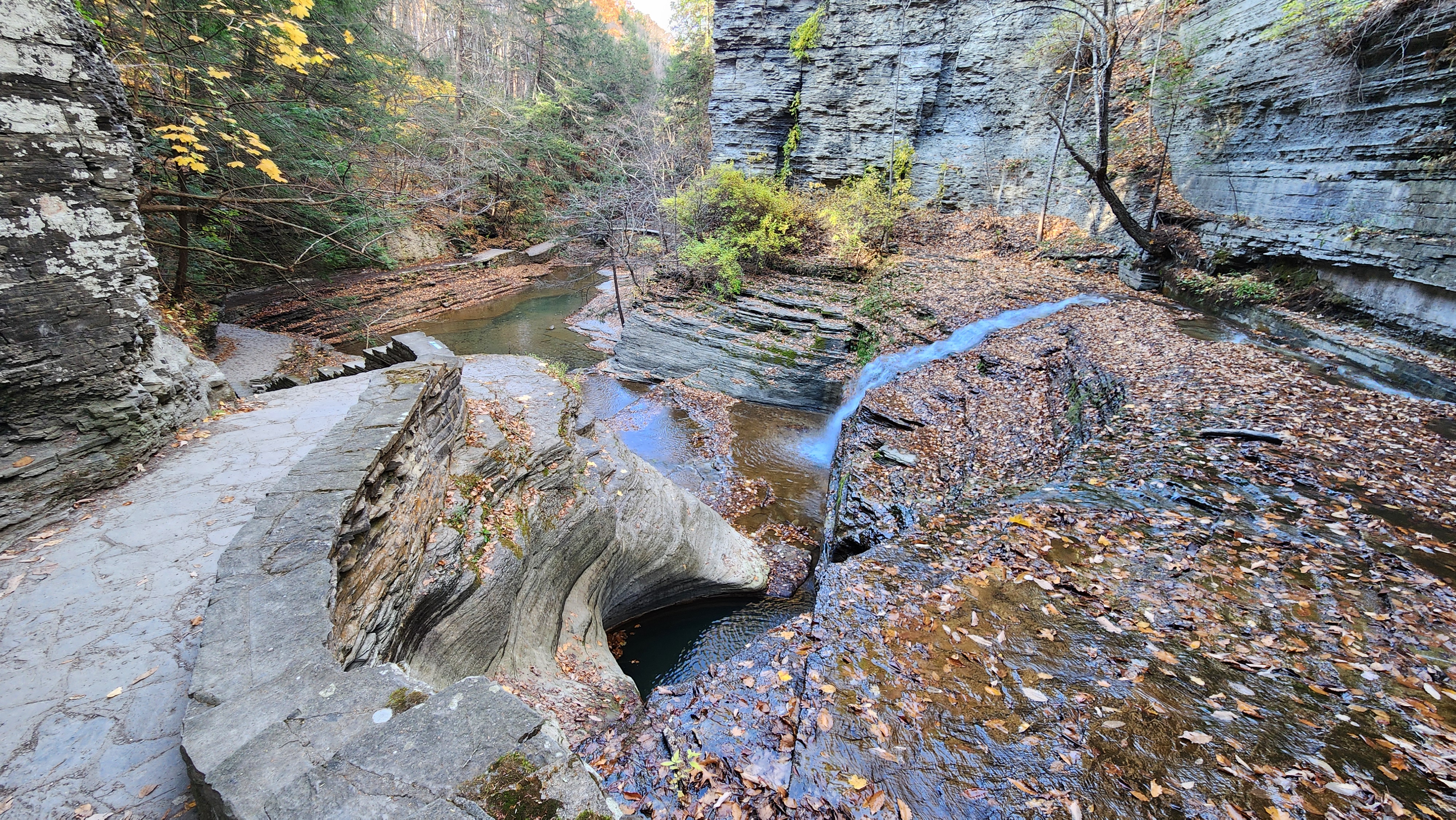
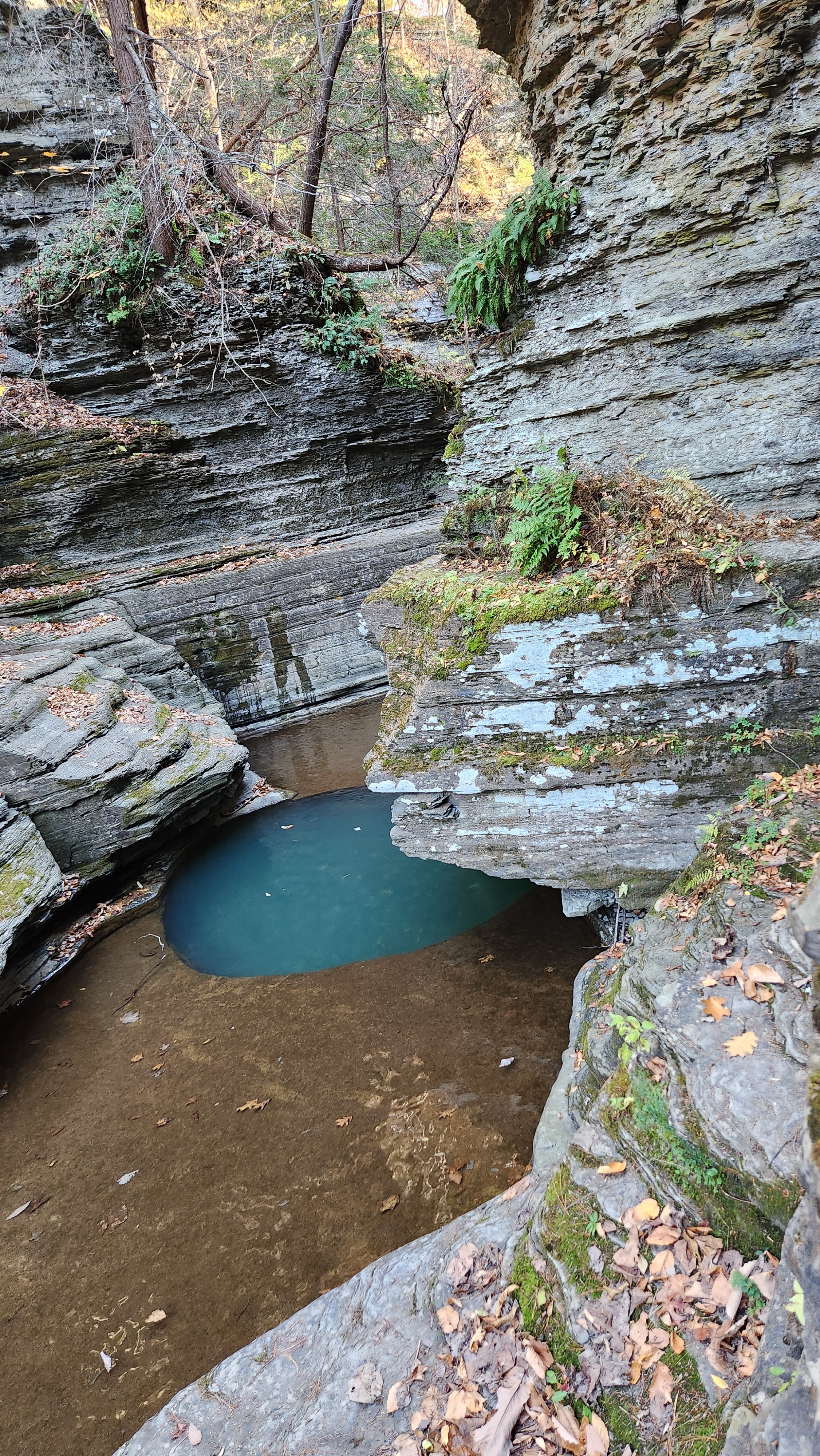
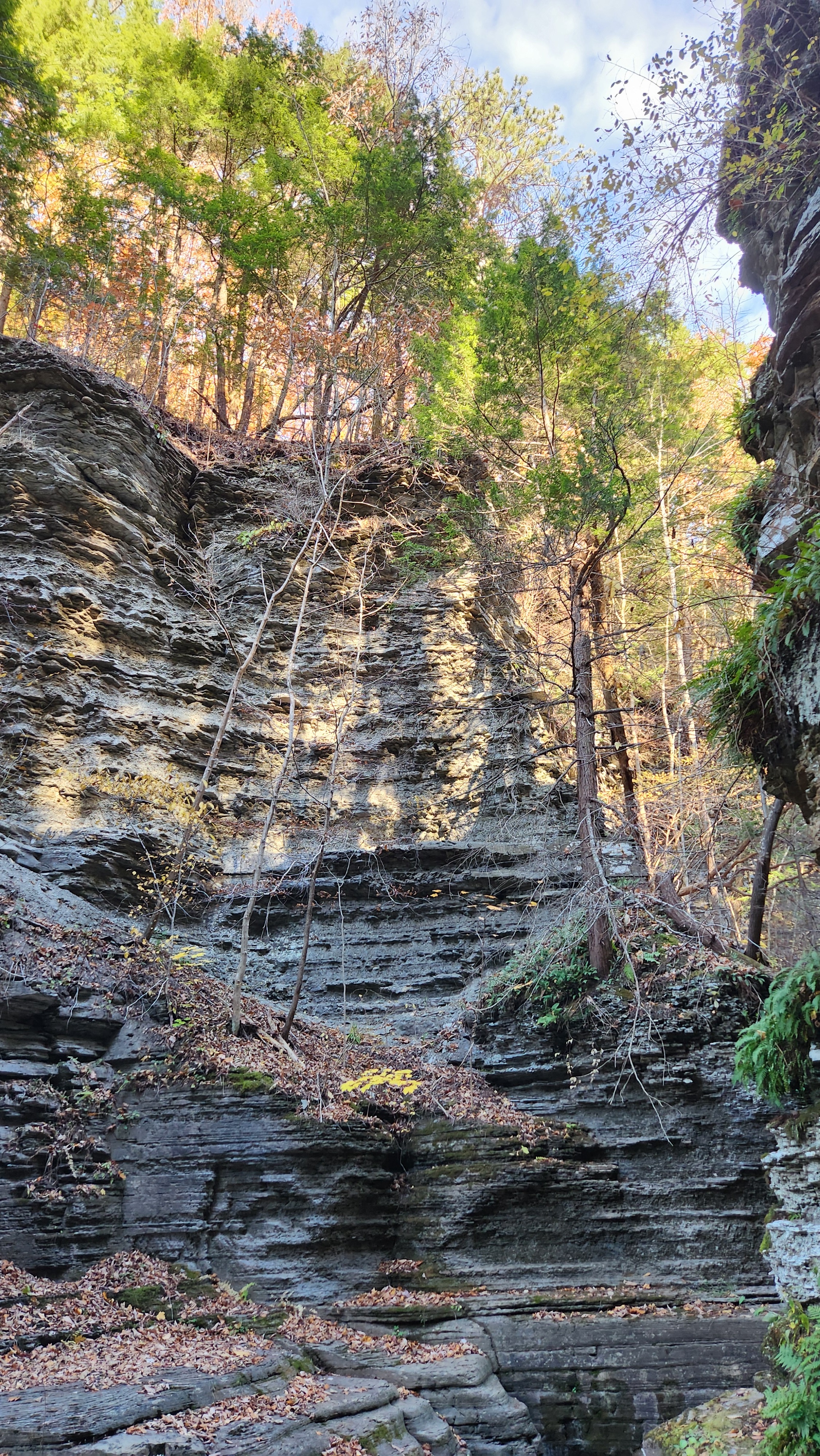
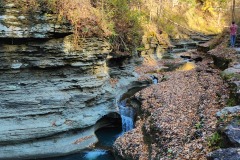
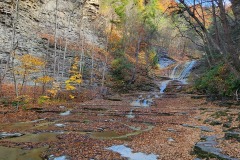
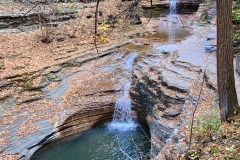
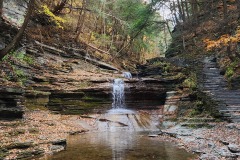
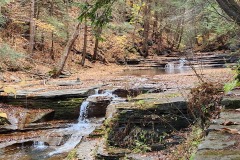
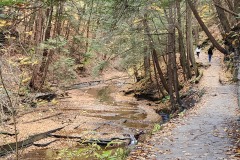
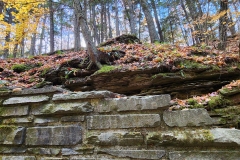
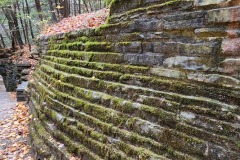
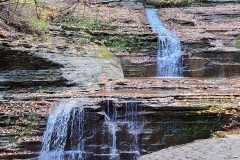
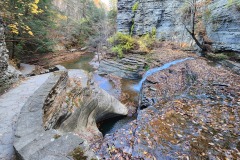
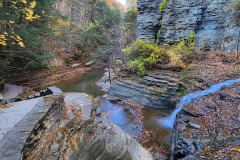
After resting at the first overlook, it’s time to climb again. The trail takes you along Buttermilk Creek, a kaleidescope of rock sculptures, patterns of light and color, and geological displays that prompt you to consider your own brief lifespan against the patient workings of water on rock over thousands of years.
- What shape are the experiences of my life carving into me?
- A place like this provides a disciplinary check on humanity’s sense of our importance and power in the universe. How do I hold onto that humility? How should it shape my approach to life?
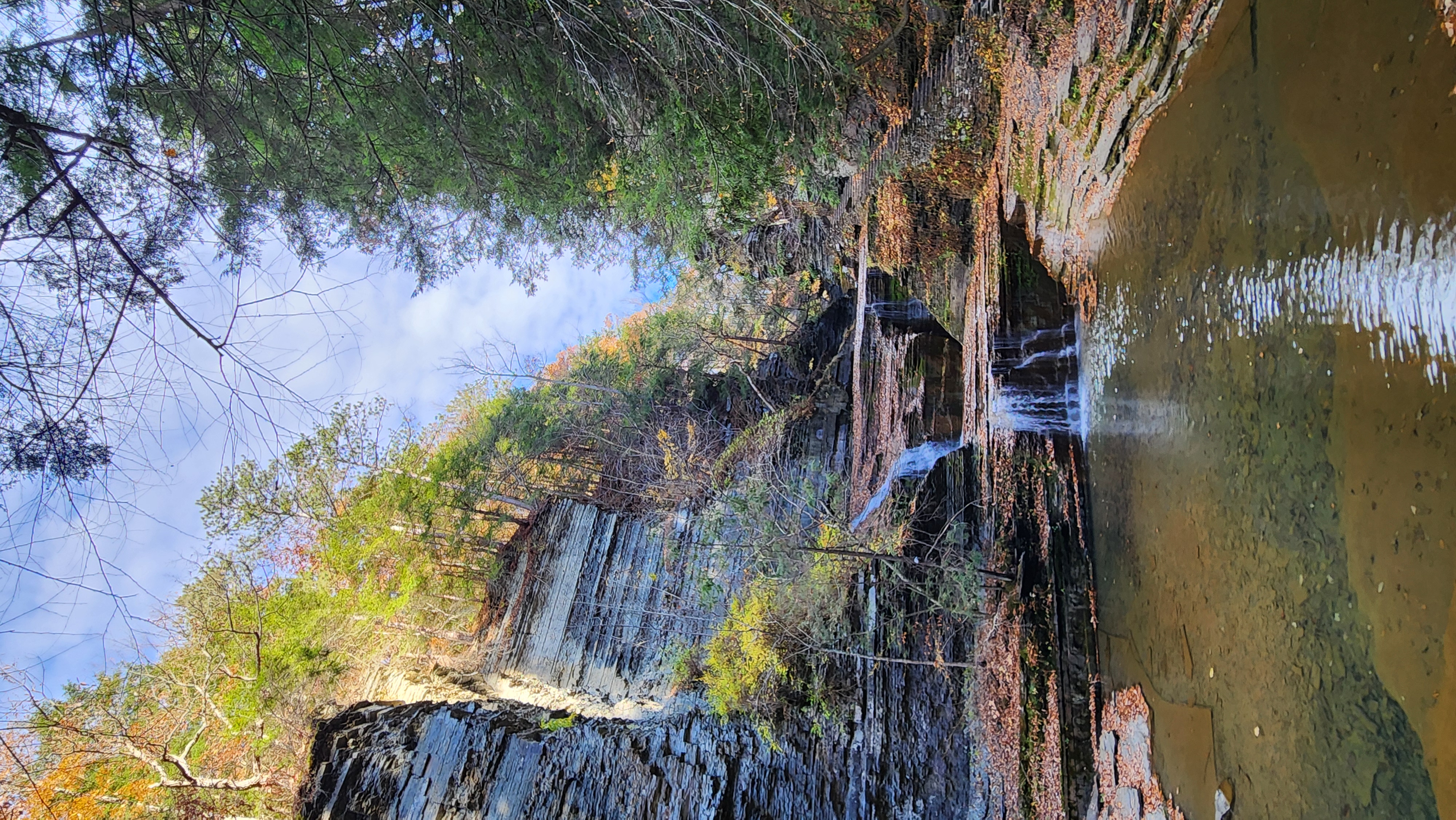
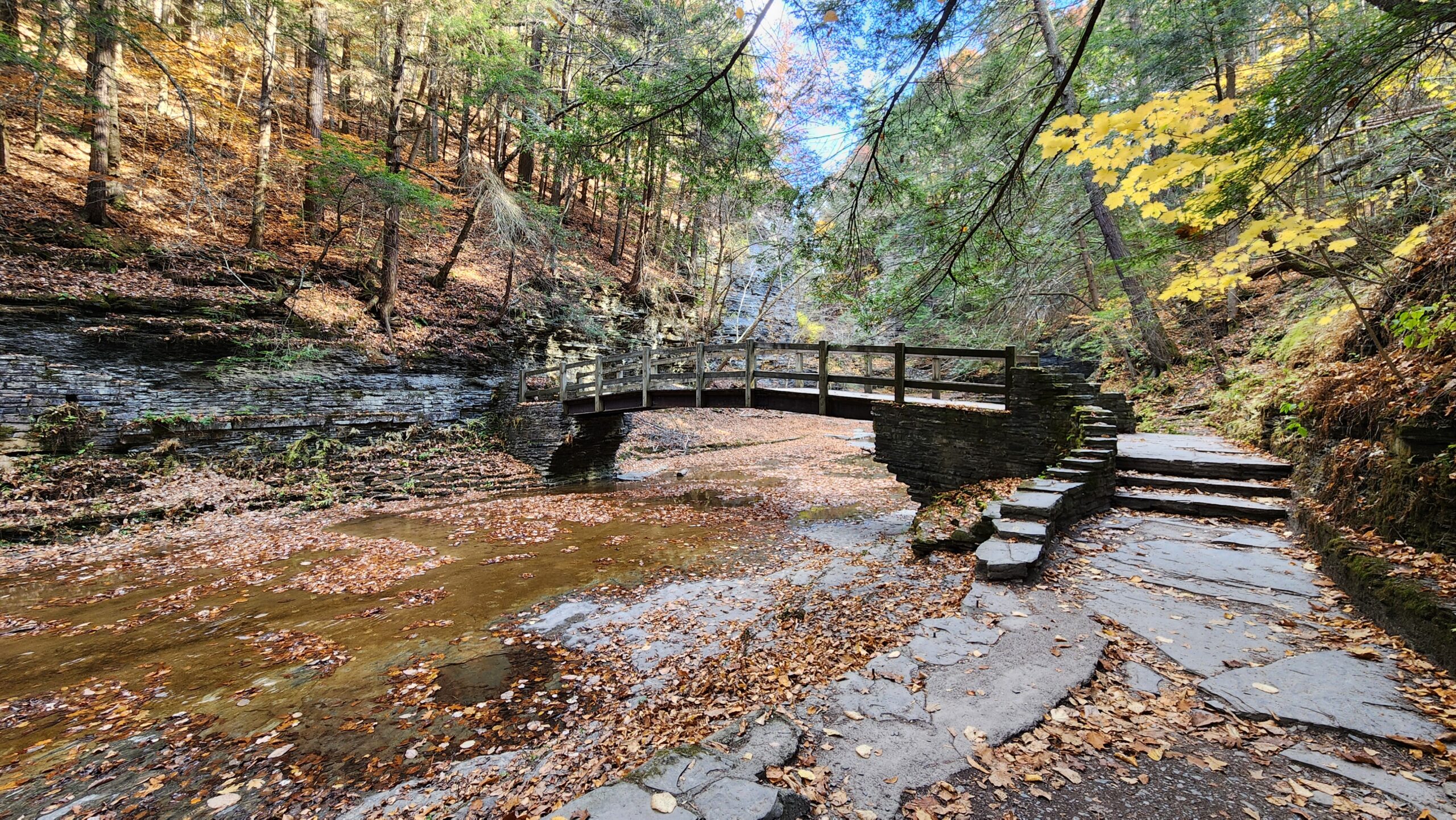
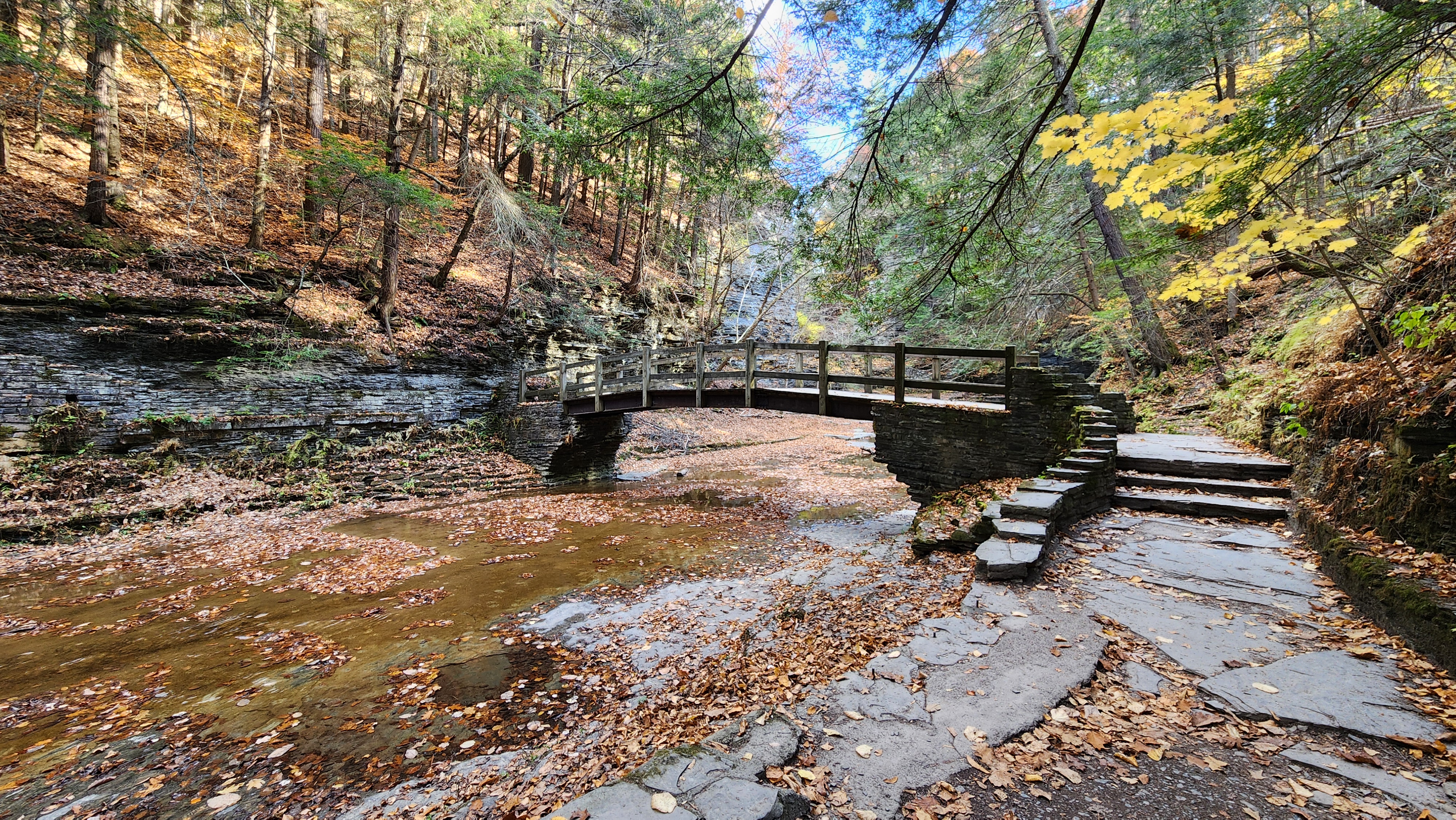
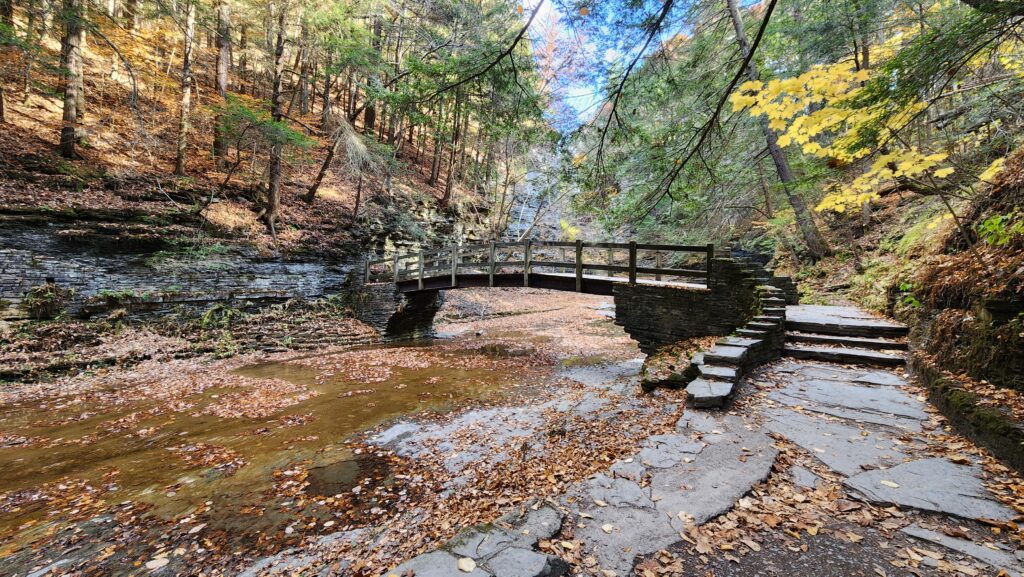
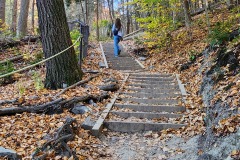
The trail includes a shortcut – a bridge you can take to the Rim Trail on the other side of the stream, taking you back to the parking lot below.
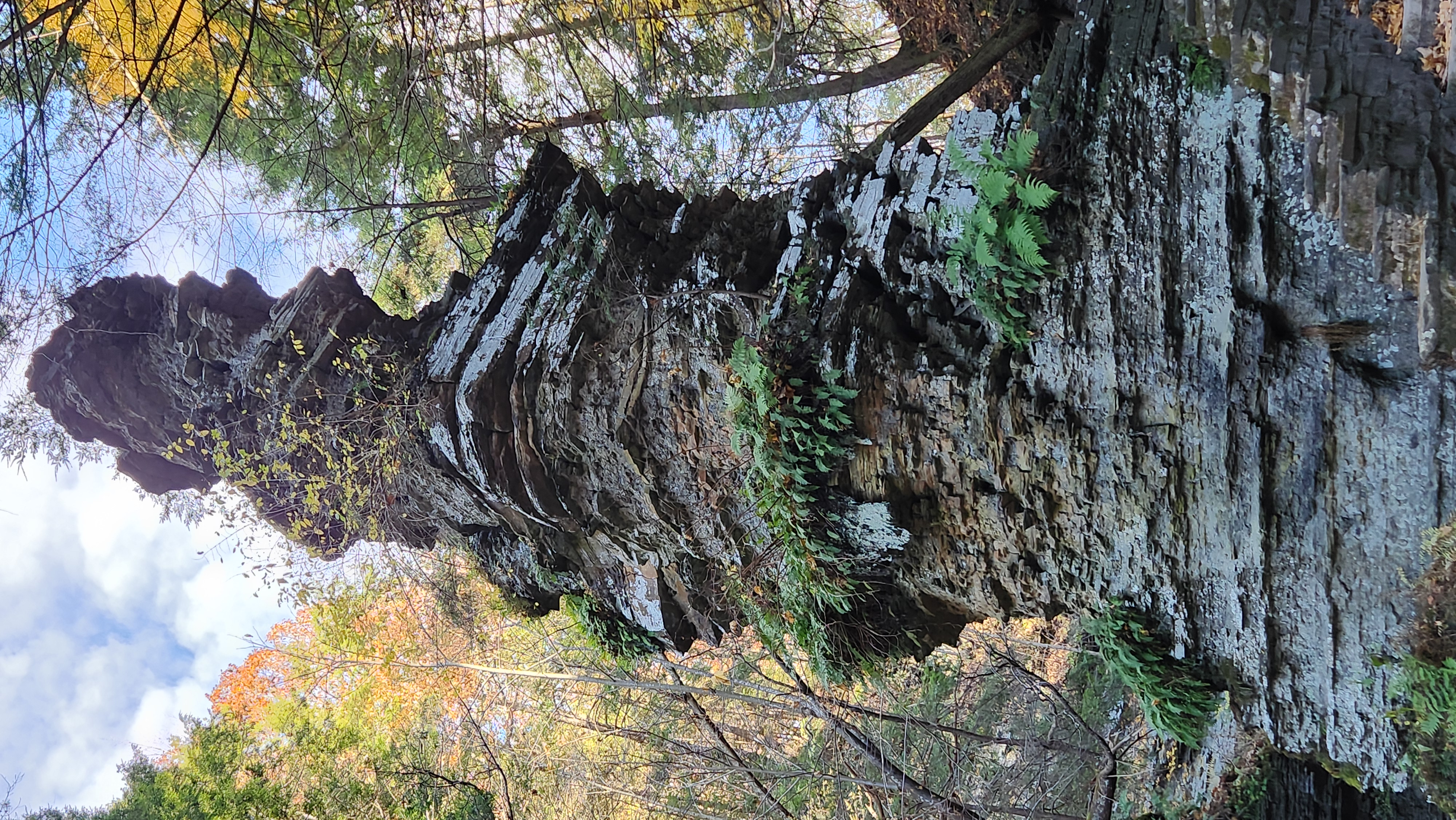
Don’t take it. If you do, you’ll miss the satisfaction of the Pinnacle Rock marking the end of the steepest ascent.
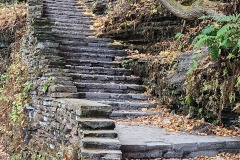
But there’s still more. I’ll finish the walk in the next post. Meantime, here are the rest of my photos for this segment of the walk.
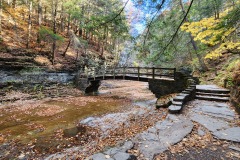
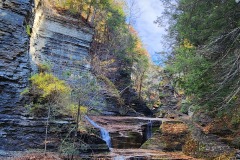
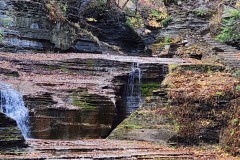
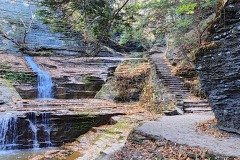
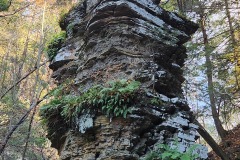
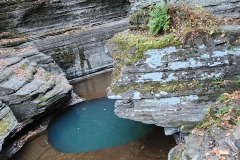
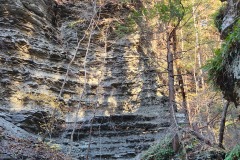
-
Walking the Gorge Trail
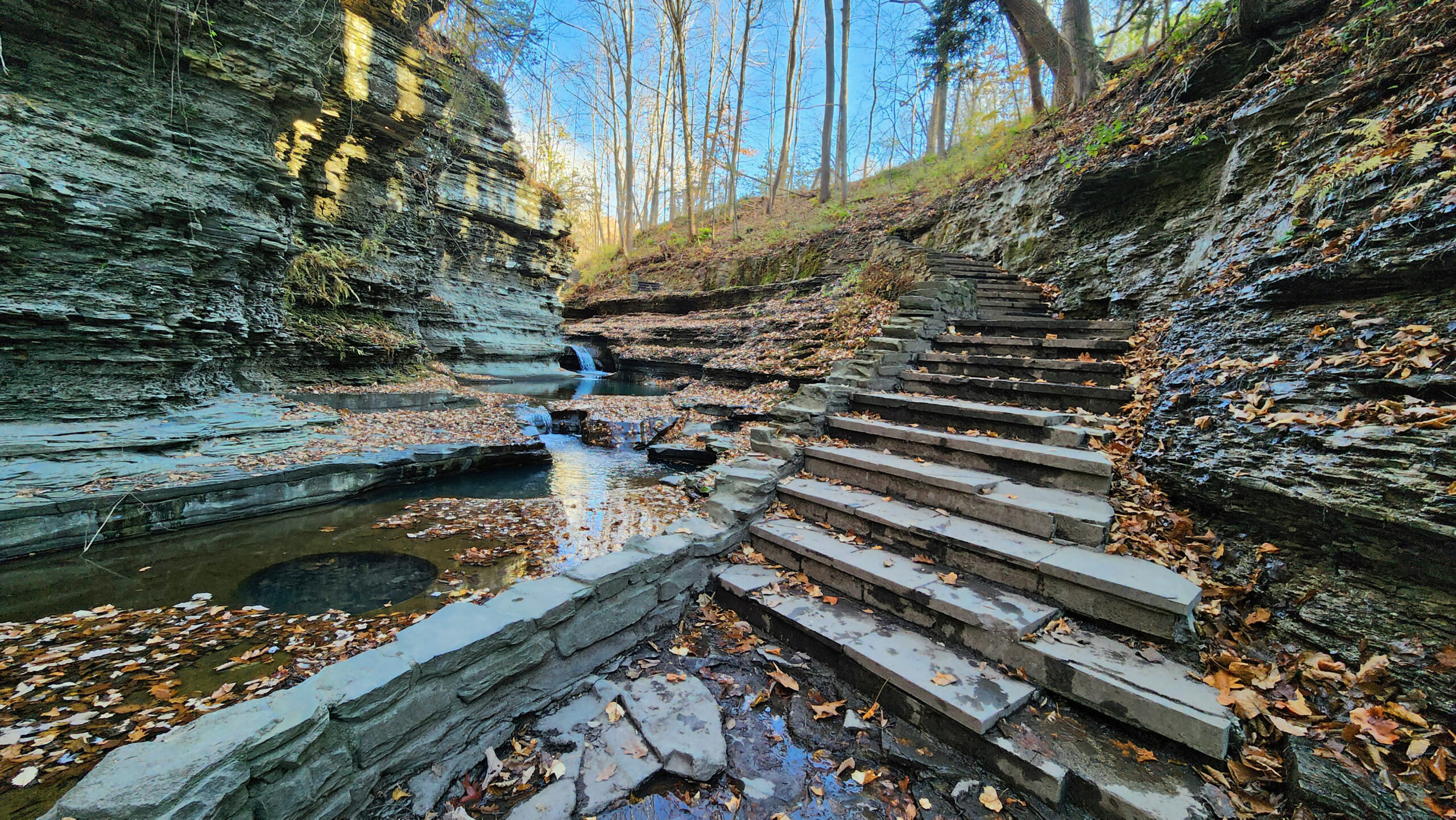
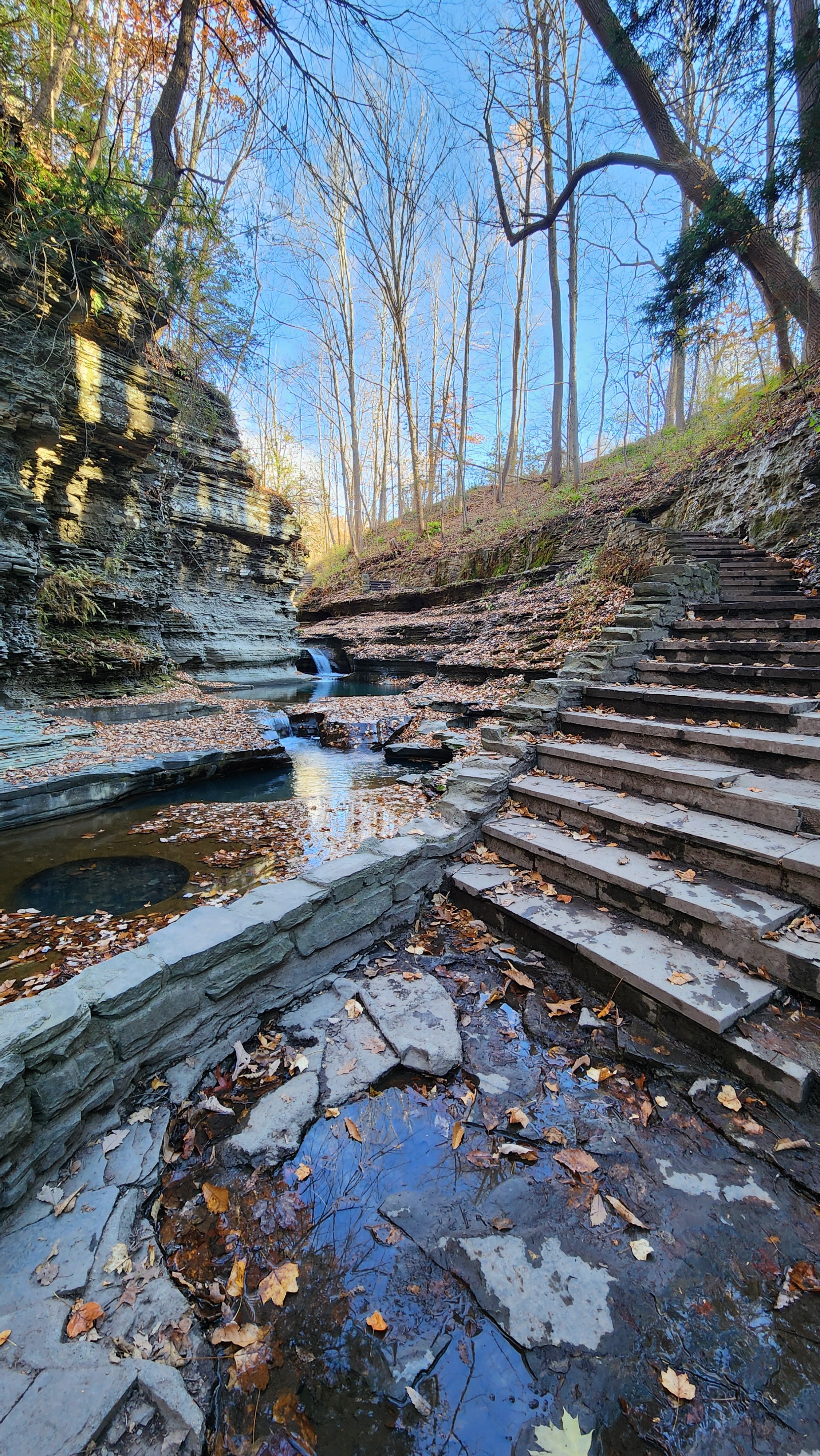
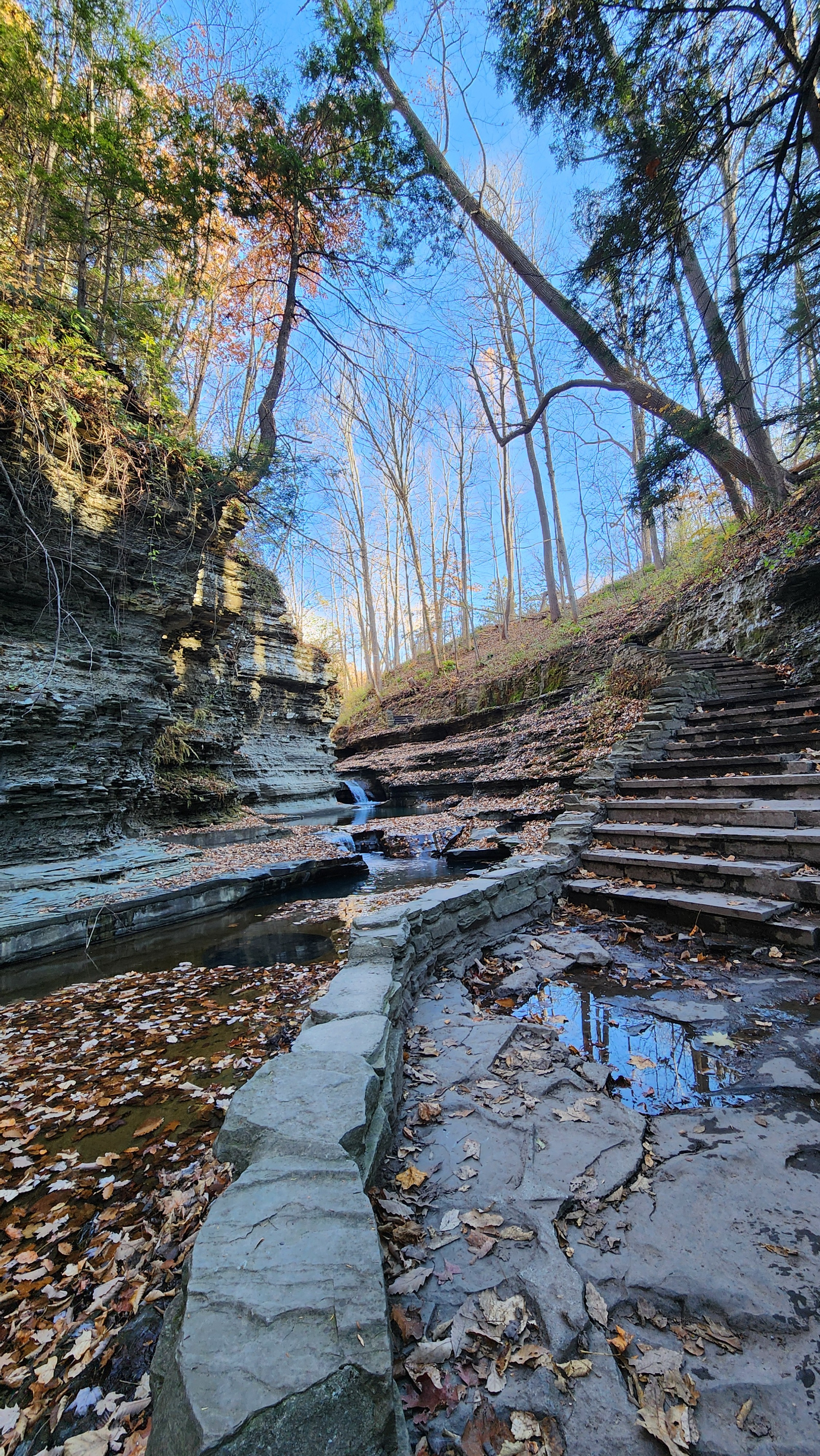
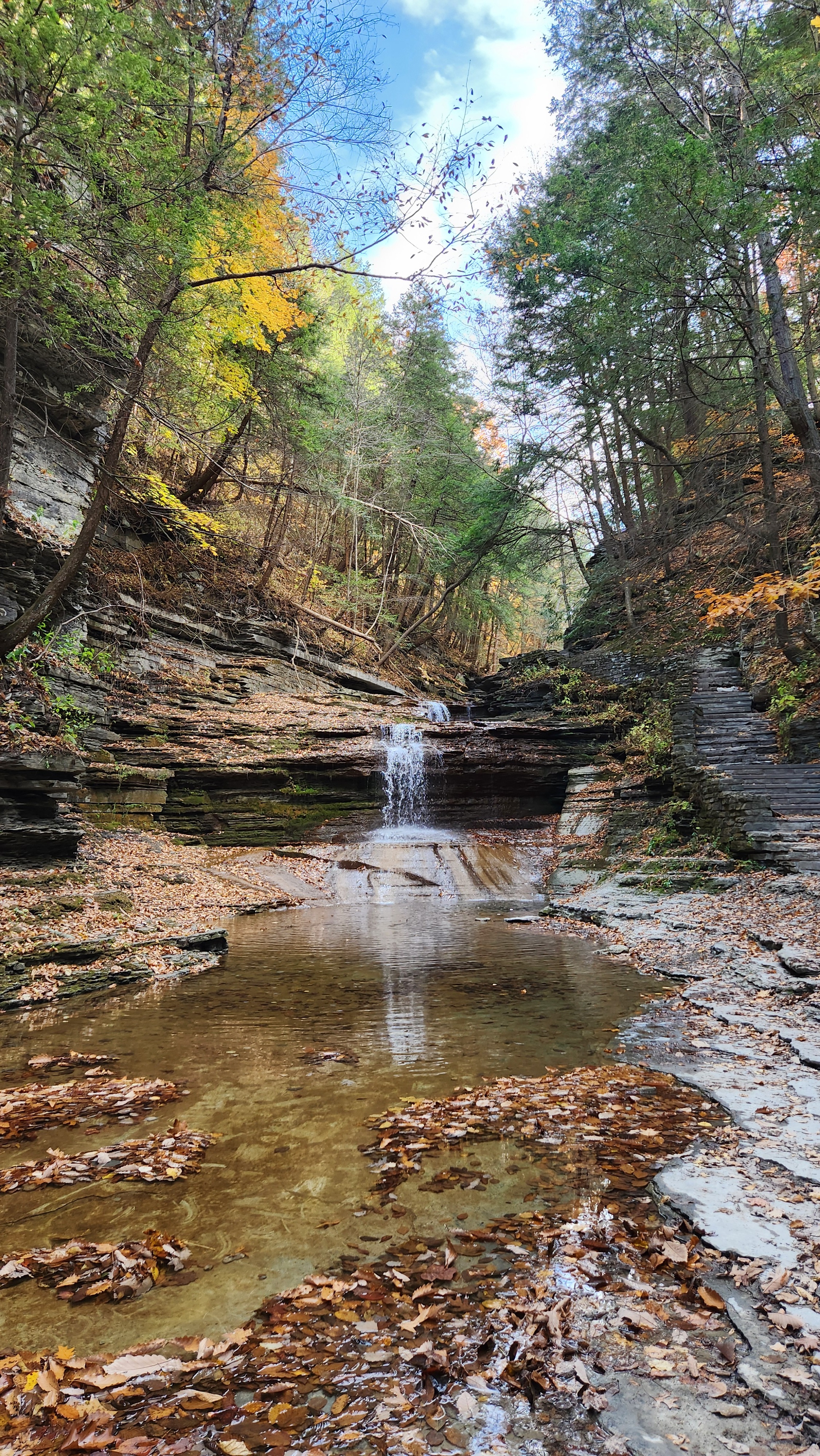
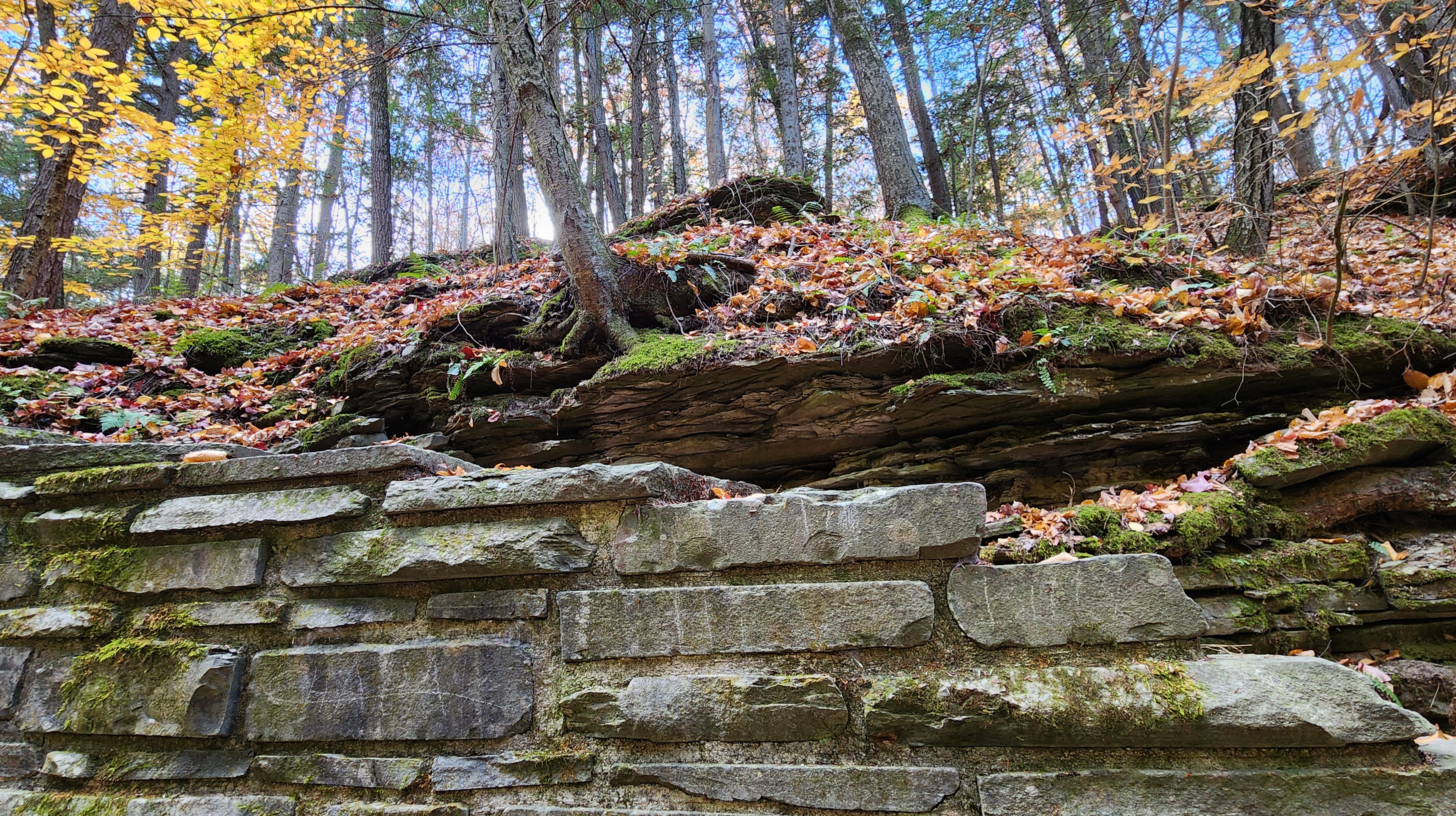
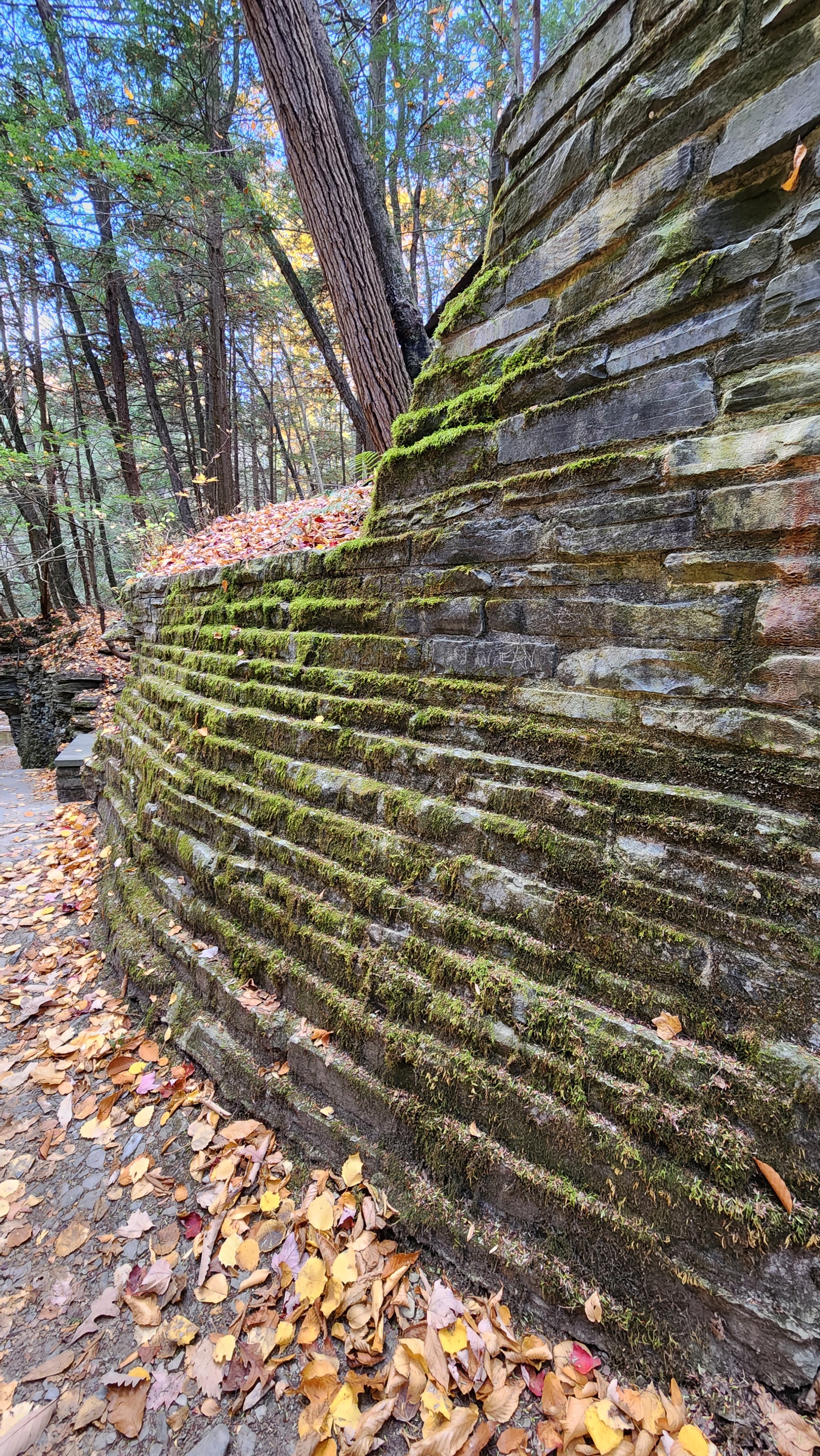
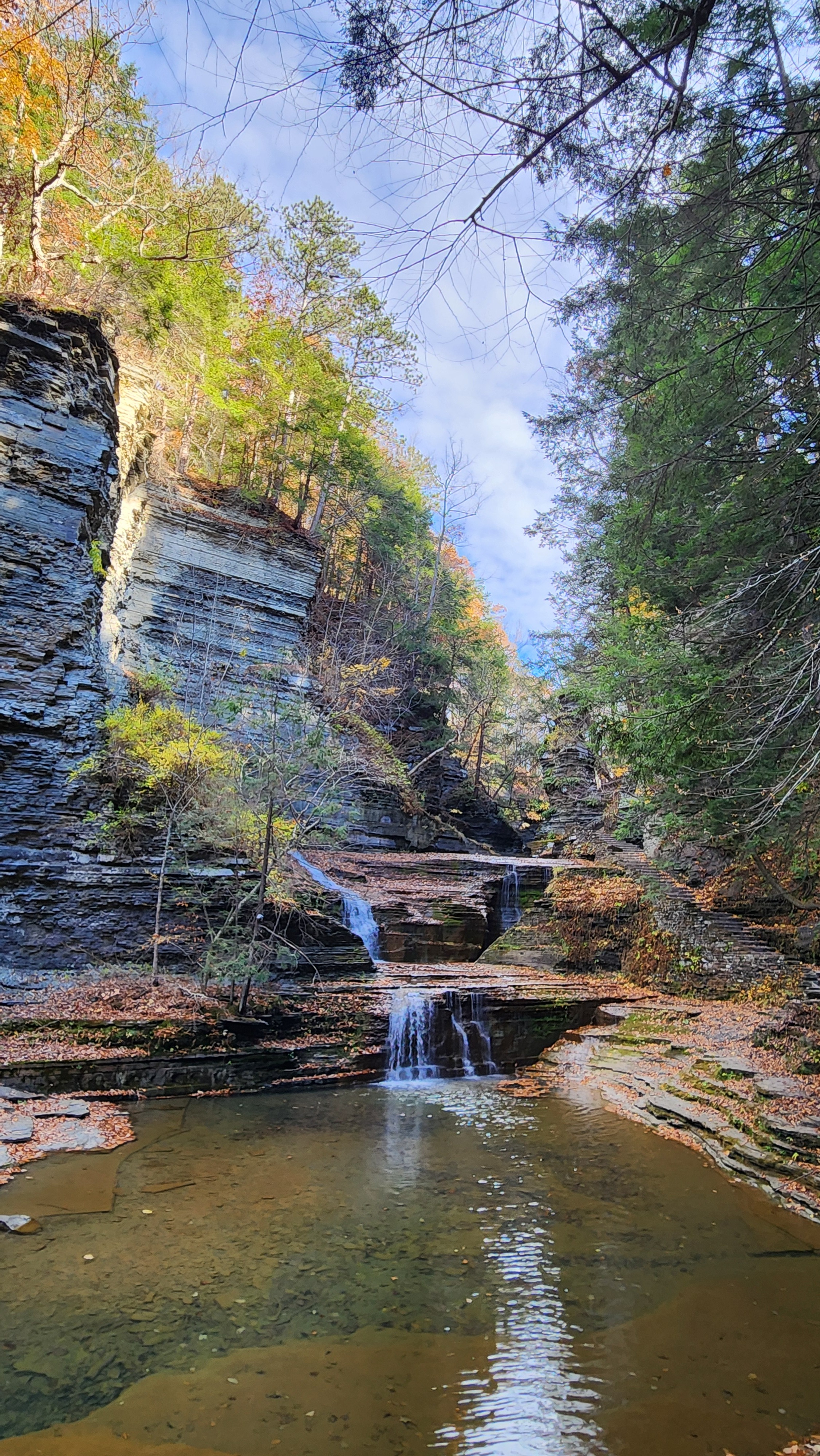
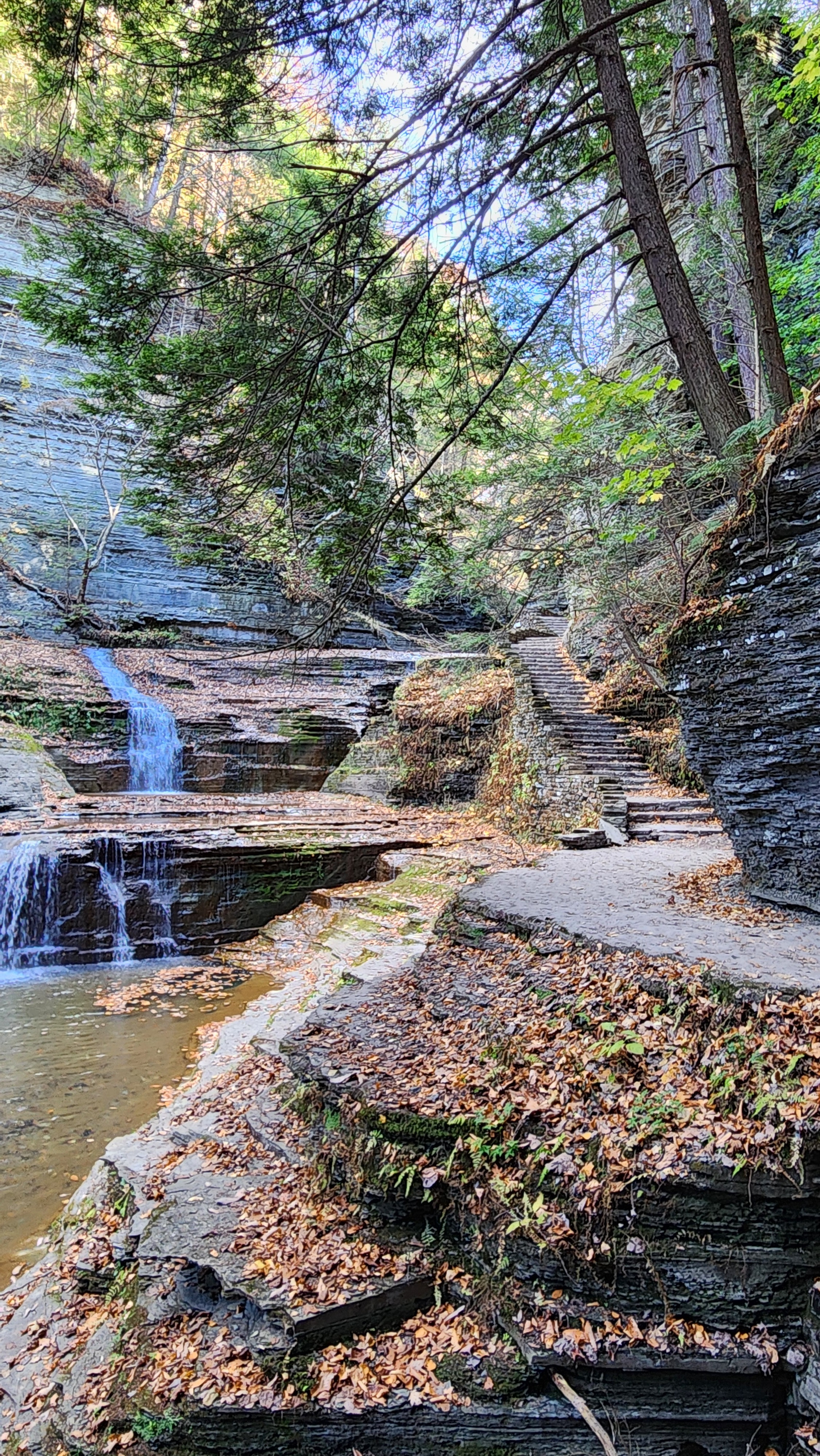
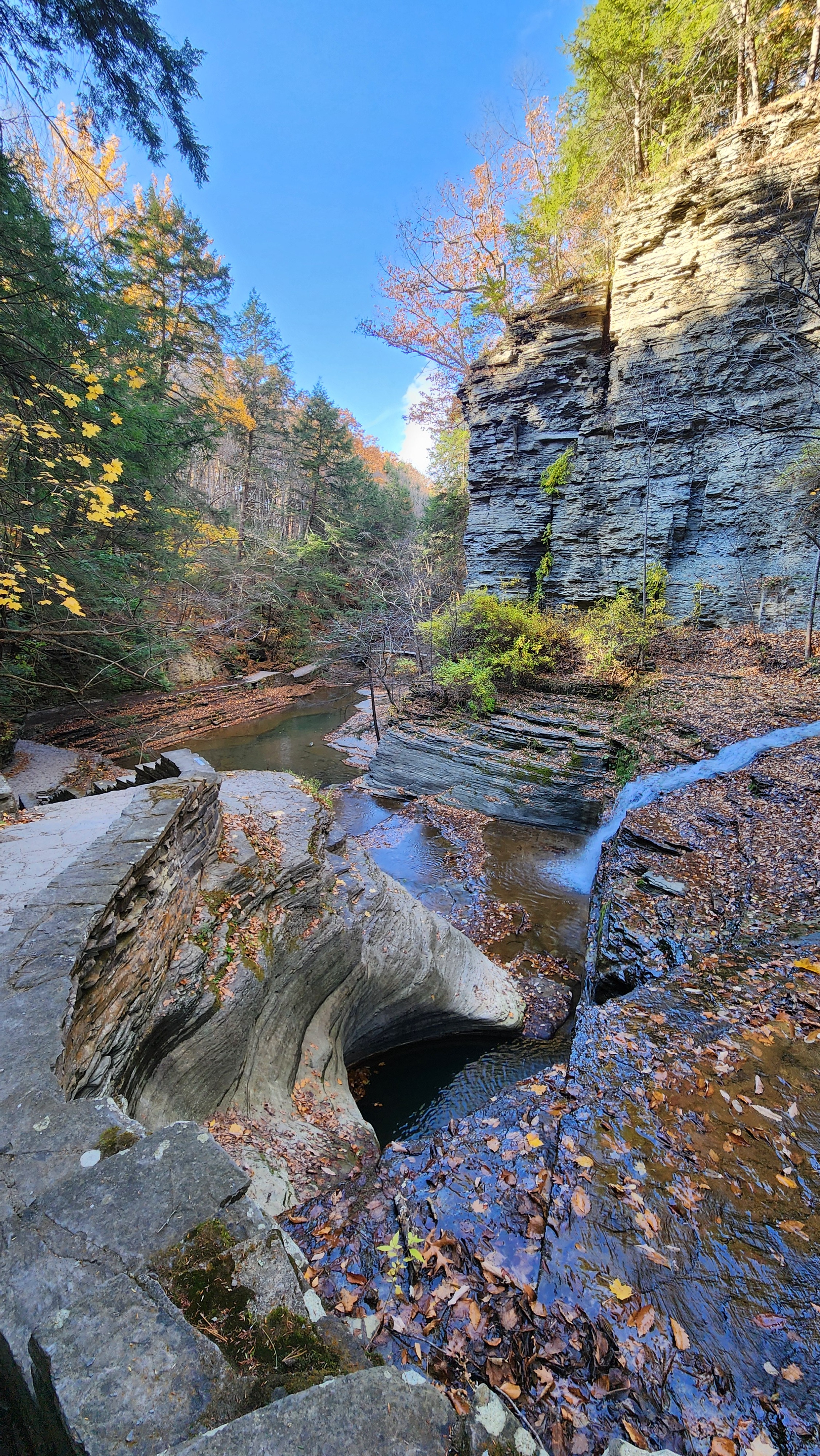
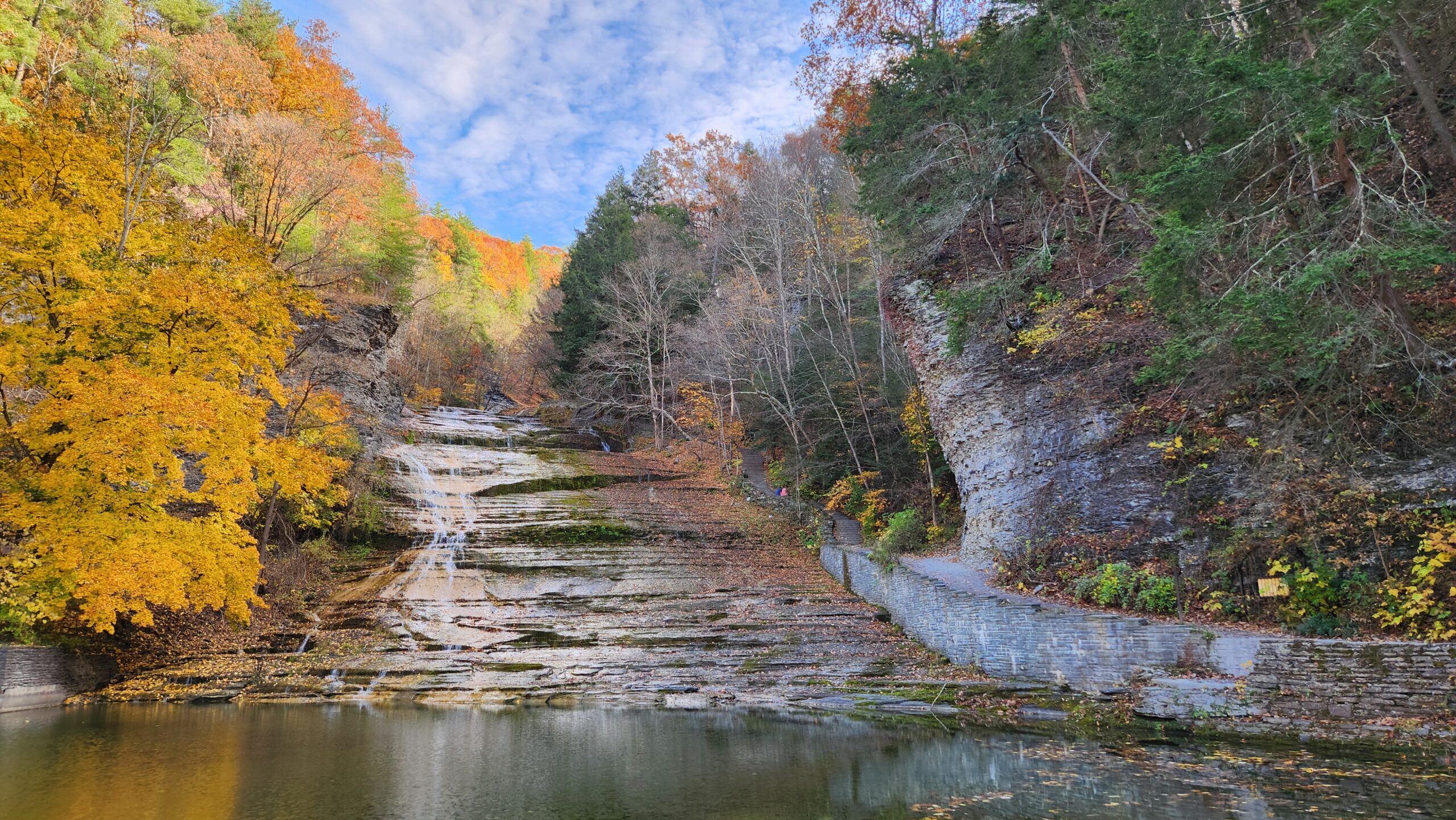
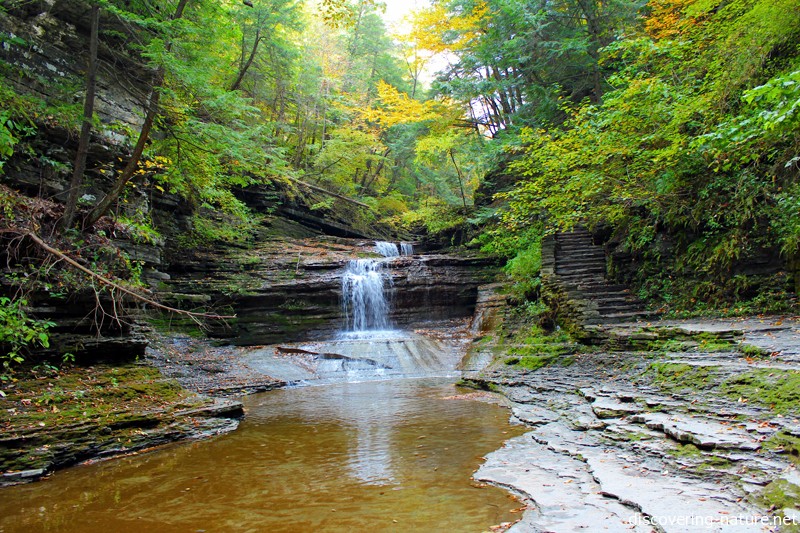
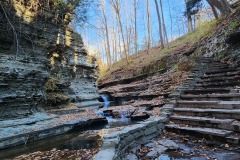
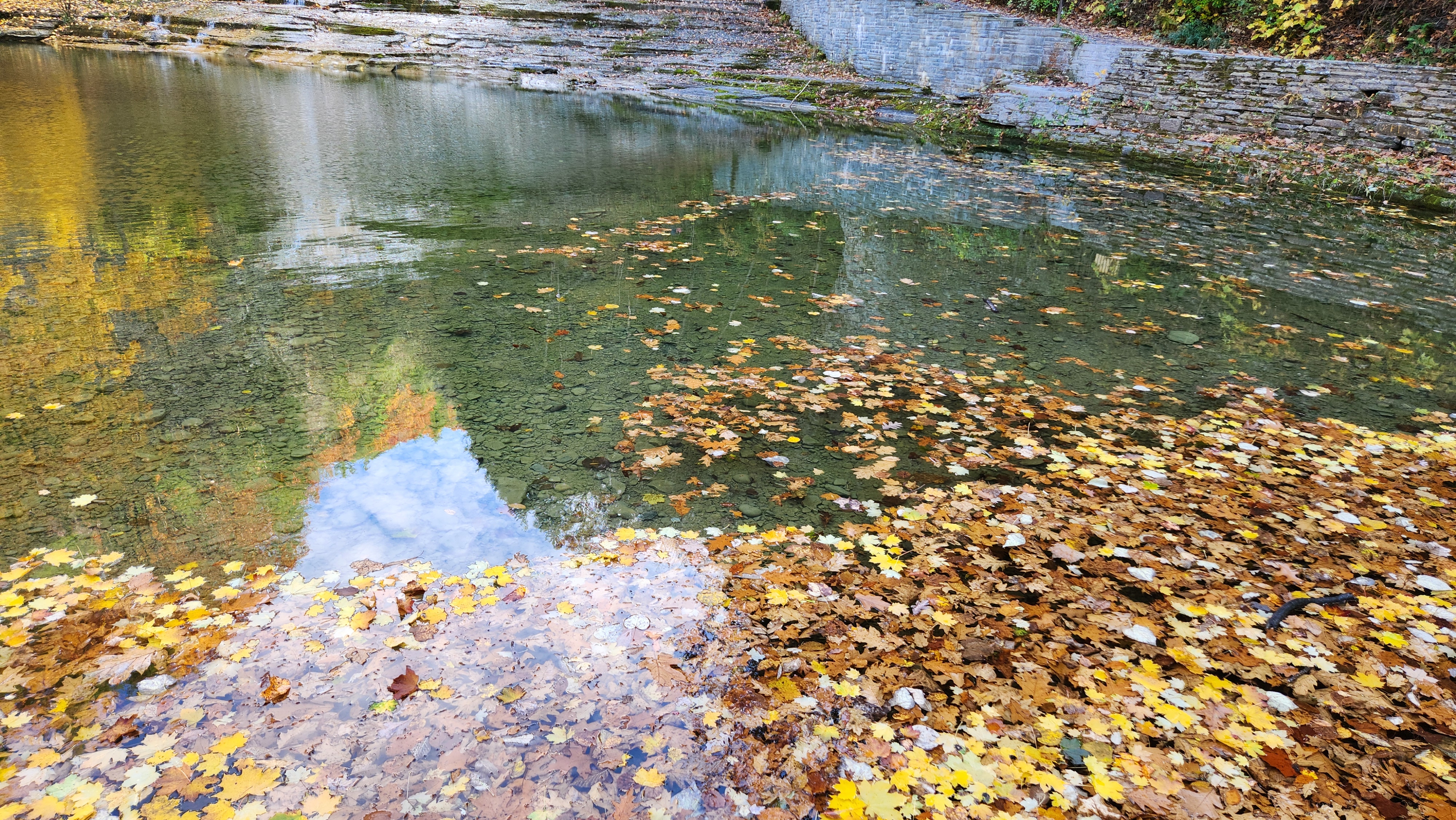
Exploring Buttermilk Falls involves a steep ascent through many layers of Devonian shale and sandstone that have eroded for thousands of years under the relentless progress of water. It’s a lovely climb, but first, you take stock from the ground, where you’re greeted by a welcoming pool sporting an unnecessary warning not to jump in. (It’s too chilly even to be tempted.)
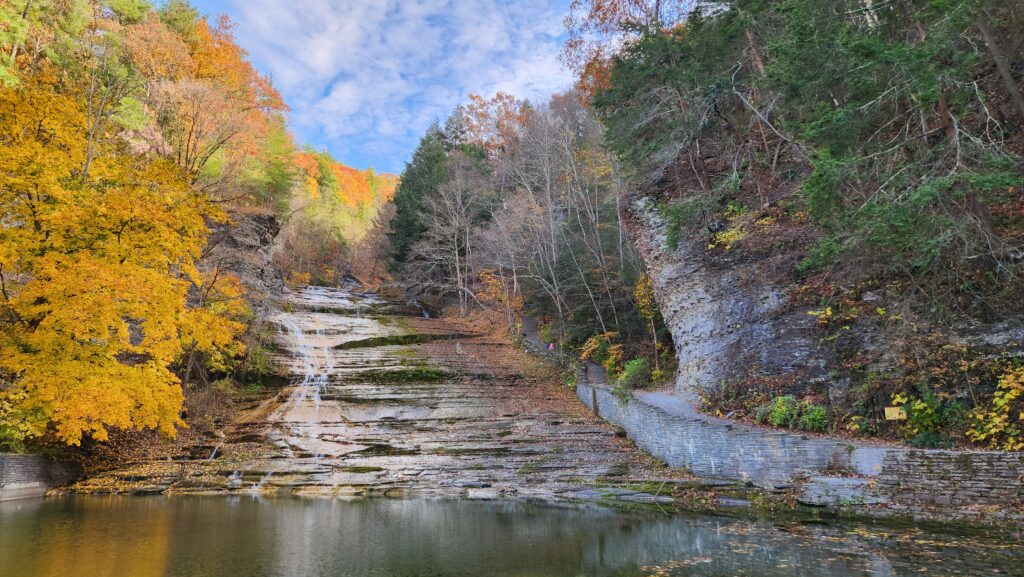
You take note of things like reflections on calm water, and the lazy drift of fallen leaves.
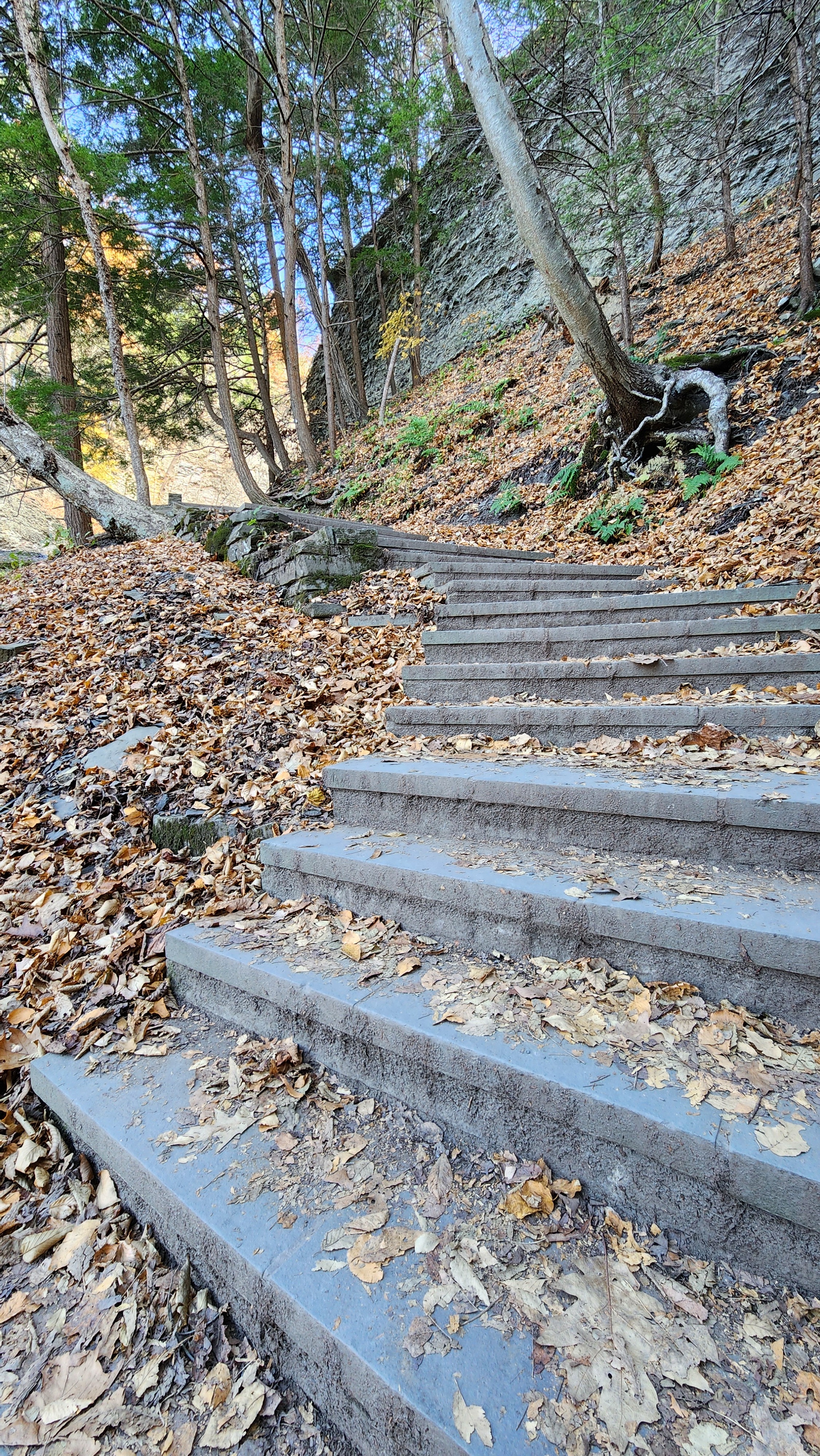
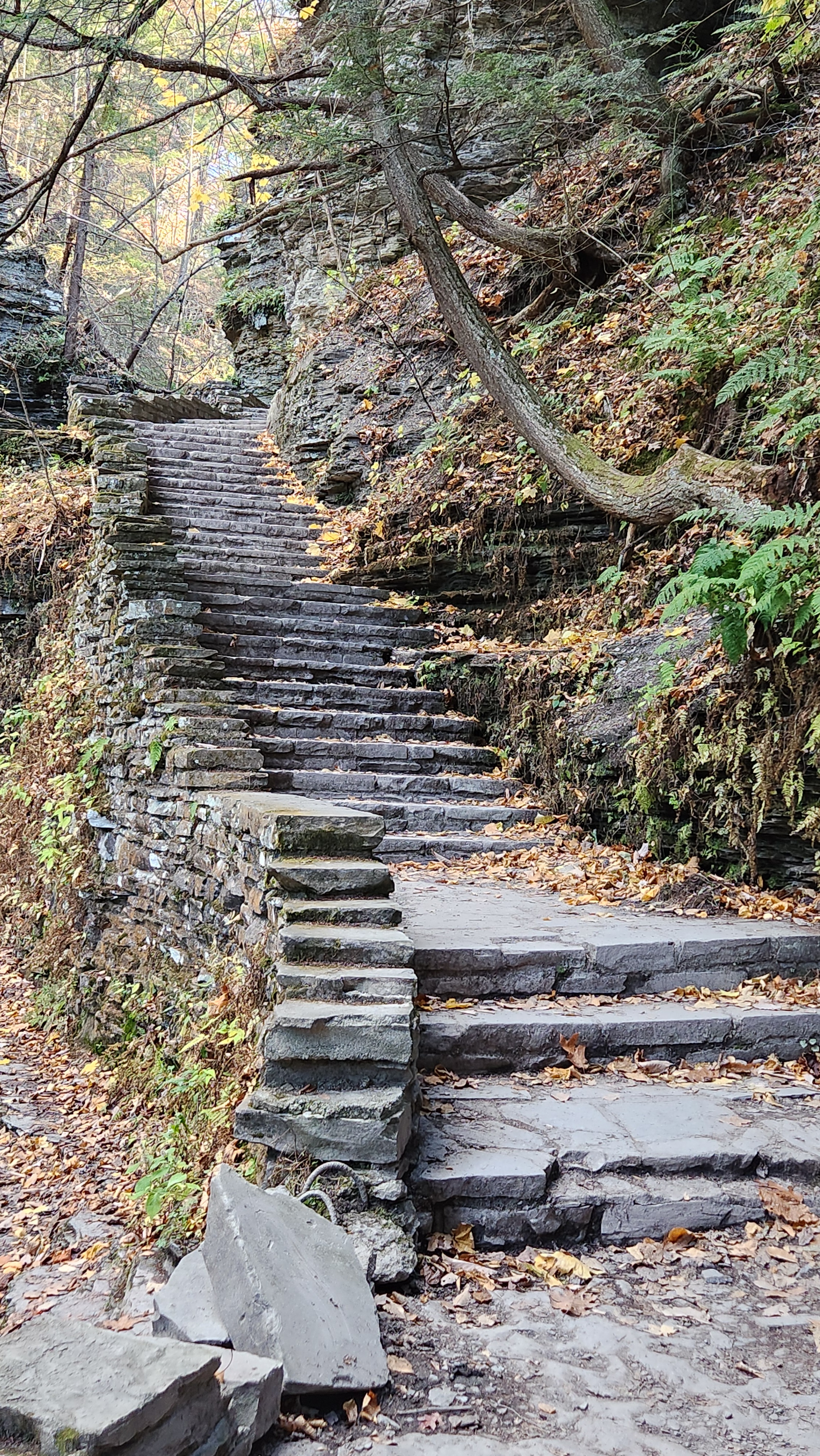
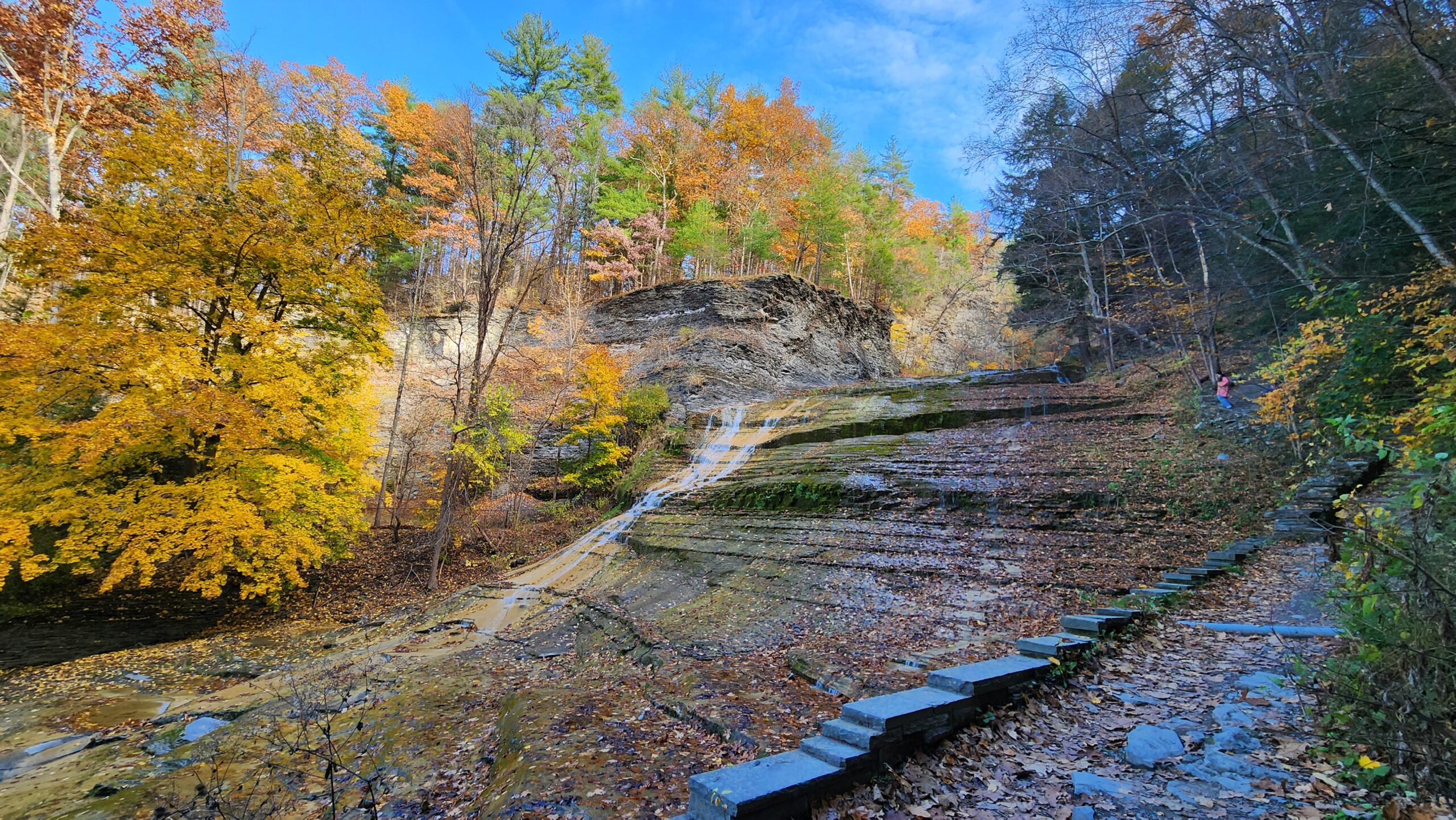
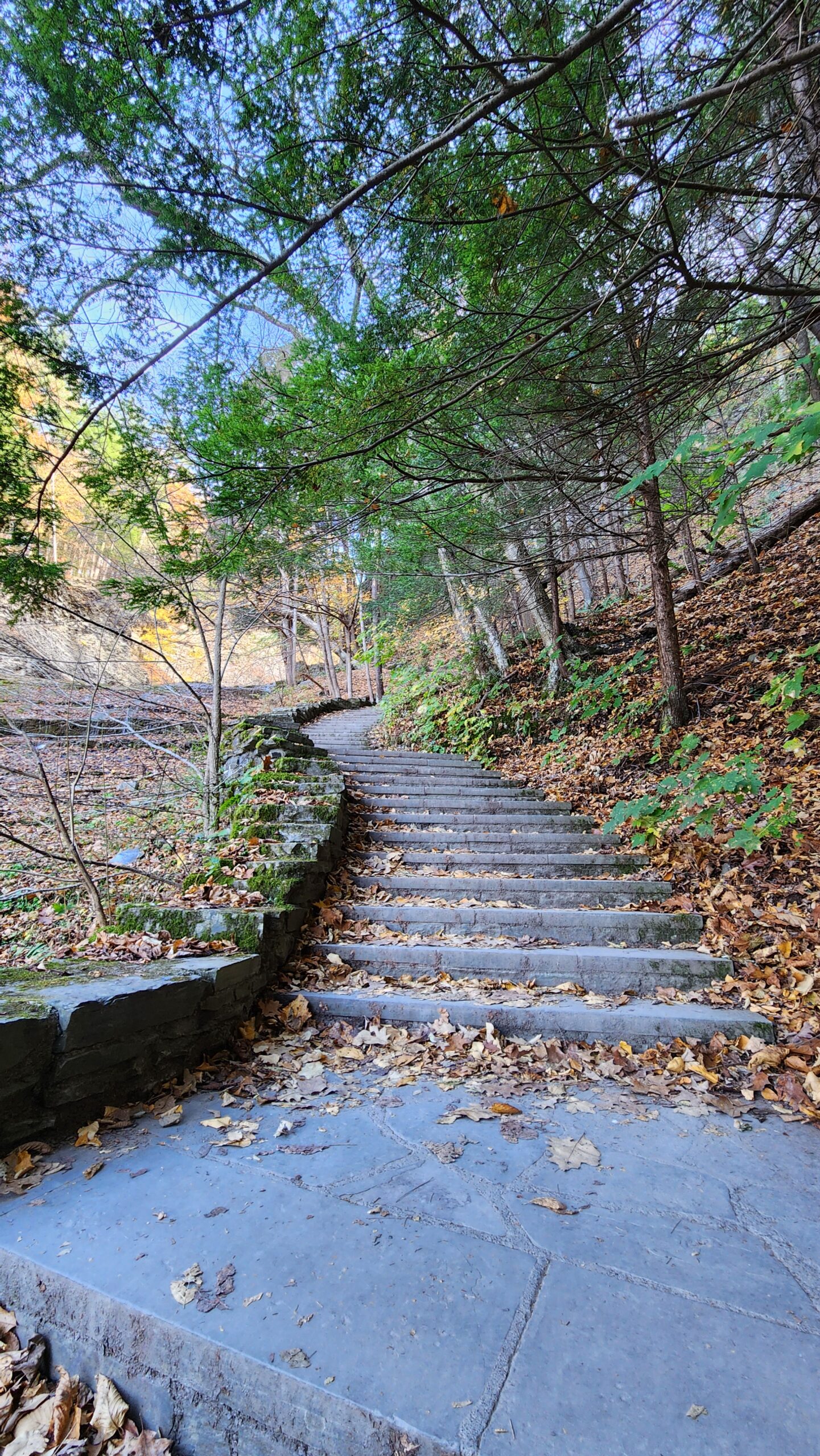
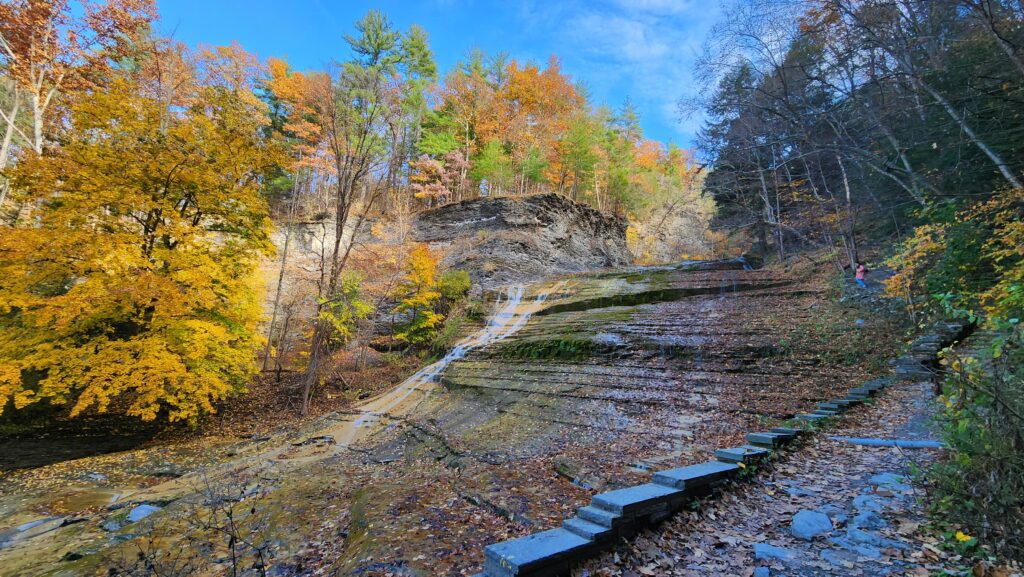
Then you start to climb. A humanly-constructed stone staircase ascends next to the natural staircase of the falls.
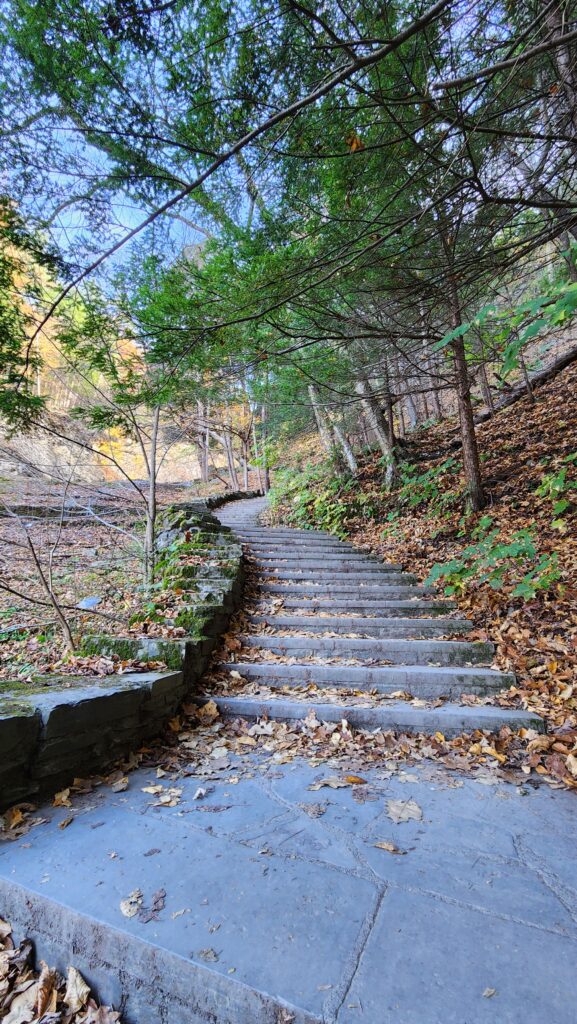
It’s short but steep, and you welcome the chance to stop for a bit, turning back to survey the view from a new elevation.
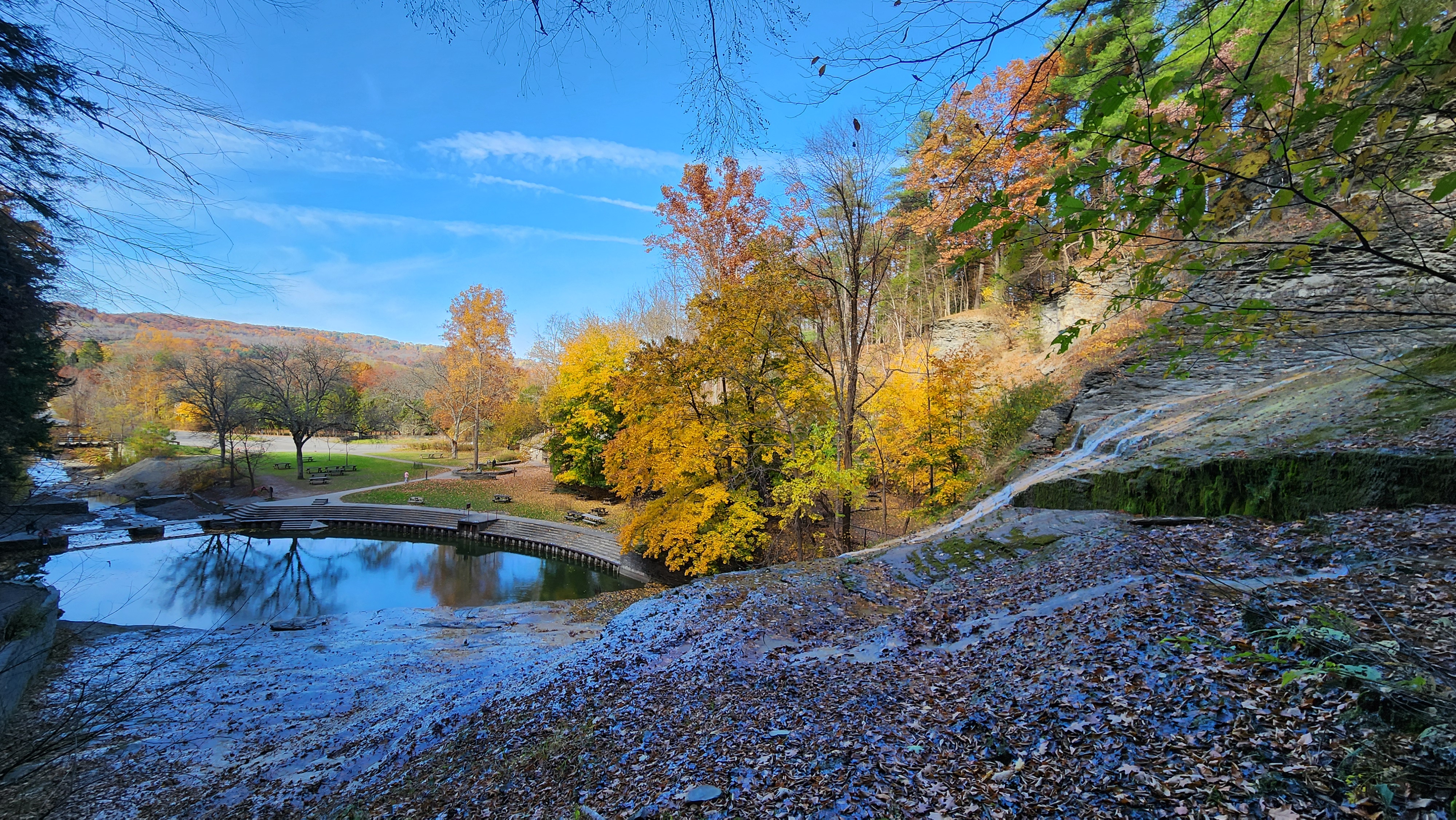
You can’t really see it yet, but from a little higher up you’ll discover a large mall with a Home Depot just beyond those trees at the bottom.
As I look, I remember a family photo experiment in the grass of that park when our daughters were young. We set up a tripod with a camera that shot a series of pictures as we dashed toward it, trying to look ominous but succeeding mostly in looking goofy and disorganized. So many walks trigger memories! The landscape bears an intimate record of our activities — not just the bad stuff, like dumping chemical waste or garbage, but good stuff from the times we spend together.
Turning to look across the stream, you note the daredevils: trees crowding to the edge of a cliff that will only ever crumble.
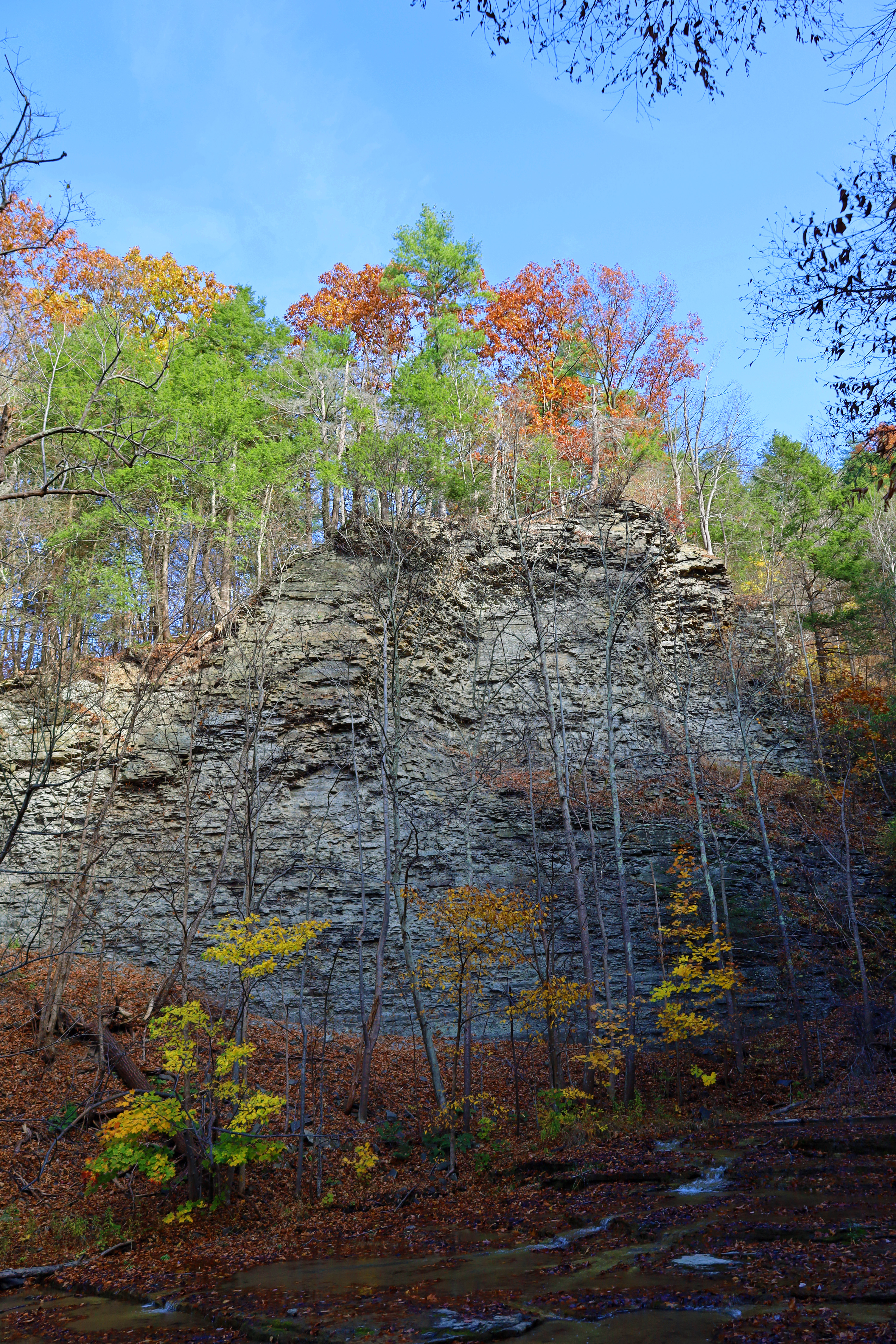
What comes next? The ascent is nowhere near completed. I’ll share more in the next post.
-
Autumn Rambles
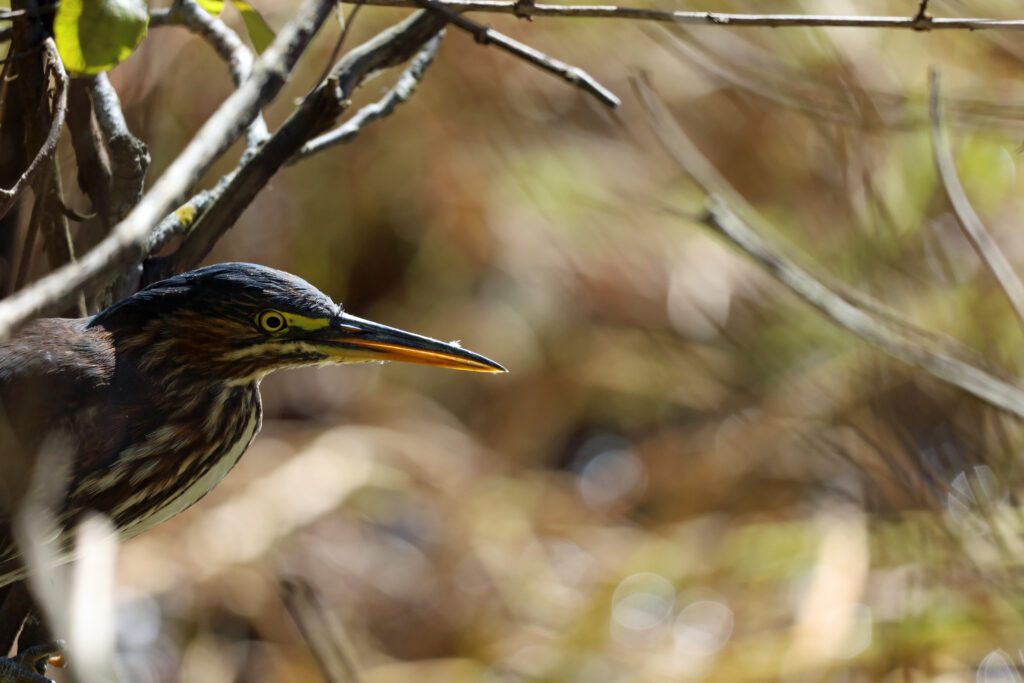
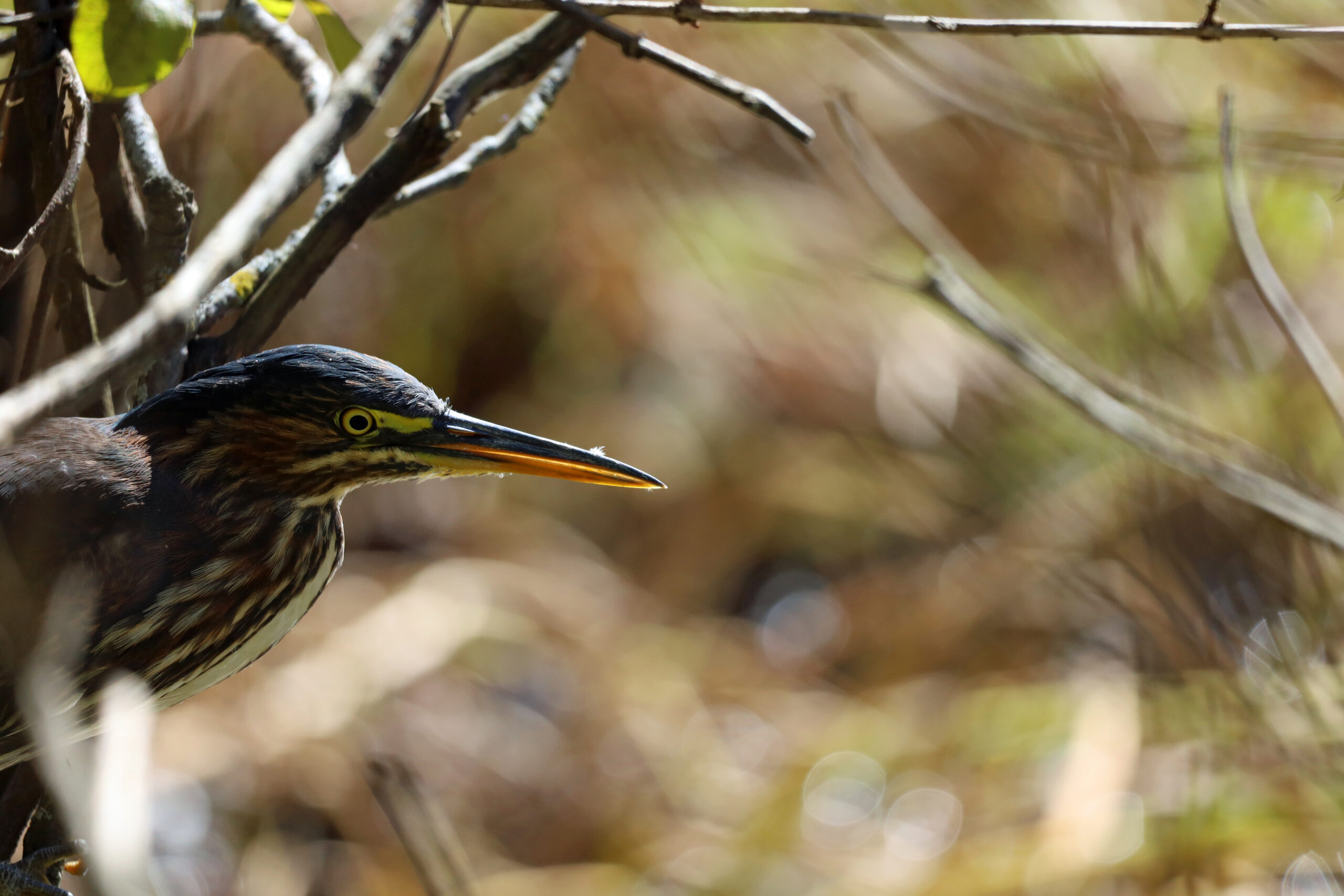
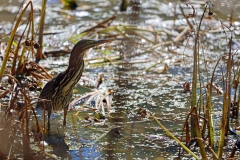
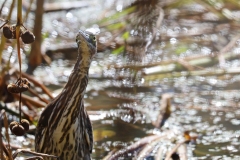
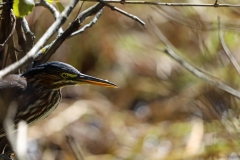
Green Heron On a walk, it’s safe to assume that surveillance is being conducted by some creature or other. This green heron is one example. It took a few minutes to ensure that we weren’t a threat before continuing the all-important business of hunting pond organisms for its lunch.
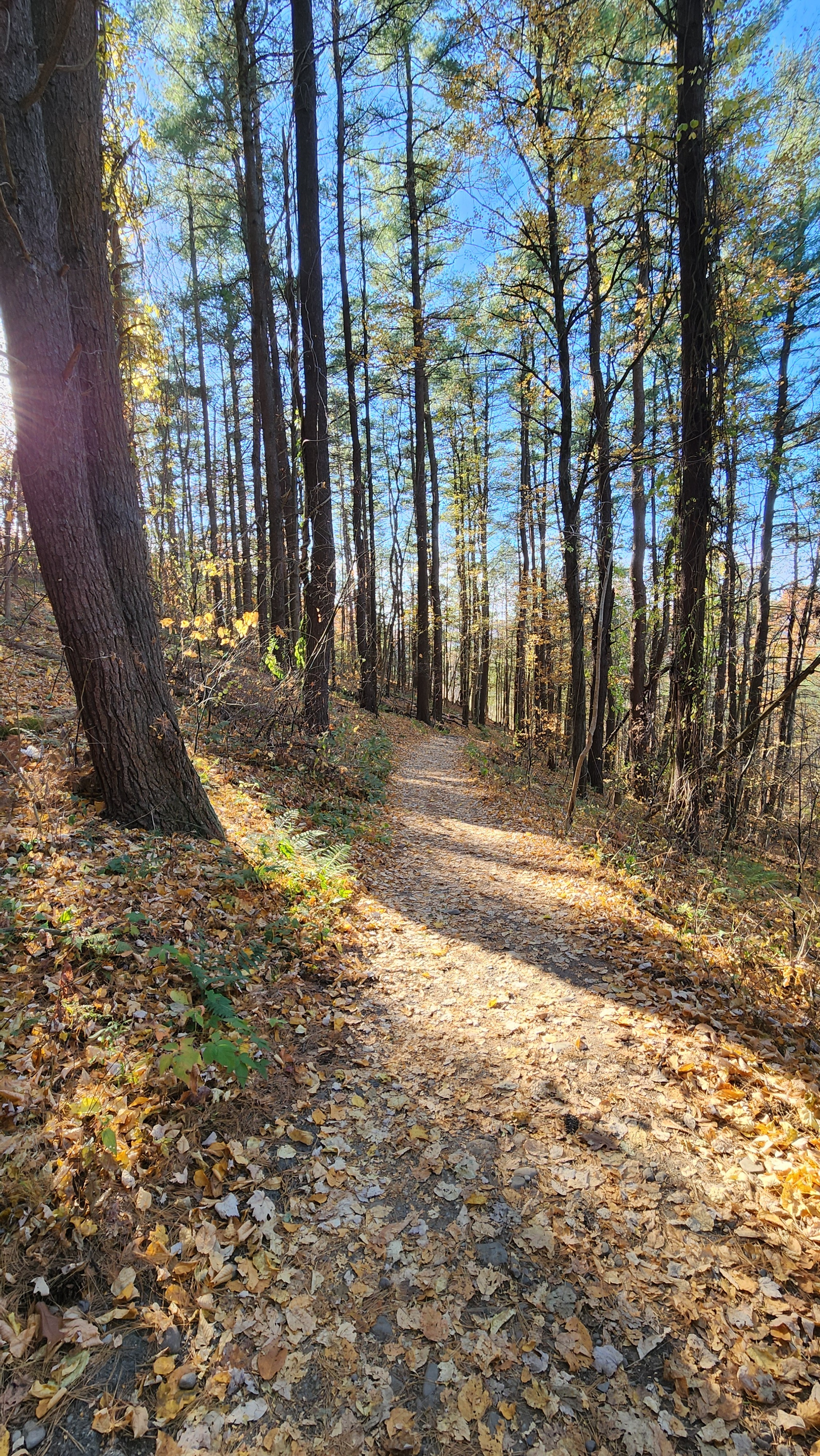
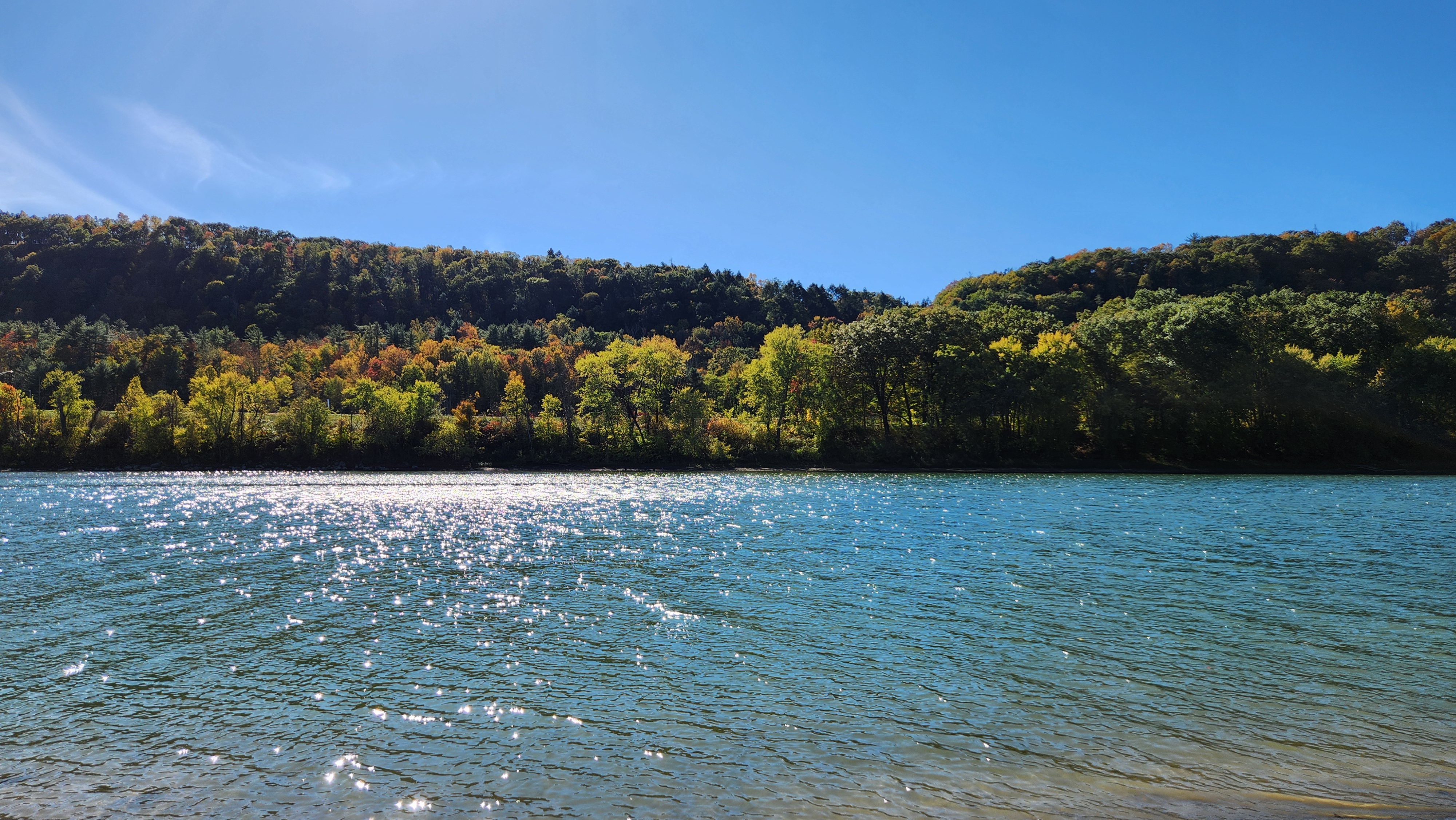
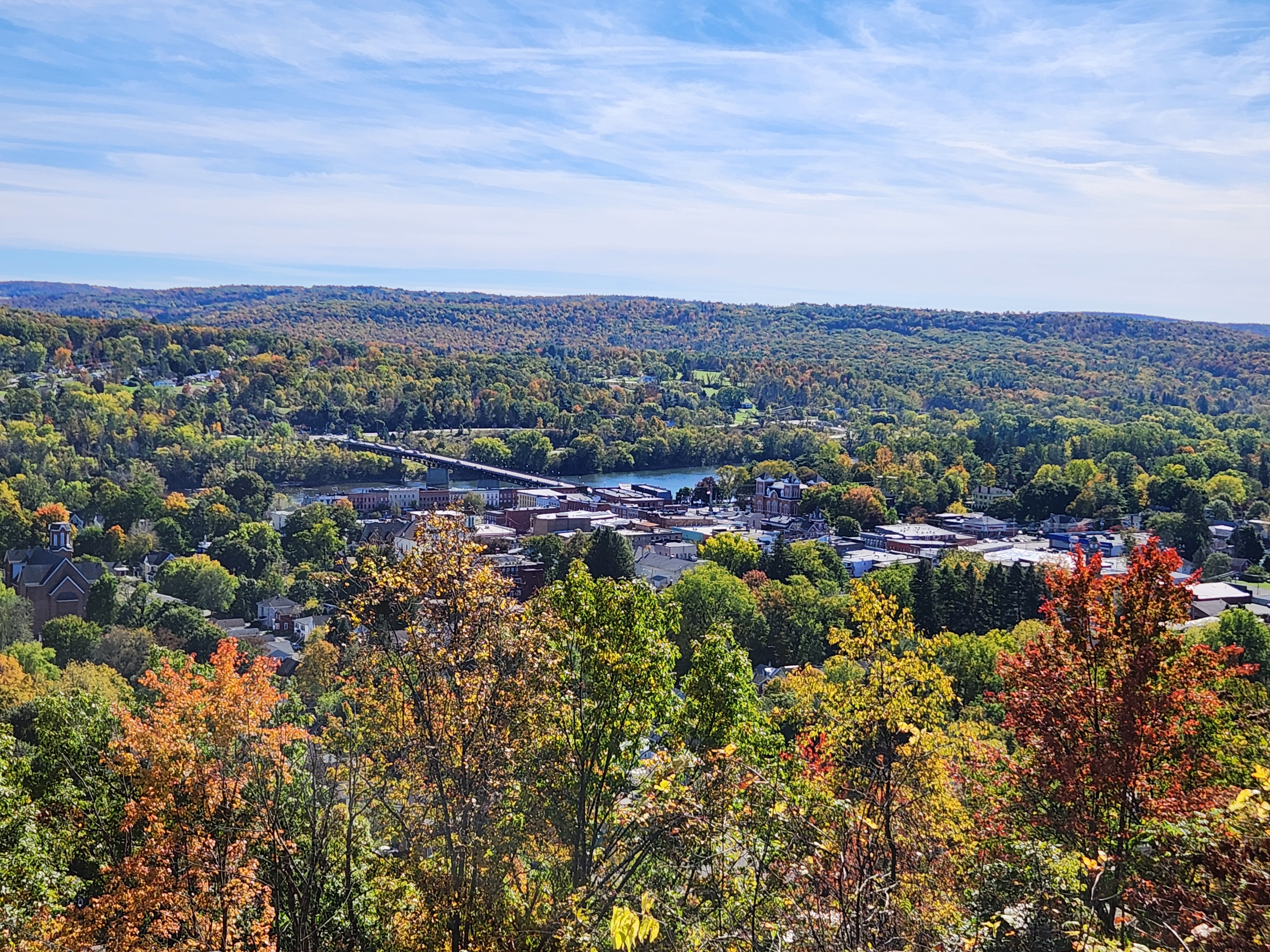
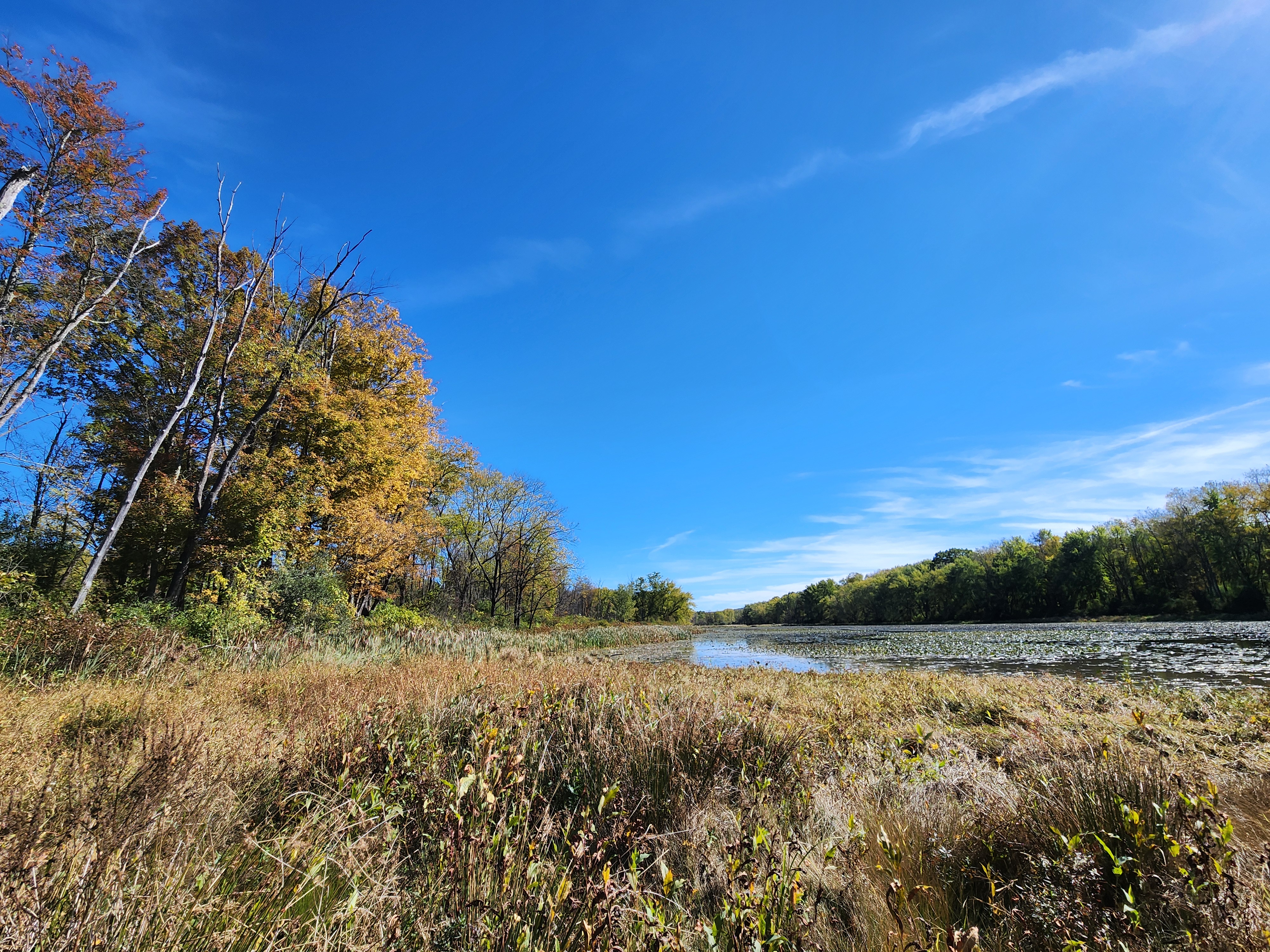
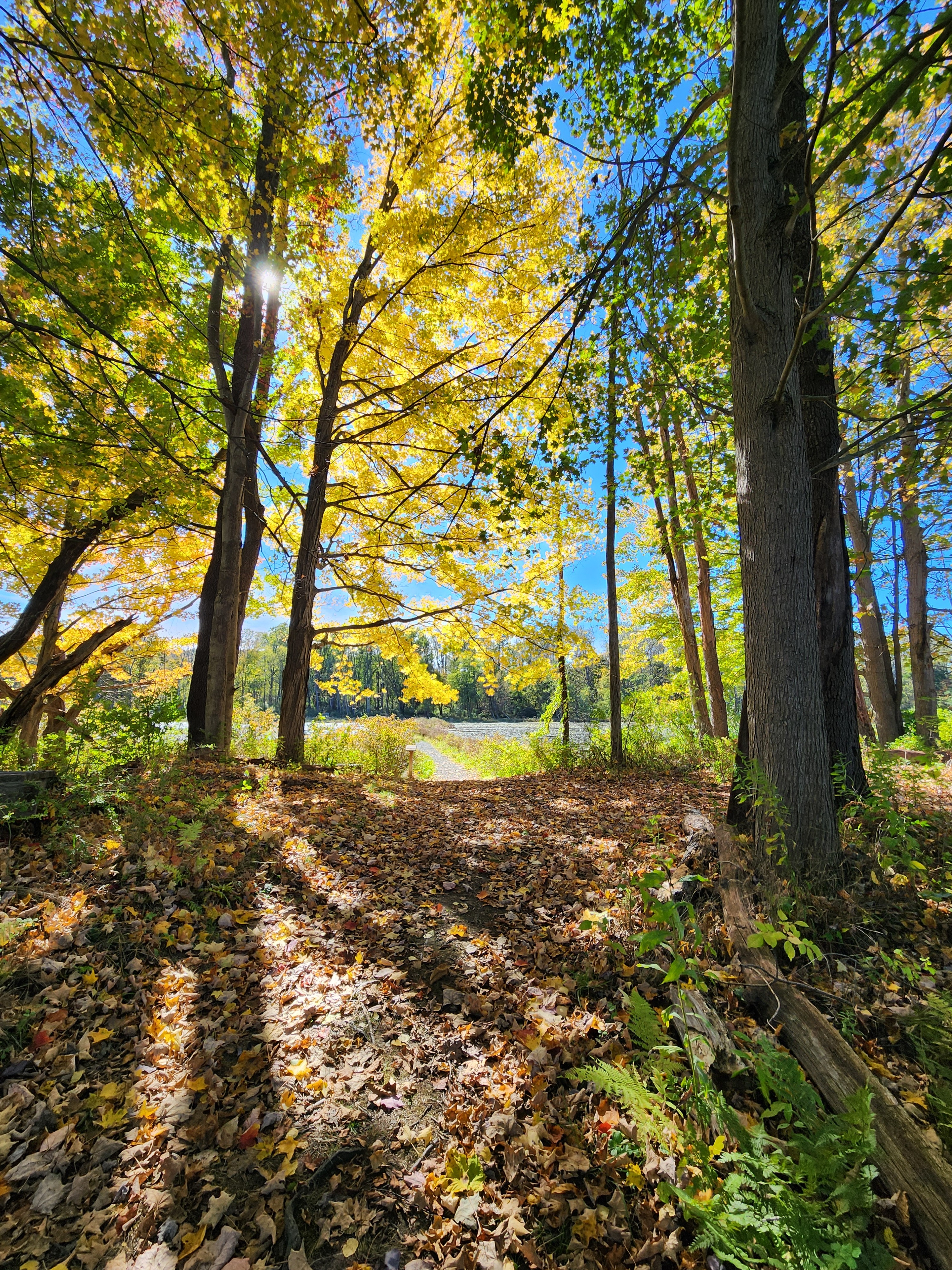
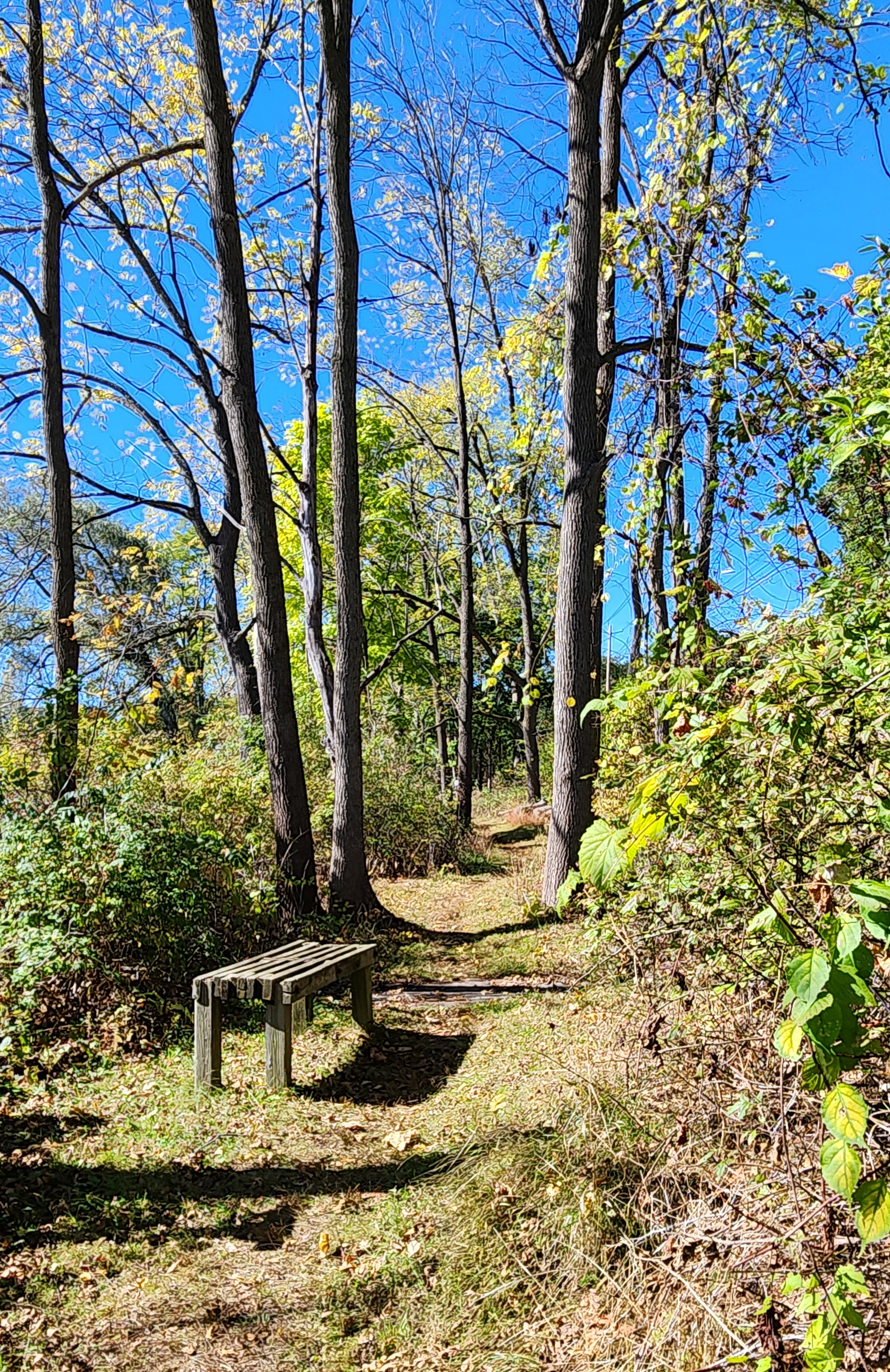
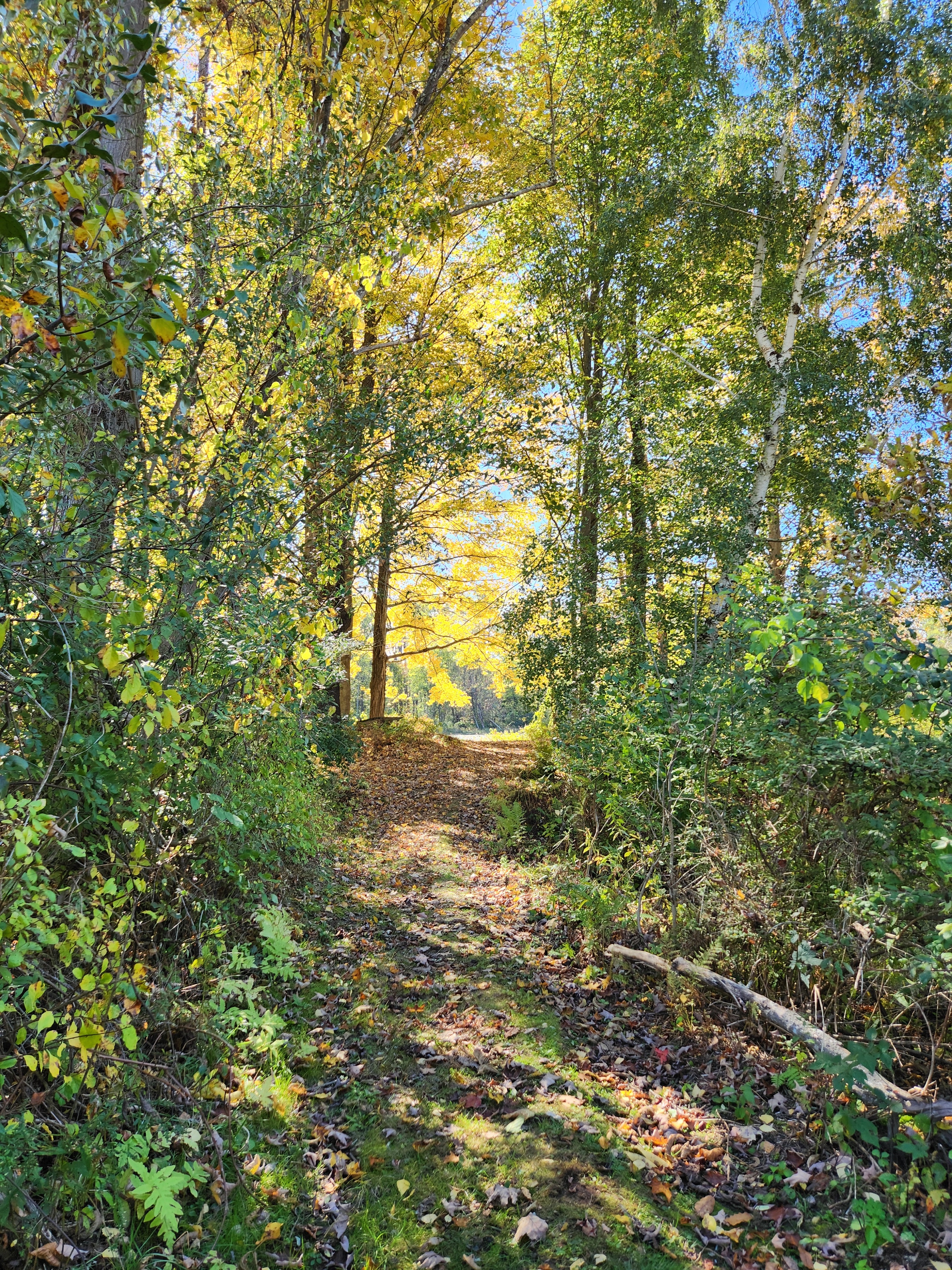
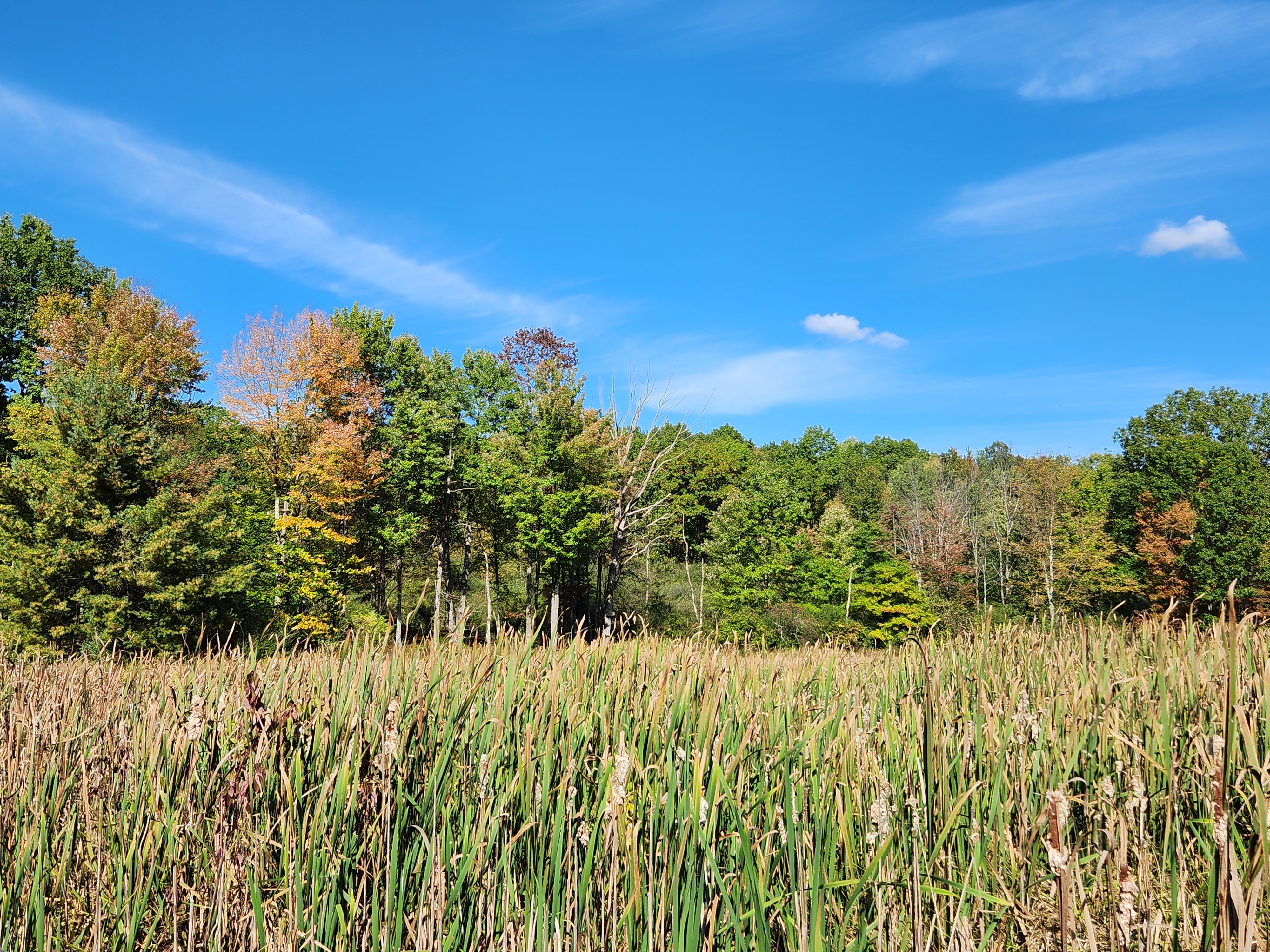
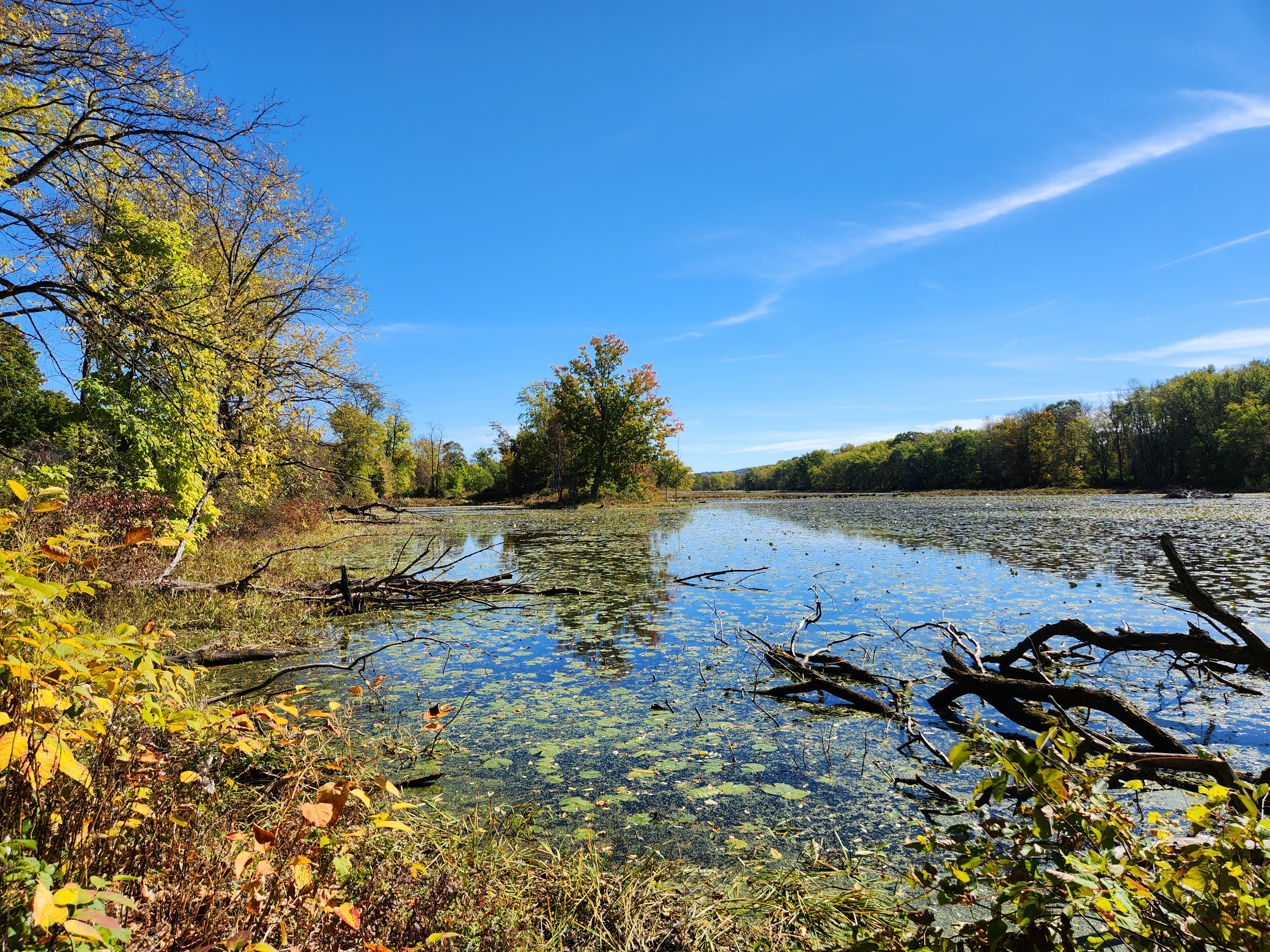
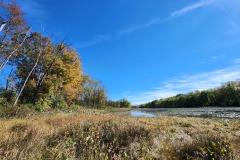
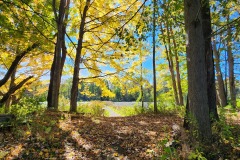
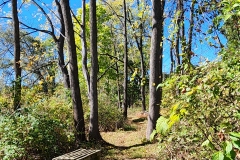
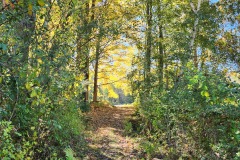
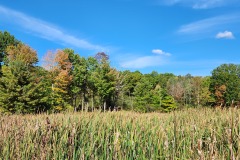
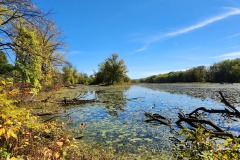
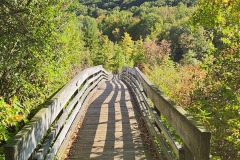
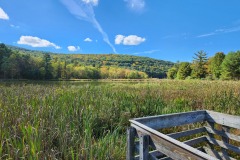
I’ve compiled images from three different walks into this gallery. There are enough photos that the slideshow spills over to a second page, reached by the arrow at bottom. It’s not a super colorful fall here — more yellows and browns than reds and oranges. But the unique autumn sunlight and odors of autumn give familiar trails a touch of enchantment just the same.
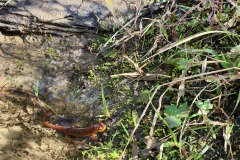
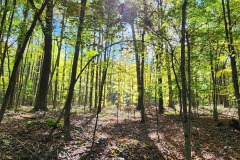
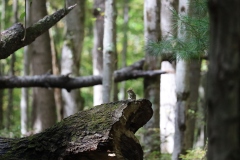
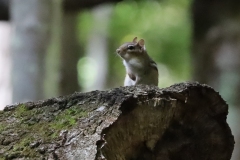
-
Pond Album
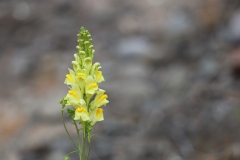
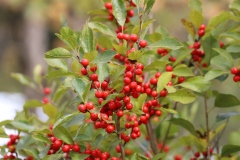
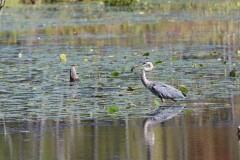
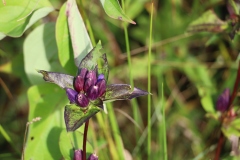
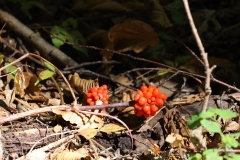
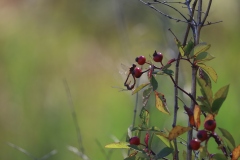
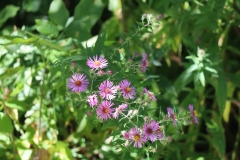
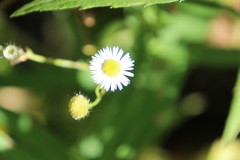
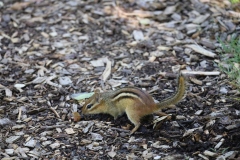
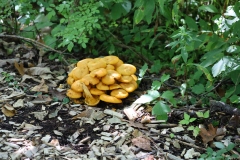
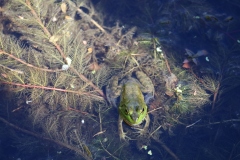
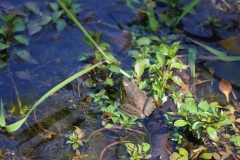
I never followed up my heron post with the other pictures from my Sapsucker Woods walk. Here they are — a reminder that we always see new sights. Several of these plants are unfamiliar to me, and I need to follow up on them.
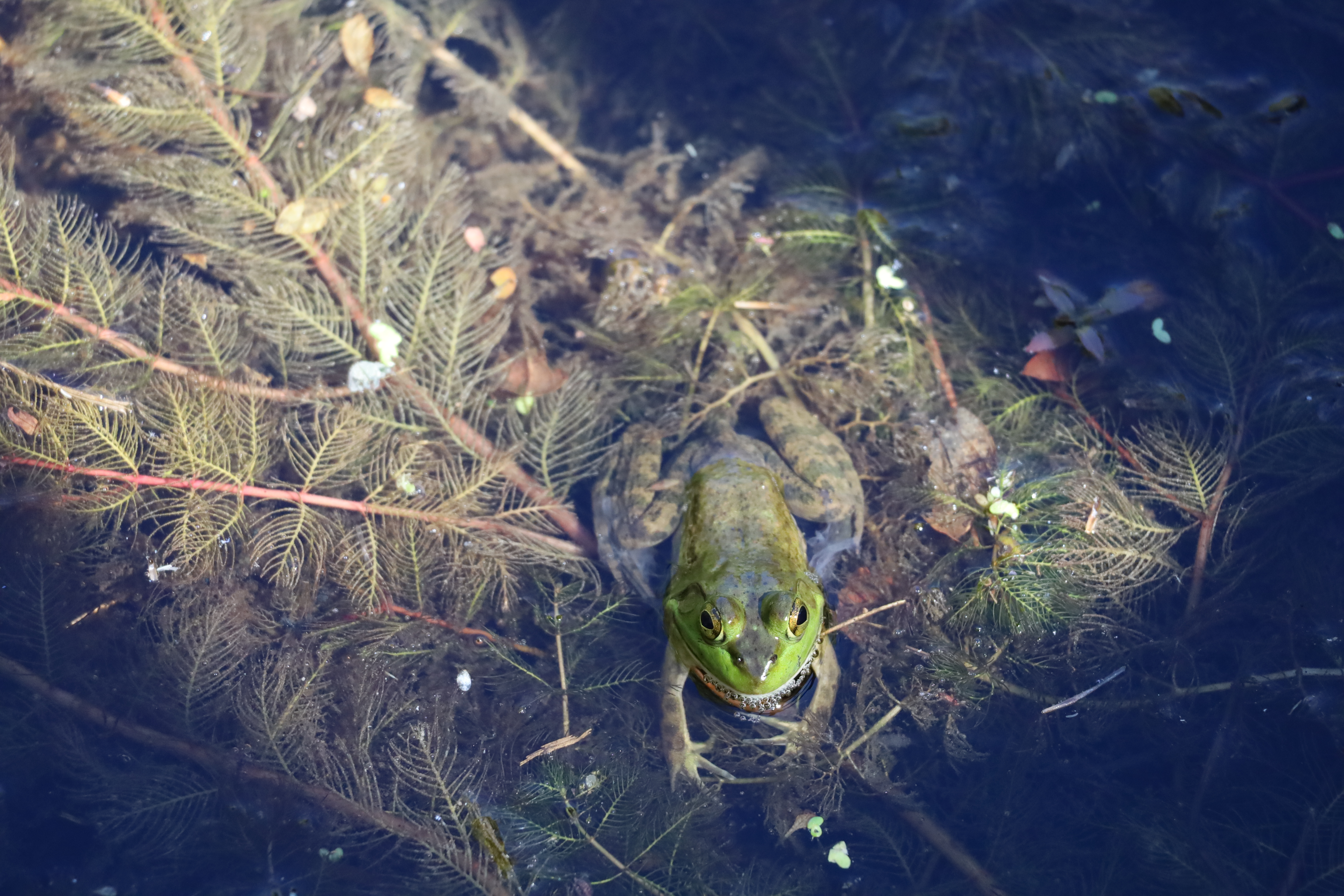
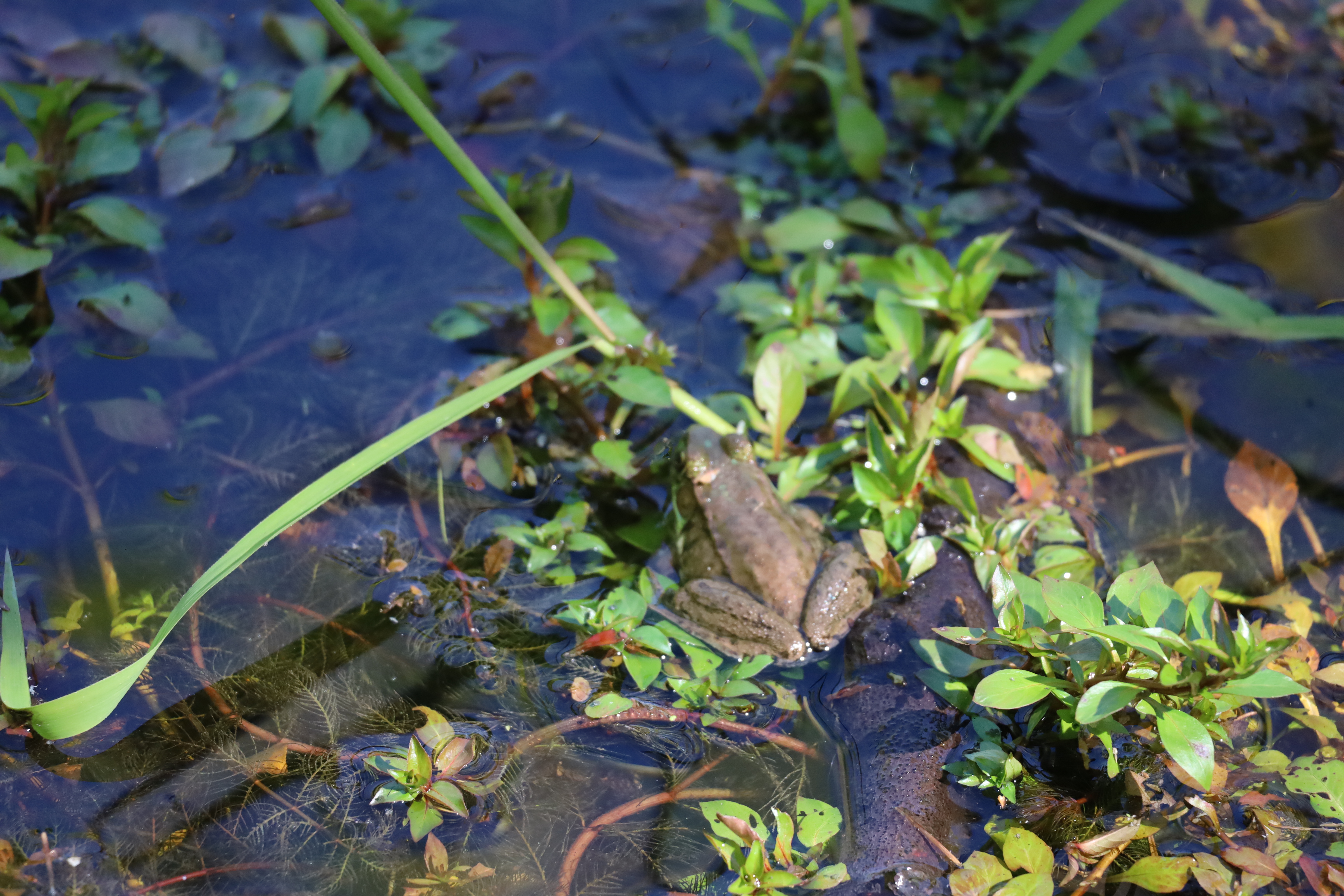
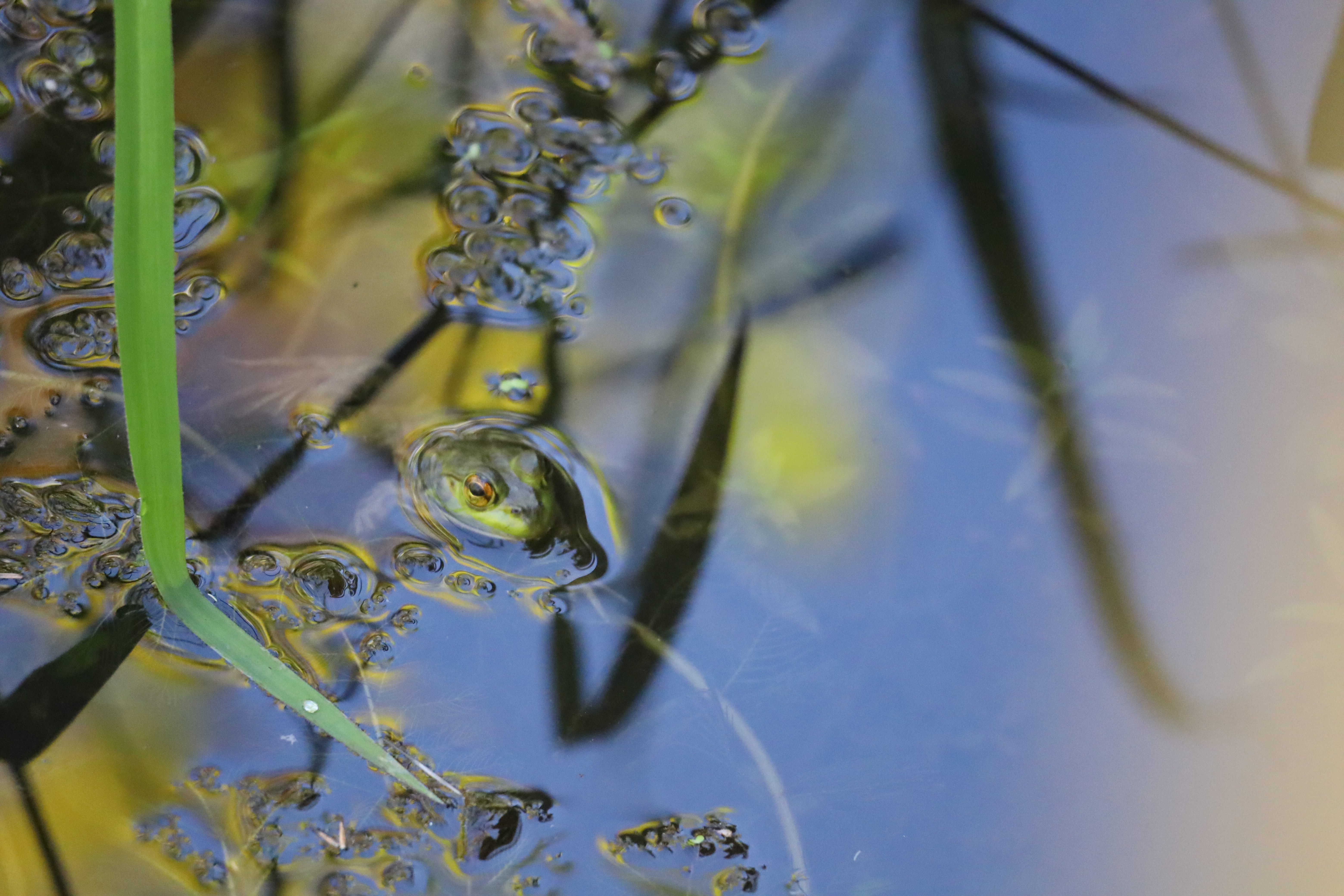
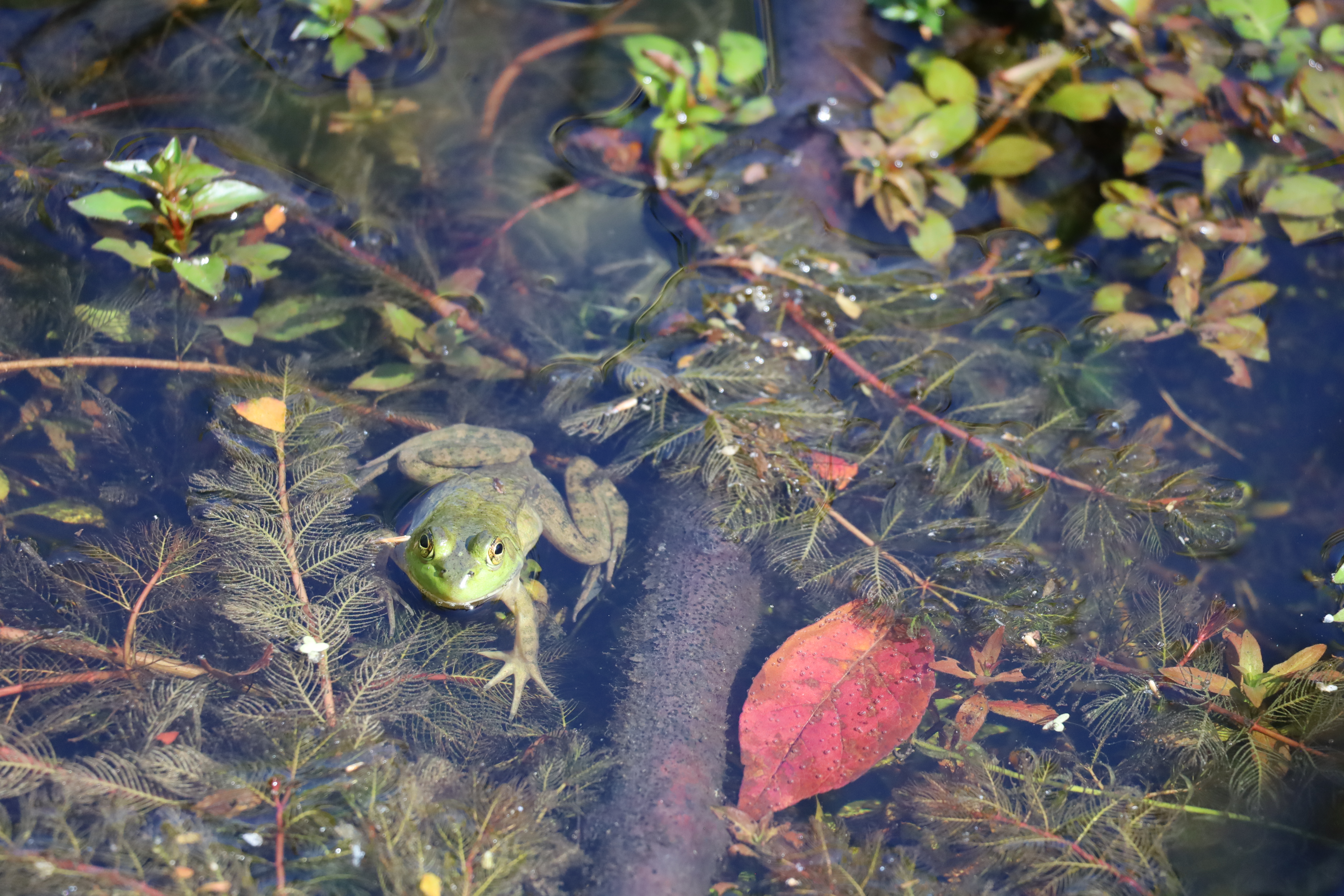
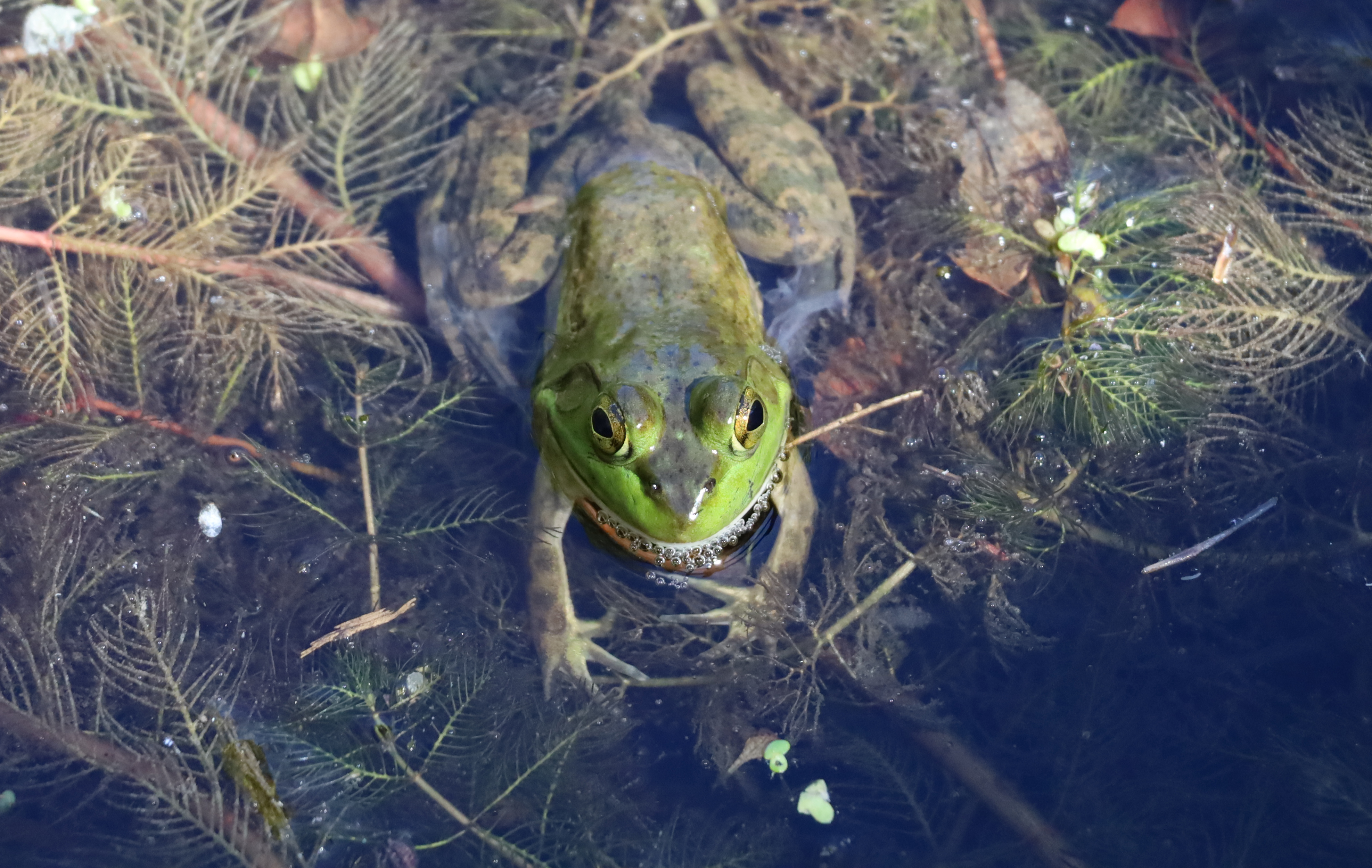
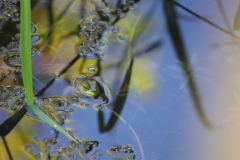
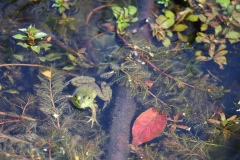
I’d also like to learn more about frogs. Years ago I took a picture of one sitting atop the ice on a frozen marsh in winter. On this walk, I saw this handsome fellow with his bubbly smile. I wonder: why the bubbles?
Anna Botsford Comstock is no help in this, but I do learn from her Handbook of Nature Study that:
- Their ears are the round gray spots next to their eyes. They’re visible on the frog in the picture.
- Frogs hibernate, burrowed into the mud of ponds. What made the one on ice appear in January remains a mystery. Reading the rest of that post makes me think it was an unseasonably warm spell, because the birds also were behaving as if it was spring. The frog may have been doing the same thing.
- They are a favorite food of herons. This I knew already.
- They can cover ground much more quickly than toads due to their muscular, developed hind legs, but water is their home environment.
- Frogs have a chameleon power to change to the color of their surroundings. This reminded me of one that I found on my kitchen counter shortly after my husband and I moved in. At that time the counter was dark green — in keeping with the original ’70s vintage of the kitchen! — and the frog sat motionless on it, identical in color, next to the sink. I was sure it was a prank, a plastic frog placed there by my husband, but in fact it was a real frog. I have no idea how it got there, other than perhaps it came through the drain. It’s the one and only indoor frog I’ve ever seen. I moved it out to the front step and later in the day it was still there but had changed to gray.
So much for my brief investigation of Comstock’s comments on frogs. Now on to the pictures.
-
Why I leave the zinnias
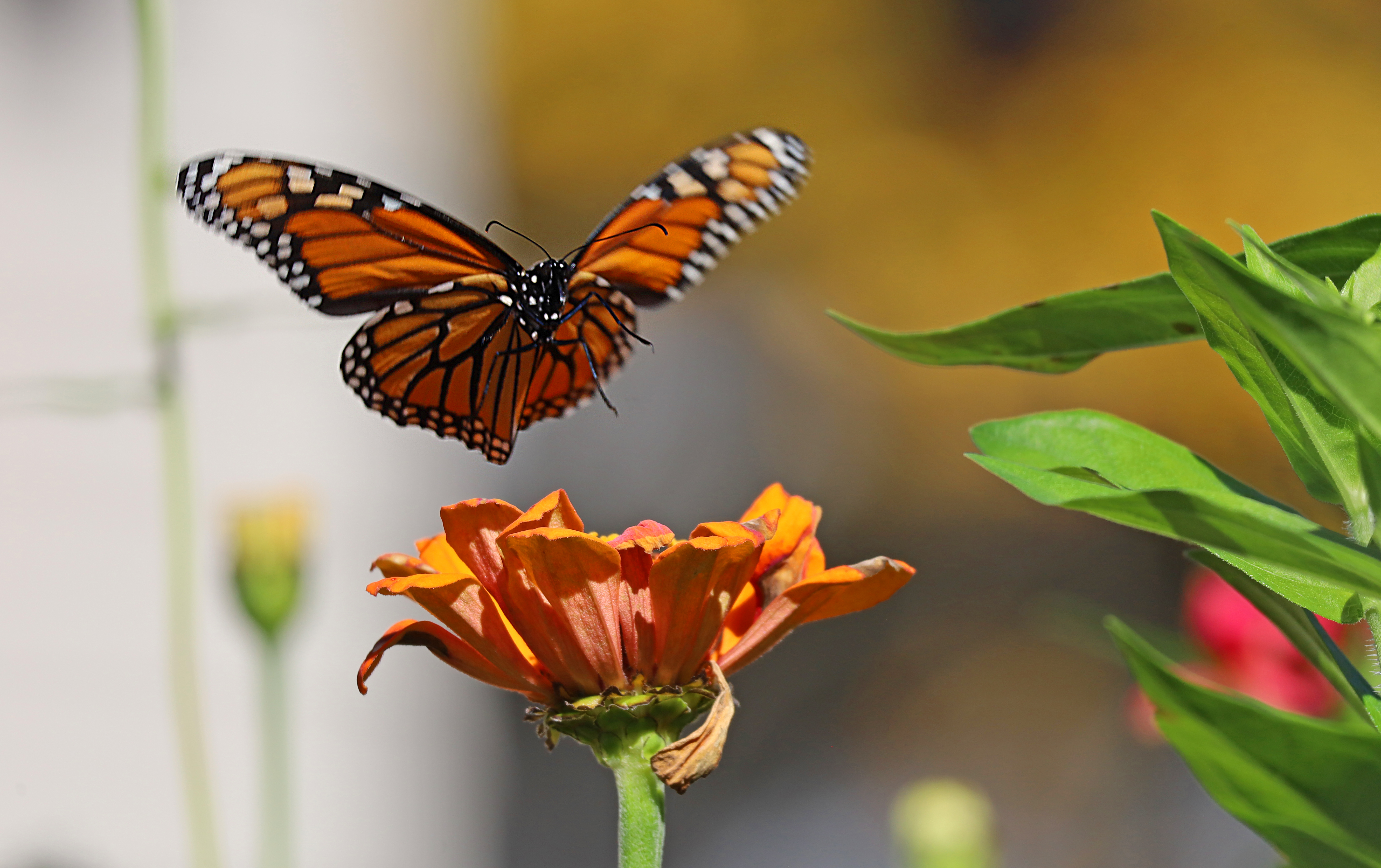
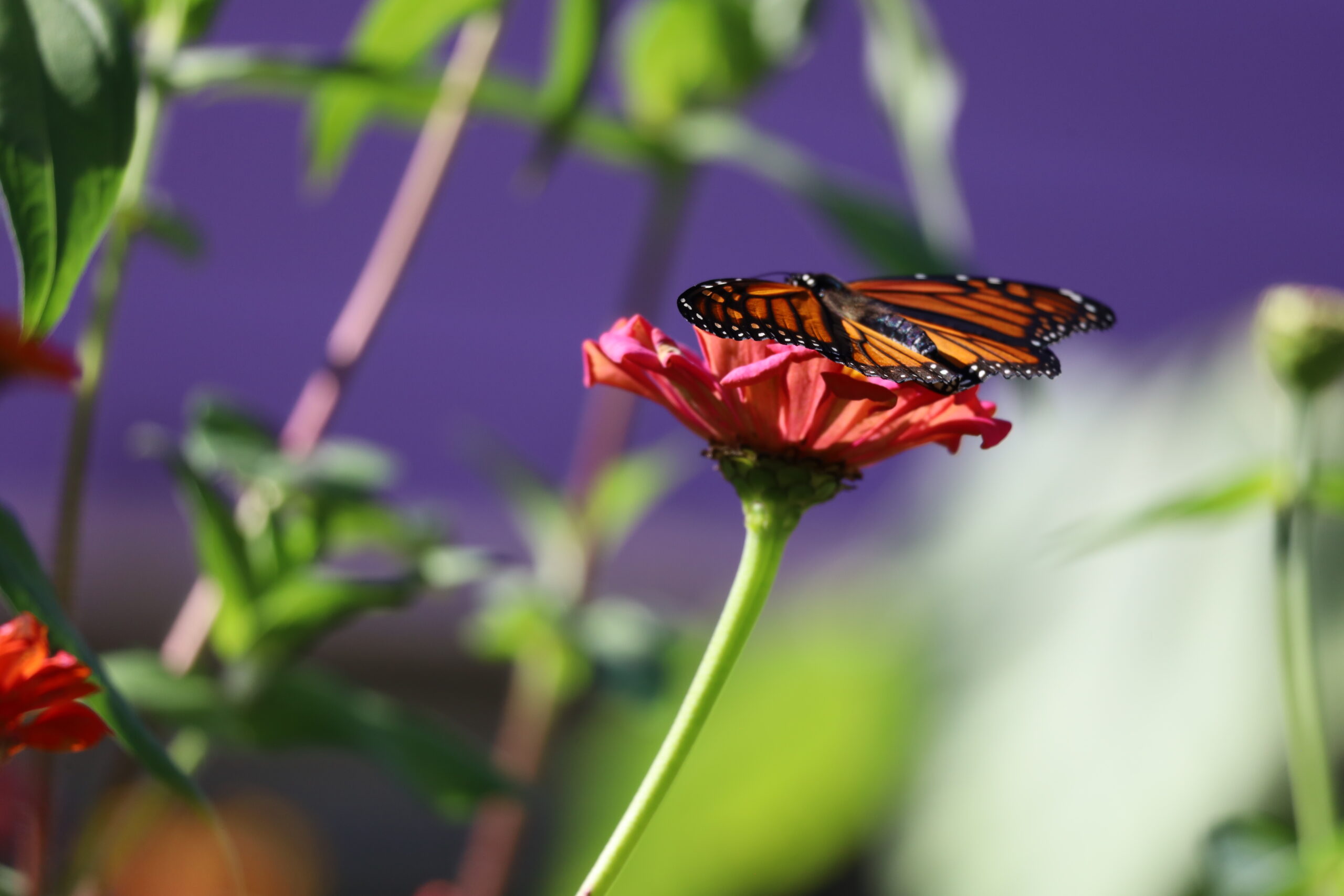
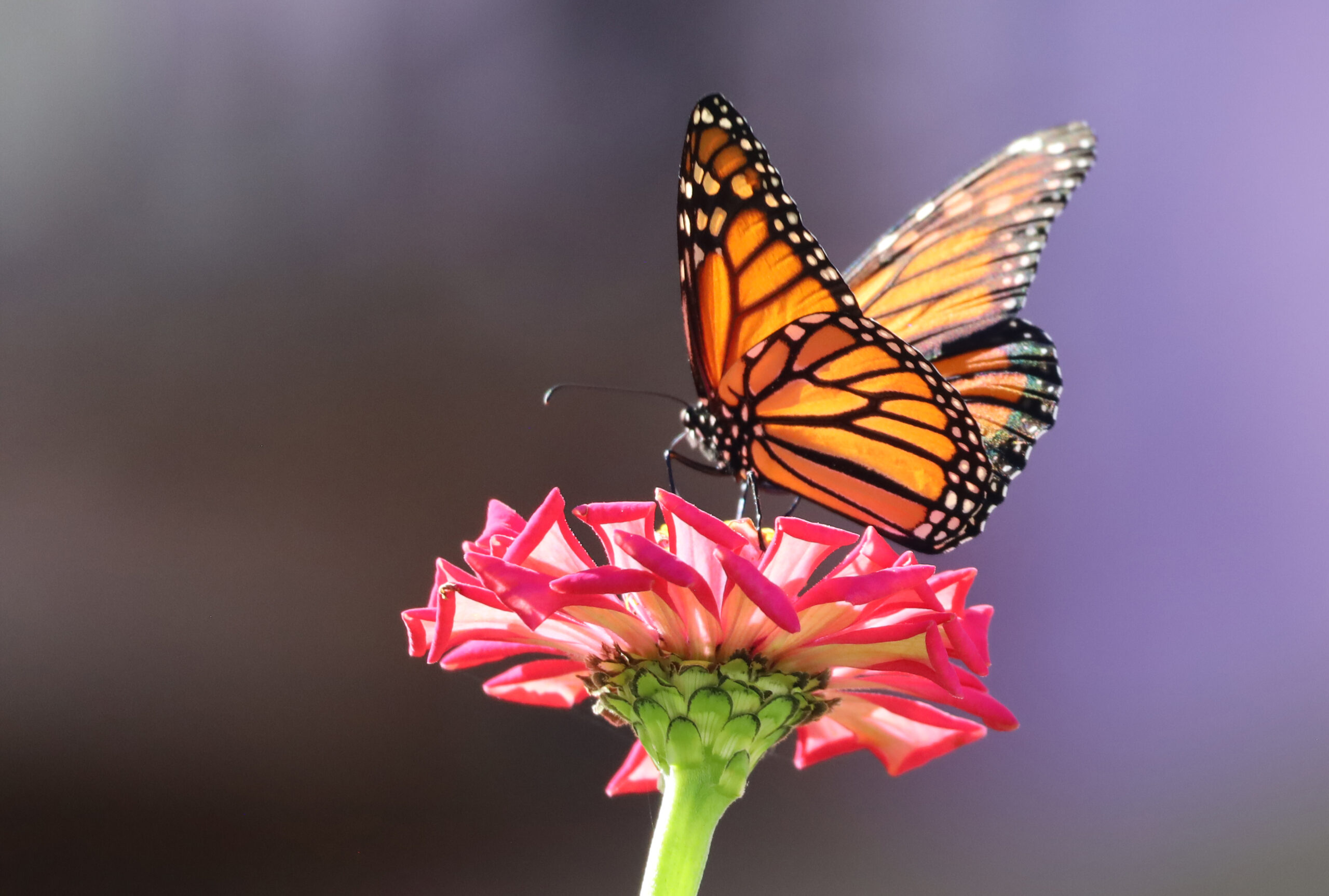
These flowers are past their prime, but I leave them for the various passersby that might benefit from them: bees, goldfinches, passing hummingbirds, and butterflies. Today I saw a monarch battling the warm breezes to feast on them, and since it’s one of a precious few I’ve seen this summer, I wanted to take some pictures.
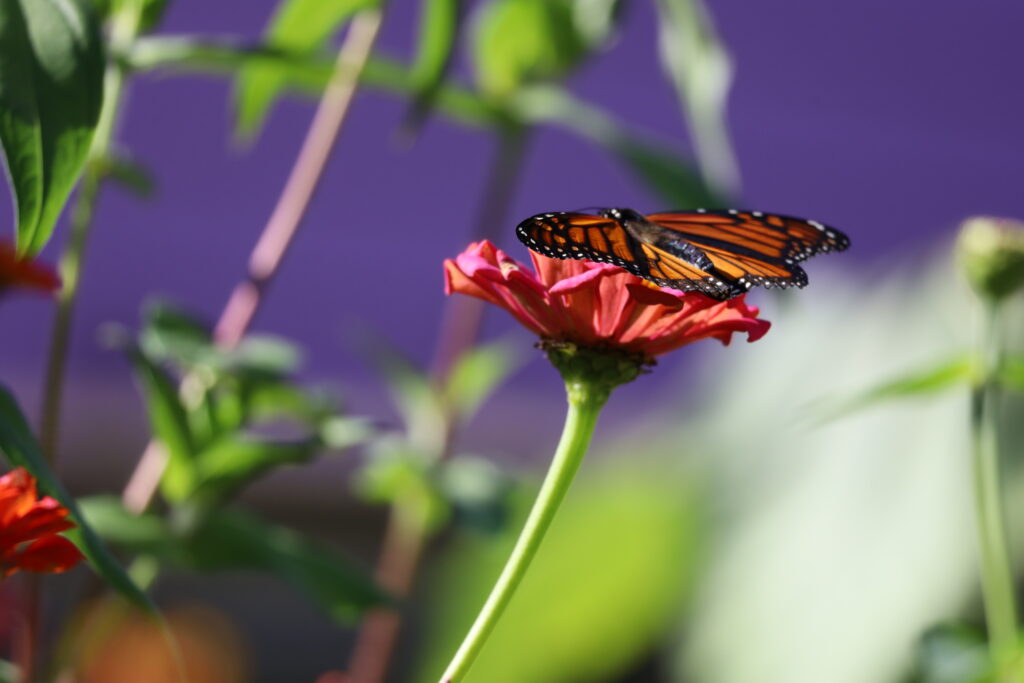
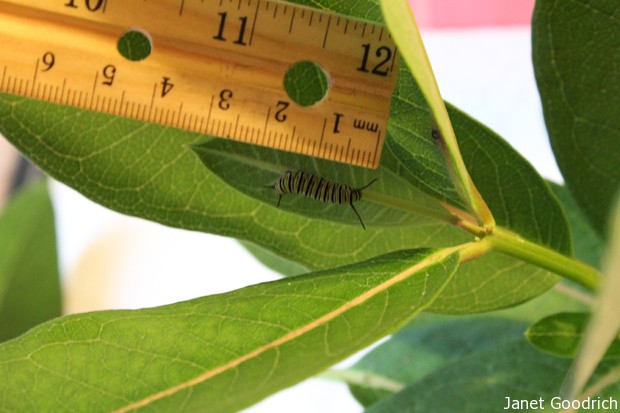
In August and early September, I searched several times for some caterpillars to see through the process of metamorphosis, but I didn’t find a single one. Monarchs aren’t doing well these days.
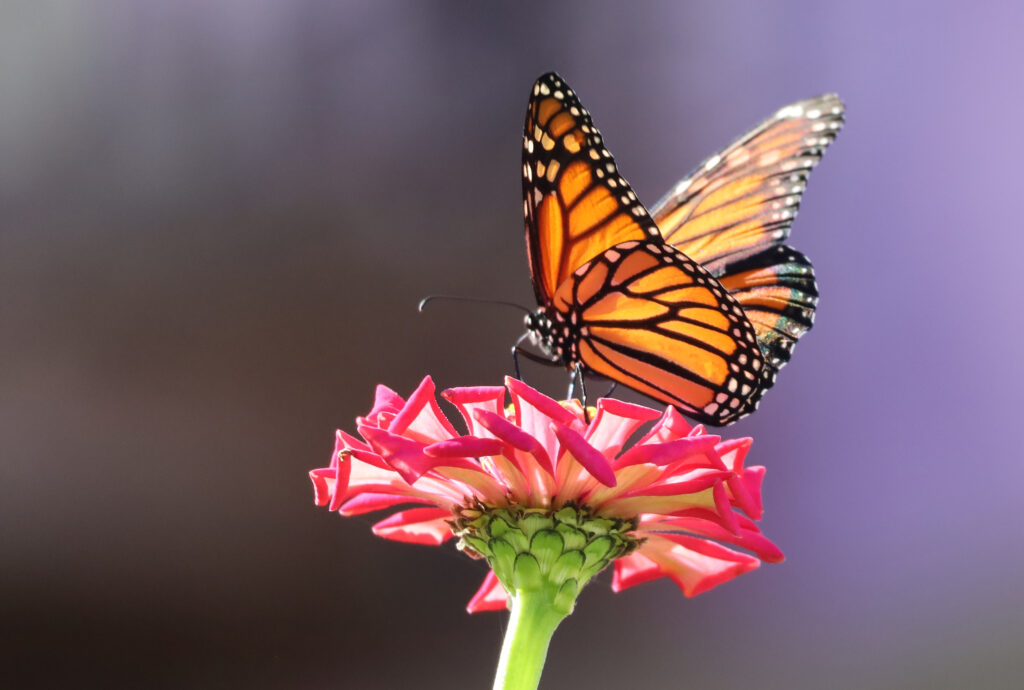
All the more reason to stop and admire while we can.