-
Unusual Feeder Visitors
Our usual winter crew at our various bird feeders consists of cardinals, goldfinches, house finches, Carolina wrens, downy and hairy and red-bellied woodpeckers, white-breasted nuthatches, chickadees, titmice, blue jays, and dark-eyed juncos. The ground feeders include white-throated sparrows and mourning doves.
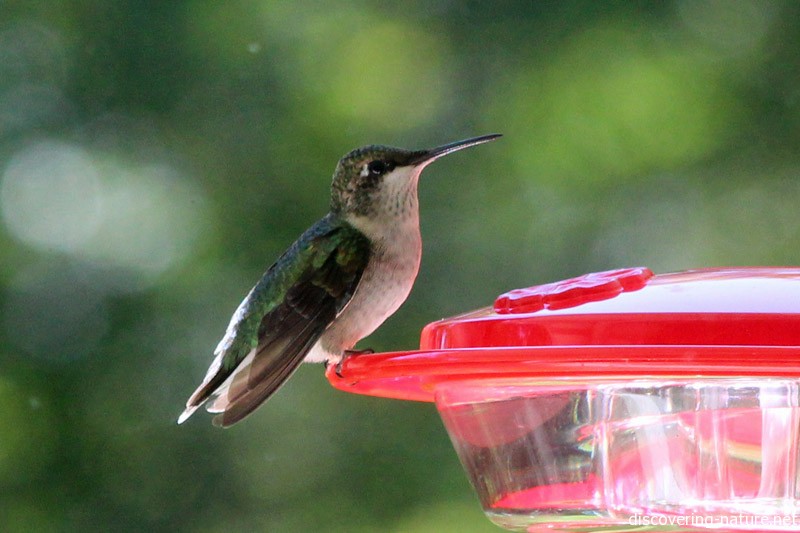
When spring rolls around we’ll see chipping sparrows and rose-breasted grosbeaks. We’ll hang the hummingbird feeder for those tiny beauties. Robins and catbirds will frequent the birdbath. Sometimes grackles and cowbirds hang around.
That’s all I can think of for now. But I thought it would be fun to recall a few of the more unexpected or exceptional feeder visitors who’ve come through.
This pileated woodpecker, for example. We see him and his Mrs. around the neighborhood, but it was an exciting day indeed when he actually tried for the suet cake — and even more exciting that my camera was close at hand!
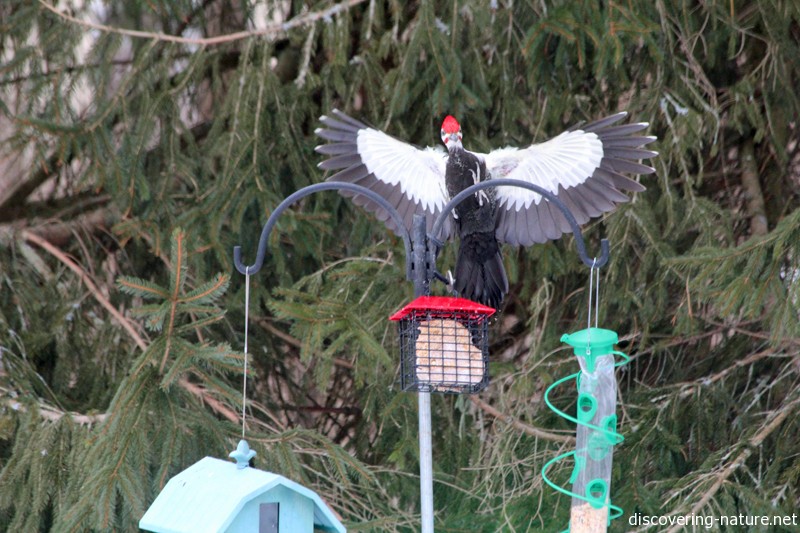
A couple of years ago, redpolls came through the area in multitudes, and for a few days we were swamped.

Once in awhile, pine siskins come to visit. They look a little like goldfinches, but streakier.
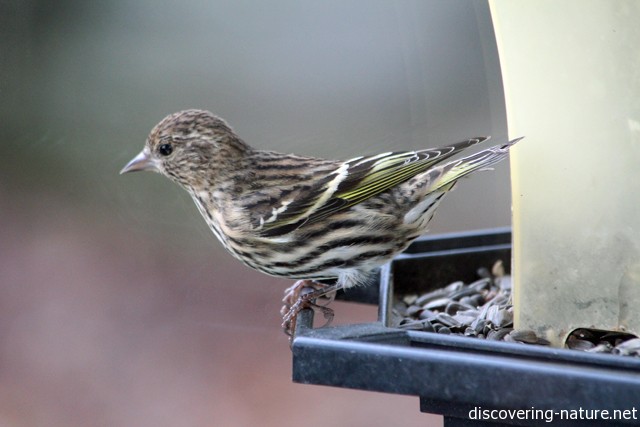
The winter before last, we had a red-breasted nuthatch who came pretty regularly. He was so beautiful and delicate. I wish he’d returned the next year and become a regular.
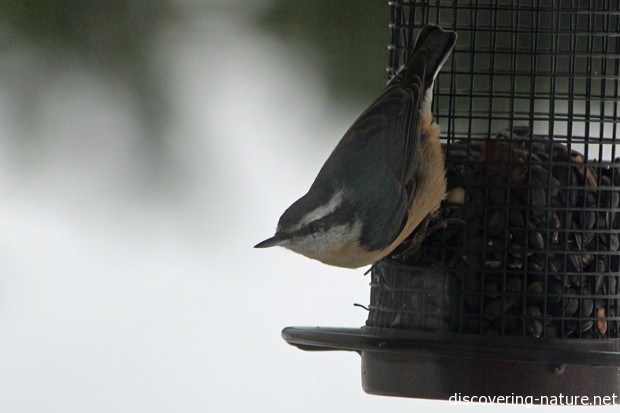
The grosbeaks and Baltimore orioles aren’t unusual in the spring, but last year they hung out together like buddies and for the first time were really interested in the suet. So many years I’ve hung oranges out hoping to attract the orioles to the feeder, but without results. It was strange the way they came for the suet.

There will be one day every year that we have indigo buntings. They never hang around for long, and it’s always on a rainy day. My pics are never very good.
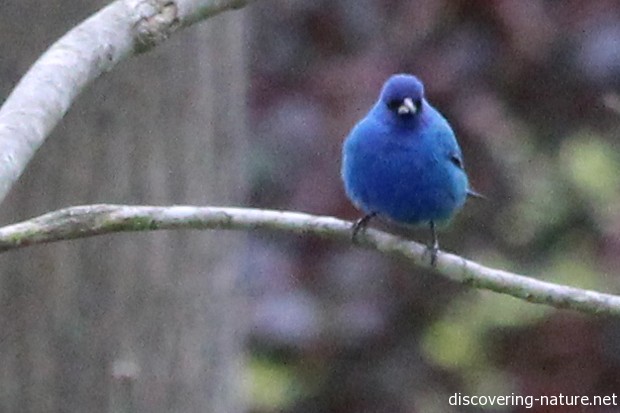
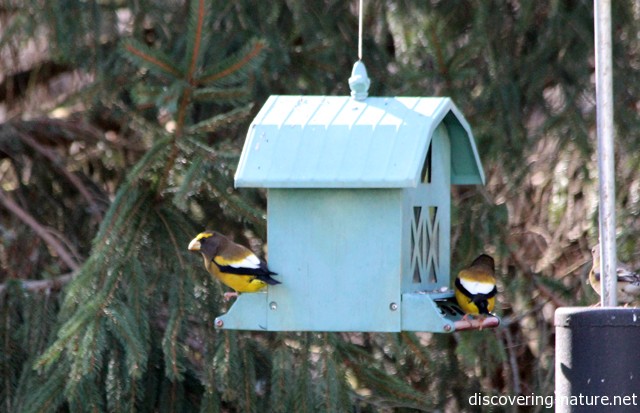
Evening grosbeaks often pass through, too. They’re never around more than a day. If we didn’t have such a habit of watching, we’d miss them.
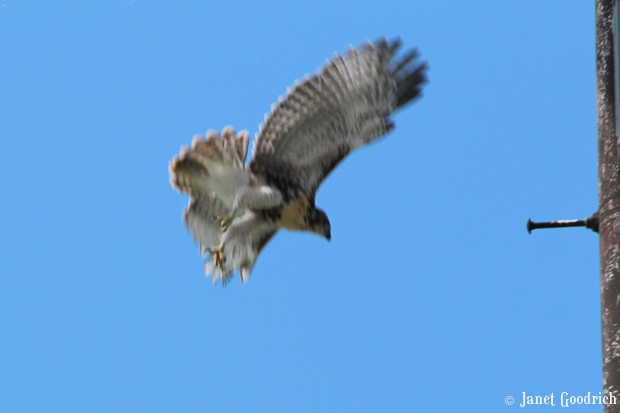
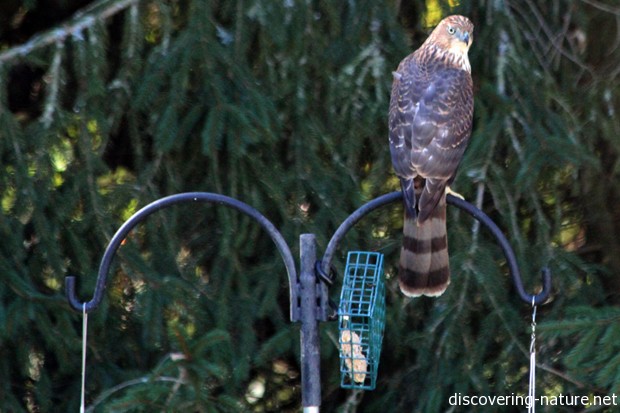
Once in awhile, a Cooper’s hawk passes through. We saw him get a robin once a few years ago, and a few times we’ve found piles of feathers. But most of the time when we see him, he’s unsuccessful — except at invoking terror.
Then there are the non-bird visitors, starting with these clowns…

We’ve outsmarted them at our pole feeder with one of those squirrel baffles. It’s fun to see them try, but they never make it to the feeder. But they would jump from the roof to this feeder when we had it out — which we don’t anymore, since the visits from Mr Black Bear last fall. When he tore down the feeder hanging from the eaves of our house, that was a little close for comfort! He did a number on the pole out back, too.

Then there was the gray fox who’d sneak out at dusk and eat seed.

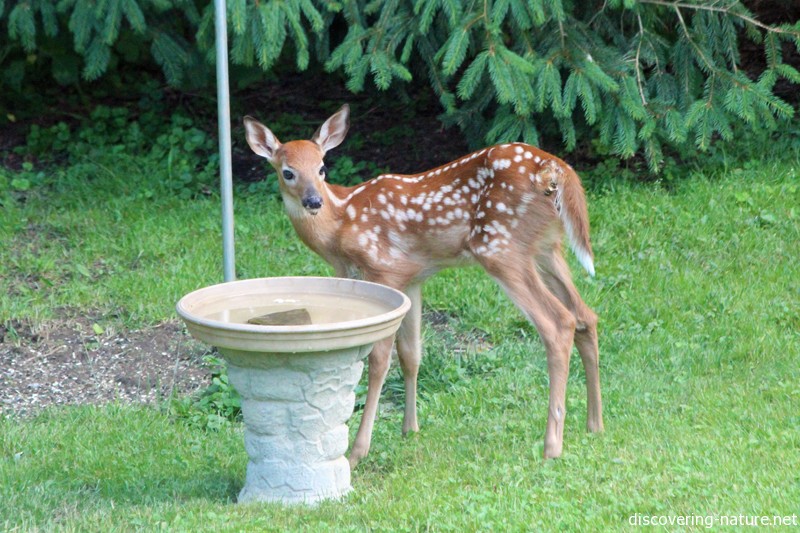
But this was the prettiest — and saddest — visitor, an injured fawn who came to drink from the bird bath, then curled up to sleep.
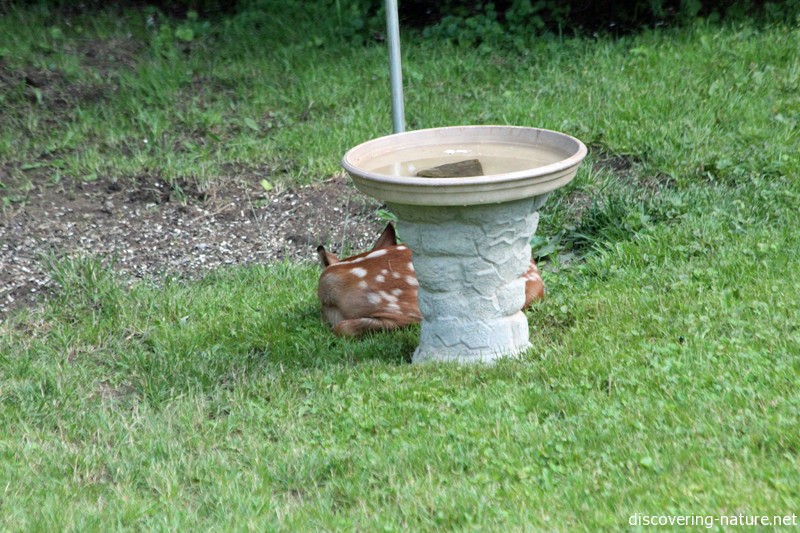
I called a wildlife rehabber about what to do, but the little guy never came back. At least he was able to get some refreshment on a hot day.
How about you? What riff raff — invited or uninvited — has your feeder brought into your life?
-
Superbirds
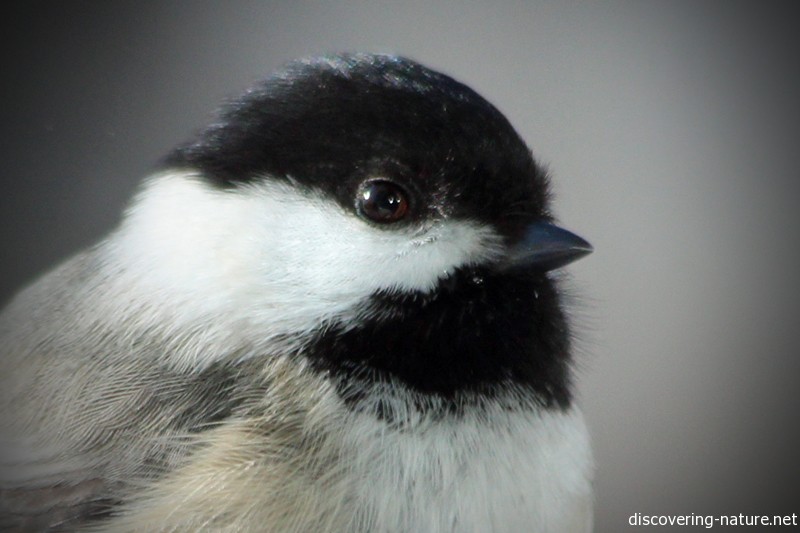
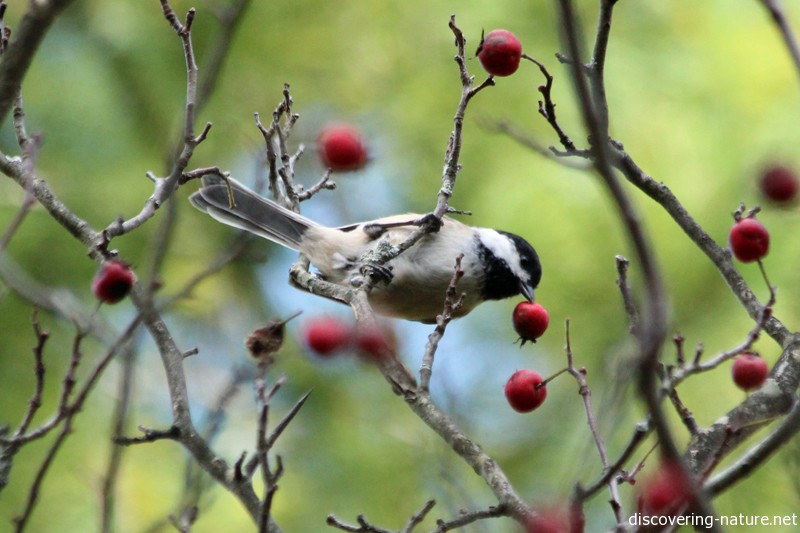
It was minus 8 degrees this morning, but these beautiful, hardy little chickadees are briskly about their business. Such brave little birds.
What else can they do? Think how much they must have to eat to survive in these temps. They have no time to waste.
According to The Forest Unseen, chickadees have various adaptations to the cold. They grow 50% more feathers in winter (the original down jacket). They sometimes sleep huddled together in a “ball of birds.” And they search constantly for food with eyes that are lined with twice as many receptors as humans’:
On a winter day, the birds need up to 65,000 joules of energy to keep themselves alive. Half this energy is used to shiver. These abstract measures become more understandable when they are converted into the currency of bird food. A spider the size of a comma on this page contains just one joule. A spider that fits into a capitalized letter holds one hundred joules. A word-sized beetle has two hundred and fifty joules. An oily sunflower seed has more than one thousand joules…
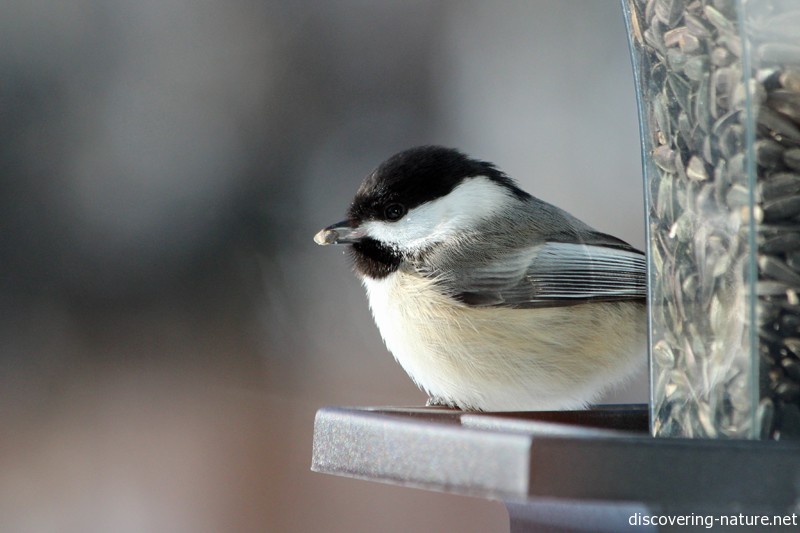
One of the reasons we keep the feeders filled around here!
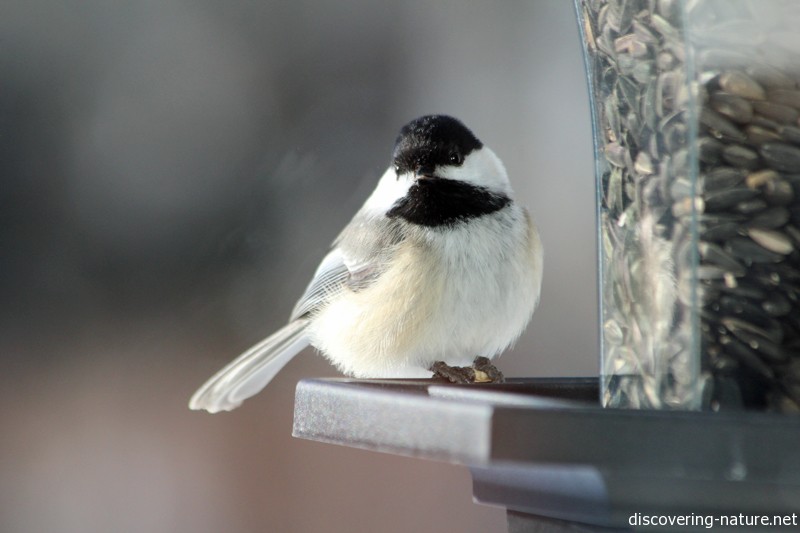
There’s something inspiring about these “common” little birds. If they can brave these cold days with every appearance of good cheer, so can I.
-
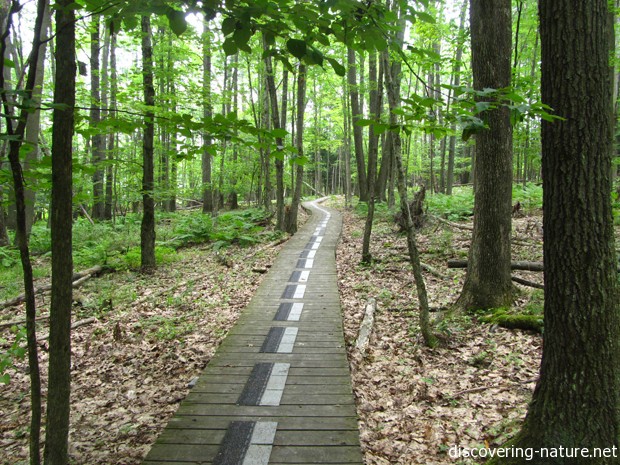
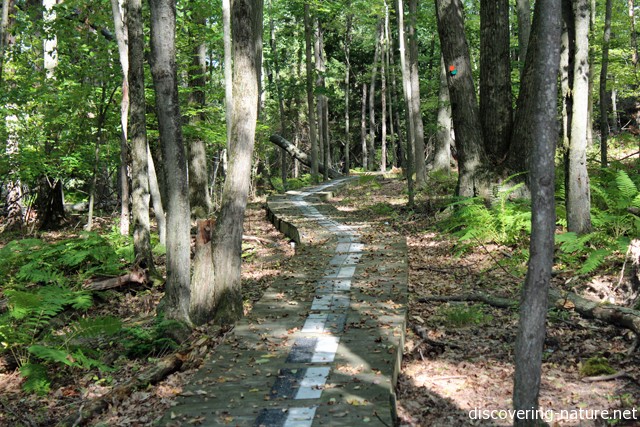
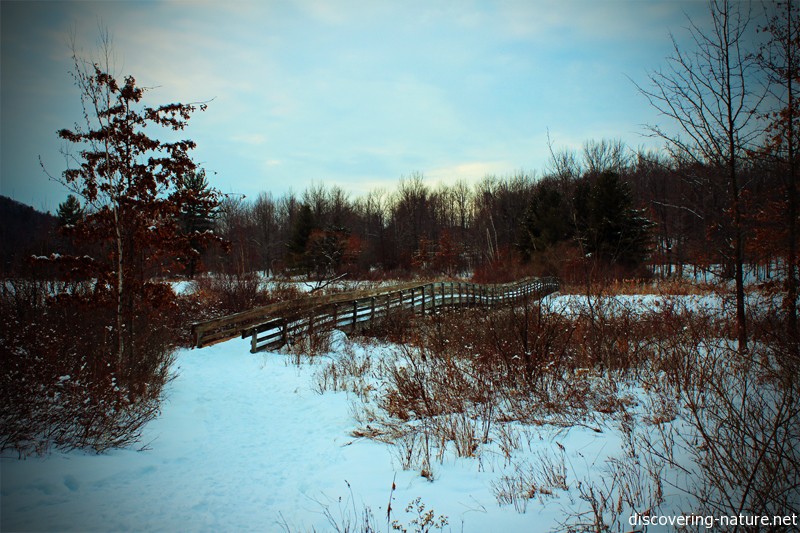
Boardwalk
-
Tracks
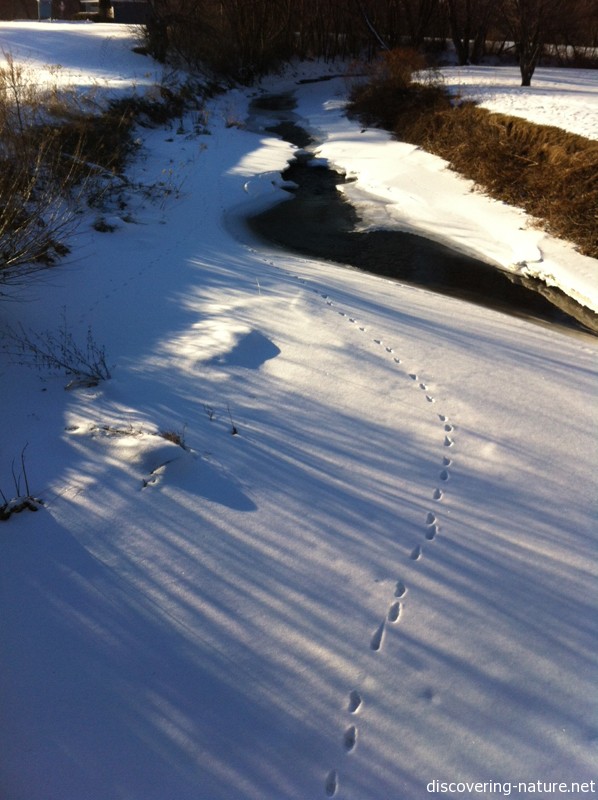
Winter reveals secrets: nests hidden in summer, wasp nests, holes in the ground no longer covered by long grass.
And tracks. Especially along frozen streams.
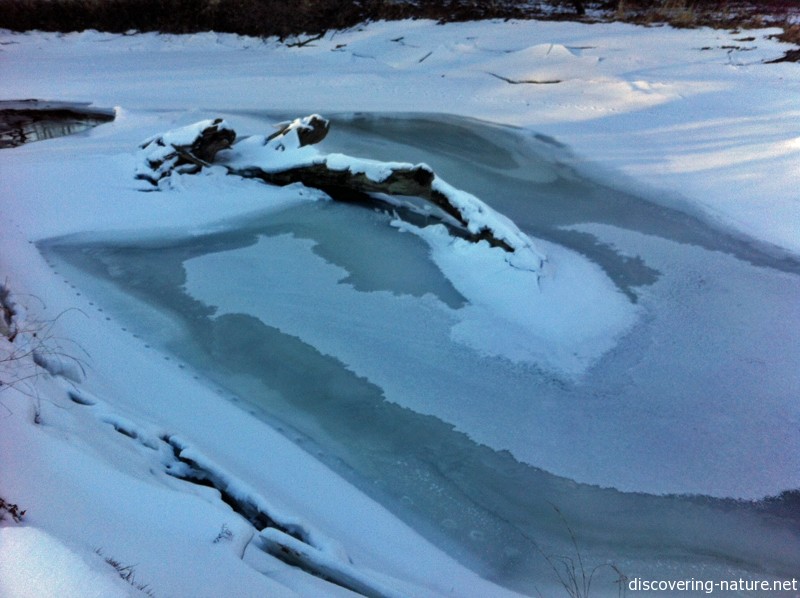
Today in this spot we saw what must have been muskrat tracks — small feet with a tail-dragging mark between. They came up over the edge of the bank, meandered in a circle on the grass, then dropped back over the bank. There was a little dirt slide that led right down into one of those slats between sheets of ice and the bank.
These tracks suggest a squirrel and a crow taking a walk together, but probably the crow came later.
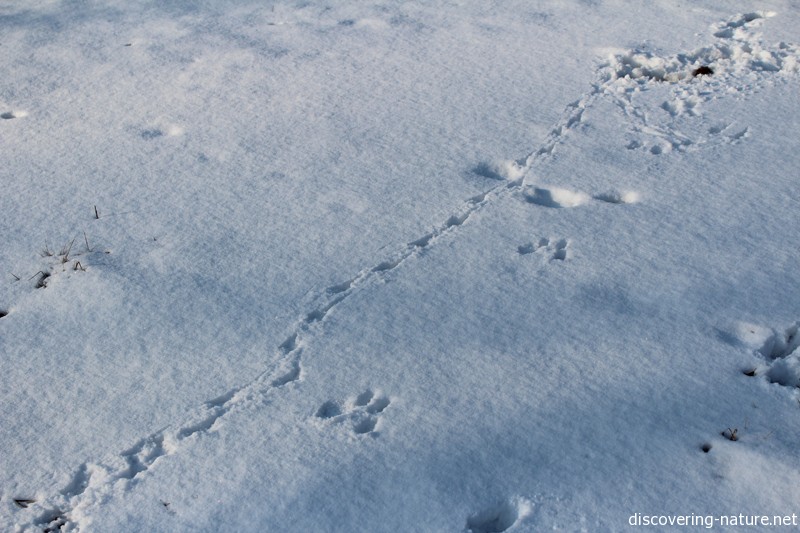
I once watched a squirrel carefully bury a nut in our back yard. Just after he left a crow landed, dug it up, and carried it away. I think the crows watch for the squirrels and investigate.
We saw several of these spots today, where crows had landed and dug at something. There were some dried seed pods around, so maybe that’s what they were after.
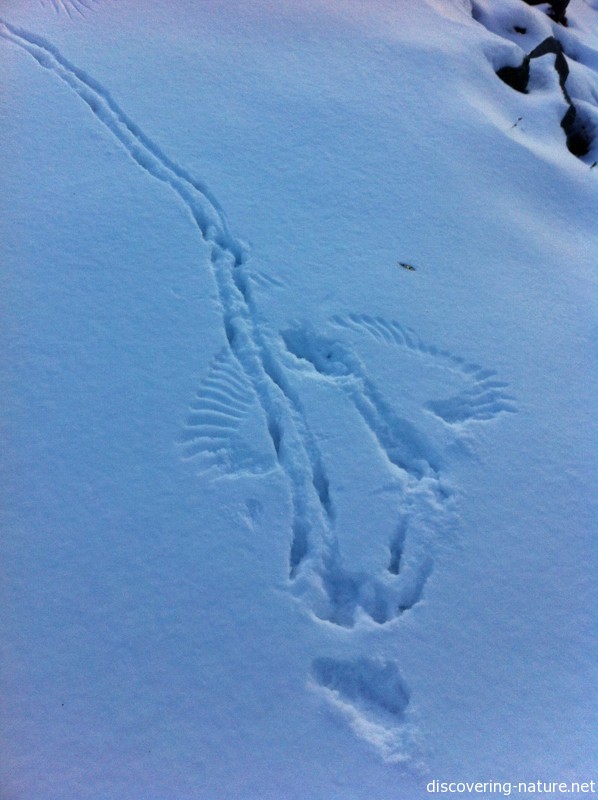
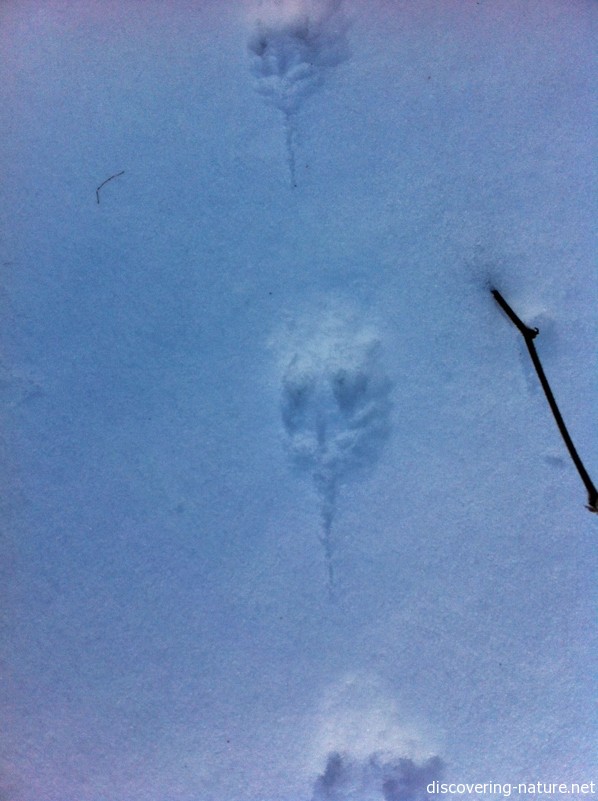
Mouse trails show up well too. They must hop pretty high to leave such perfect imprints, complete with little tail marks.
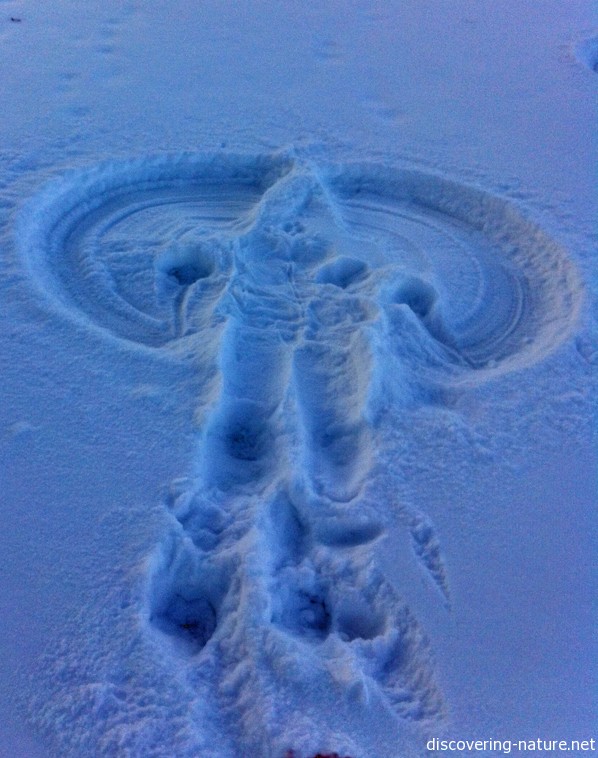
Then there are the tracks left by juvenile homo sapiens — my kids, who like to write in the snow with sticks.
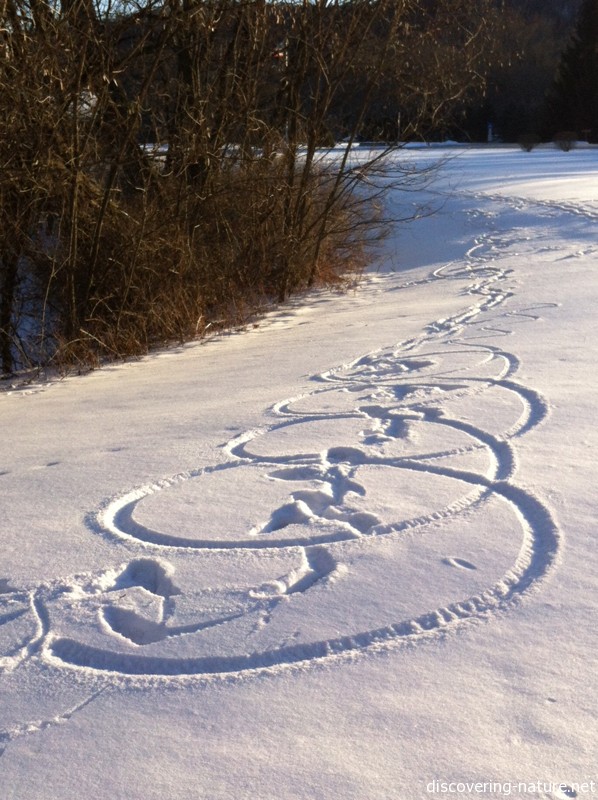
Winter crop circles. Or Nazca lines. We humans, unlike all these tough little barefoot animals, have the luxury of boots and can make gratuitous marks in the snow. Maybe next time we can draw something spectacular. Till then it’s the tried and true.
-
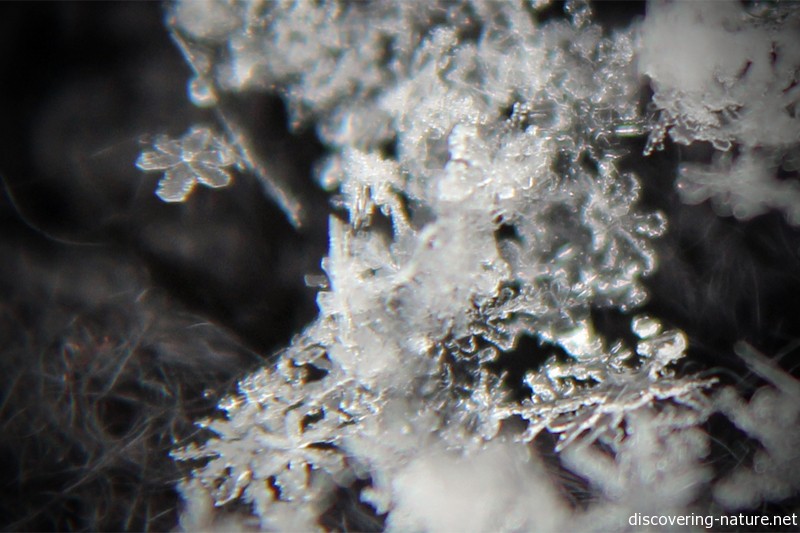
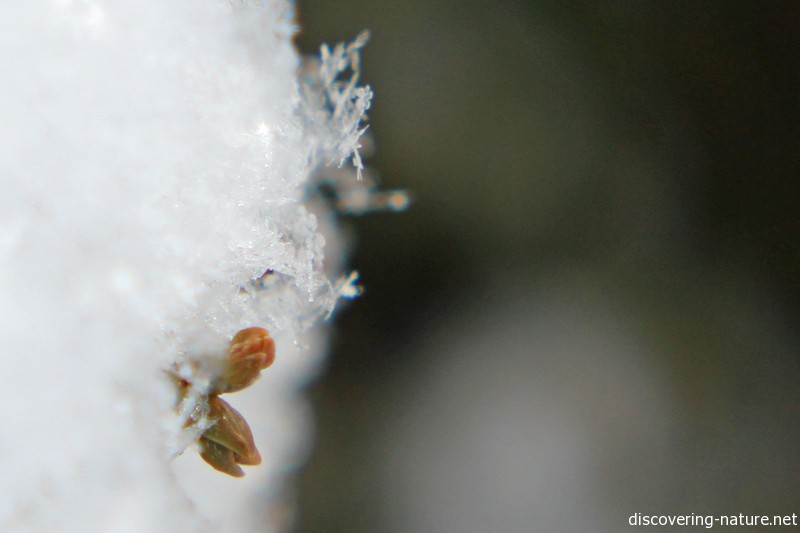
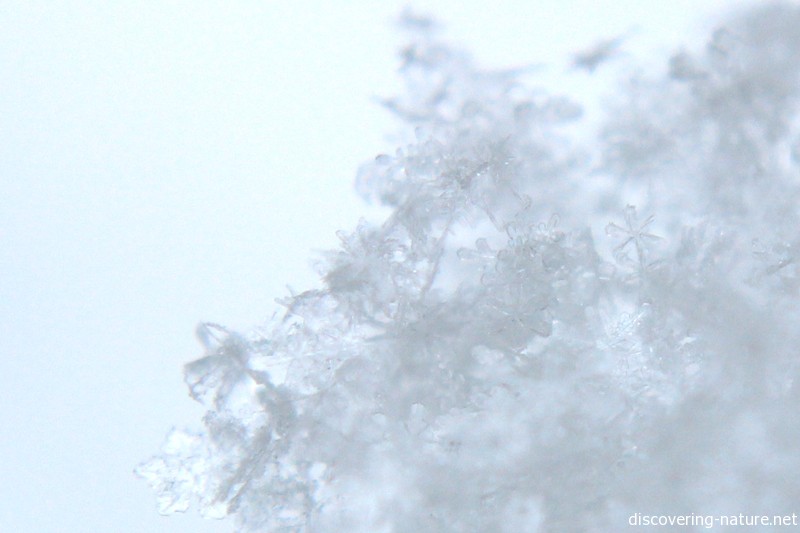
No two alike?
-
Winter trails

-
Winter’s understatement
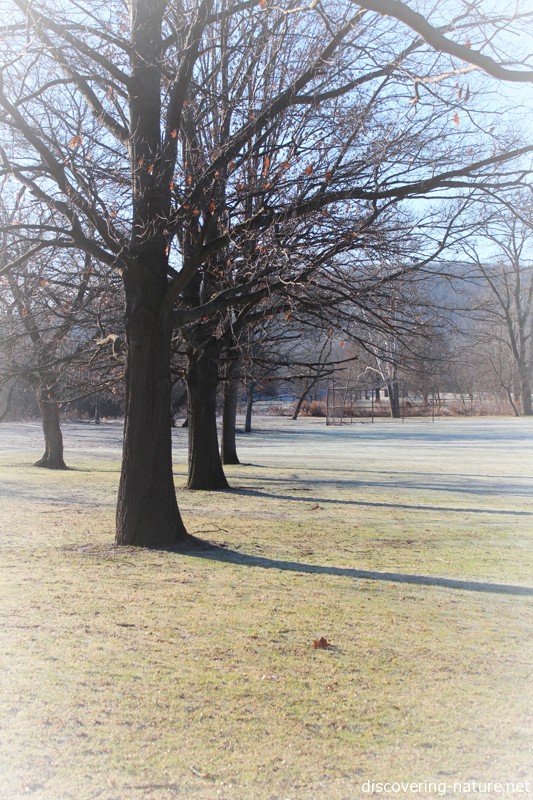
These pictures were actually taken back in December — I just haven’t gotten around to posting them. They capture a beauty unique to winter with its pristine paleness.
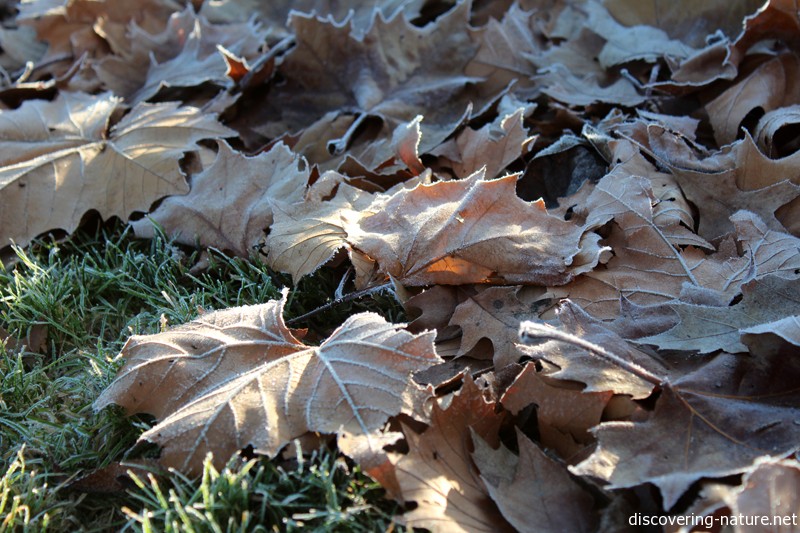
The frost seems to emphasize the outlines of things, from grass to dead leaves. And somehow, the reflections seem sharper.
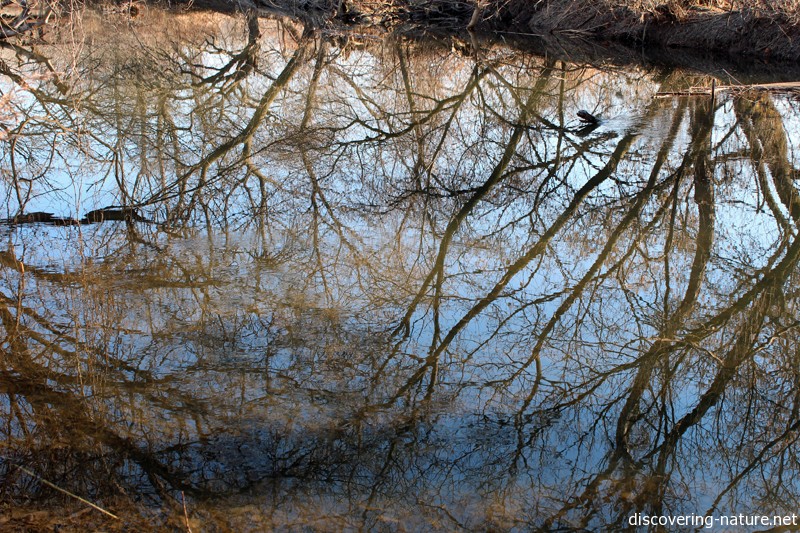
Textures and colors stand out in a way that fails to attract attention in the green busyness of summer.
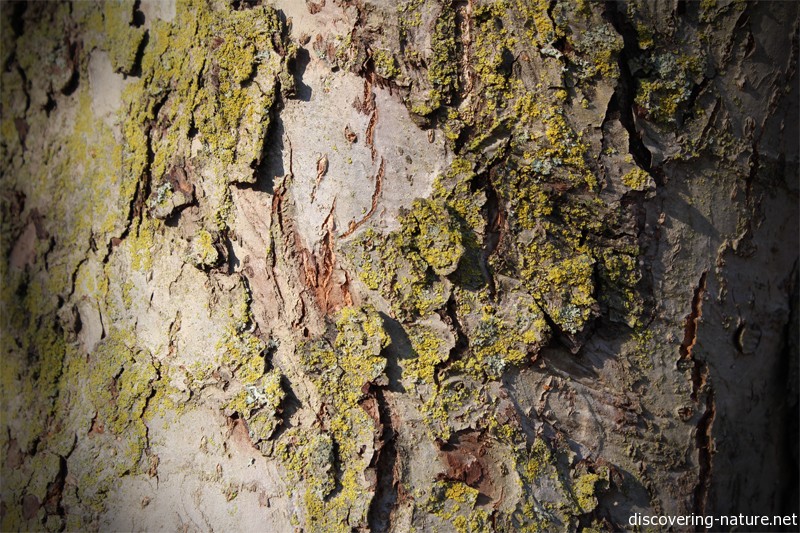
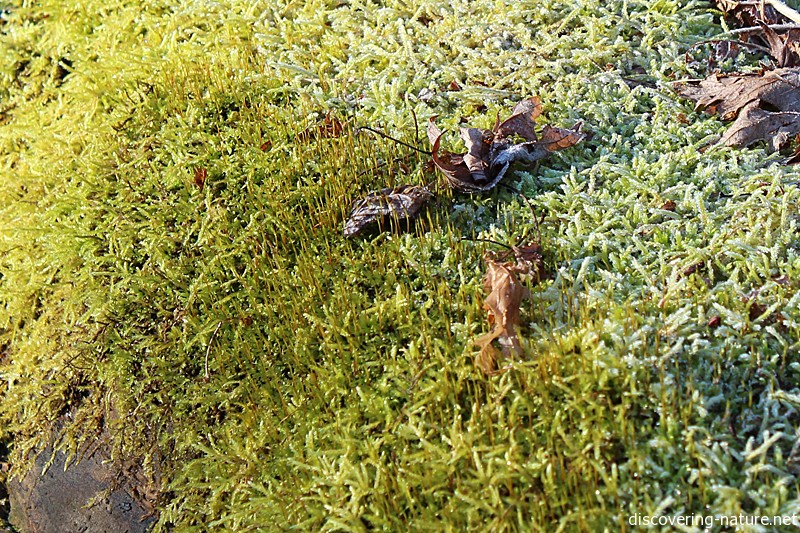
I know it was December, but what I think of is John Updike’s poem about November extolling “the beauty of the bone.” Winter lasts longer than I’d like where I live, but it does something for me.
-
What hawks see
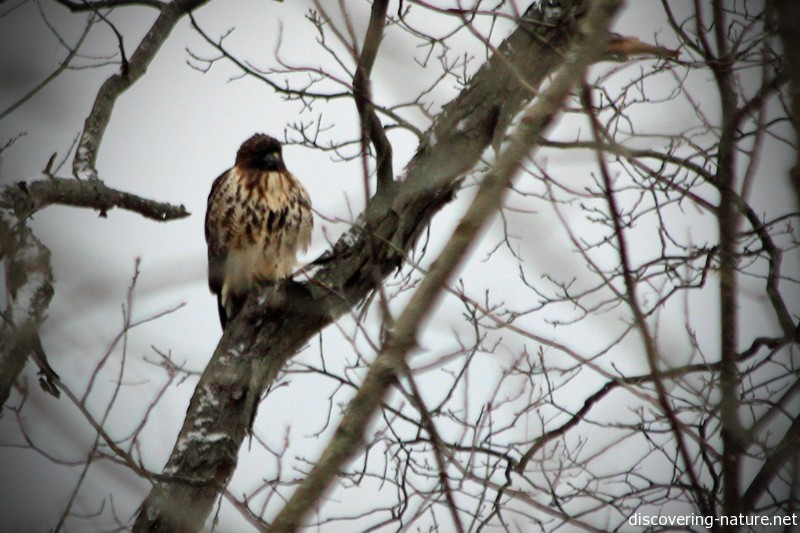
These redtails are all over the place in the winter. I’m not sure if it’s just that they’re easier to see when the leaves are down, or if they come out of the deeper woods in winter as I’ve read.
I’ve wondered before: what makes them choose a given perch? Do they see evidence of mice, and simply wait for an opportunity? Or is it more random?
Today on a walk in the park I saw what looked like veins under the snow: mouse tunnels become visible as the upper layer of snow melts? That’s my guess.

-
Reflective…

-
November Light
We took a windy walk today. Most of the leaves were down, and the wind blew them up into numerous eddies. I wish I could capture wind and whirling leaves in photos, but…
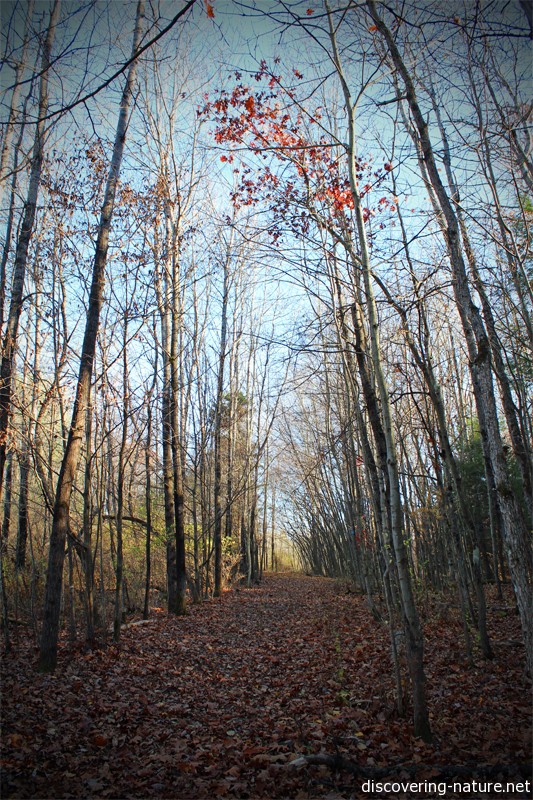
The other factor was the light. I love the brightness of November sun, and it was truly squintworthy today.
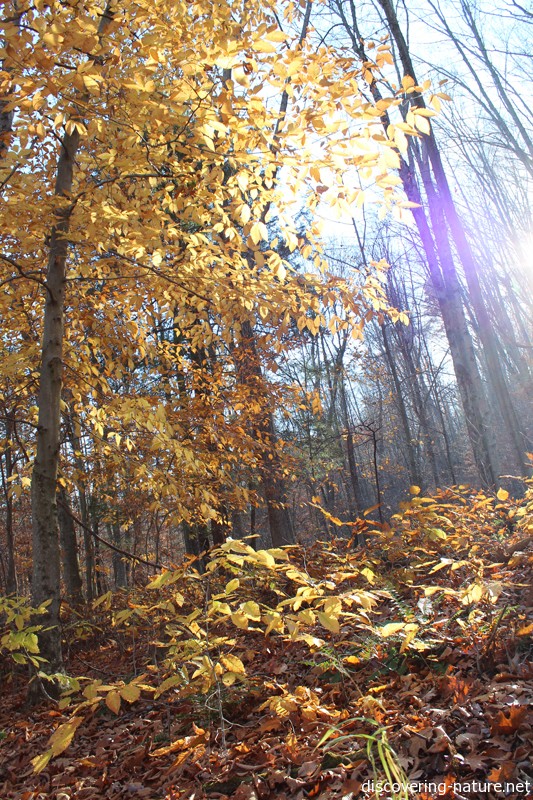
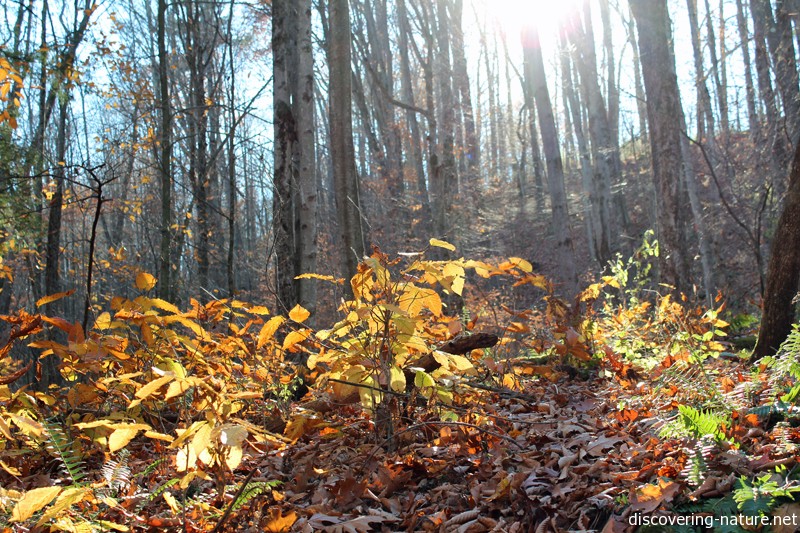
The only leaves left are a few brown and red oak leaves, and these golden leaves.


At one point, I stepped off the trail to photograph an evergreen grove — and discovered a deer.
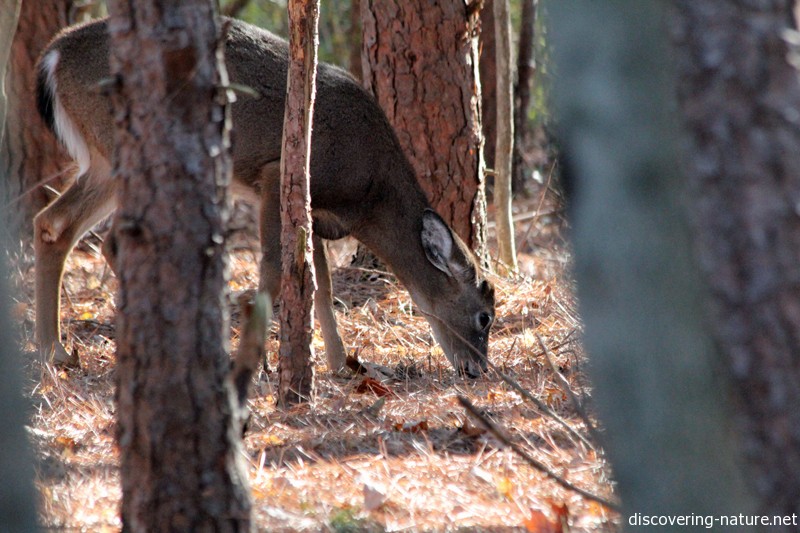
She saw us but kept foraging, close to the ground. Then, she decided to lie down for a midafternoon nap.

Hope she stays in the preserve for deer season. We said goodbye… then I took my tree picture.
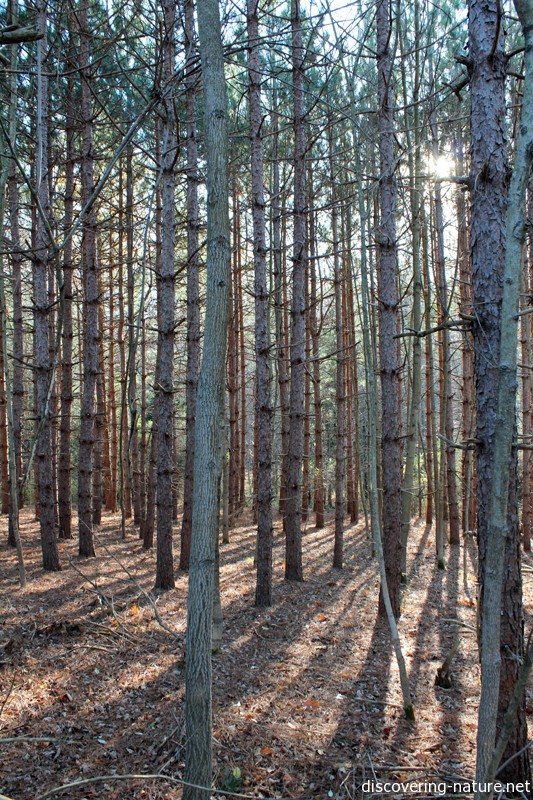
We didn’t see many animals, but we had the woods to ourselves and enjoyed the unsettled feeling of the tossing trees and the sound of wind.