-
American Kestrel
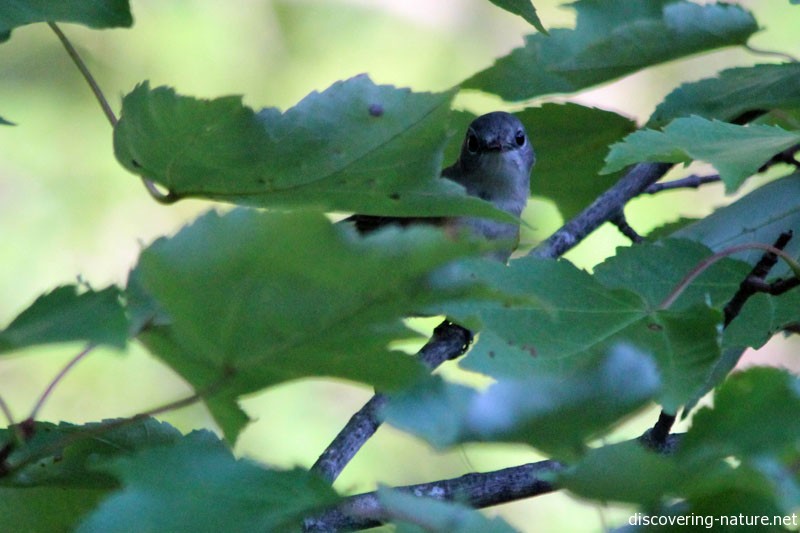
 Okay, it’s blurry. But even blurry, it’s more than I’d ever seen a year ago. I didn’t see my first American kestrel till early summer of last year, despite how beautifully bright and detailed their markings are.
This one was across a field, and I stopped beside a country road to try and get a few pics.


For Christmas, my daughter received a book by master bird carver Floyd Scholz, and among other things Scholz has increased our appreciation for these kestrels. Click on his name and visit his website to see some of his absolutely amazing, lifelike carvings. He has a book about carving and painting an American kestrel which we’ll no doubt invest in at some point if my daughter continues with her interest in carving. For now we content ourselves with the raptor book we now own — an exercise in close observation that inspires nothing short of awe at the grandeur of these magnificent birds.
-
Glitter and sparkle
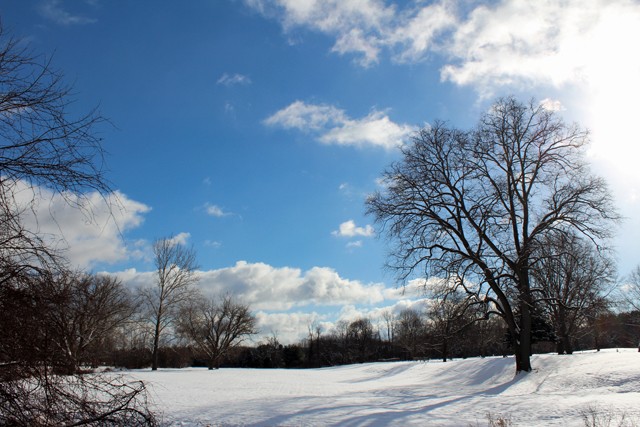
Just before we got to Hickories Park, I wondered if kingfishers migrate. I got my answer immediately: they don’t. Or at least, they haven’t yet. This was perched over the fastest current on a bitingly cold morning.
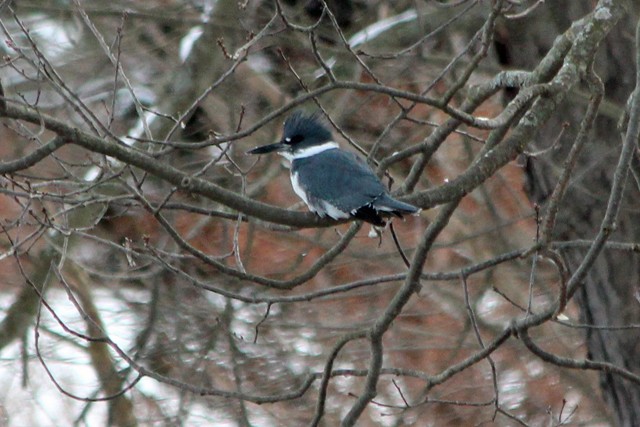
He was quite talkative, but even with all the rattling, it was hard to get my eye on him whenever he changed perches.
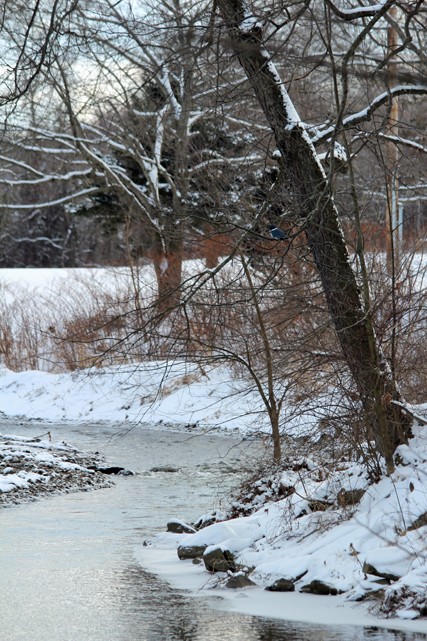
Even the water was shivering, and the ice made strange noises. Maybe there was a muskrat under it.
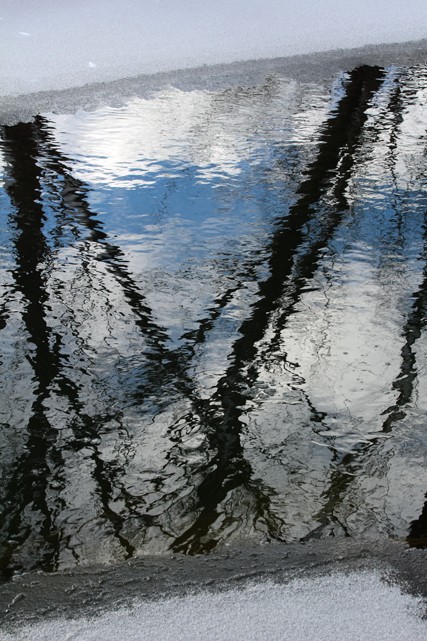
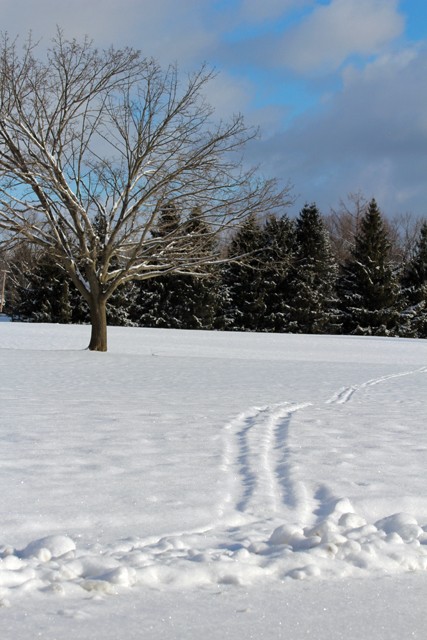
Cold blue and white and glittering snow everywhere.
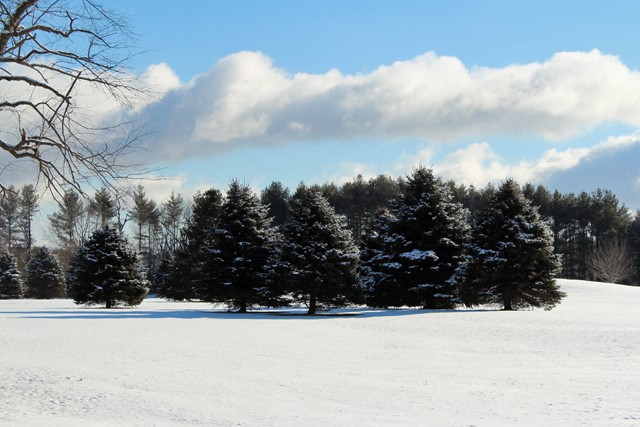
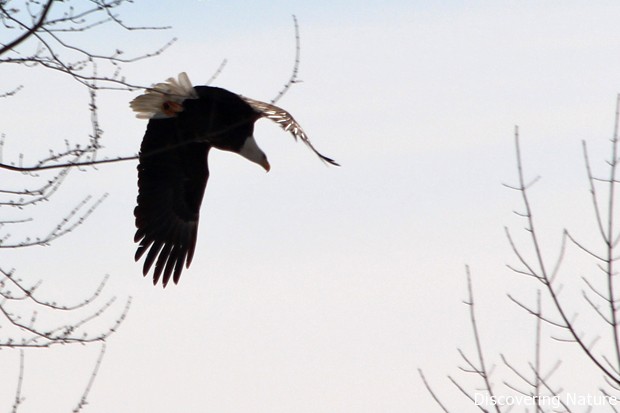
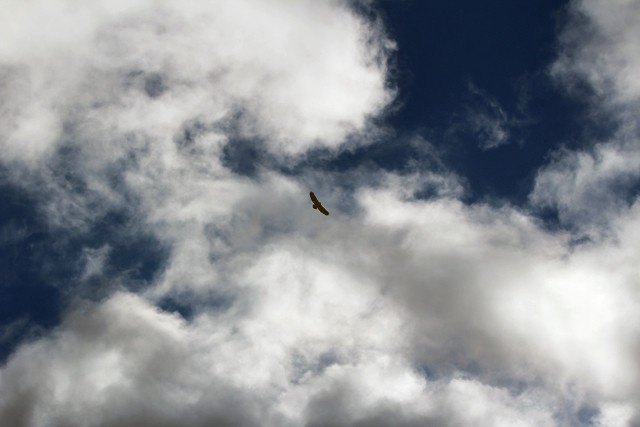
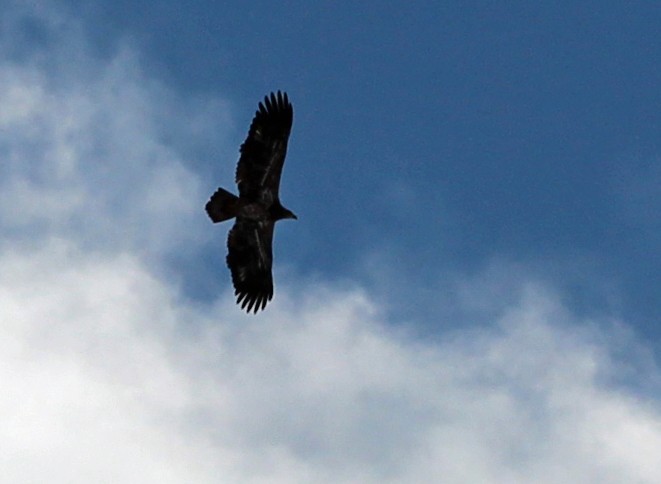
A juvenile eagle sailed over us — always an inspiring sight.
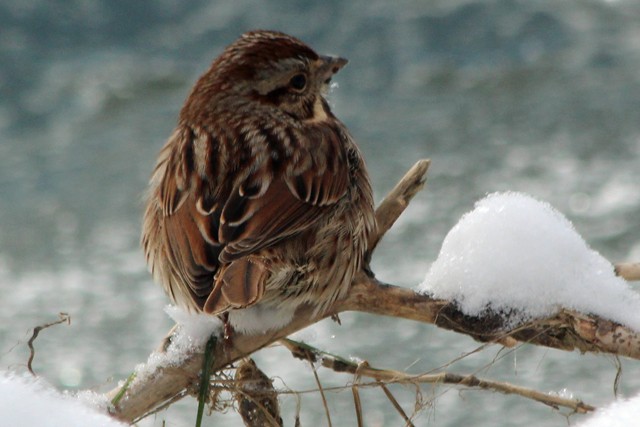
And along the stream, little birds were hopping like popcorn. It was as if the ground was moving, they’re so similarly colored. Mostly sparrows and juncos.
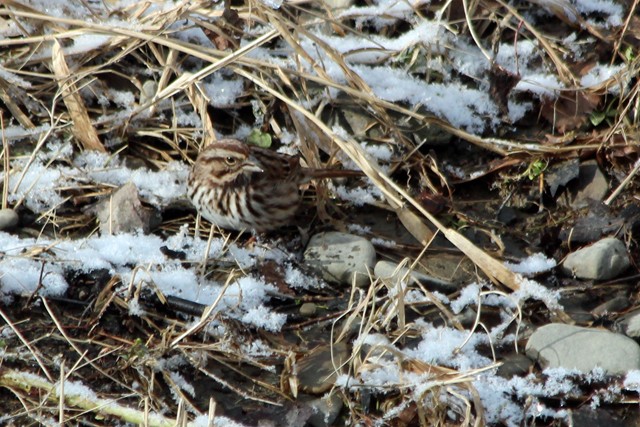
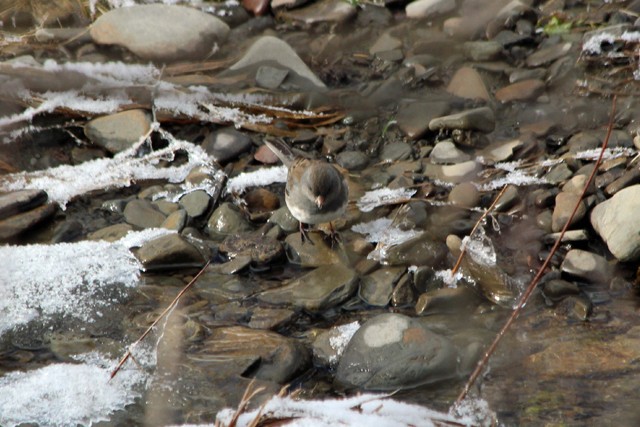
There’s an old gospel song: “His eye is on the sparrow, and I know he cares for me.” I hope he’s keeping a closer eye on me than the sparrows. They looked awfully cold, and there are plenty of predators that would like to eat them. They were too busy to think about that though. There is something inspiring and cheering about the way they get down to business and do what they have to do to survive. I celebrate sparrows. We nondescript types have to stick together.
-
Up close and personal
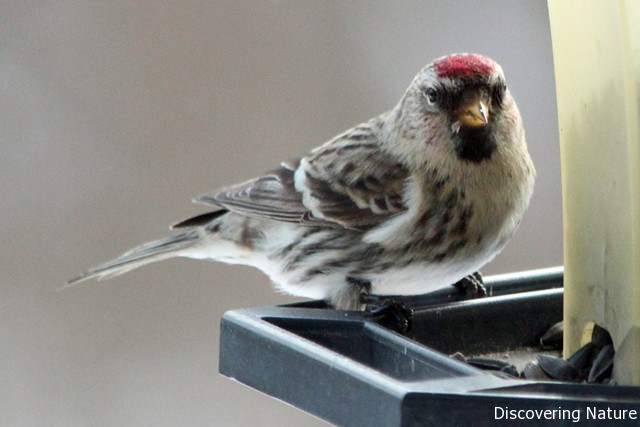
More redpolls today. We got an inch or two of snow and they’ve treated us to some close views by using the feeder attached to the house.

Any room down there? 
Absolutely NOT! 
Nice view from up here. Makes me want to… 
…yodel! -
Red-tail art
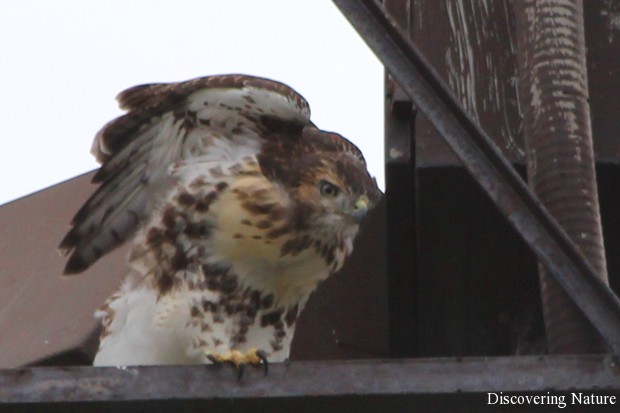
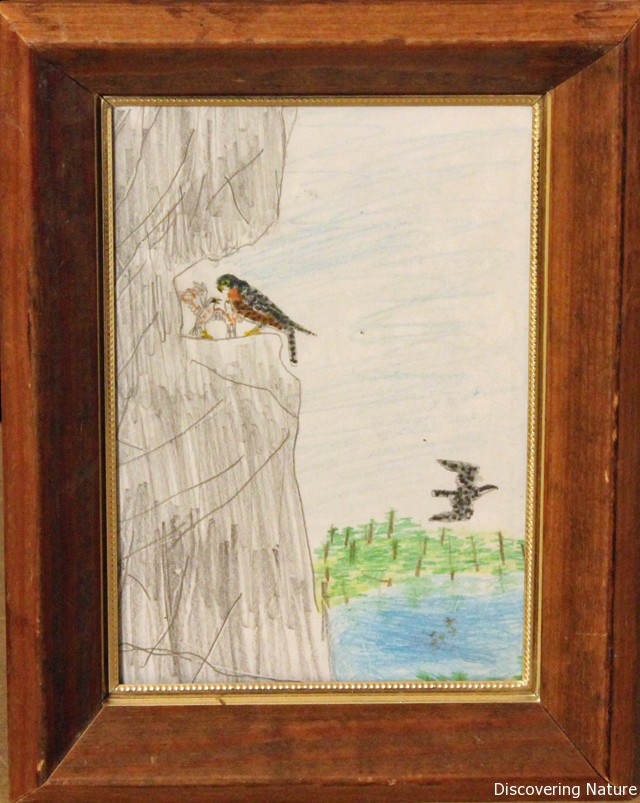
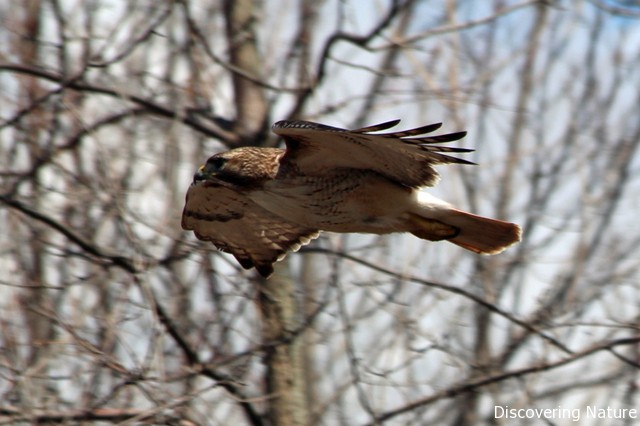
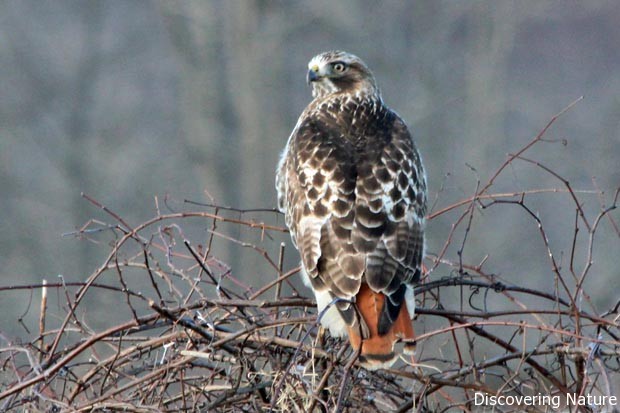
My daughter came home from our walk yesterday and disappeared into her room to draw the hawk we saw.

She’s 11. I love her drawings — they just get better and better.
-
Frog on ice and other sights
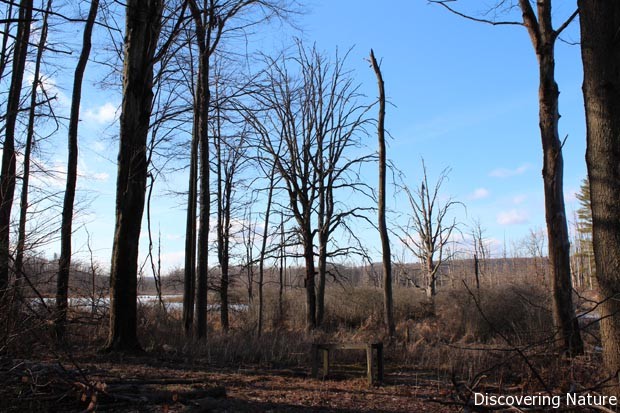
To celebrate the sun’s return from long vacation, we took a walk at a nearby marsh today. Most of the snow has melted, and I’m convinced at least some of the birds are confused. They’re certainly vocal — I heard a titmouse belting out his piercing call on my neighborhood walk this morning, and yesterday there was a goldfinch in the tip-top of a tree, singing his heart out.
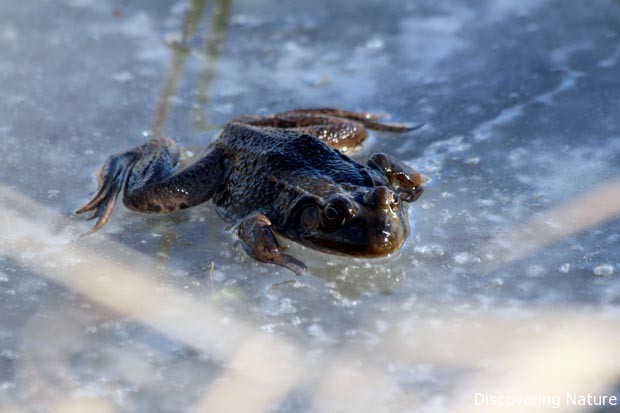
Today I saw something a little more down to earth. We’ve probably all heard the illustration about the frog boiled alive in a science experiment as the heat was turned up so slowly the frog didn’t feel it happening. But this is the first time I ever saw a frog sunbathing on ice.
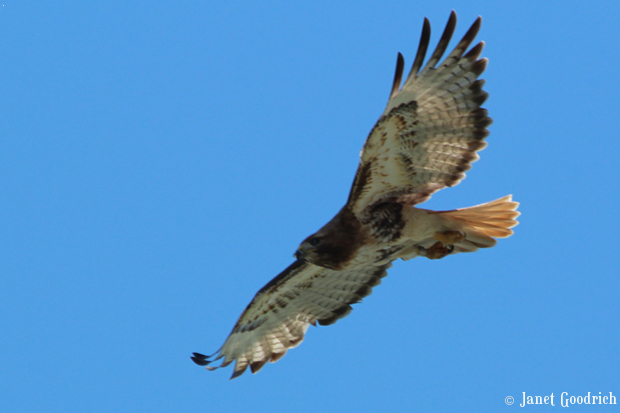
The only birds we saw in the woods were crows and one downy woodpecker. There was a red-tail in the distance, and he treated us to a few wild shrieks as he flew over. Most of the beauties were small things — bursts of color in the predominantly gray-brown drabness of the woods.
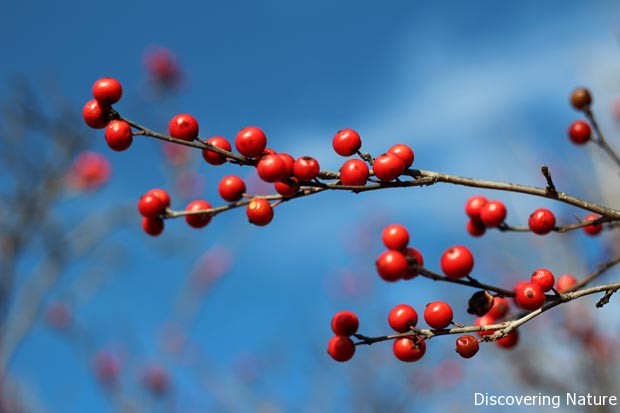
Winterberries 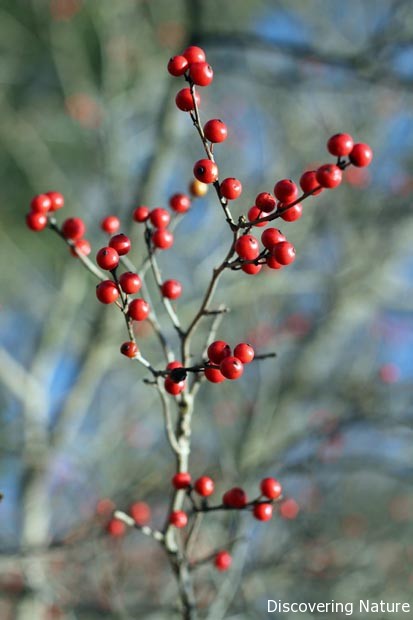
I read somewhere that these berries are a last resort food for deer. If I remember correctly from last year, they won’t last much longer before shriveling and disappearing.
The woods near the marsh have a primeval feel — lots and lots of dead trees, many of them fallen and covered with moss. The varieties of moss really stand out this time of year — so rich looking and so many different textures and shades of green.
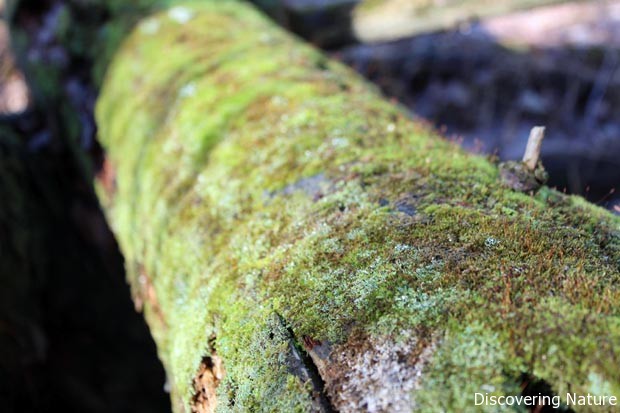
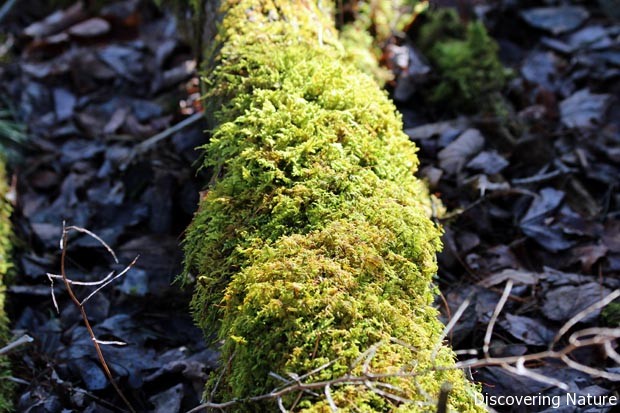
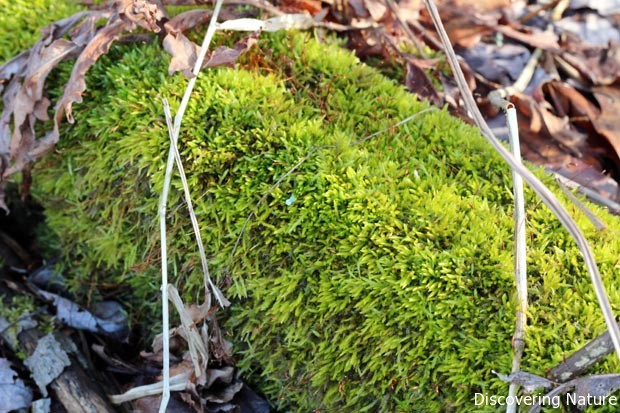
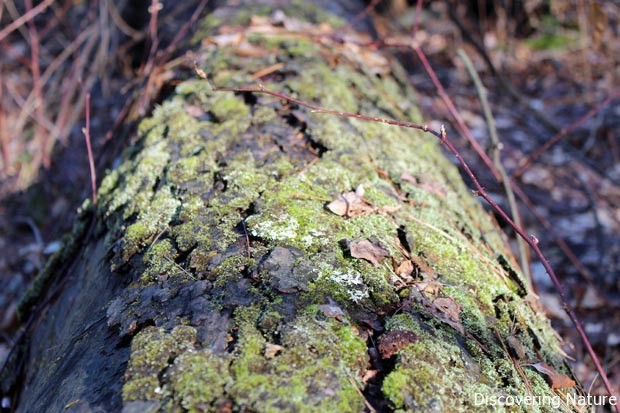
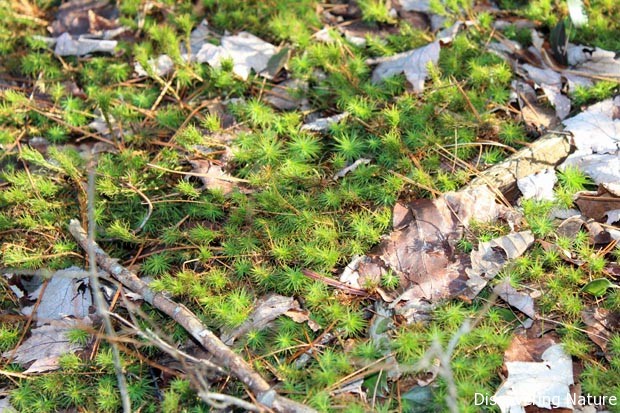 It sounds morbid to say it, but moss always strikes me as a beautiful window dressing for decay. These trees have surrendered — the girls love to climb in among them. They call it the carpet store.
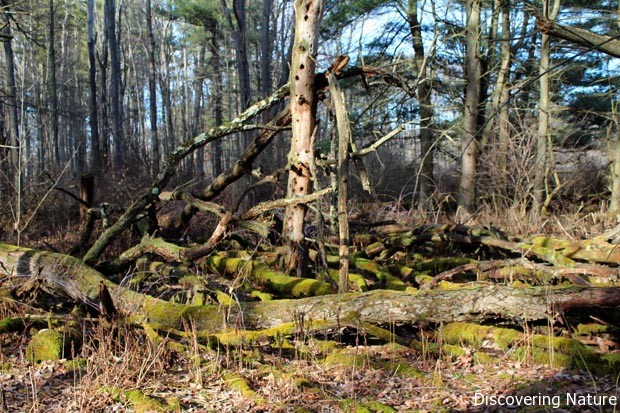
And these are making their slow descent.
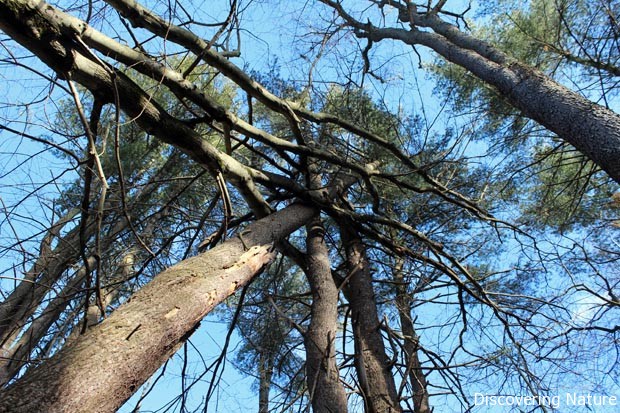
I stood beneath these for awhile, listening to what I thought at first might be a woodpecker, but what turned out to be simply the creaking and rubbing of this tangle of tree trunks. Then I called the girls over and asked them to listen. “A woodpecker!” Younger Daughter immediately exclaimed. It made me feel better.
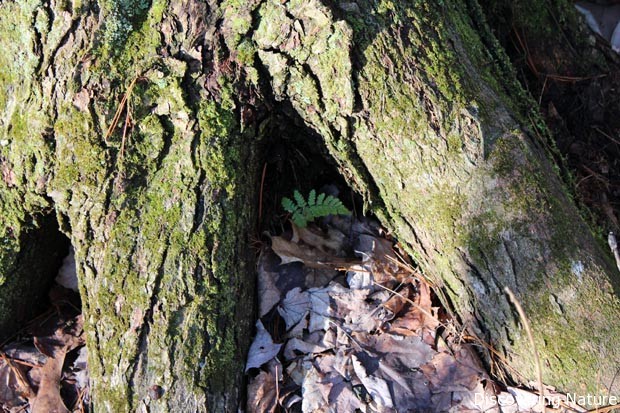
This tree had ferns between its toes.
The marsh has a decrepit bird blind that we always walk out on — with some fear and trembling. It’s pretty old, and I think it’s been flooded numerous times. One of these days we may discover its limitations.
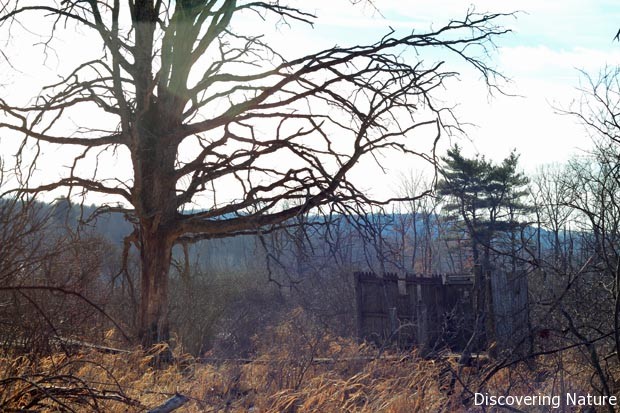 The view is worth it — beautiful in a lonely kind of way.
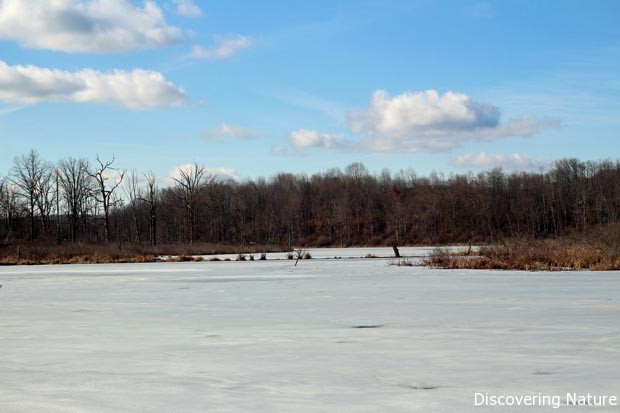 In warmer seasons we’ve seen green herons, great blue ones, blue-winged teal, wood ducks, mallards. There are muskrat lodges all over the place as well.
That’s about all. It was wonderful to feast our eyes and ears, and to feel released into the wide world.
On the way home we saw several red-tails. I’m not above stopping along a busy road to admire these fierce, regal birds.
-
January Robins
Some of the best sights go unphotographed.
This morning I went for a walk around the neighborhood. I’ve had to lay off running over the last year because of joint issues, and often I walk on the treadmill. This allows me to read while exercising, which is a source of pleasure right at the start of the day. But it’s always better still to get outdoors — even though at this time of year it’s usually dark. There is a meditative quality to these walks that I crave, and this morning I took my restless mind out for a stroll.
It was like walking in a cloud; the air is dense with water vapor from the melting snow, and noticably mild. The birds were quite vocal, almost as though they were having a premonition of spring: titmice, chickadees, cardinals, nuthatches, blue jays. The world was in shades of gray.
But then I saw something totally unexpected: two pale robins! This was a first. A pair of robins in upstate New York in January. Robins are supposed to mean spring:
Robin’s song is crystal clear
Cold as an icicle,
Sharp as a spear.
I have seen Spring lift her head,
Snowdrops a-shivering,
Winter dead.(“Robin’s Song,” E.L.M. King)
Granted, they weren’t singing. They were clucking, no doubt critical of the shrivelled berries they were eating. But still, it was a sight to remember.

Last year’s first robin: 3/7/12 -
Captive Wildlife Photography

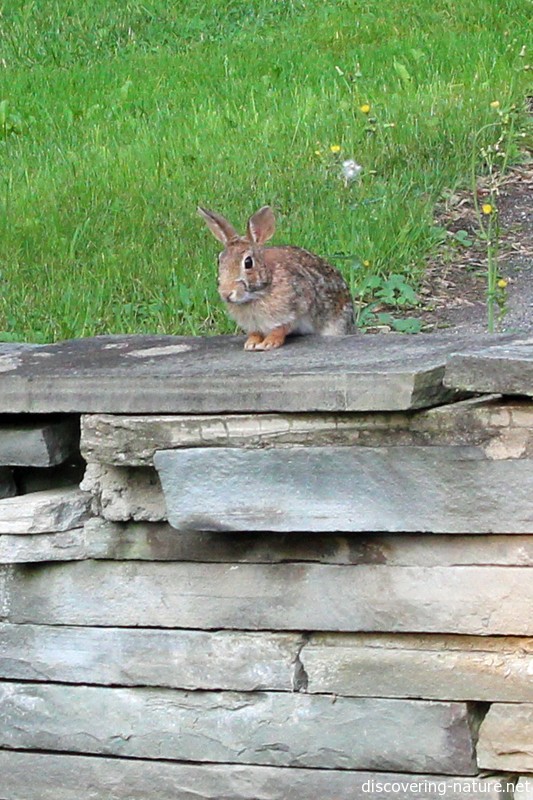
What’s up, Doc? This is Whisper, the Incredibly Pampered Rabbit. He, and our dog, are about all I have to try out my new camera lens on.


And this is Katie, the Incredibly Gracious Dog. She’s lived through momentous eras with us — namely our early marriage, and the birth of our children. She’s 13 and just gets more and more sweet.

 My new lens is for close-ups. But to see Katie in her element she needs to be viewed in the great outdoors…

March 7 …or with a frisbee…

5/12/09 
5/12/09 
5/11 
5/11 …or on duty in any other way she sees as essential.

12/09 
3/01 And so my experiment with a new lens becomes a celebration of a loved dog… the “dog o’ dogs,” as we call her.
-
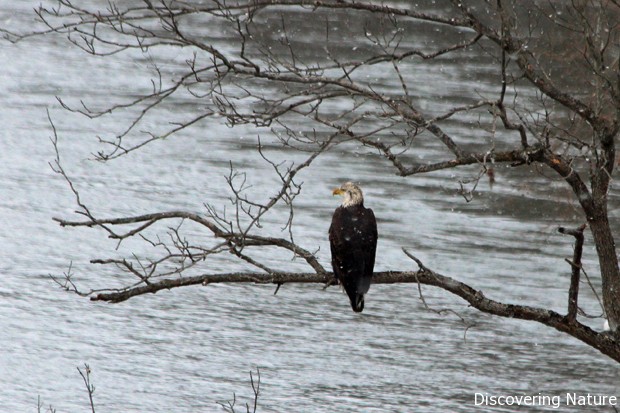
Eagle Pair


We were driving home from a walk during which we saw almost nothing when we saw the dark bulk of these two eagles sitting in a tree beside the river.
-
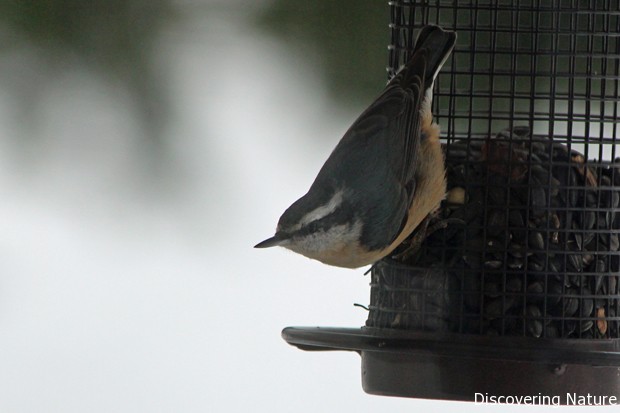
Red-breasted Nuthatch
I glanced out our front window and saw this visitor this morning!

Red-breasted Nuthatch We’re used to seeing white-breasted nuthatches, but the red-breasted nuthatch is a bird we’ve only begun to see since late summer here. As usual, I’m not sure if it’s that they haven’t been around, or that we haven’t been looking.

I love the blush of color and the eyestripe. It comes and goes like lightning, so I was tickled to get some pictures. They would be improved with a little sunshine (and no reflections from the window glass), but we’ll take what we can get. Smile, Little Bird!

It’s smaller than the white-breasted nuthatch, and perhaps not quite as aggressive. The white-breasted sometimes expands to twice its usual size to intimidate other birds when it’s on the suet, but this little bird darts in and darts out and minds its own business.

-
A Riot of Redpolls

These little arctic birds are everywhere today! They’re on the feeder attached to the house, like this one, sometimes wedged tightly together.
They’re also on the roof.


 They’re in the spruce tree.


They’re on the feeder out back.

They’re on the ground.

They’re in the treetops.
 Everywhere, they’re discussing everything with great animation. They’re looking up, down, around — like David Copperfield, whose first plan as a young man is to spend some time “looking about me.” They move in a large, swirling mass.
I’ve never laid eyes on one before this year — that I know of. But I was reading at All About Birds that during iruption years, they travel in huge flocks like this. They breed in the arctic tundra and boreal forest, so this is the sunny south for them!
There are many neat facts about them over at All About Birds. My favorite discovery is that they tunnel under the snow to stay warm, in tunnels sometimes a foot or more long. They can survive temps as low as -65 degrees!
Incredible. Welcome, redpolls! Enjoy your visit.