-
Cooper the Stalker
The Cooper’s hawk is not my favorite — especially when he shows up, as he periodically does, at our bird feeder. Though usually he’s unsuccessful, it seems exceptionally uncivil to turn our efforts to help his fellow birds maintain a food supply in winter into an opportunity to kill and eat them. Nevertheless, I have to admire his handsomeness and athleticism. This series captures one of his visits, when he landed on the feeder and then noticed what must’ve been a mouse on the ground near the woodpile. He left empty-taloned, but his thought processes were easy to read.
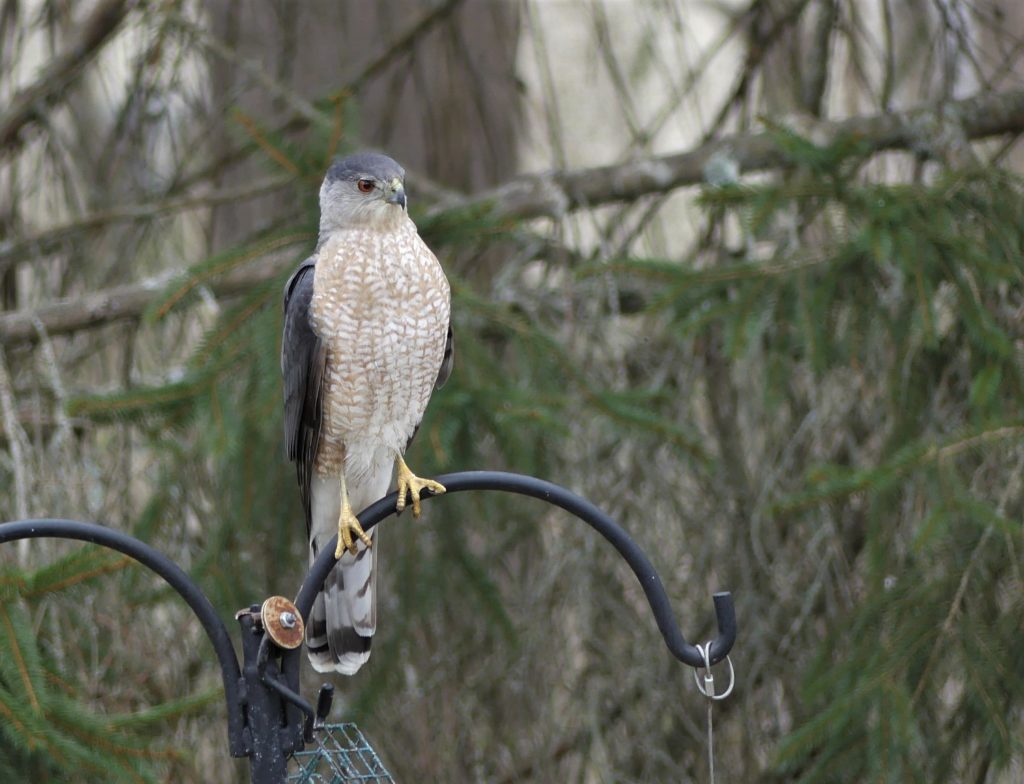
This is where the appetizers usually get delivered, right? 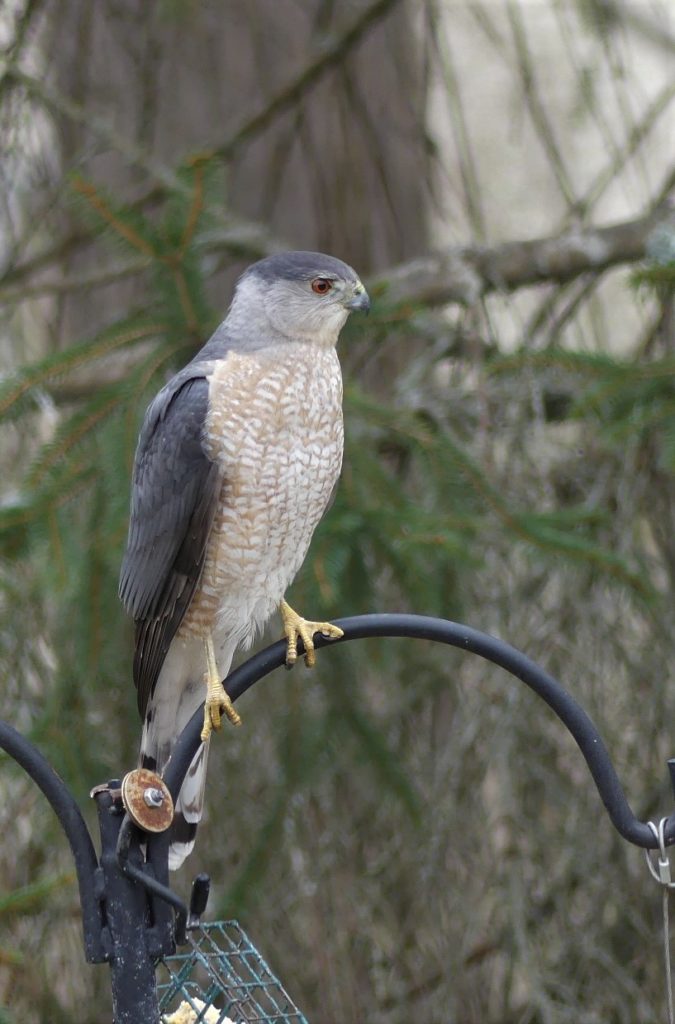
Waiting, waiting… Hey, what’s that on the ground near the woodpile? 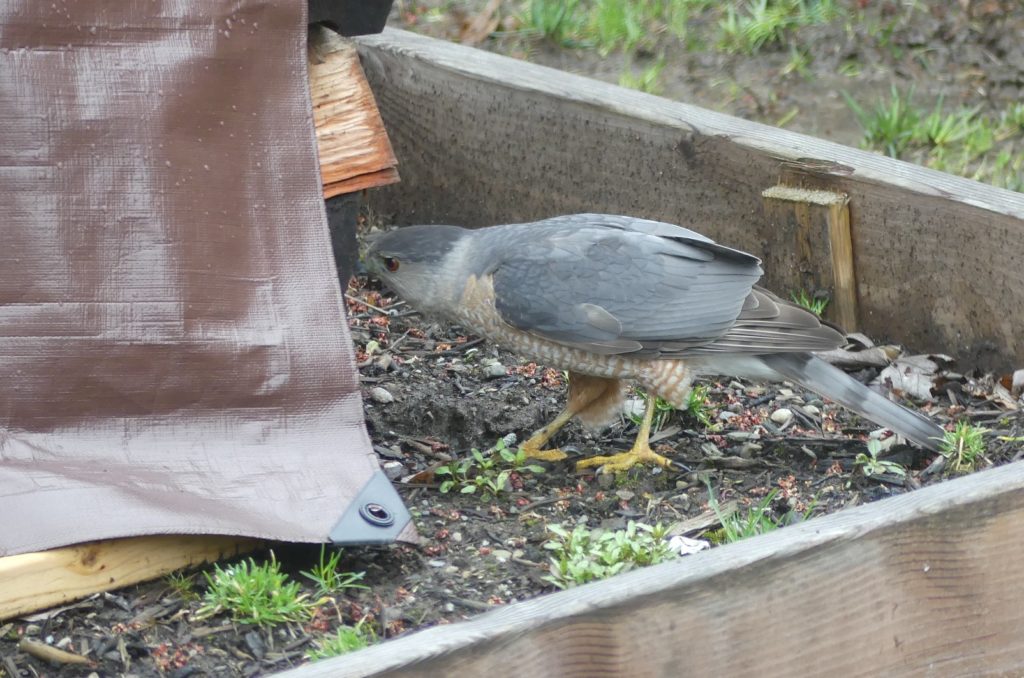
Here, mousy mousy! 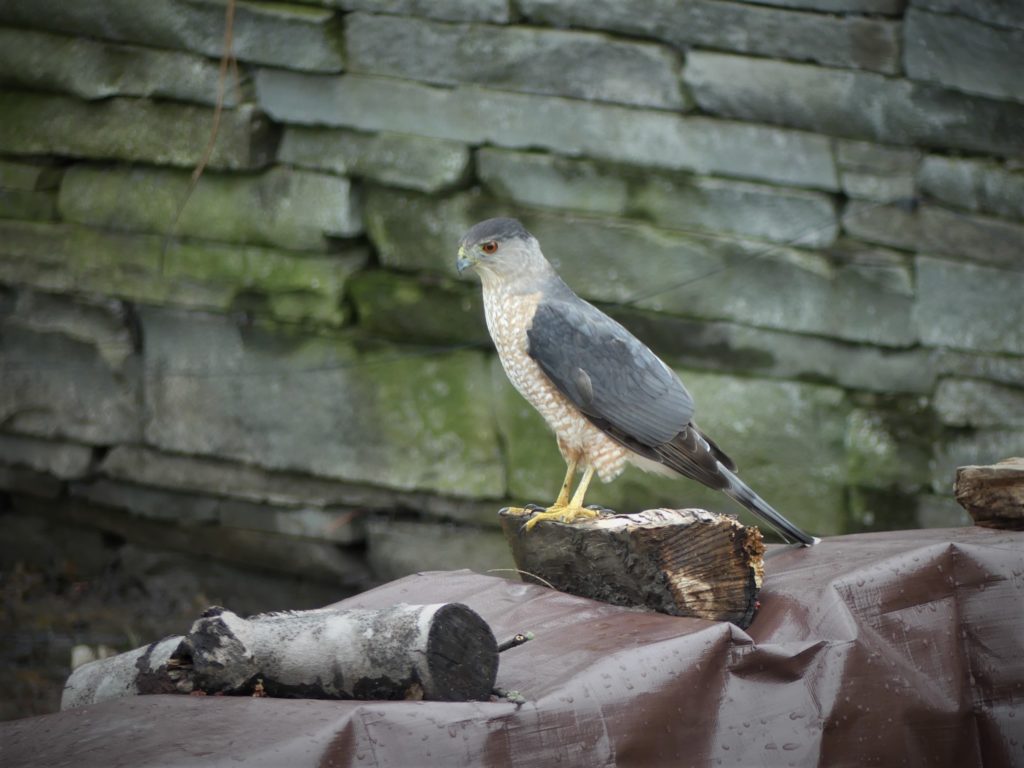
-
Brick Pond
My youngest and I decided to “carpe the diem” and take a walk yesterday, even though it was late in the day and we didn’t have much time. We chose Brick Pond, a site nearby that usually promises some rewarding sights. The mud in the pond was at one time used to make bricks, and it even rebuilt the town after a devastating fire. But today it’s a nature preserve.
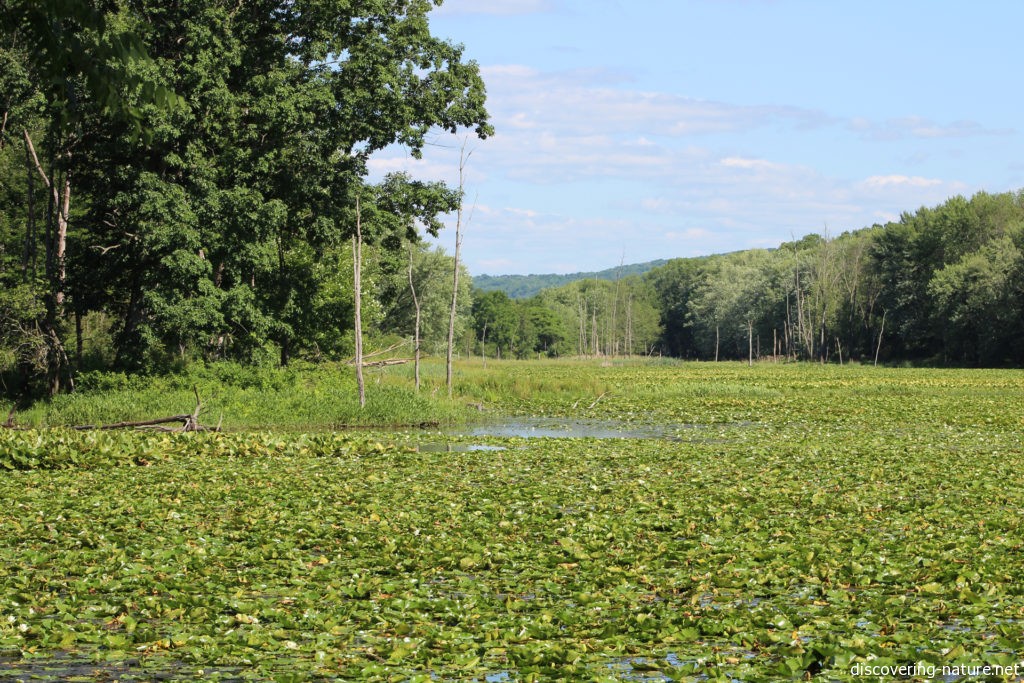
My daughter took the Panasonic Lumix, a point-and-shoot bridge camera; I took the Canon T6 which, after being sent out 3X for its sub-par autofocus, actually produced some fairly focused images. Here are a few of my favorites:
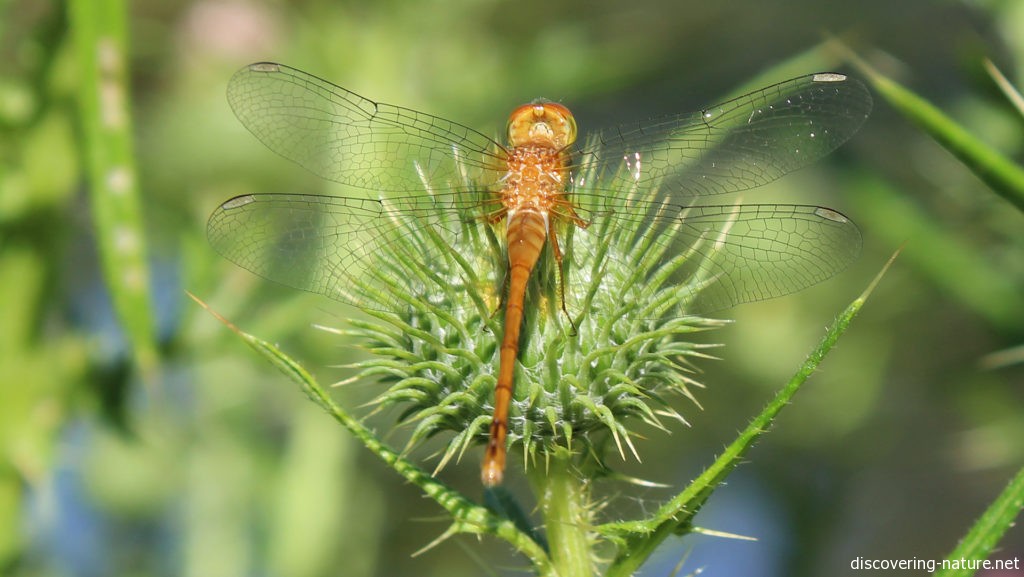
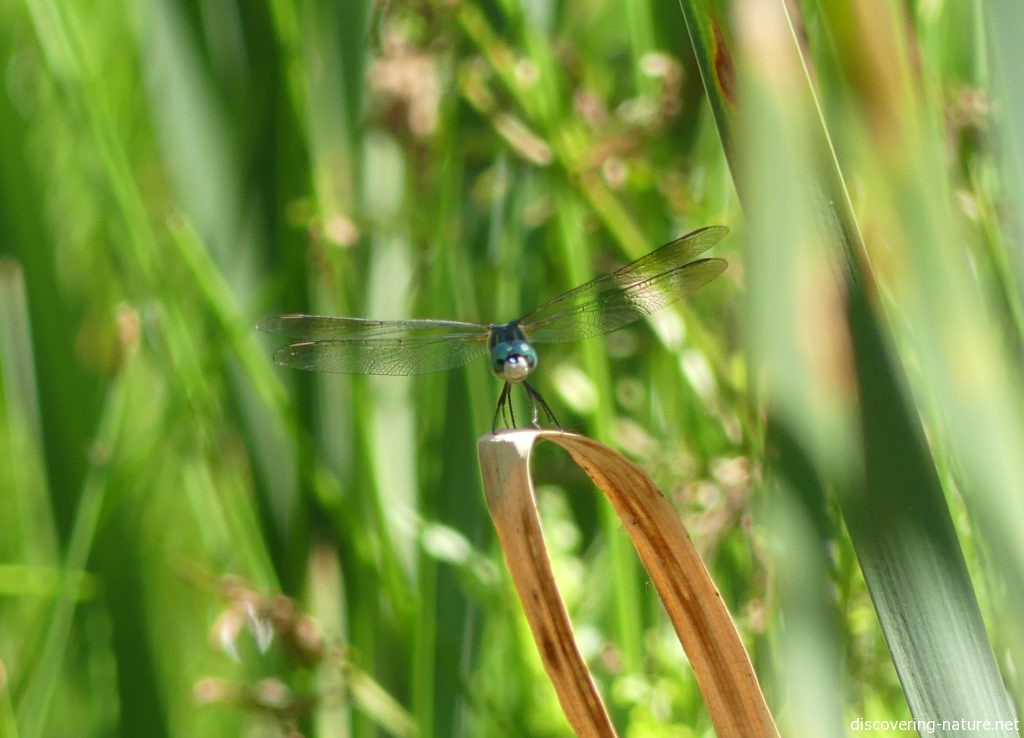
This dragonfly’s wings remind me of stained glass windows whose panes haven’t been stained yet. The wings would have been completely invisible to me without the telephoto lens to show me the details… except when the sun caught them:
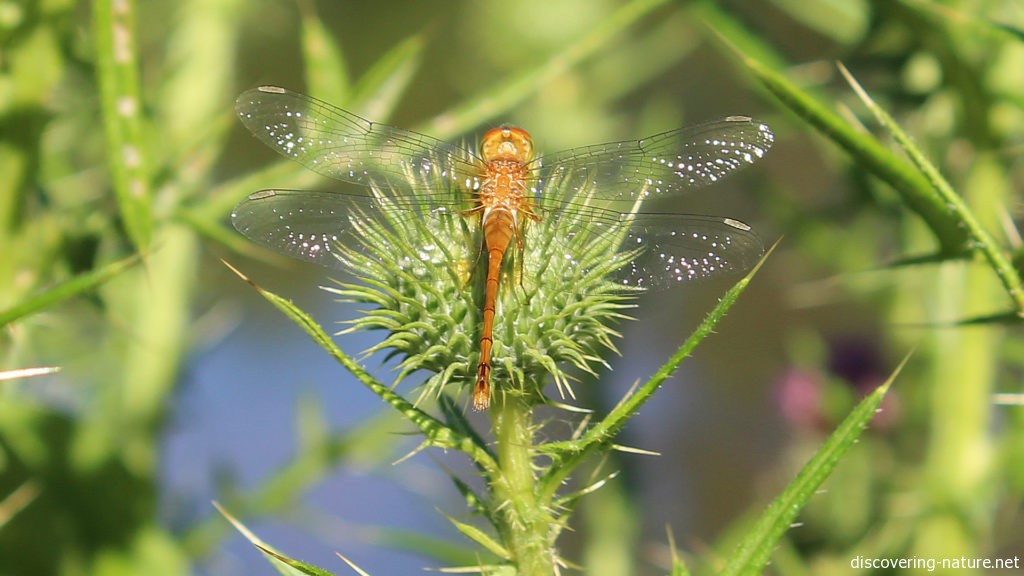
This one was small. I’m guessing it belongs to the category of “skimmers.” But there were some large ones about as well. Maybe these big ones belong to the category of “darners”:
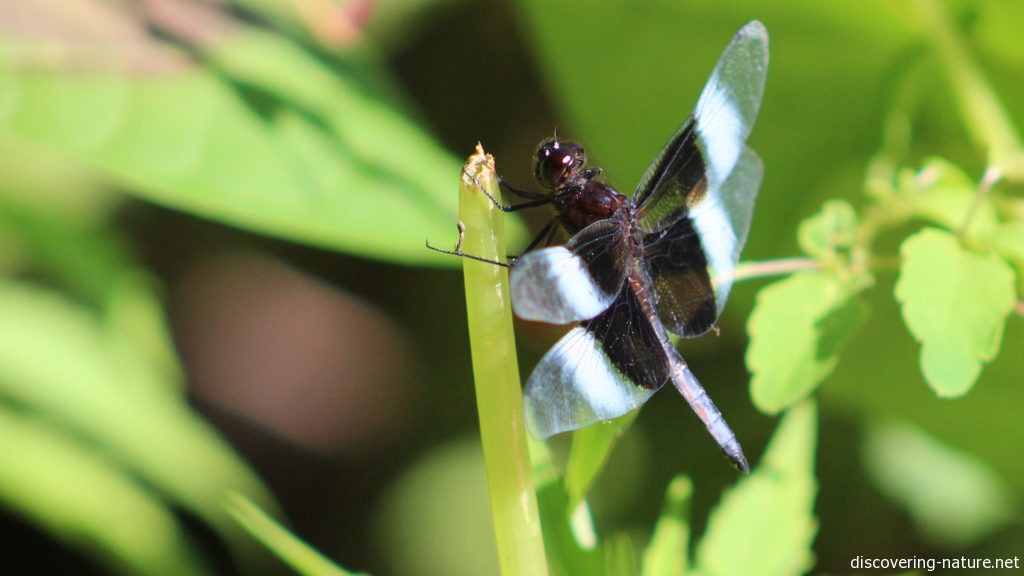
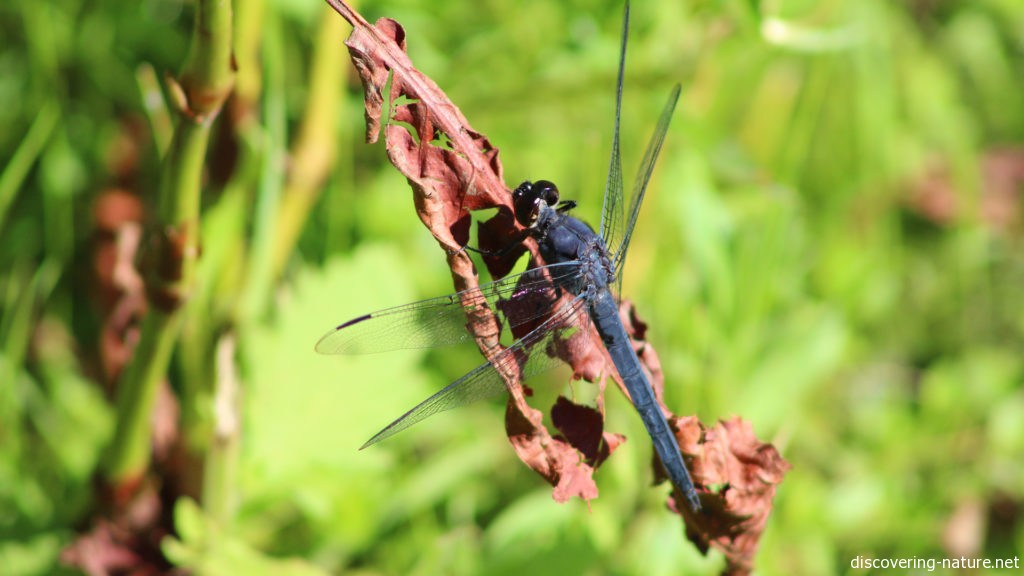
This giant indigo fly seems to think it’s camouflaged…
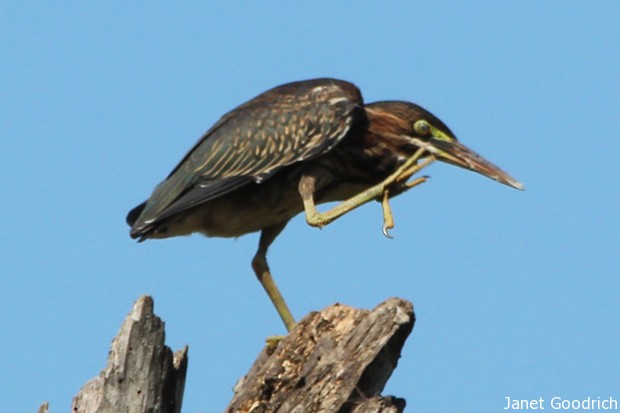
Another treat was this green heron:
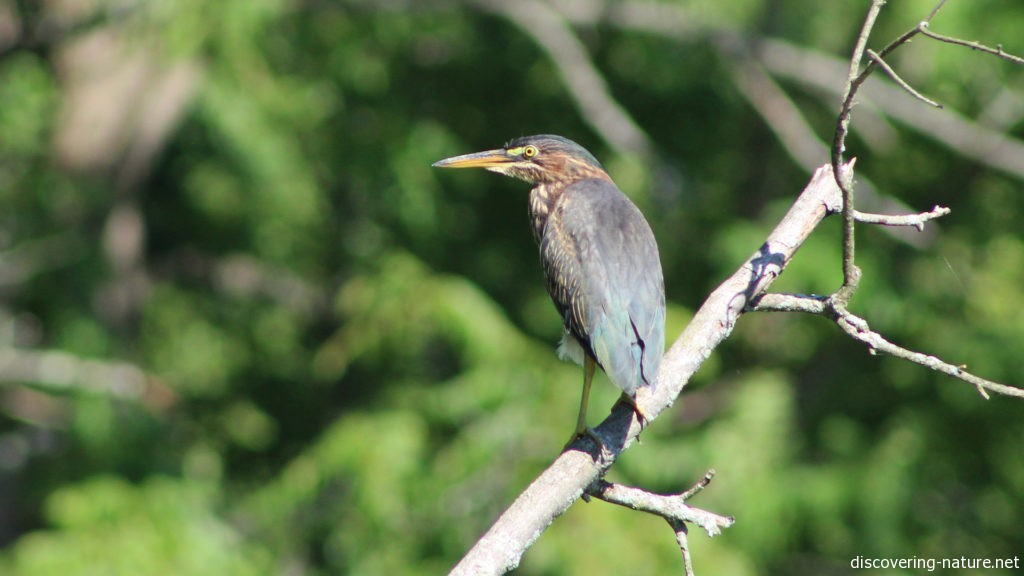
You can right-click and choose “view image” to see the picture full-size. 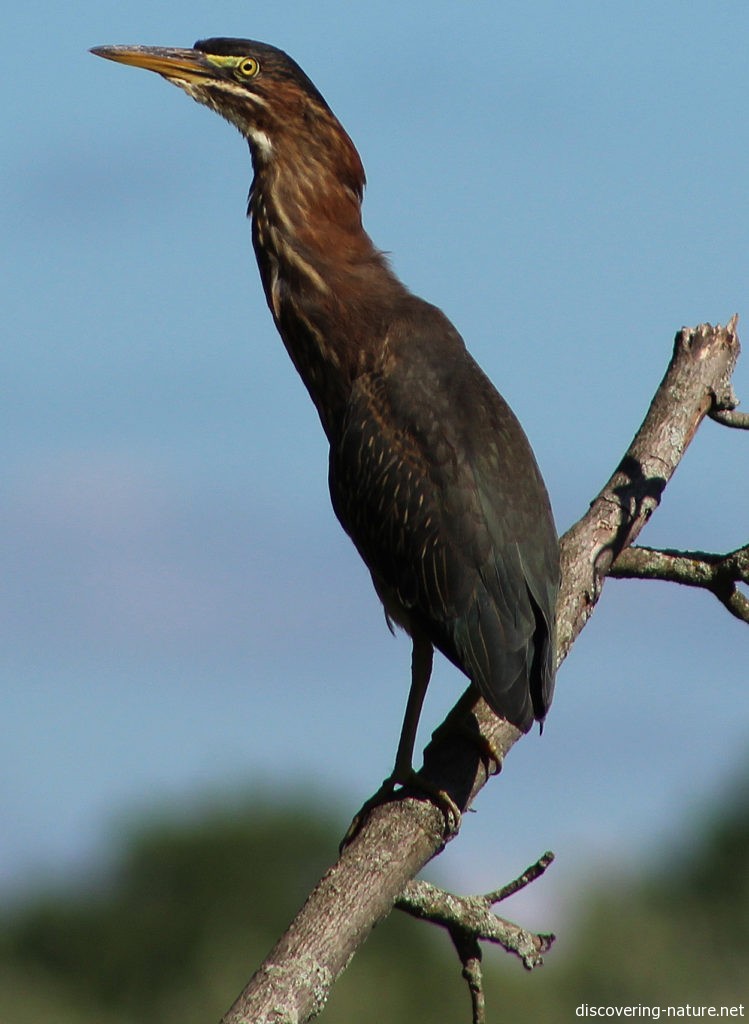
It sat for quite awhile, observing us as we observed it. Usually they’re spookier than that. If I were in the habit of posting pics of my family, I’d love to share the one of my daughter photographing this bird with a gaggle of Canada geese just beyond her, all pointed in the same direction. It was quite the spectator sport.
There were some pretty flowers and berries too, and I was pleased that the camera could pick up on them.
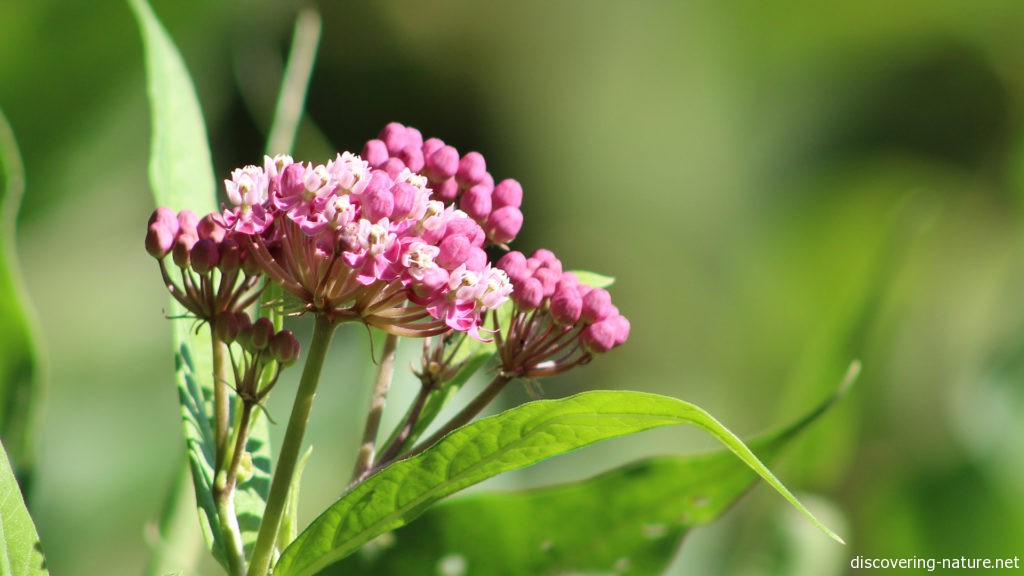
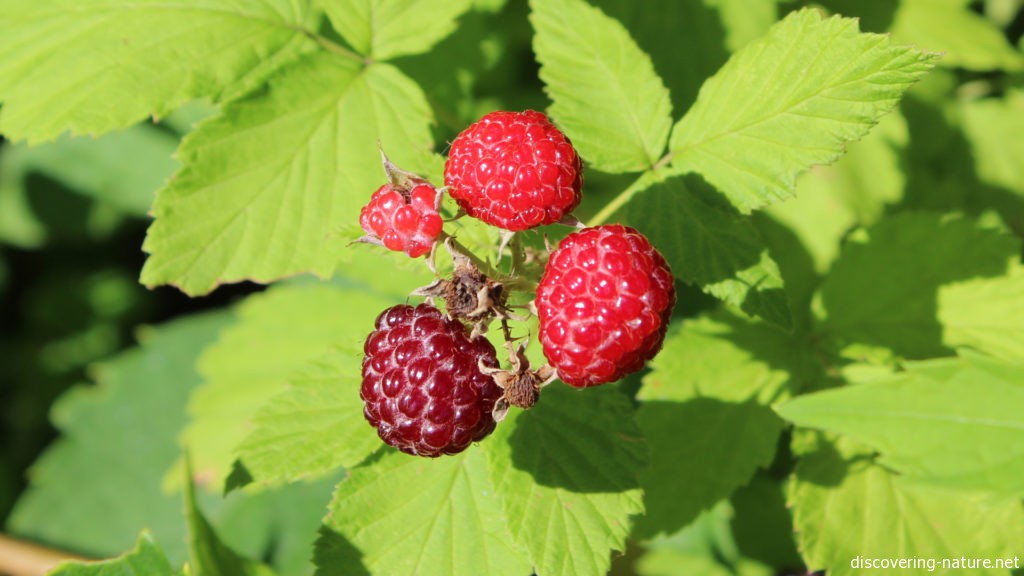
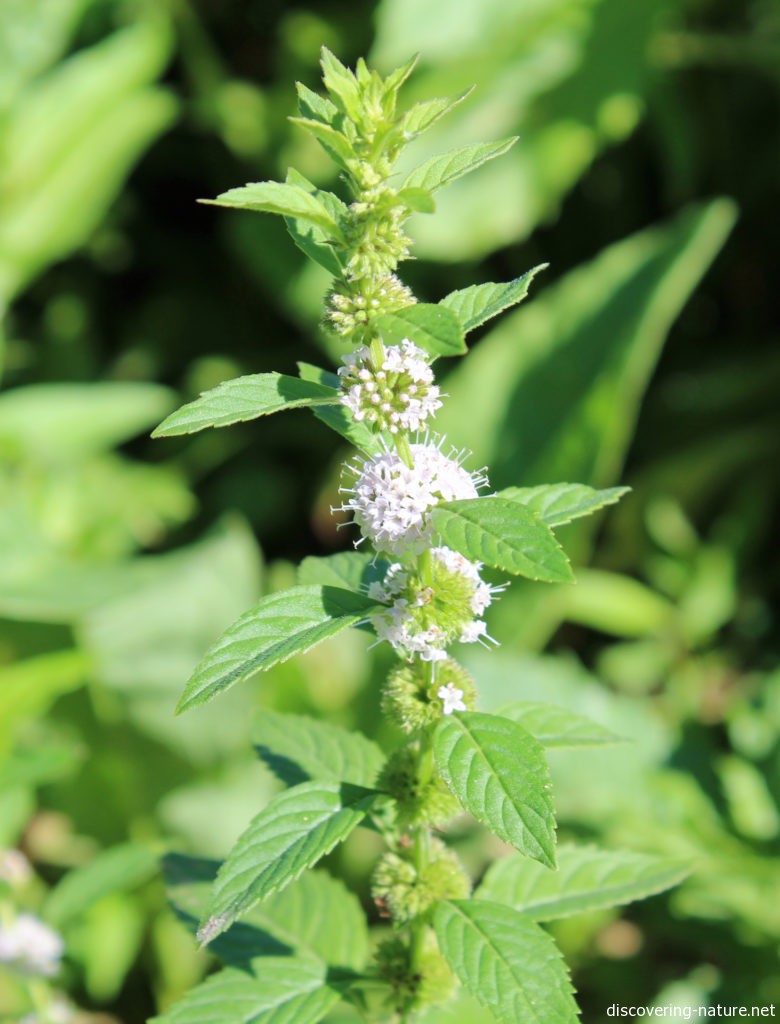
I’m wondering if that last one is a “button bush.” A friend posted her button bush, absolutely alight with yellow swallowtails, on Facebook the other day. But the butterflies were elsewhere yesterday.
Here’s one from a walk earlier in the week, taken with the Panasonic:
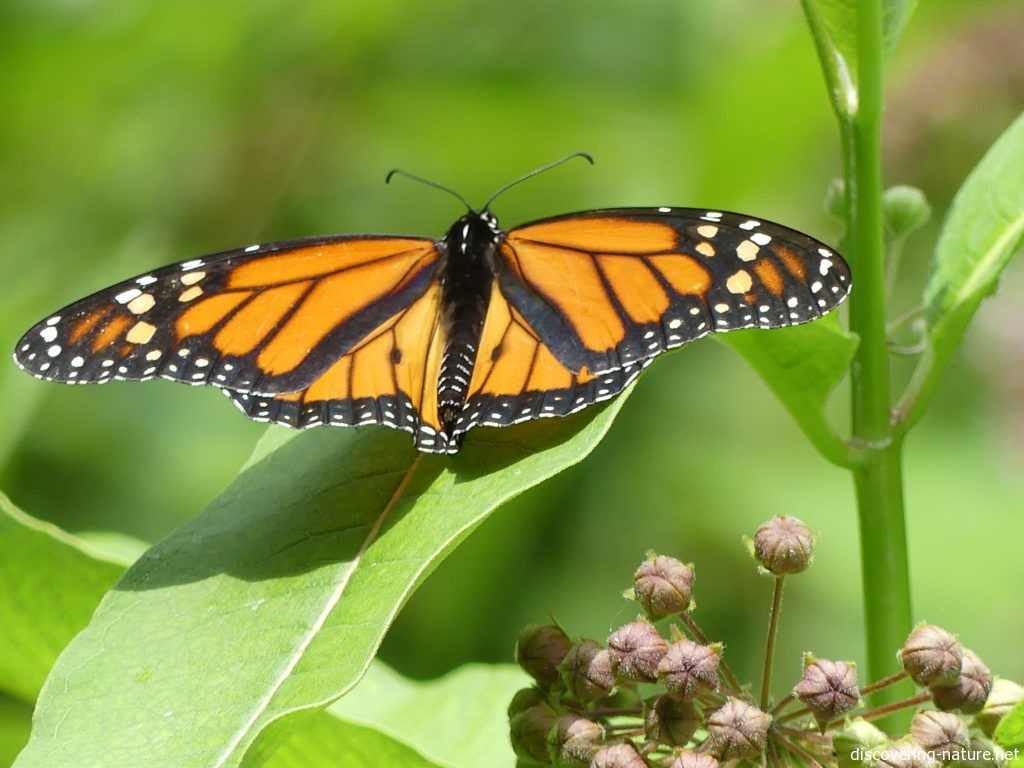
Monarch on milkweed. The spots on his wings show that he’s male. 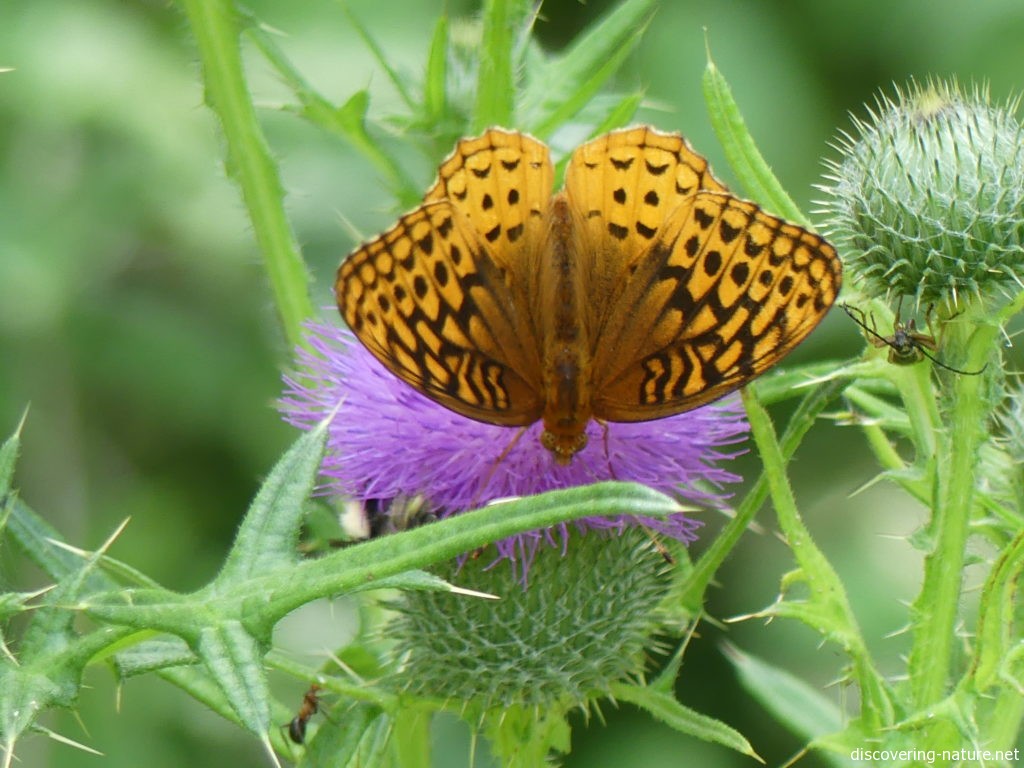
Fritillary on thistle We’re feeling pretty blessed to have such an abundance to enjoy during these warmer months, as well as two decent cameras to capture the memories.
-
Summer Afternoon
We took a walk last week at Sapsucker Woods, following the trail around the pond.
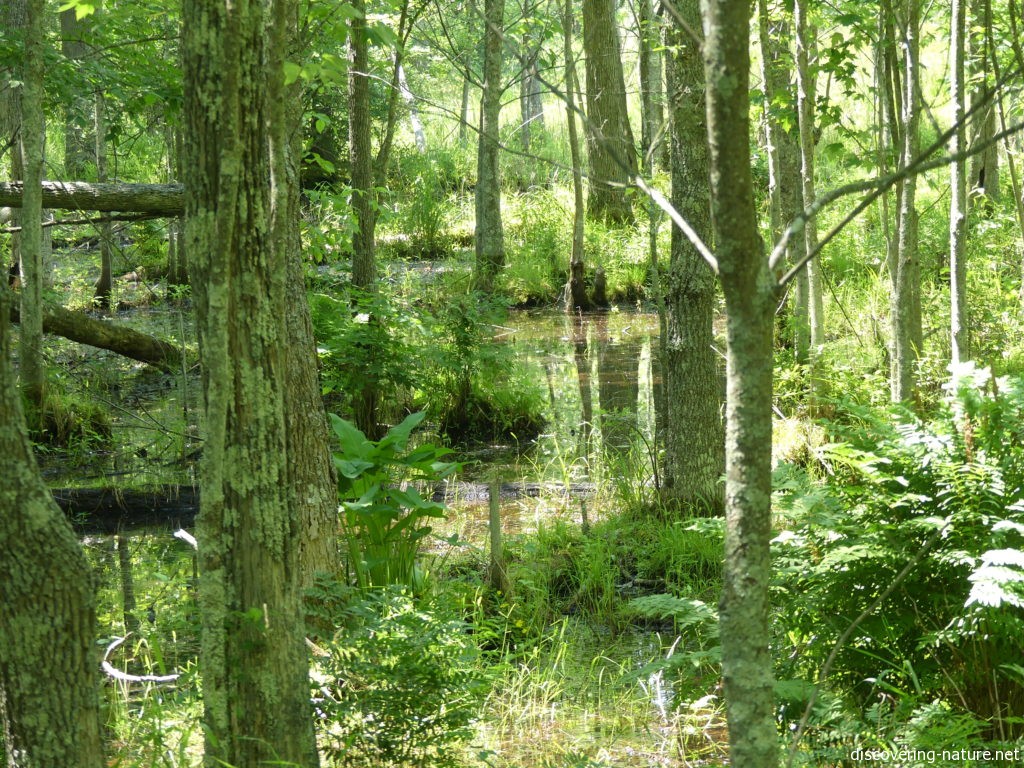
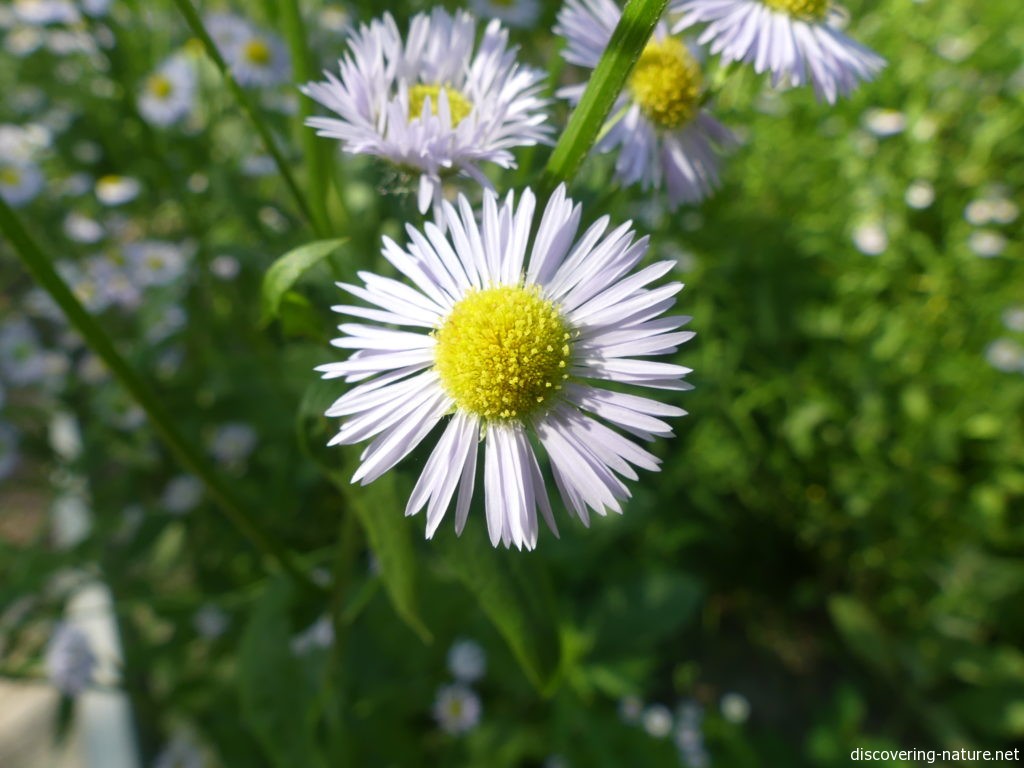
Flowers reflected and drank up the sun.
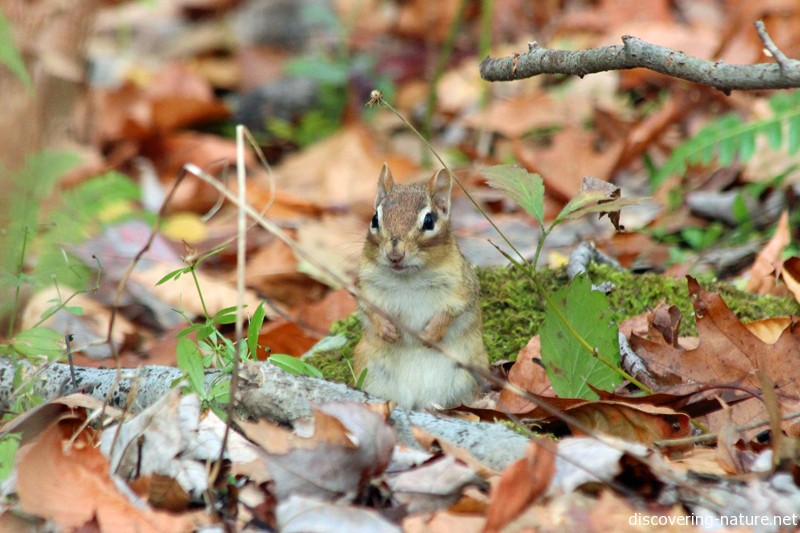
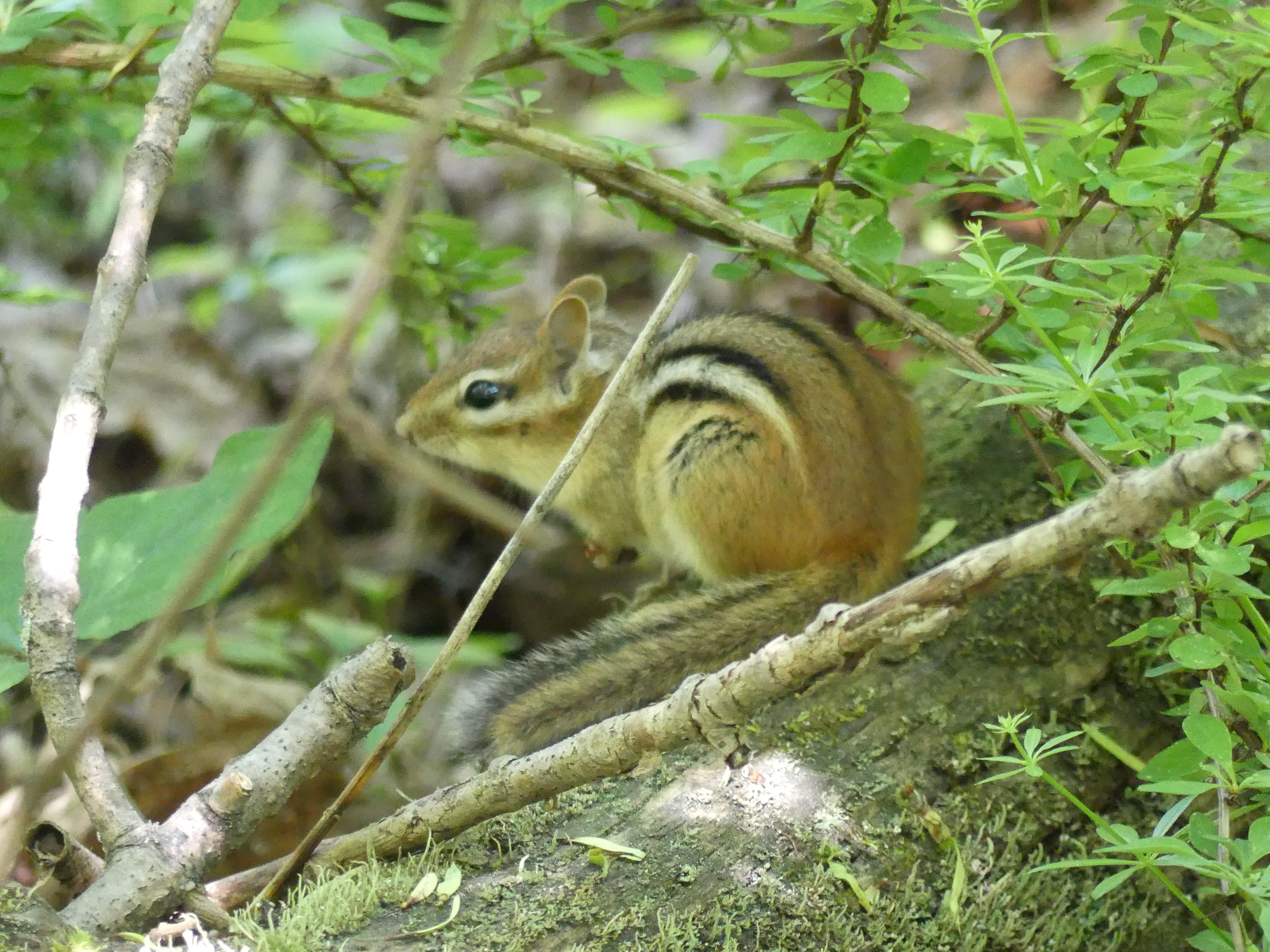
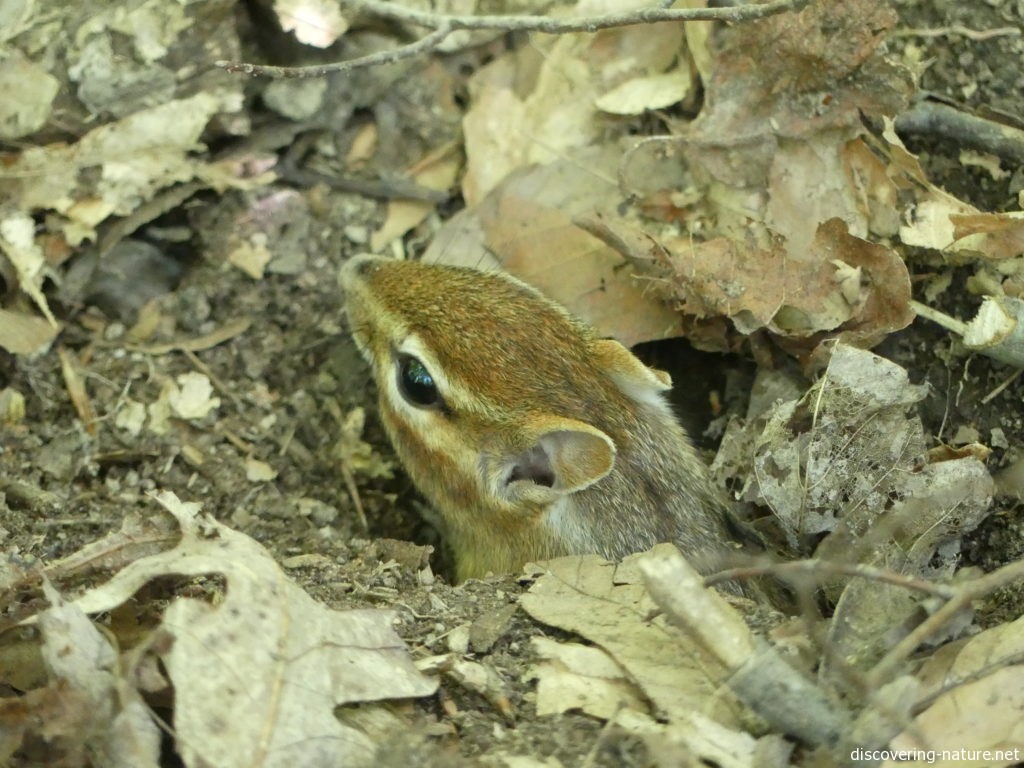
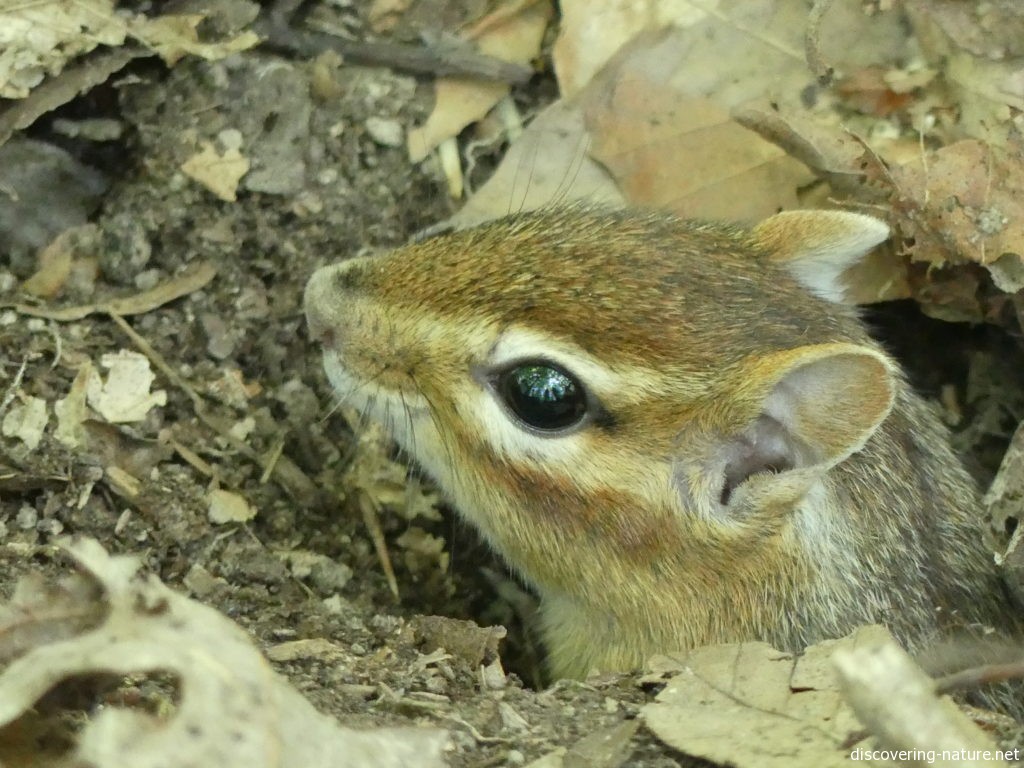
Chipmunks are so common, but so photogenic. This one took refuge in a hole almost under our feet.
A little farther on, we saw this bird — a wood thrush, I think — sunning itself. At first we thought it was hurt…
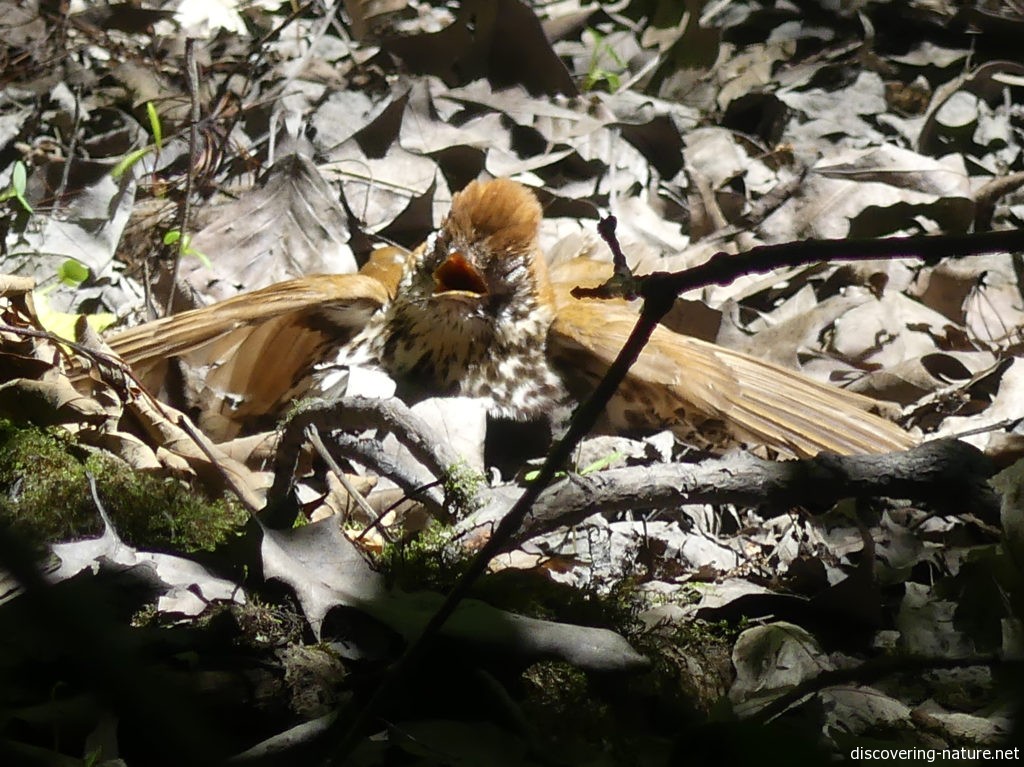
But when it realized we were observing, it assumed a more dignified pose.
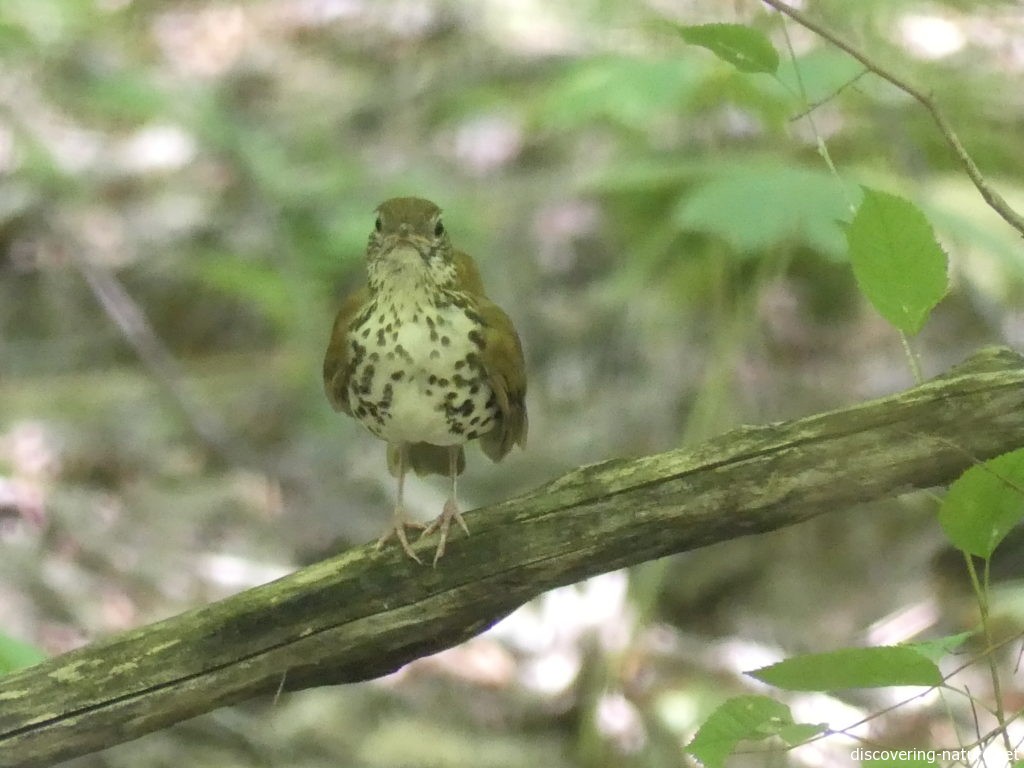
This tree struck us as having an observing eye (or two).
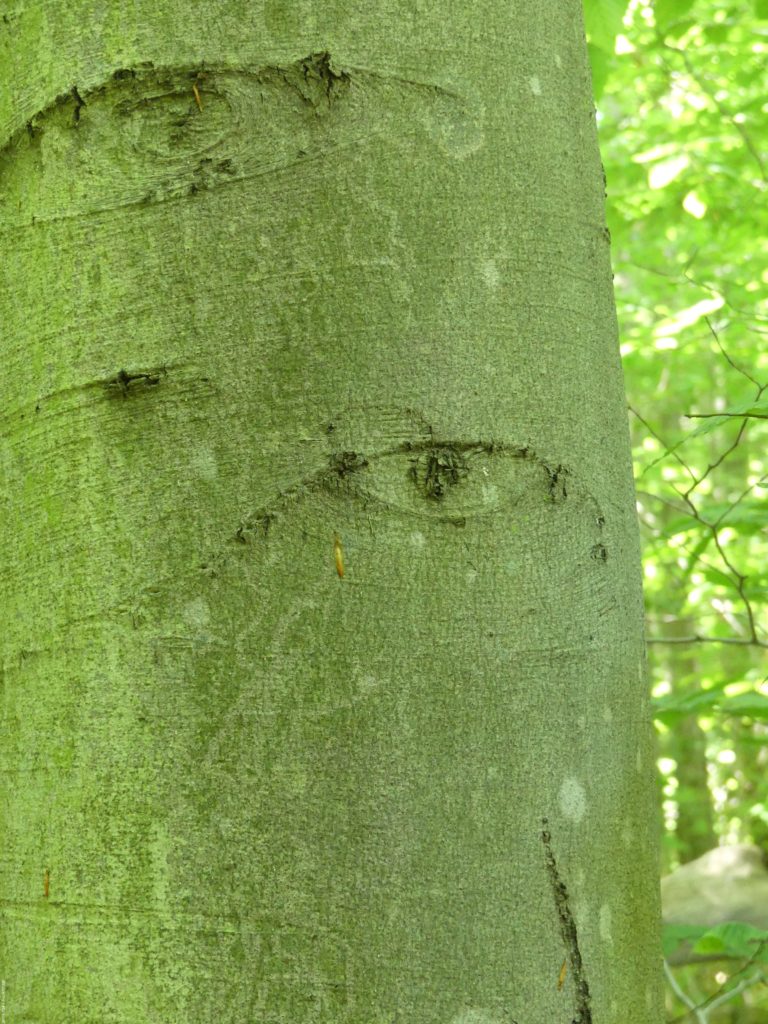
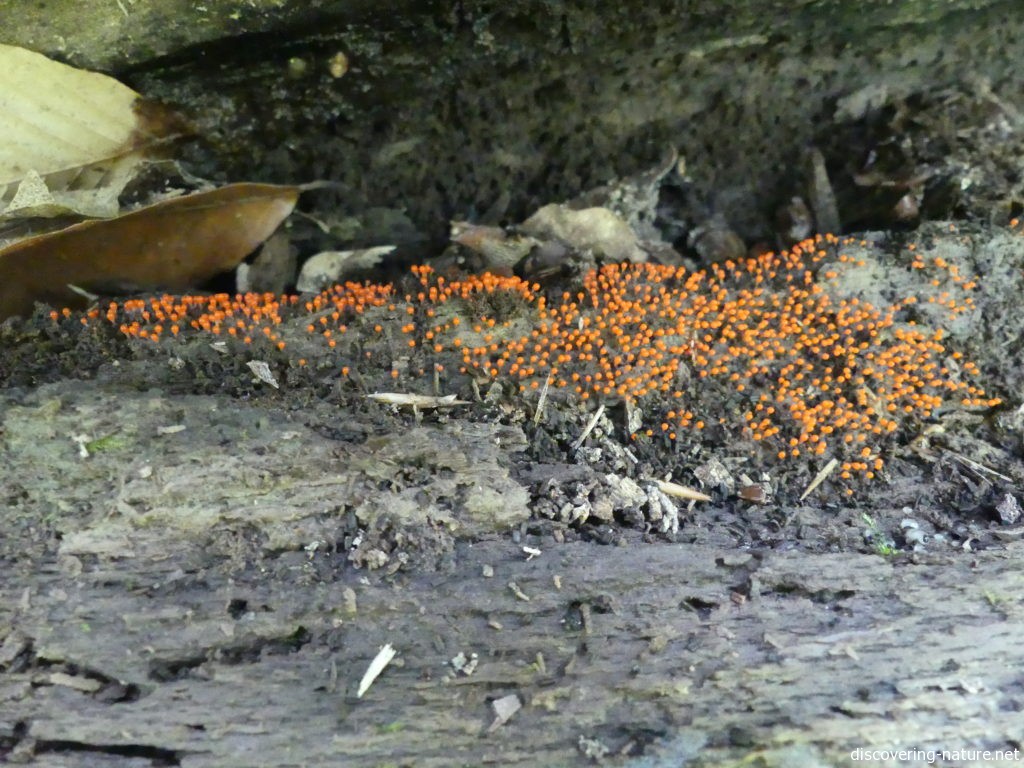
This fallen tree was less fortunate, but the red fungus was interesting.
The walk included some time hanging out beside the water.
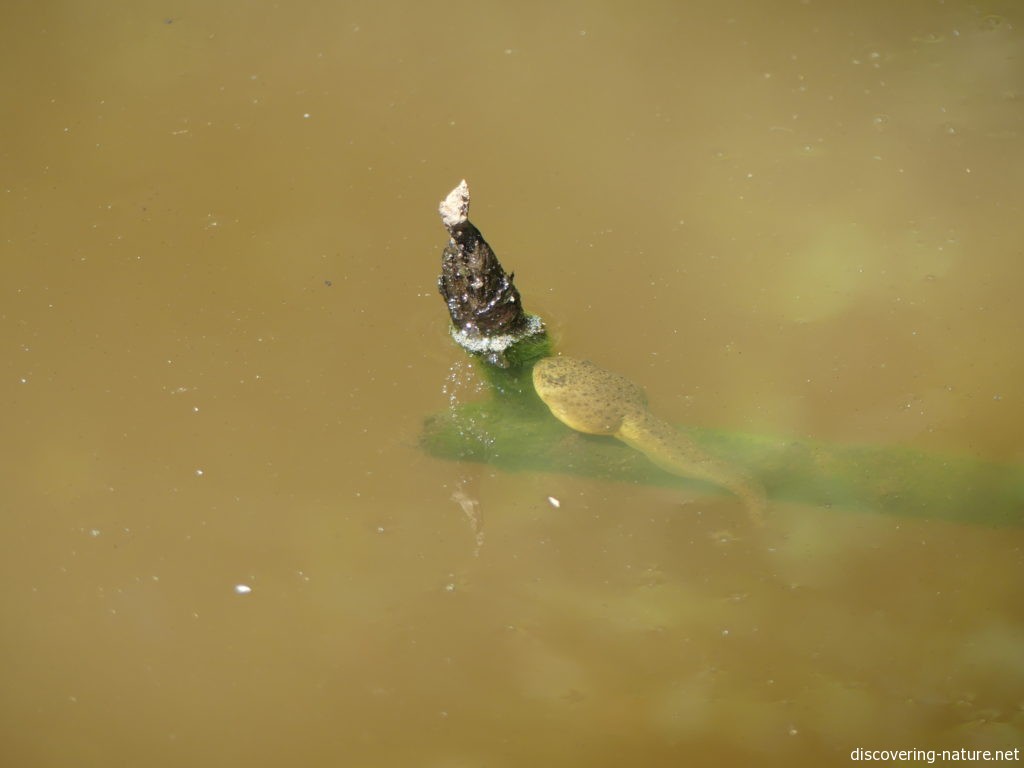
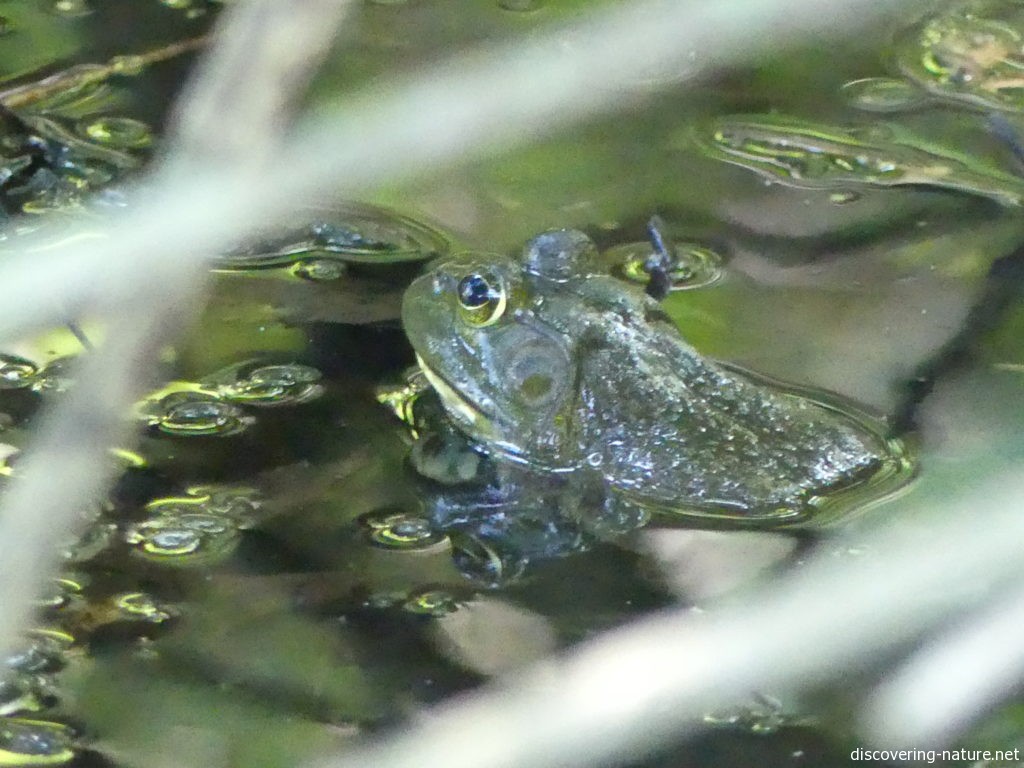
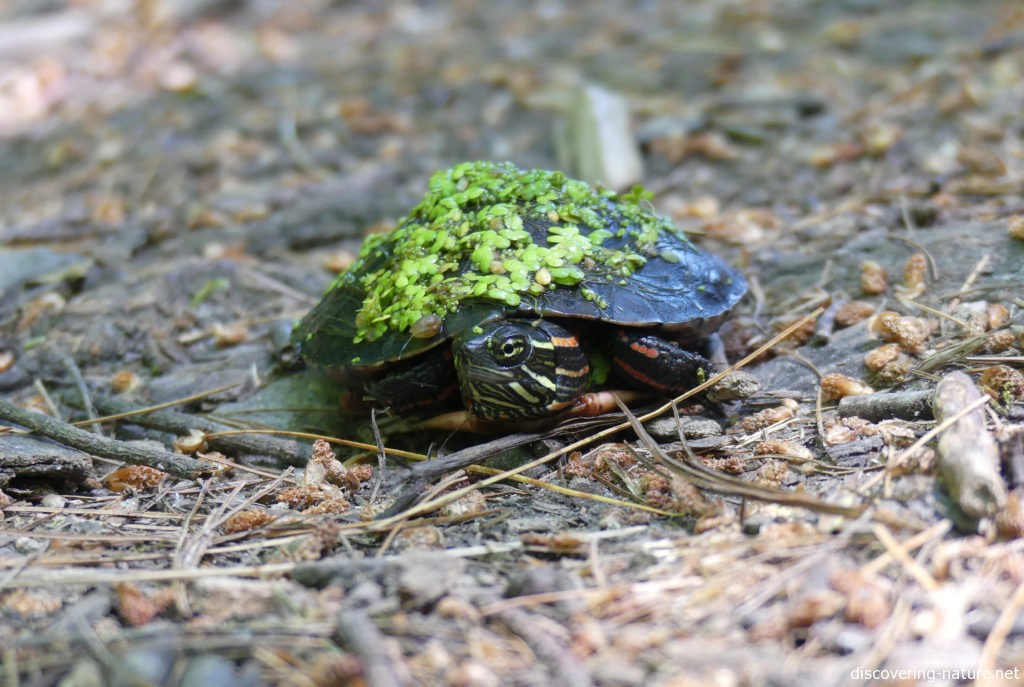
On the way out we almost stepped on this little guy. He looked like a rock.
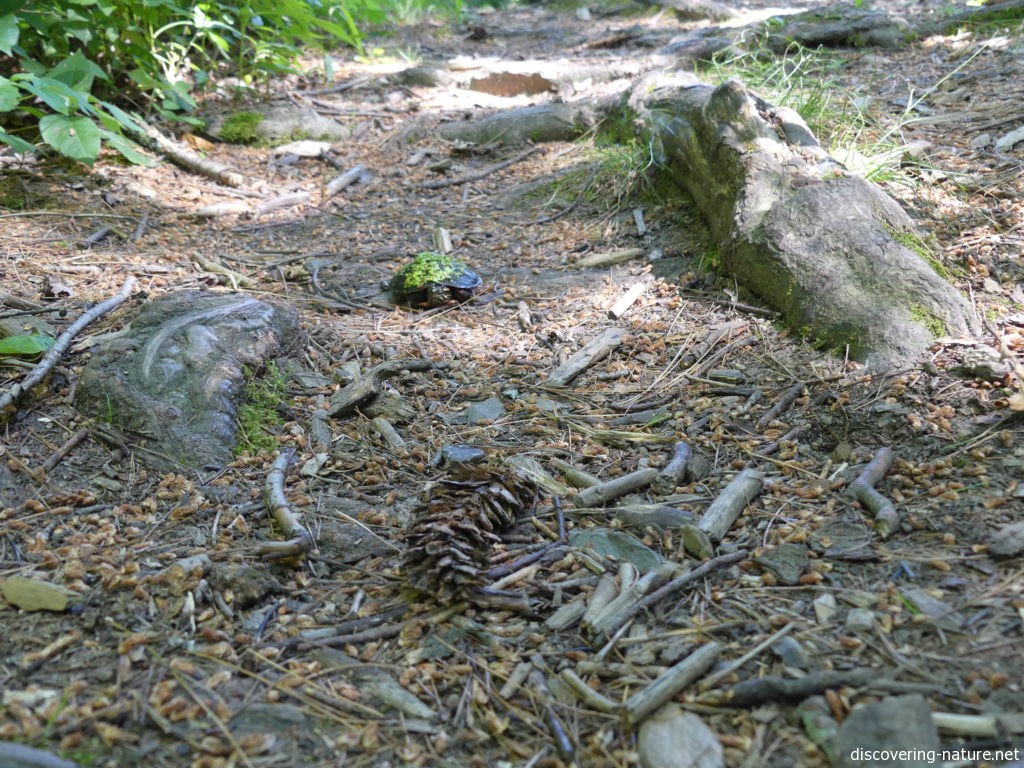
A closer look:
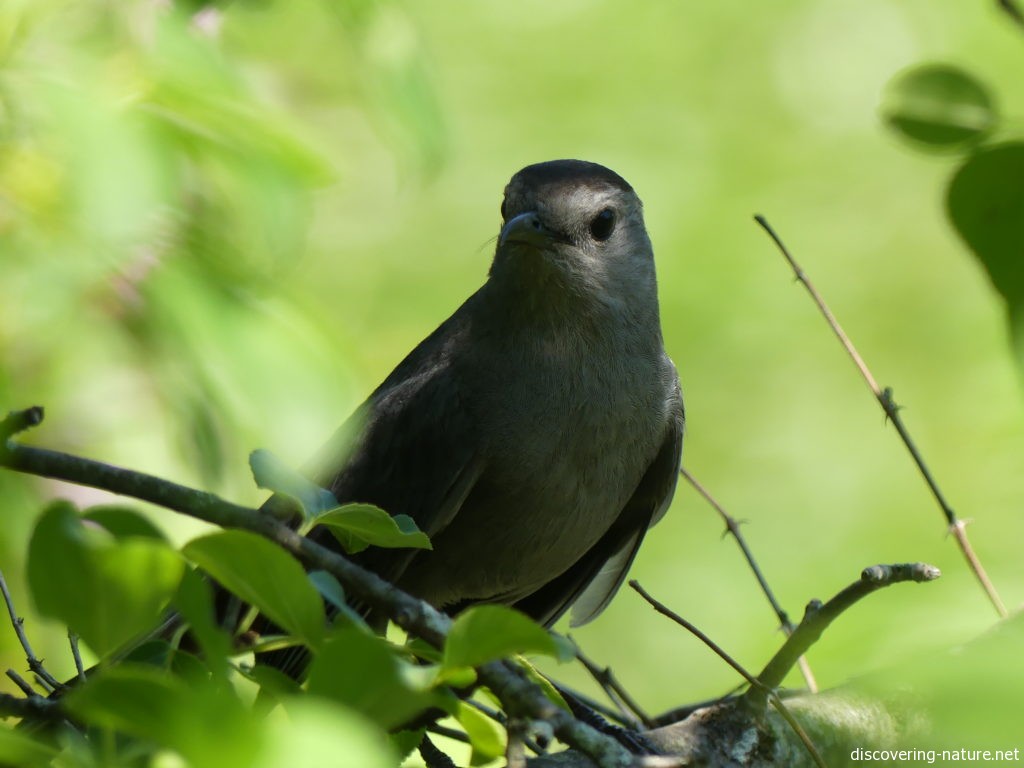
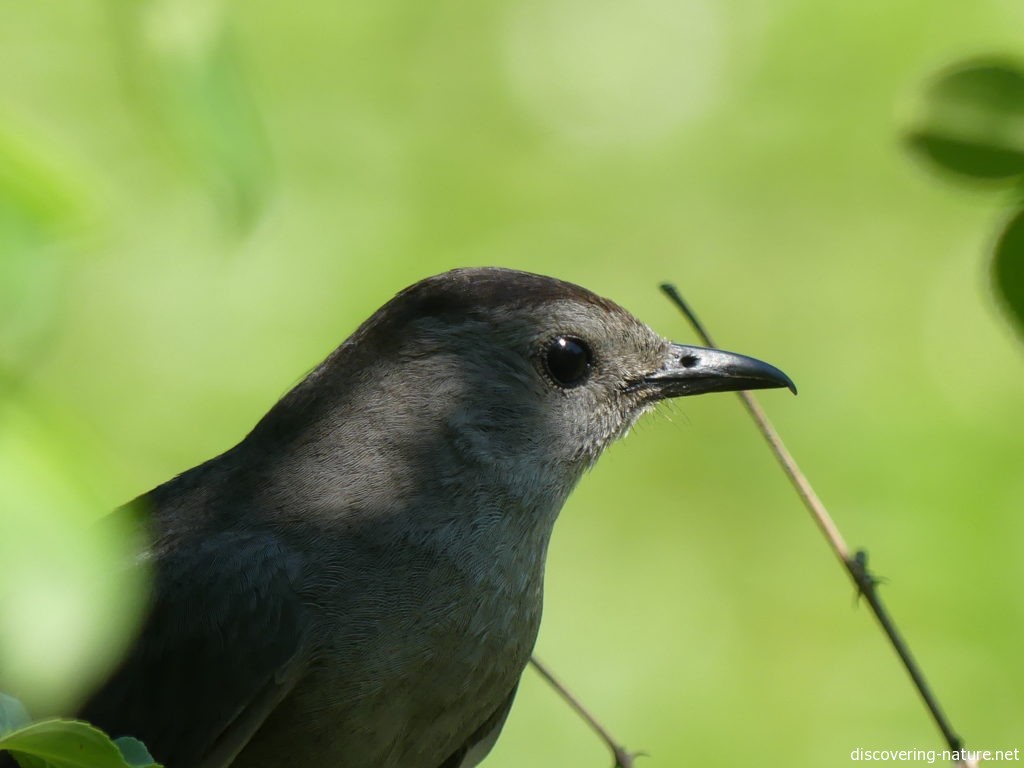
An elegant catbird supervised the conclusion of our walk.
-
A few more sights from this week
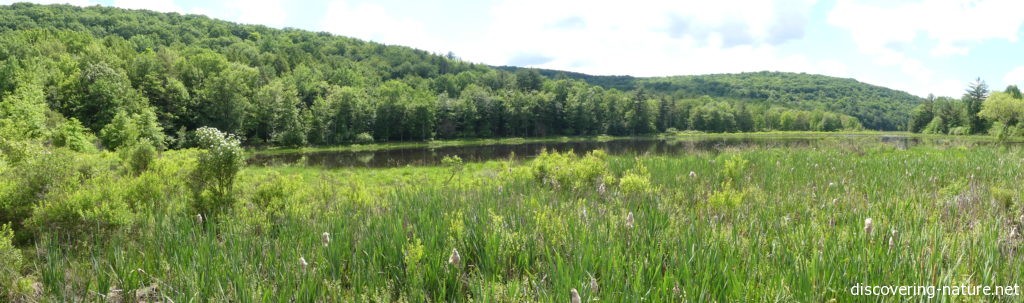
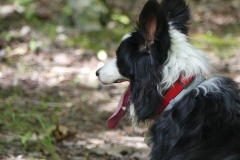
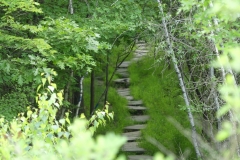
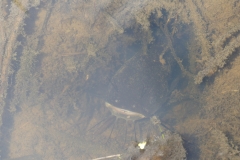
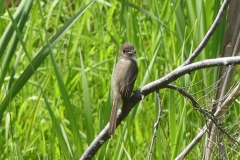
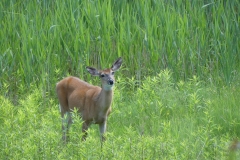
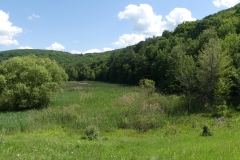
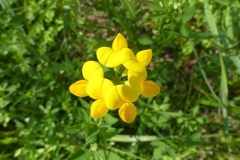
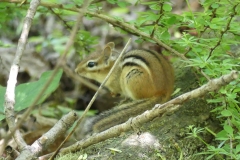
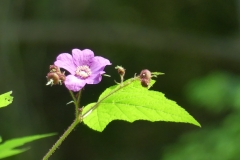
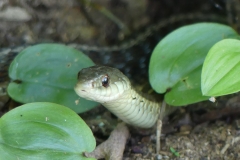
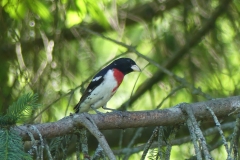
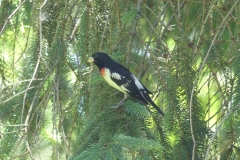
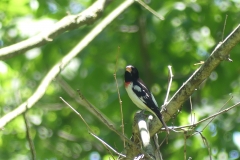
I live in a beautiful area, though until the sun comes out we can easily forget. This week has helped us remember.
-
Even sparrows
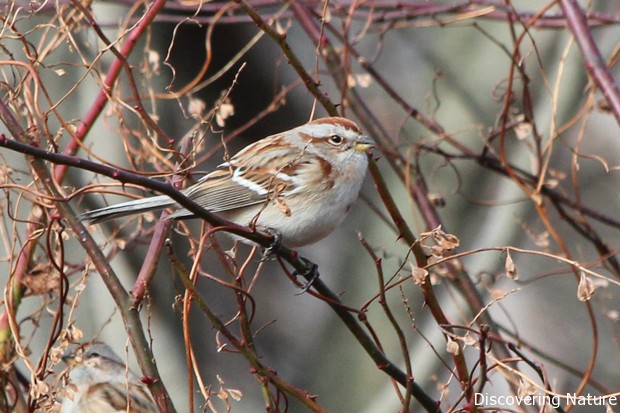
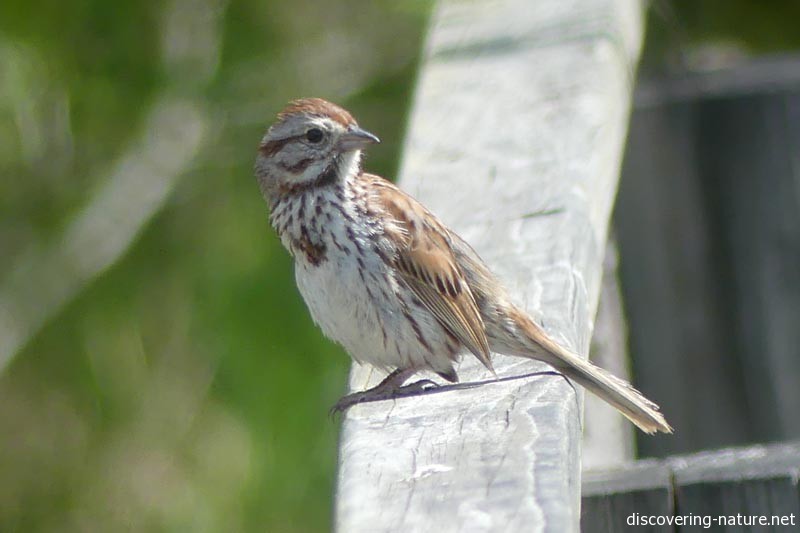
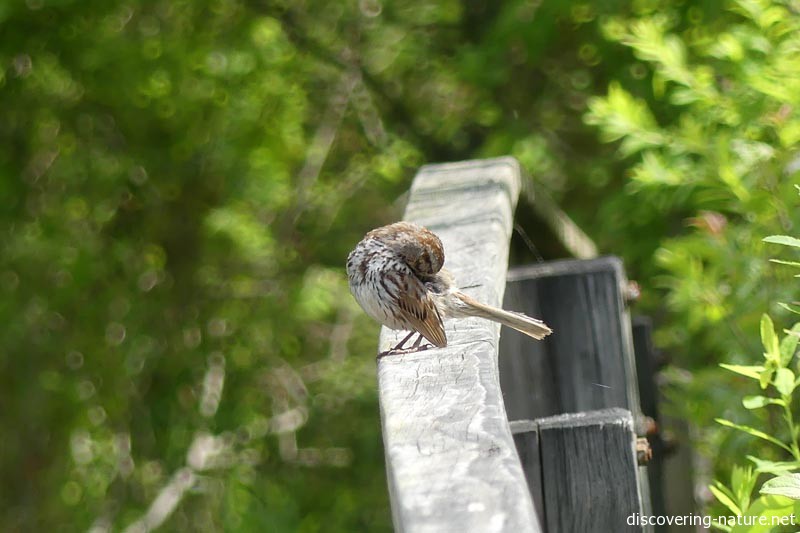
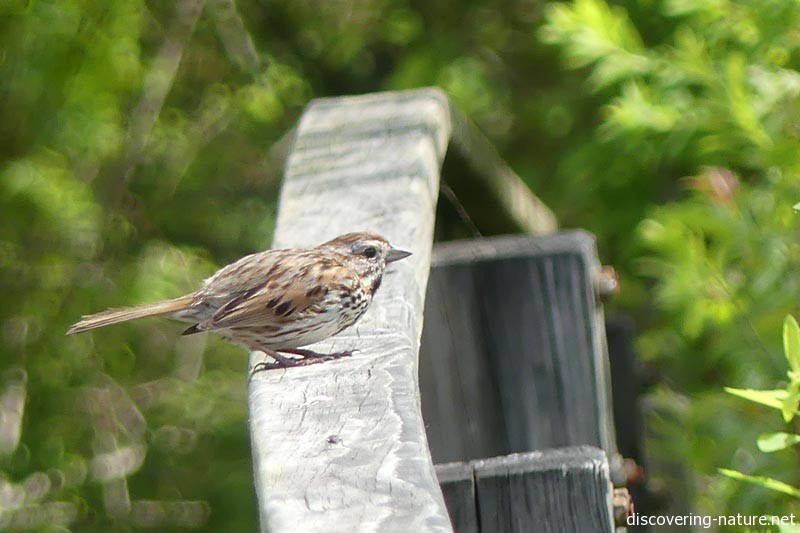
In trying out the new camera my husband blessed me with, my most cooperative subject was a song sparrow. There were other birds around — a yellow throat, a yellow warbler, a redstart. The sparrow is the least exotic and colorful. Yet a close look shows even sparrows to be remarkably varied.
-
Wildflowers
We took an afternoon walk yesterday to see how a familiar preserve looked in the sun. Here’s a new flower — with the not-so-catchy name “narrow-leaved blue-eyed grass”:
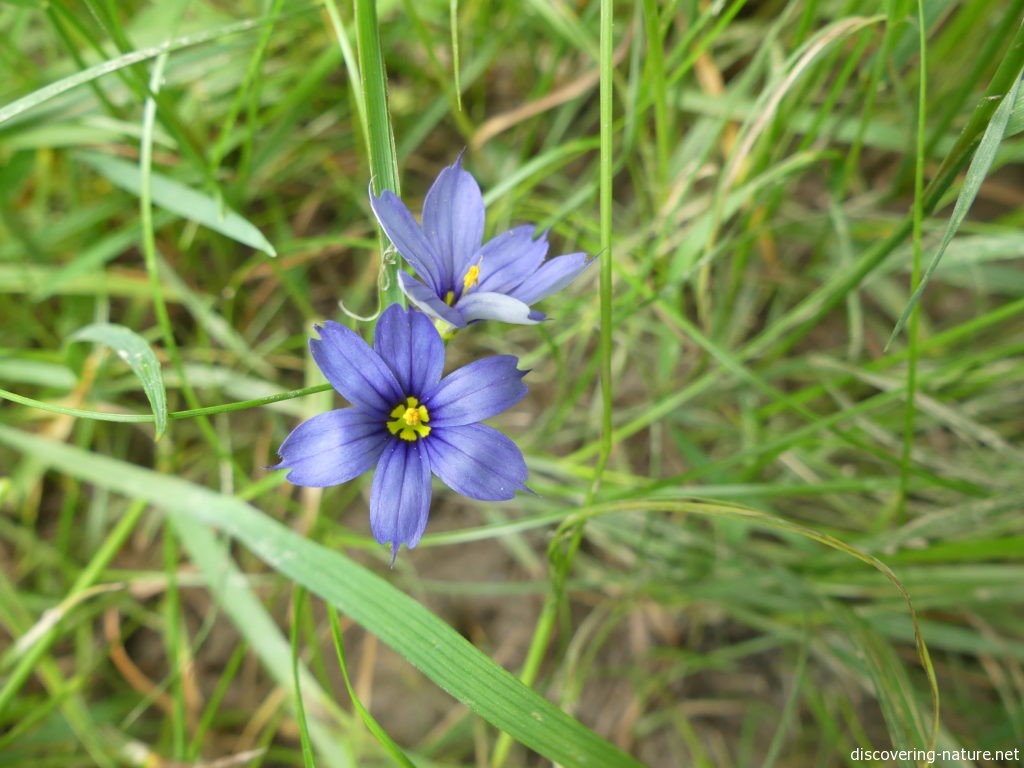
It’s only about a half an inch across, but it was neat to see a new adornment on the ground. Here’s a closer look:
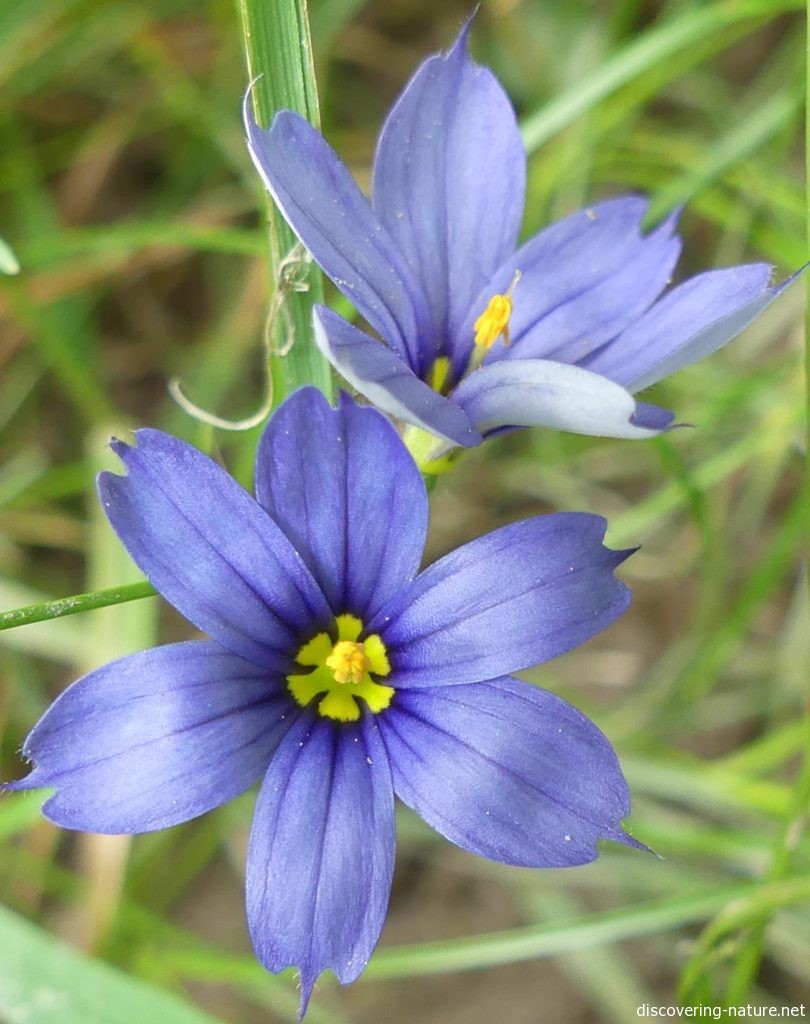
A veery was singing in the distance, which my daughter tried without success to see. Oven birds, a house wren, robins and cardinals provided musical accompaniment. A few other flowers we saw:
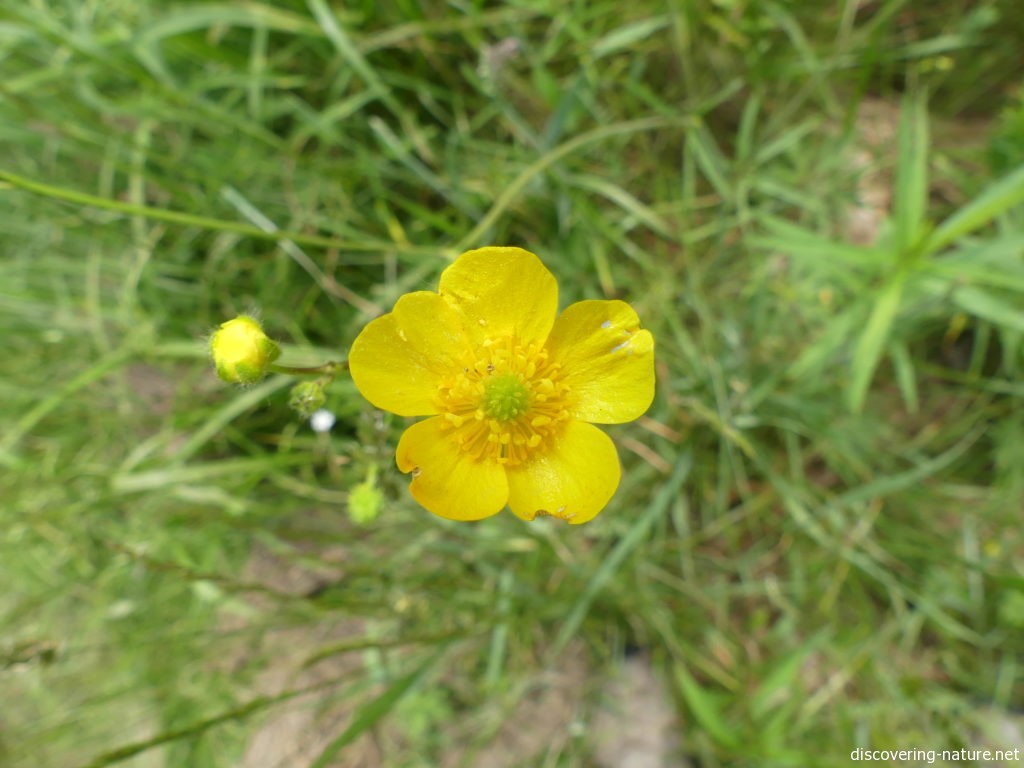
Buttercups (I guess) 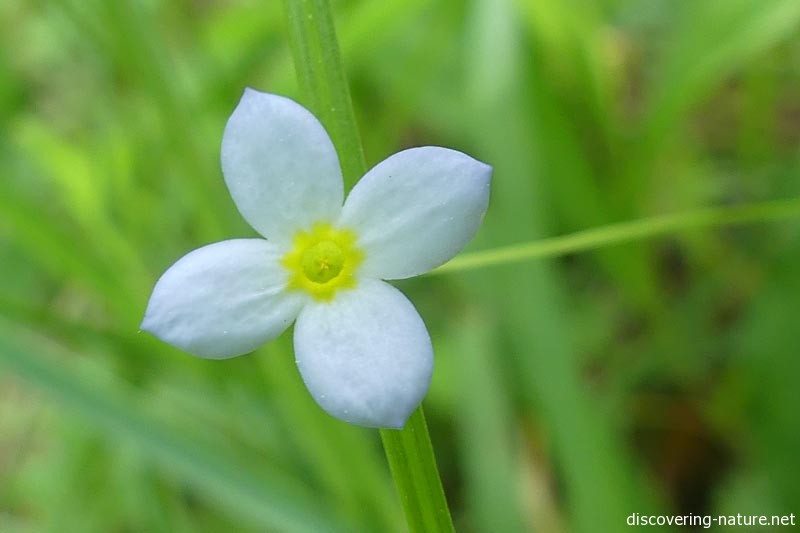
Bluets 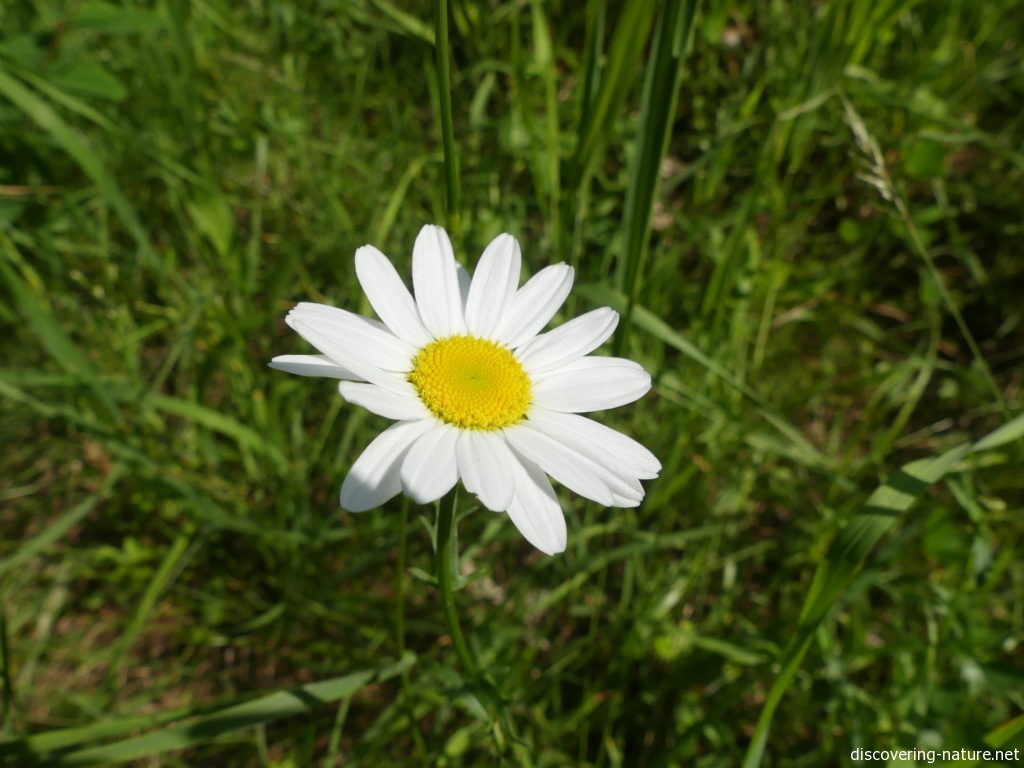
Daisies There were mosses a-plenty…
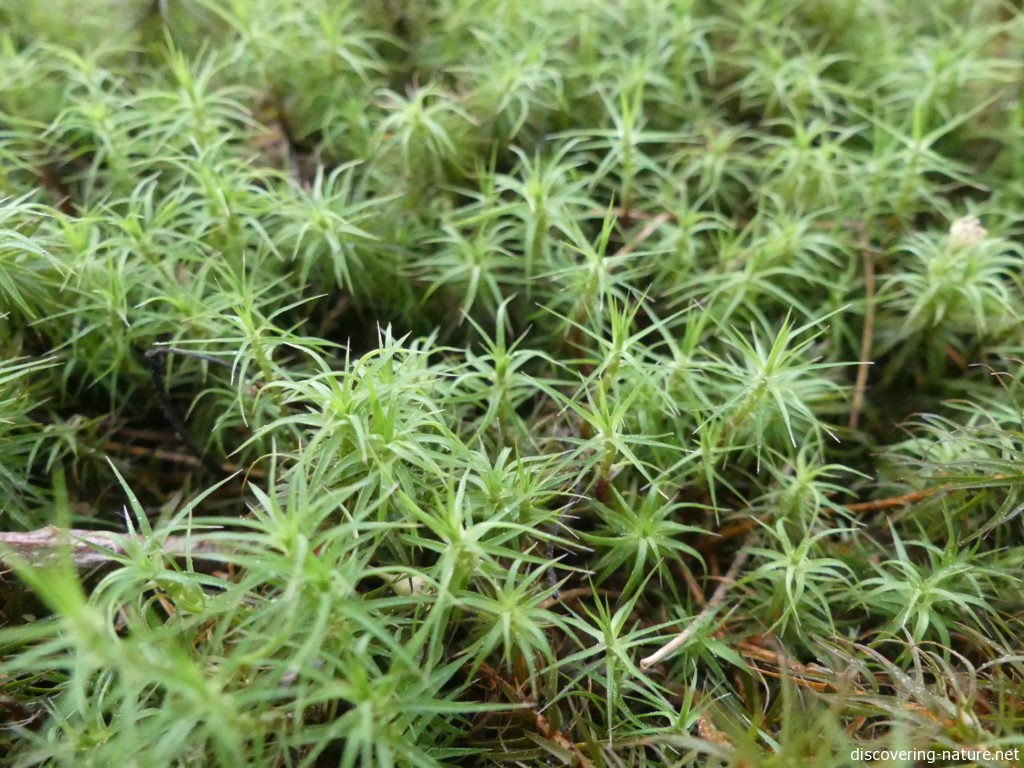
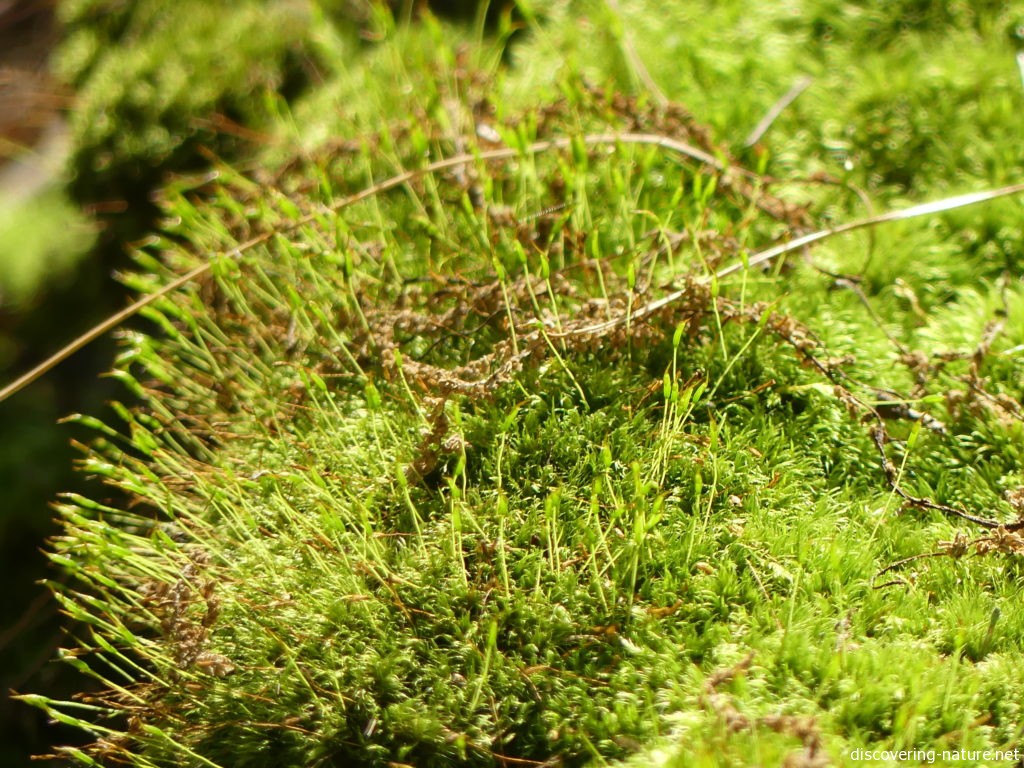
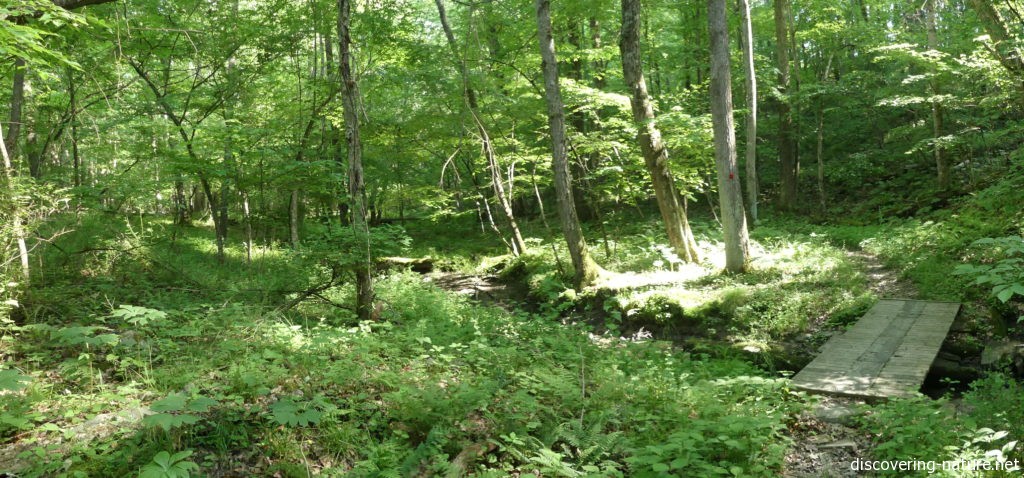
As well as some favorite spots to think.
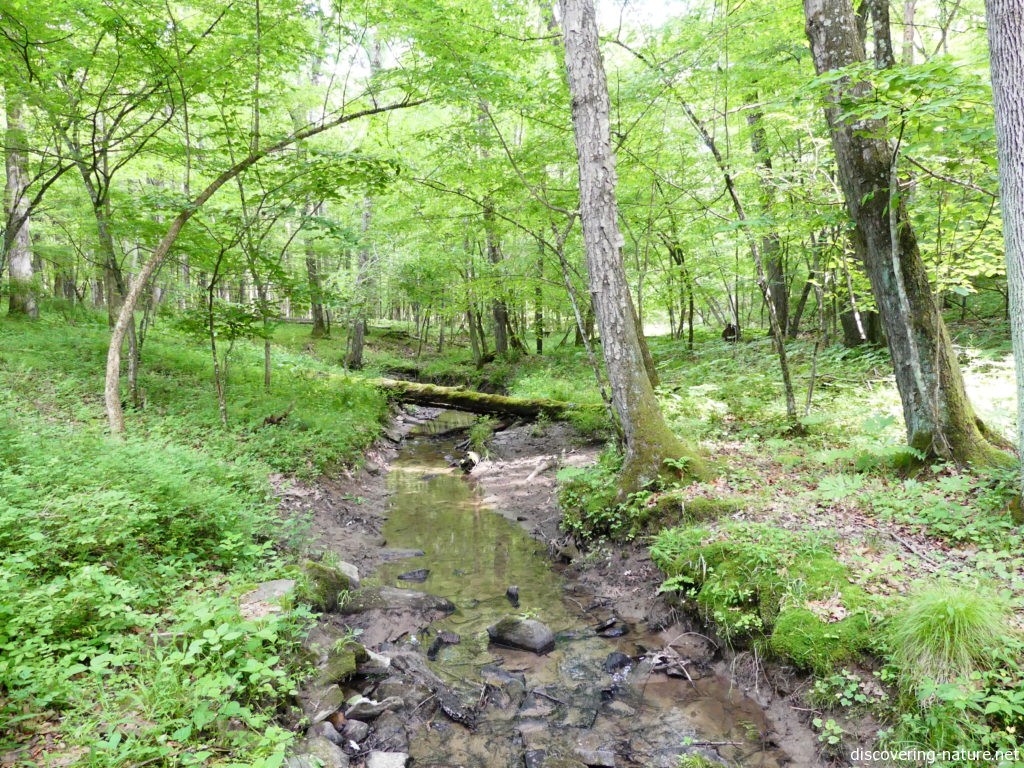
A couple of oven birds tried hard to lead us away from what must have been their nest site. It would have been amazing to see an oven bird nest, but we settled for watching the birds for a few minutes, then moving on to give them some peace.
Not only did we observe; we were observed:
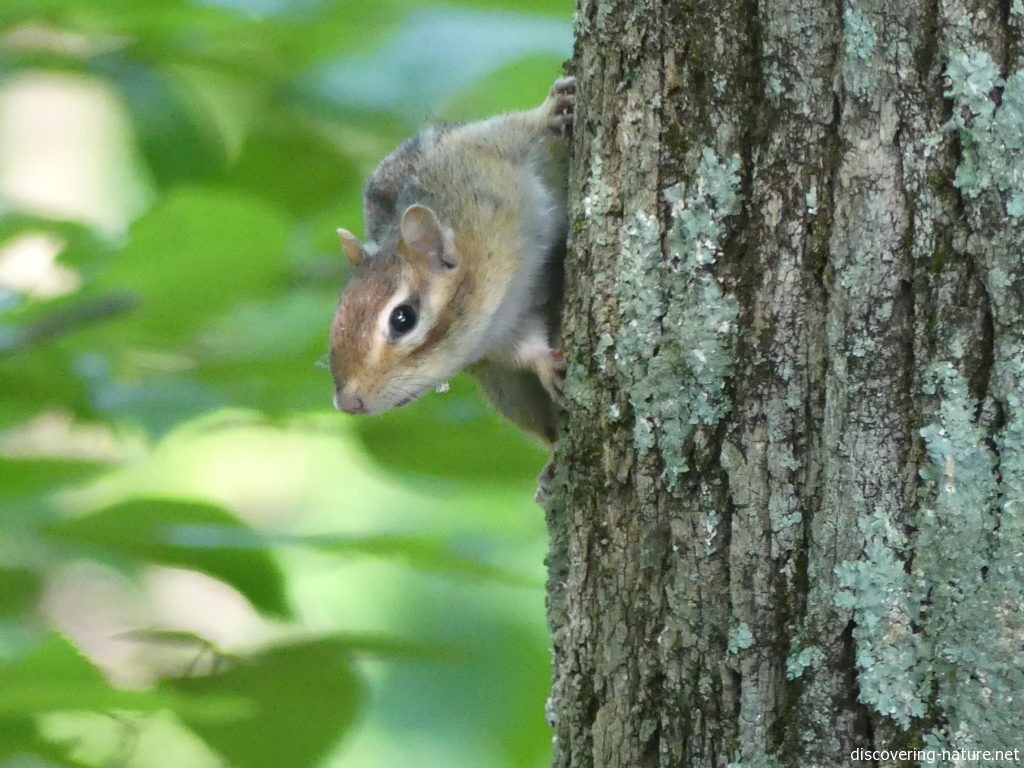
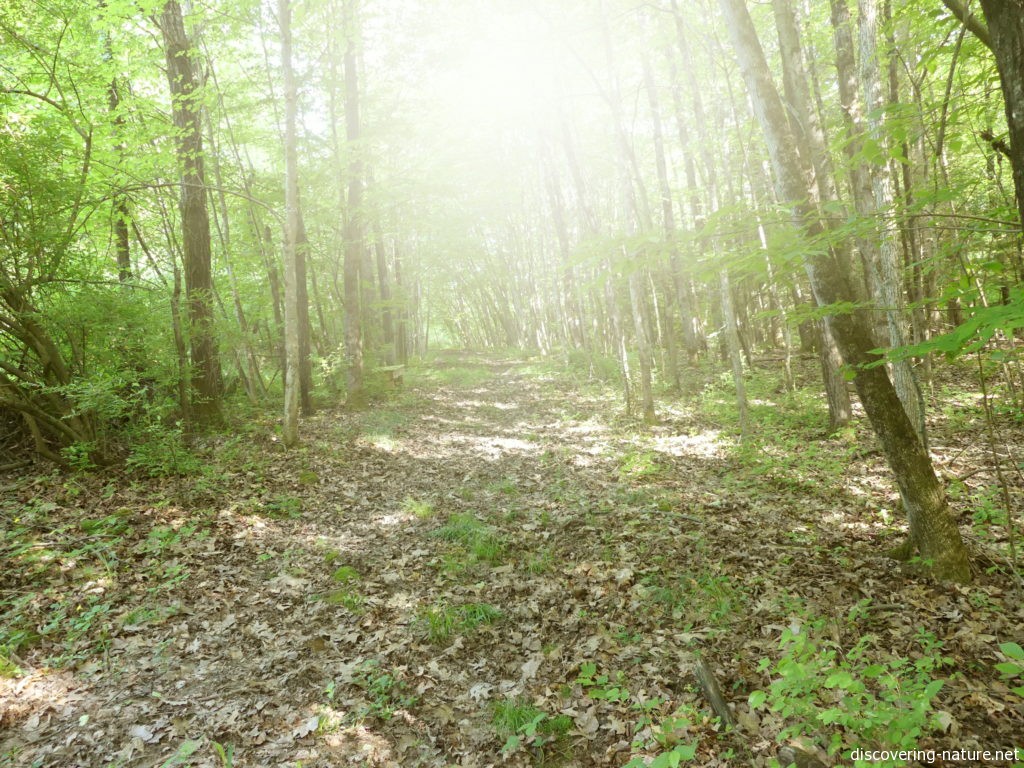
On the whole it was a lovely stroll.
-
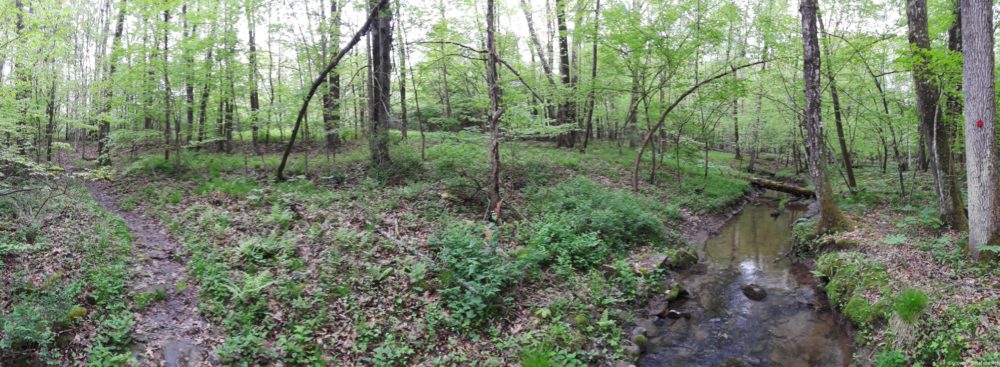
Cloudy and green
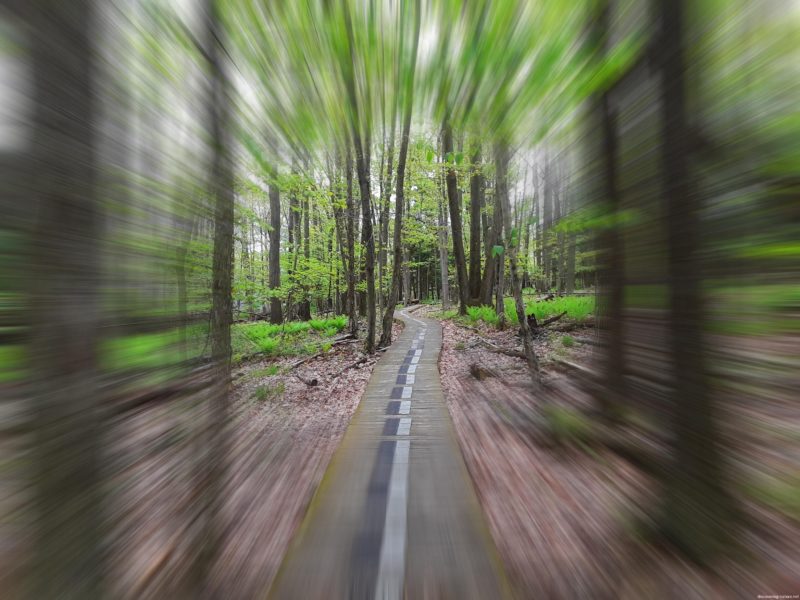
Around here this spring, we have to accept the overcast as an almost constant state. But the temperature was pleasant and even a little sultry, so we ventured out.
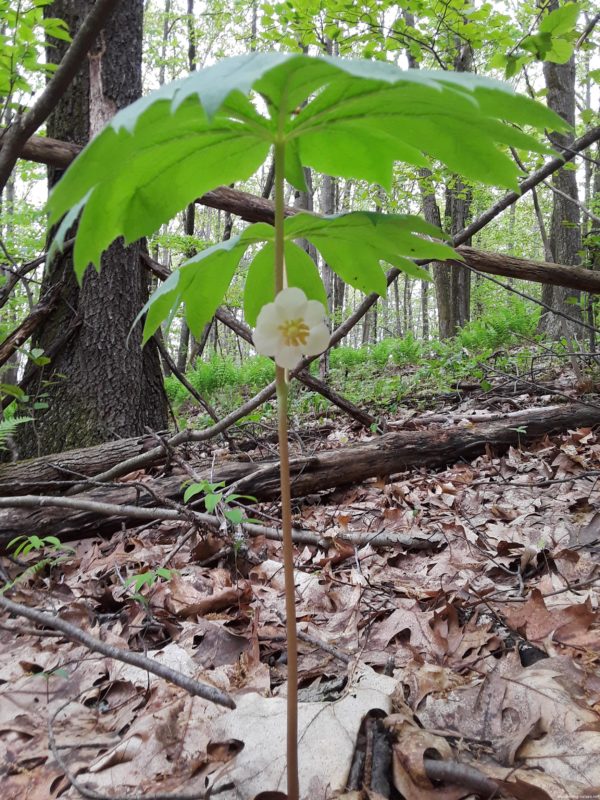
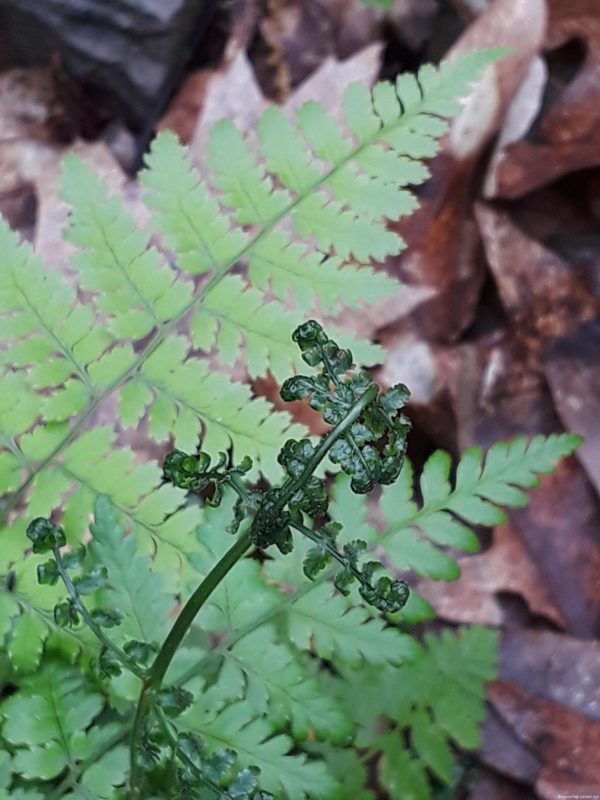
A may apple in bloom Plants continue to develop even in wet conditions. This interrupted fern shows its fertile leaves.
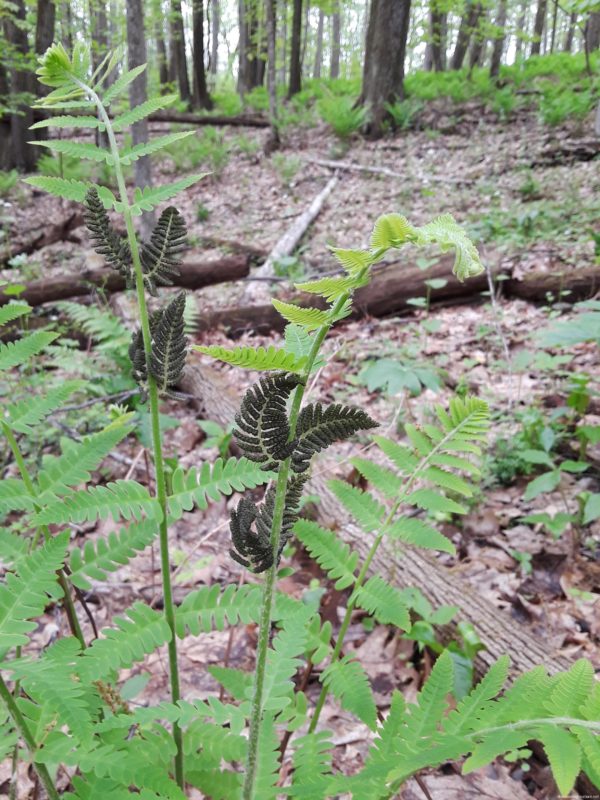
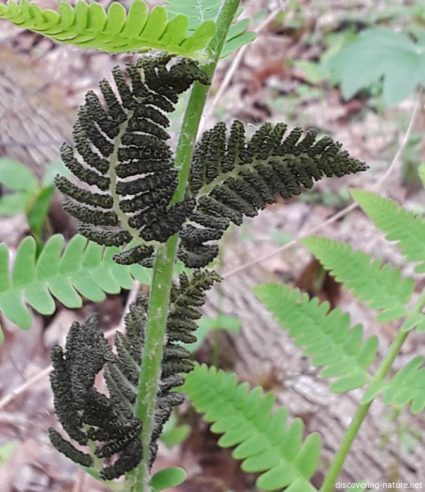
A closer look My daughter noticed this clump with a bracken fern growing in the midst of another kind of fern. (Maybe a common polybody fern? I’m trying to learn them, but many look alike to me.)
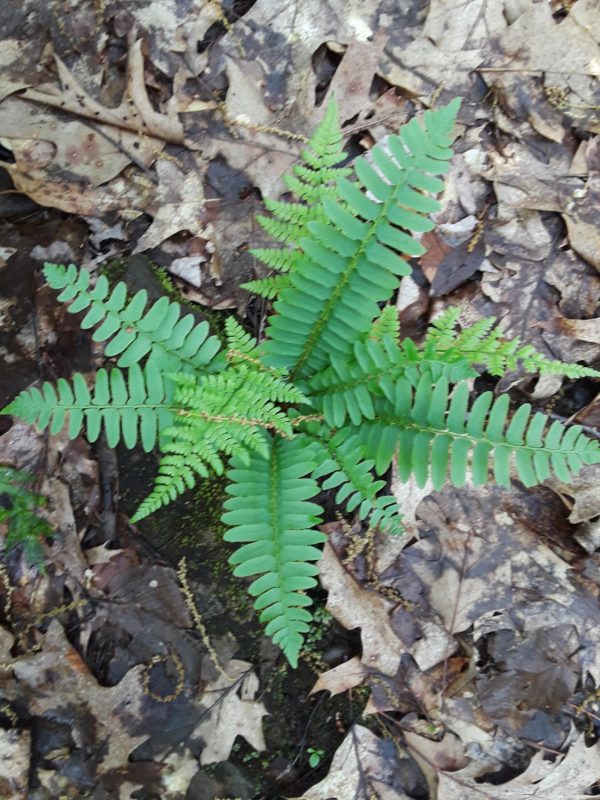
A few more specimens. . .
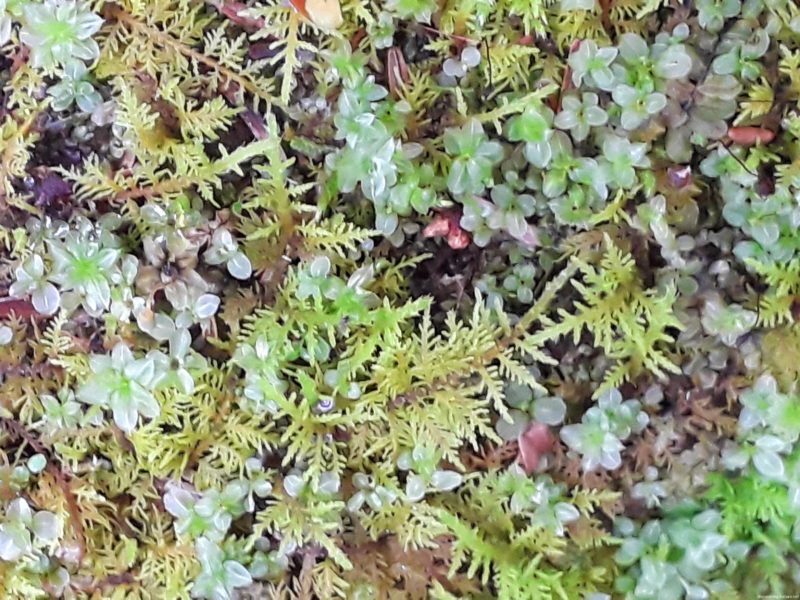
“Moss” on a dead tree. Seen closely, it always looks like a whole community of pants. 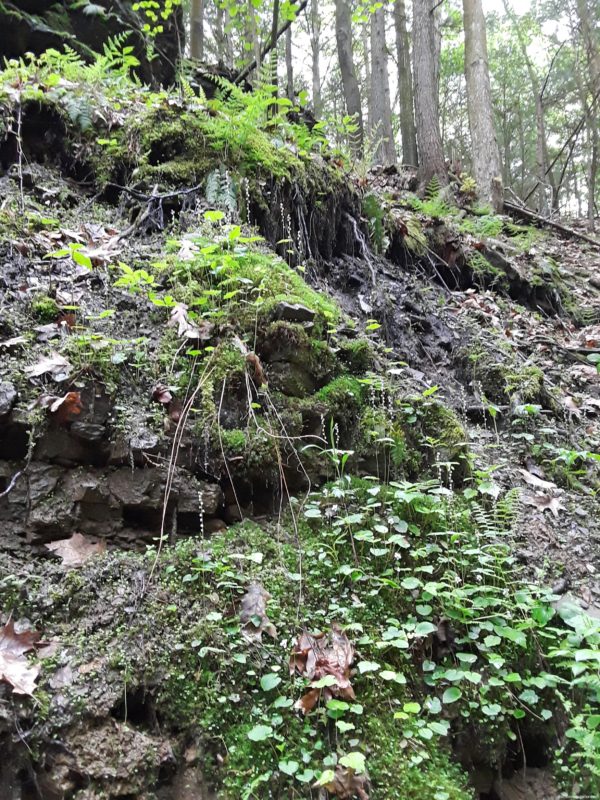
A wide variety grow along the bank of the stream, too. 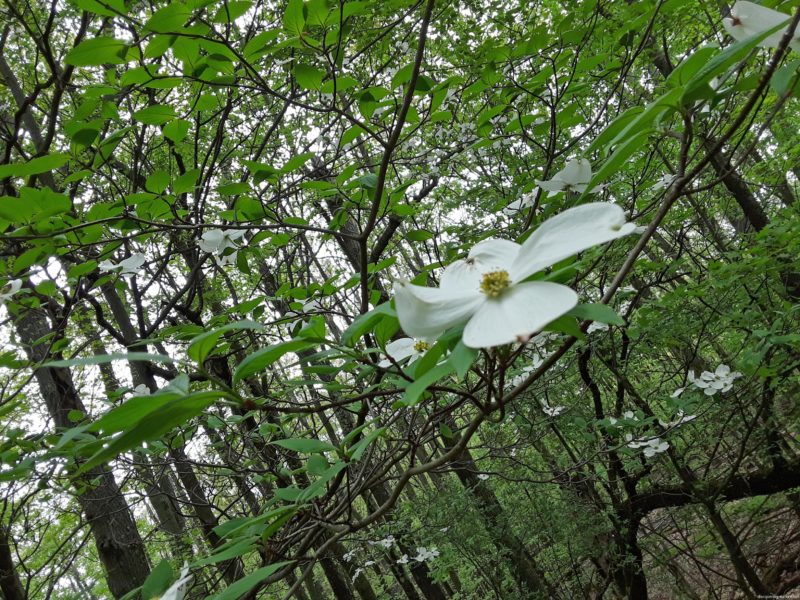
Dogwood It was very dim light, and the photos show the drabness. But somehow the greens look greener when it’s overcast. My pics don’t show it as much (partly because I’m still stuck with my cell phone camera), but one has a sense of the light emanating from the leaves instead of the sky.
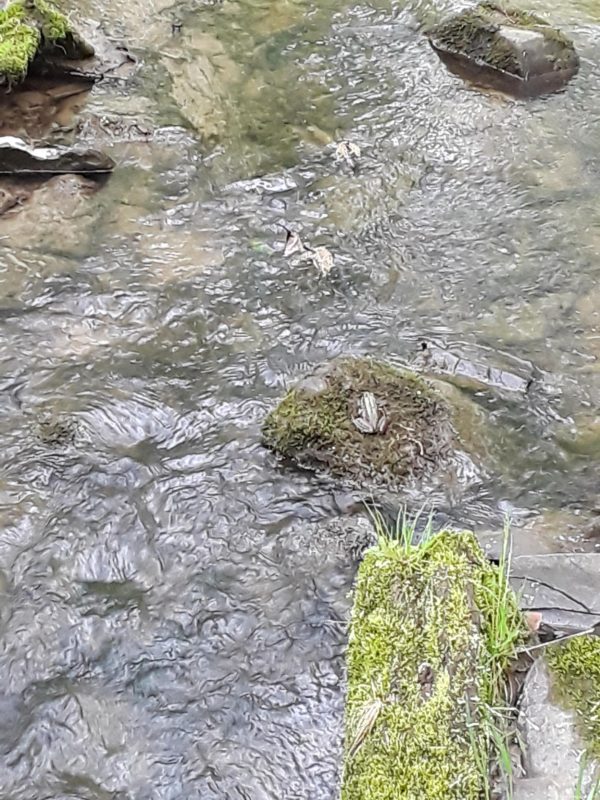
See the frog? 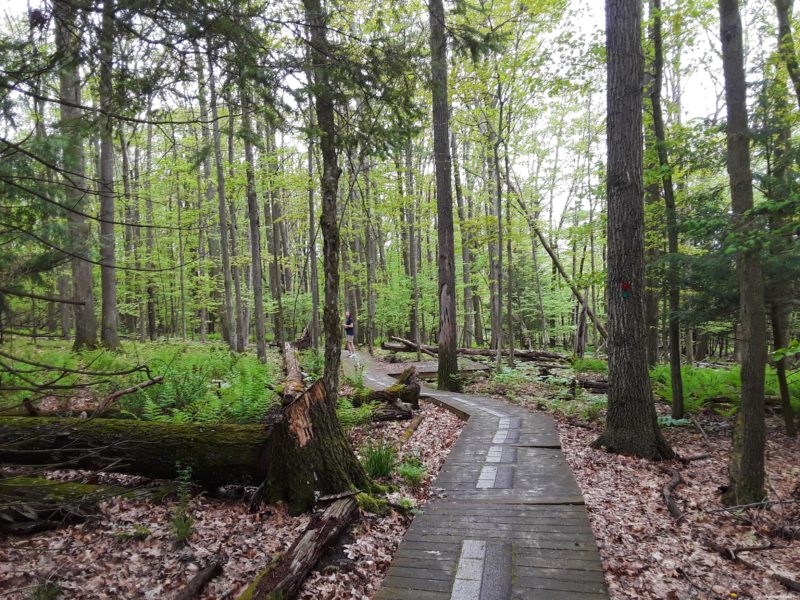
-
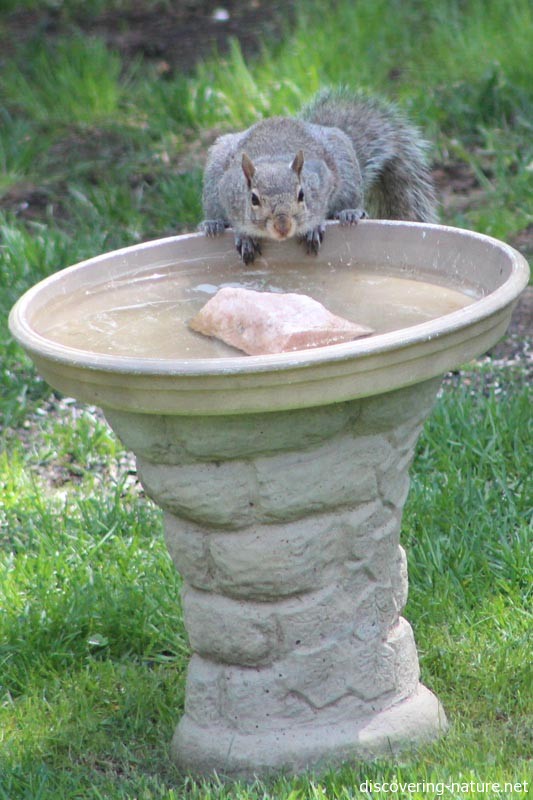
Caught in the act
-
Finding flora
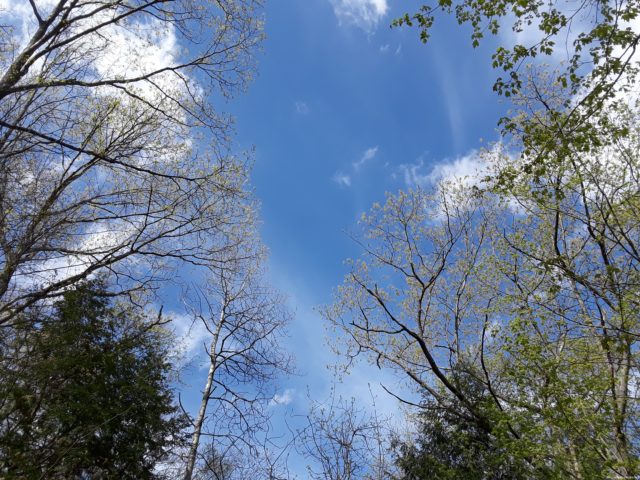
Blue sky was unexpected, so we seized the day. Though my camera is still in the shop, the cell phone worked to capture some memories.
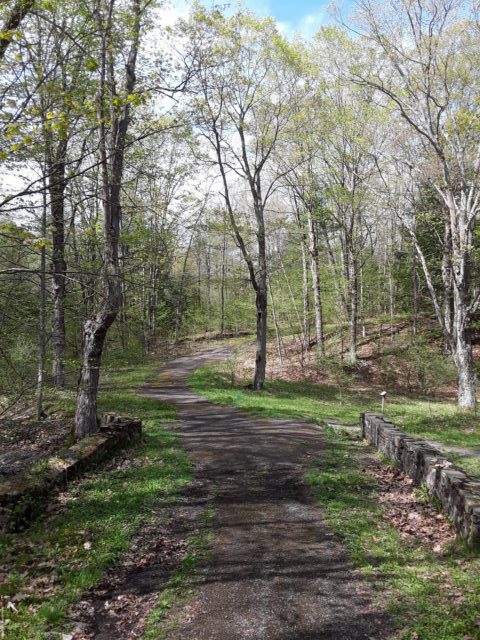
We were hoping to see some early ferns and wildflowers, and we weren’t disappointed.
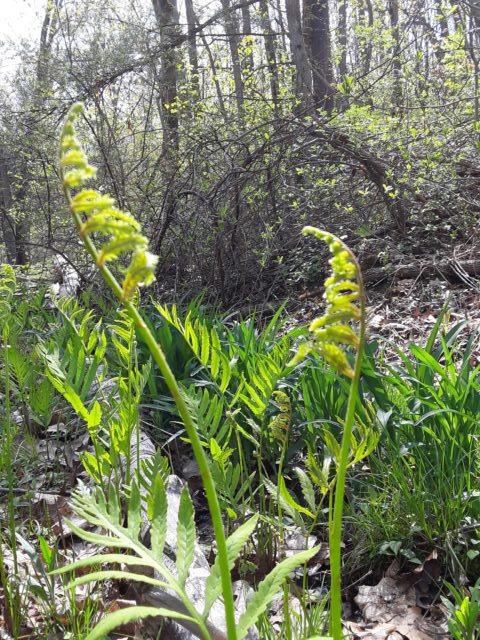
Sensitive fern 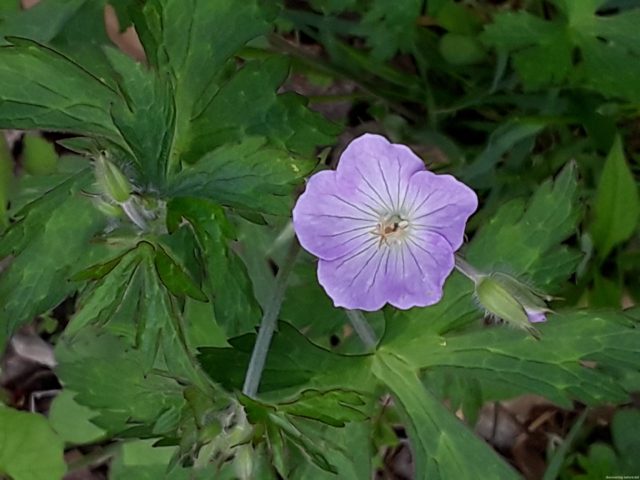
Pasture rose 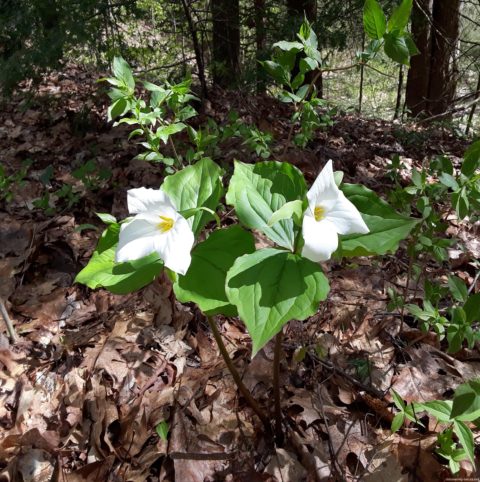
Trillium 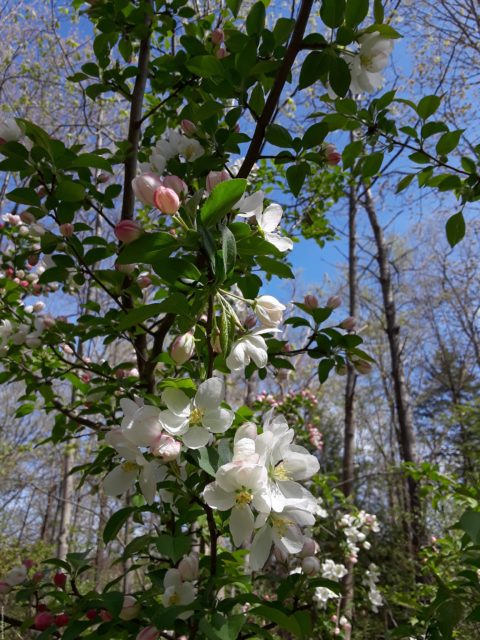
Wild cherry The May apples had formed buds since last week:
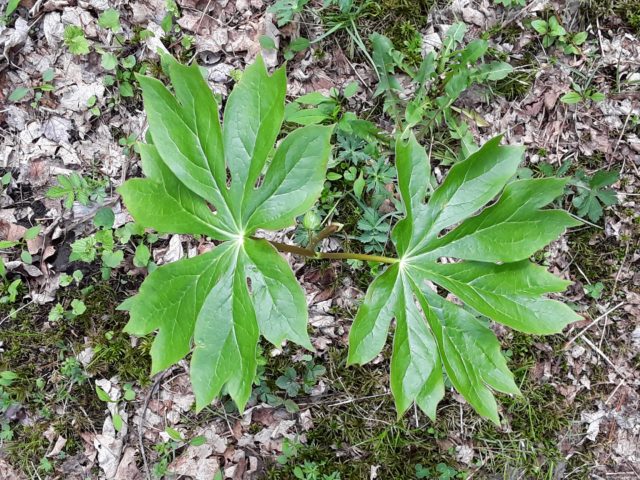
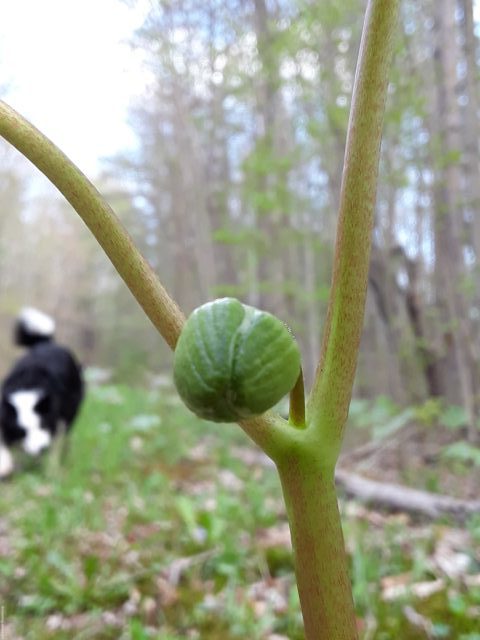
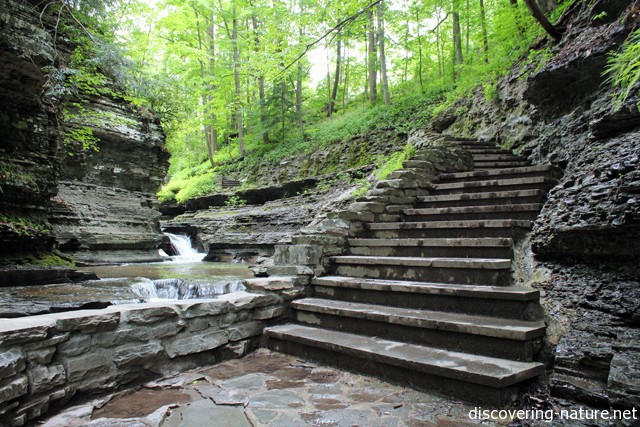
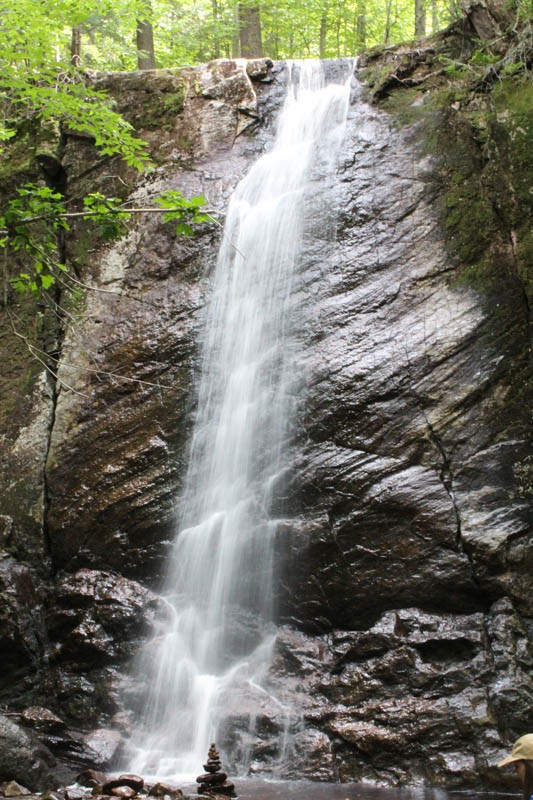
(May apple bud, photo-bombed by Lucy) The high point of the walk was the waterfall and old stone bridge.
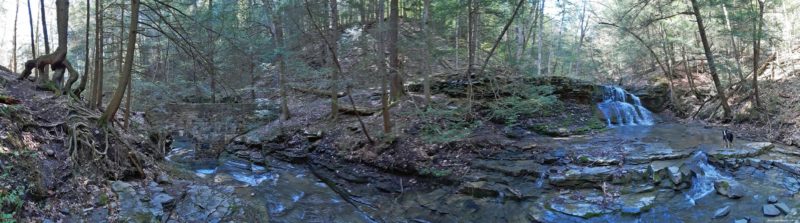
That tree on the bank is always striking to me. It looks like it’s tip-toeing down to go wading.
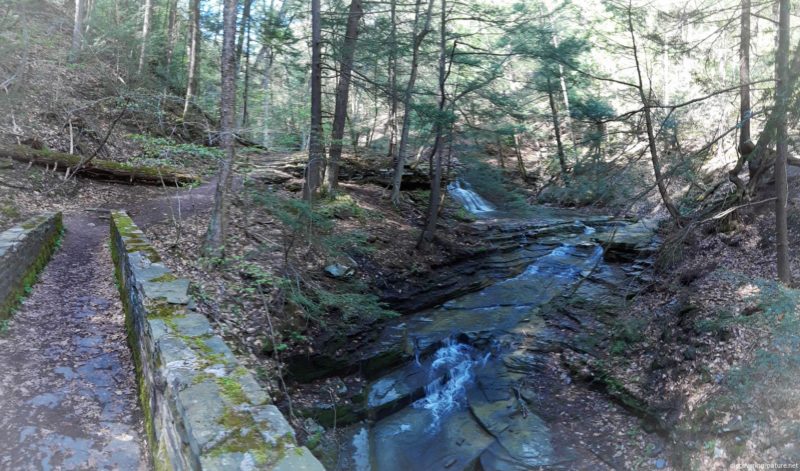
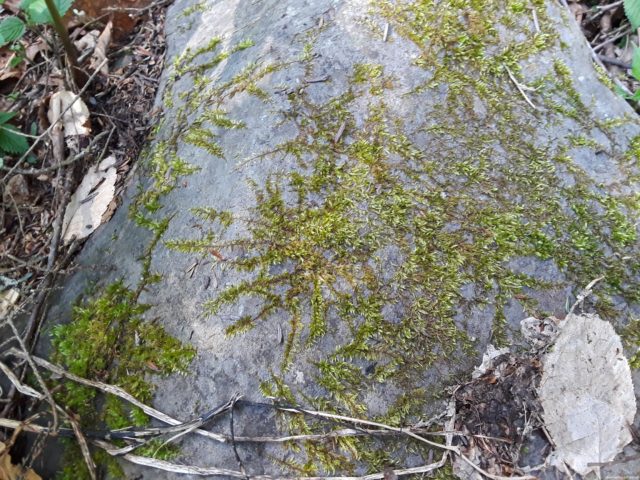
The walk back yielded some artistic moss etchings on rocks…
As well as more ferns, more moss, and a tiny toad.
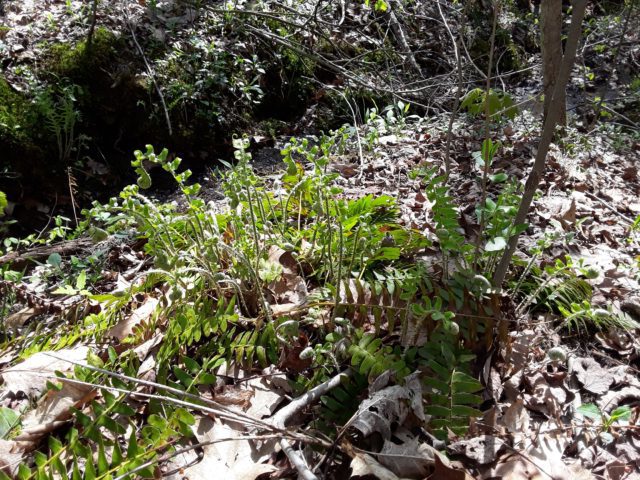
Christmas fern (?) 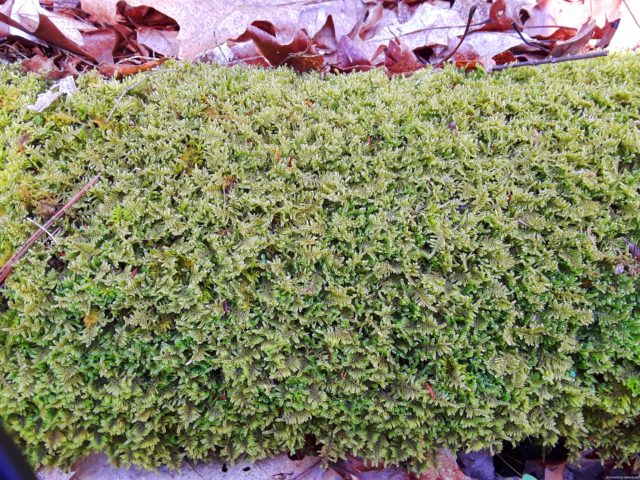
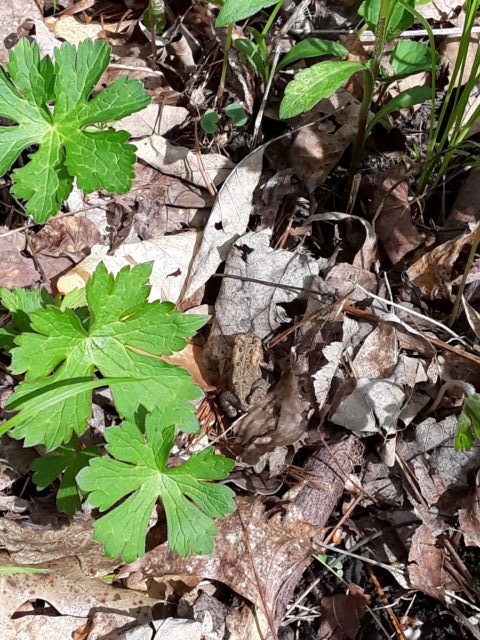
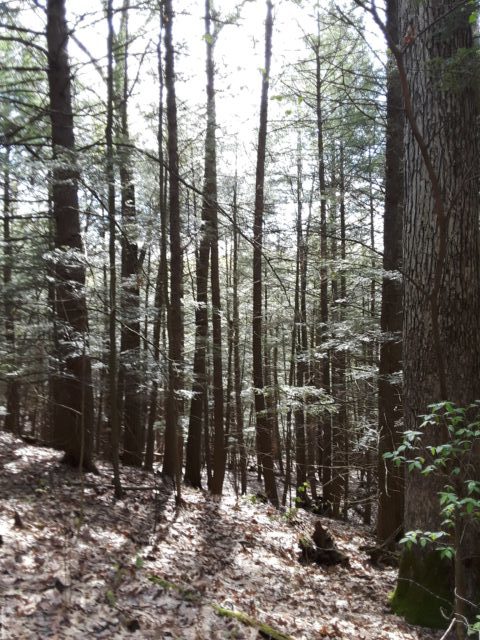
On the whole it was a thoroughly enjoyable expedition with sights from small…
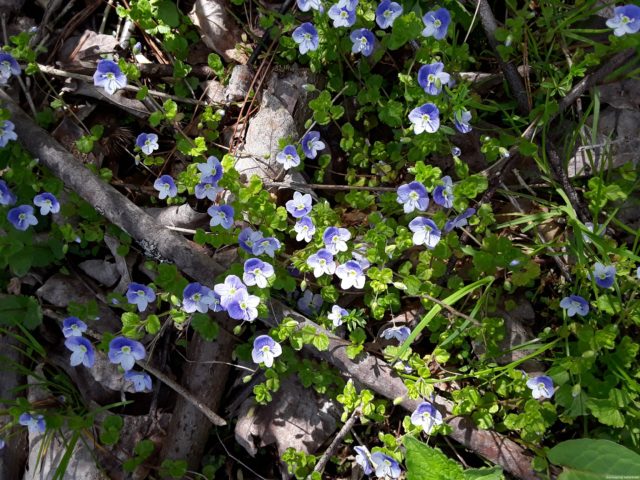
Bird’s eye speedwell …to tall.
-
Spring songs
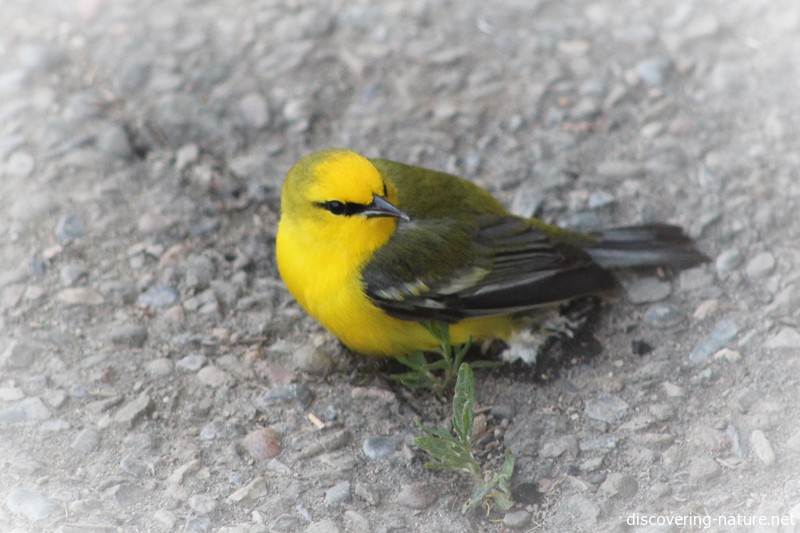
A prothonotary warbler that hit a window, recovered, and flew away. My camera is off to a Canon service center to get its autofocus repaired. Some internal problem keeps it from getting sharply focused images. That leaves me with eyes, binoculars, and ears for processing the season.
It’s a blessing in a way, because I’ve been reminded of how much I’ve learned about my place since I started paying attention. Just listening out the windows and around the yard, I’ve heard:
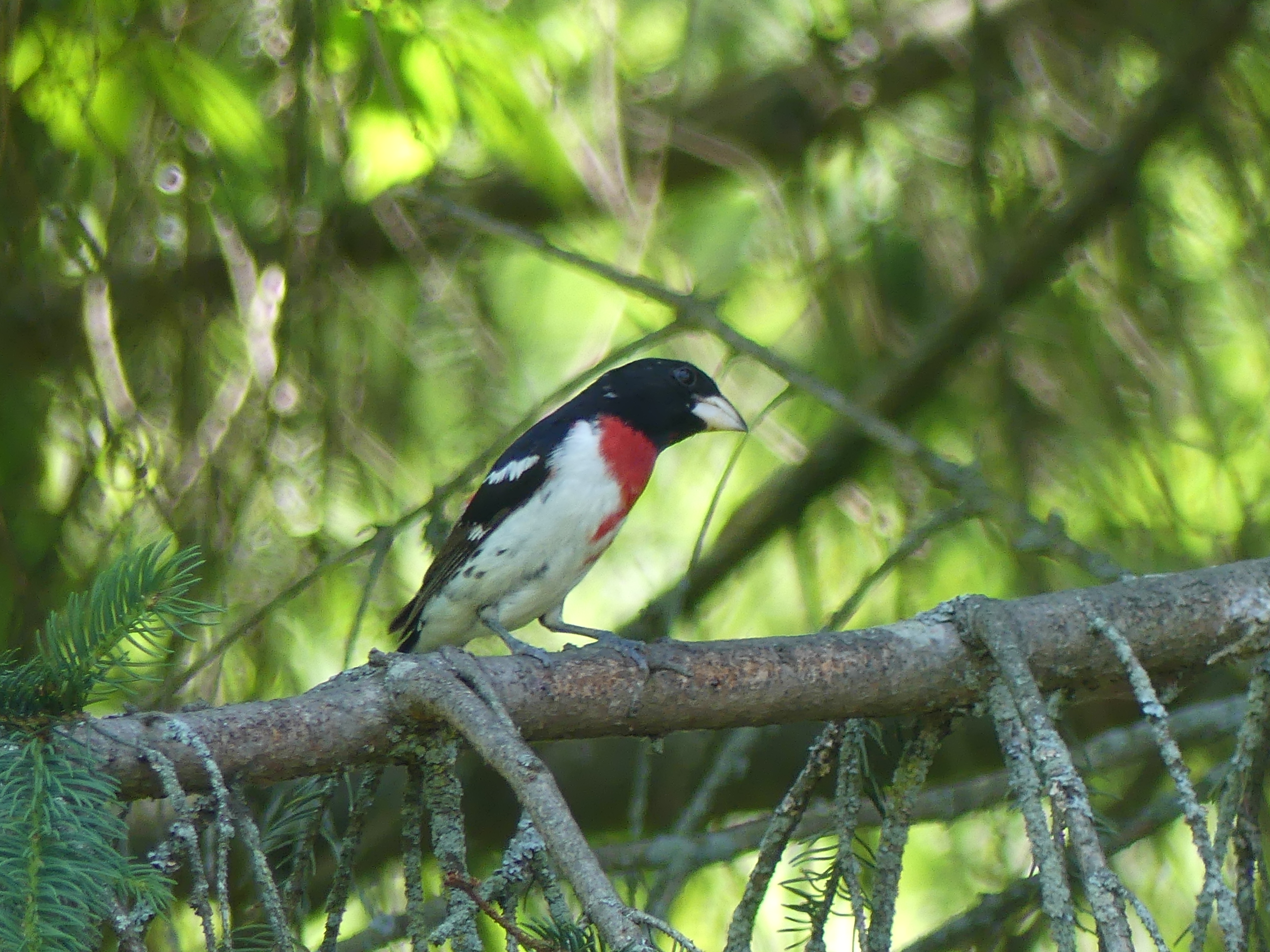
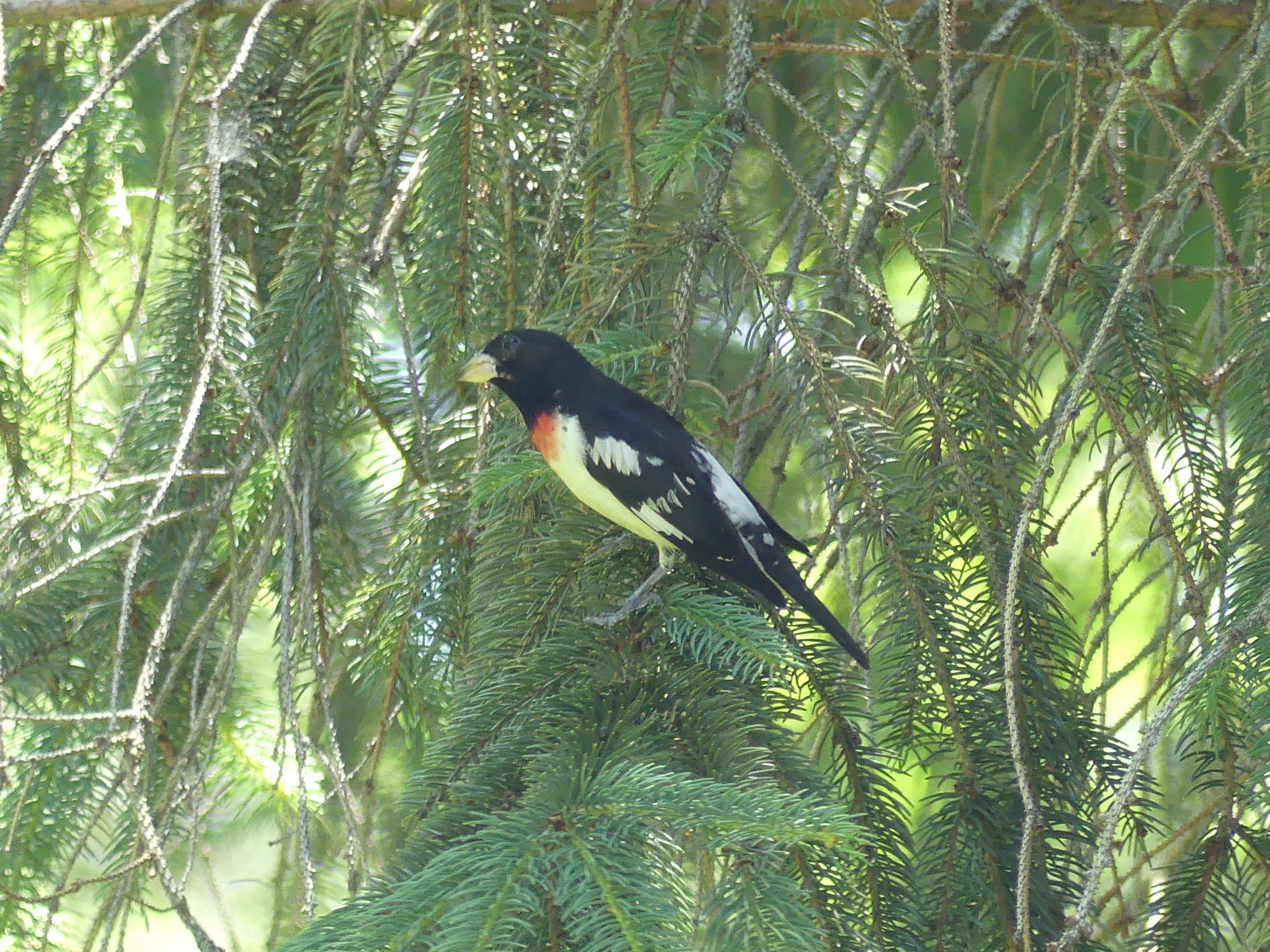
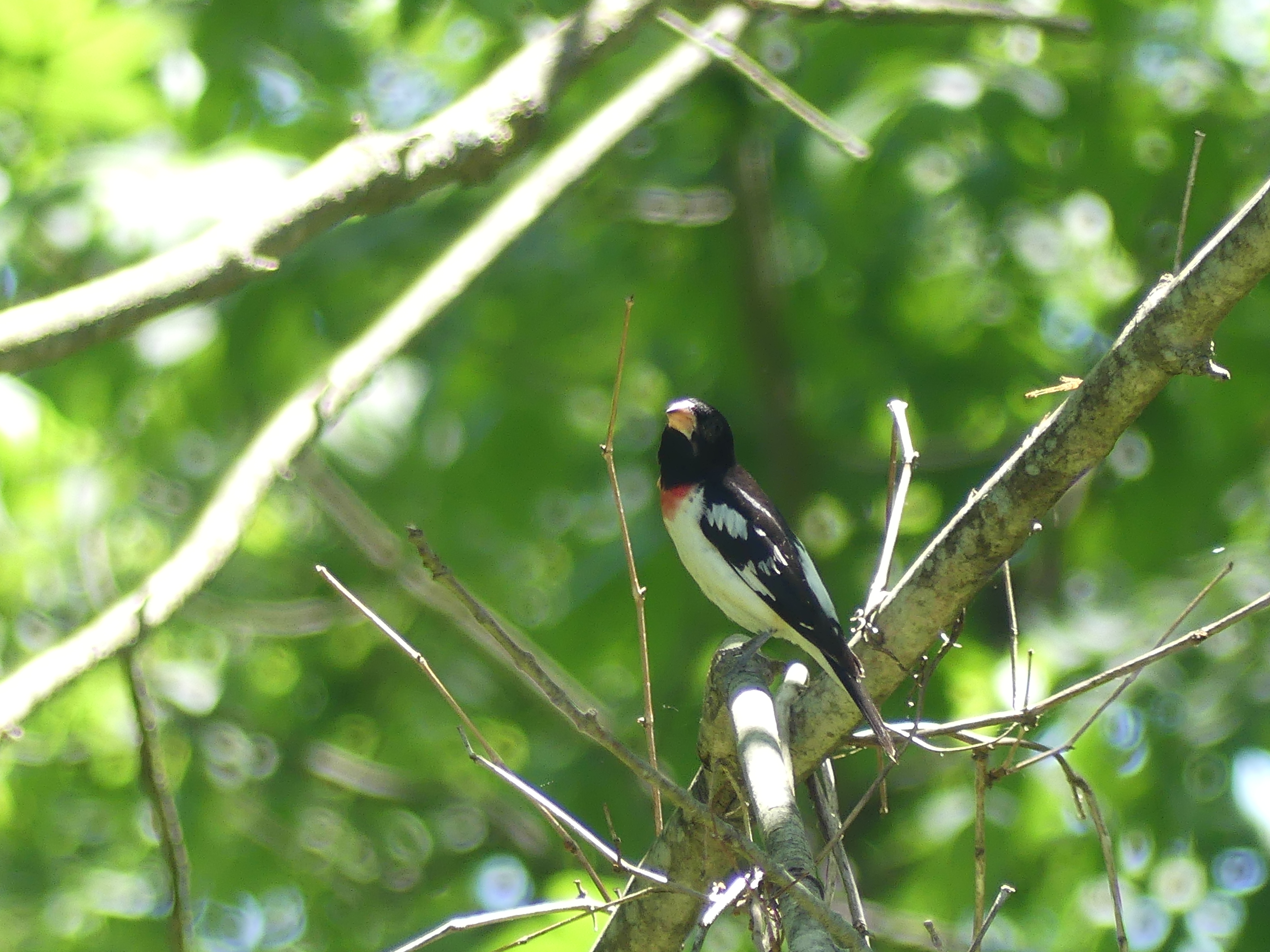
- Rose-breasted grosbeaks
- Orioles
- Catbirds
- A veery
- A hermit thrush
- A chestnut-sided warbler
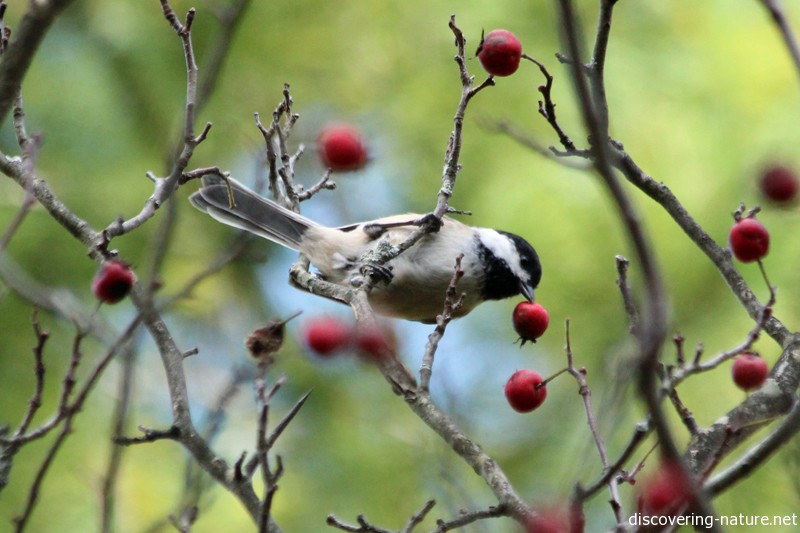
- Chickadees
- House wrens
- Carolina wrens
- Robins
- Titmice
- Nuthatches
- Blue jays
- Cardinals
- A blue wing
- Song sparrows
- Chipping sparrows
- White-throated sparrows
At a friend’s house, I added:
- An oven bird
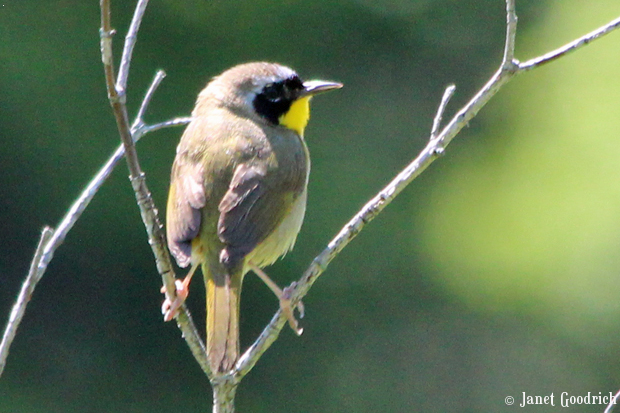
- A common yellow throat
- A field sparrow
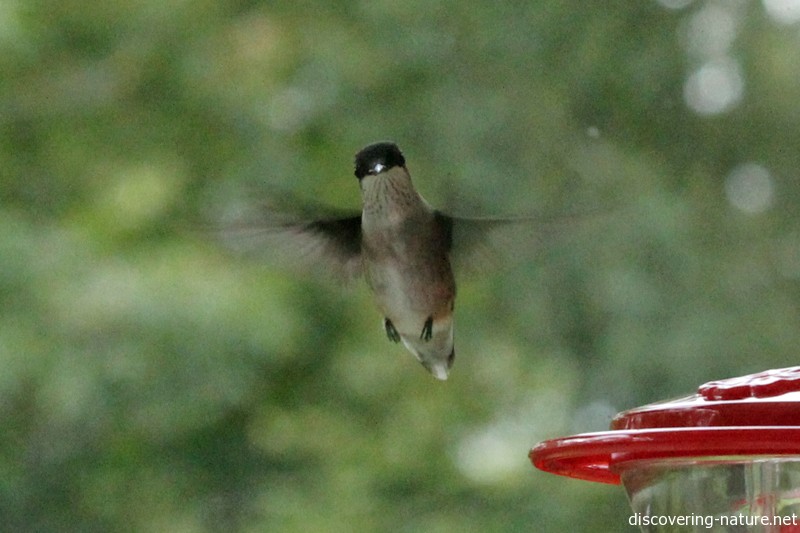
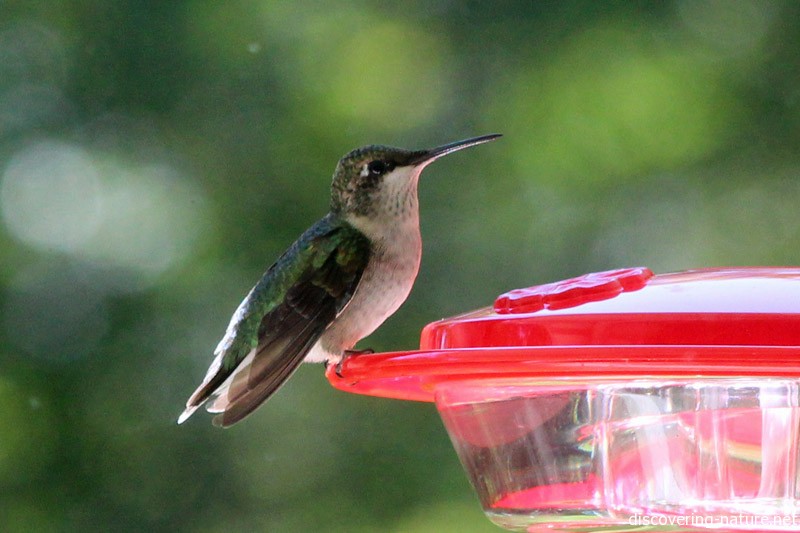
It’s quite the symphony. Other birds — cedar waxwings, ruby-throated hummingbirds, juncoes, white crowned sparrows, and yellow-rumped and blackburnian warblers — also have songs, but they are often so high pitched that I don’t notice them. They tend to blend in with other kinds of sounds in the neighborhood. I’ve seen these birds here too in recent days, either passing through on their way northward or settling in and staking their territorial claims.
How many other creatures are there out there that I’m not aware of yet? Before learning these birds, the spring brought an indistinguishable barrage of sound, but without knowing who was contributing what songs it was not “readable” or “hearable.” Now I recognize it as intricate orchestral score that showcases the individual themes of any number of birds singing simultaneously, calling and responding to establish property lines, attract mates, or stay together in migration.
The more you look, the more you see — and hear.