-
Field Notes: Fall Wildflowers
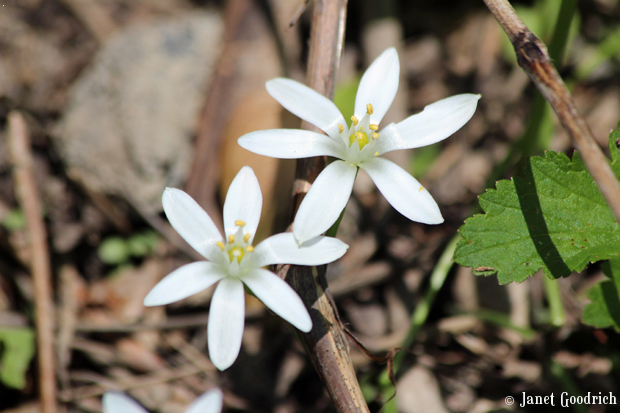
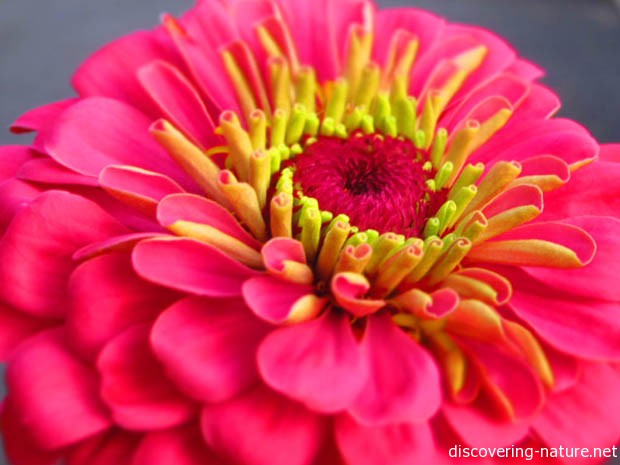
The paths in late August are sprinkled with wildflowers. Here are a few:
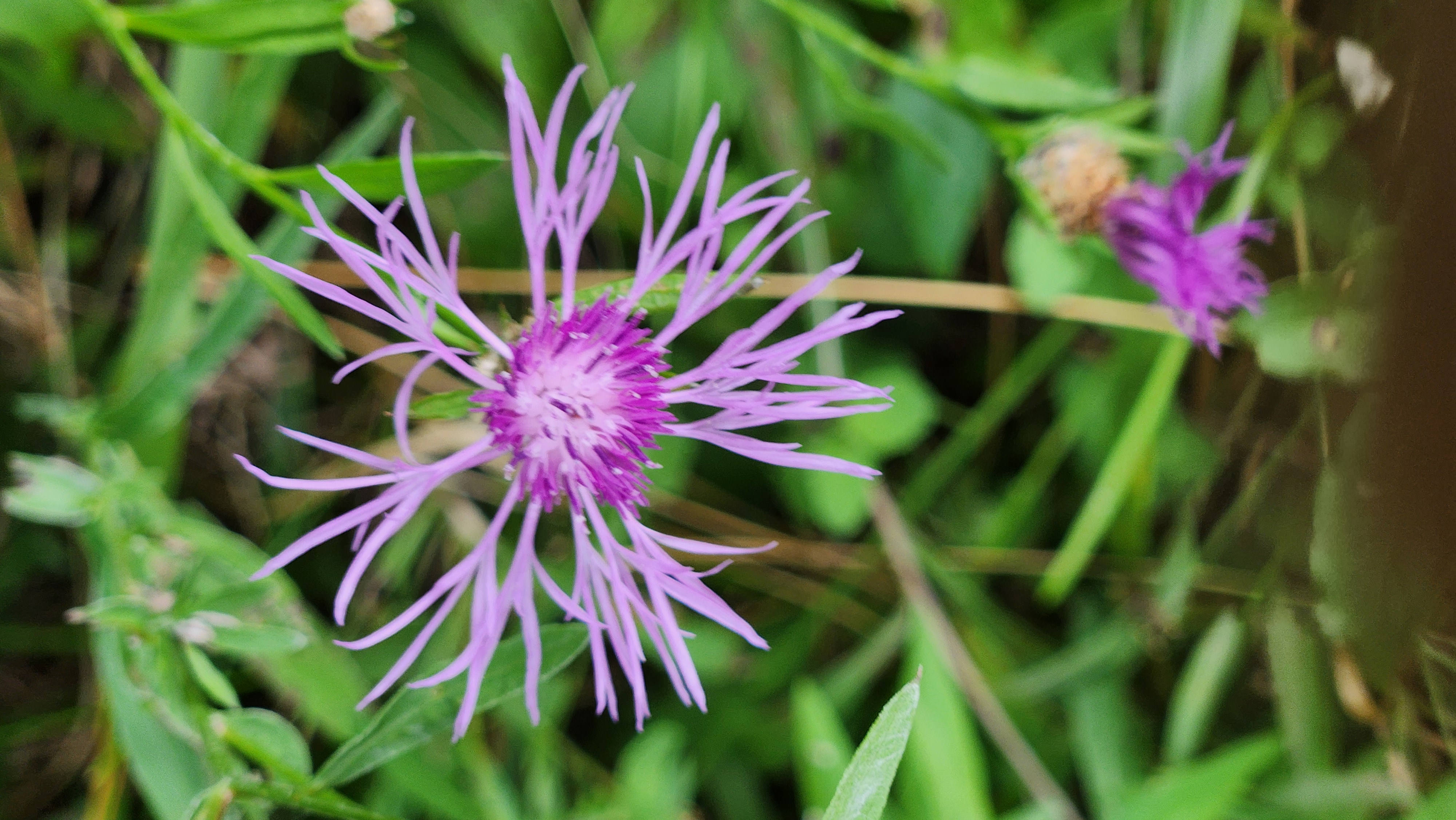
Aster 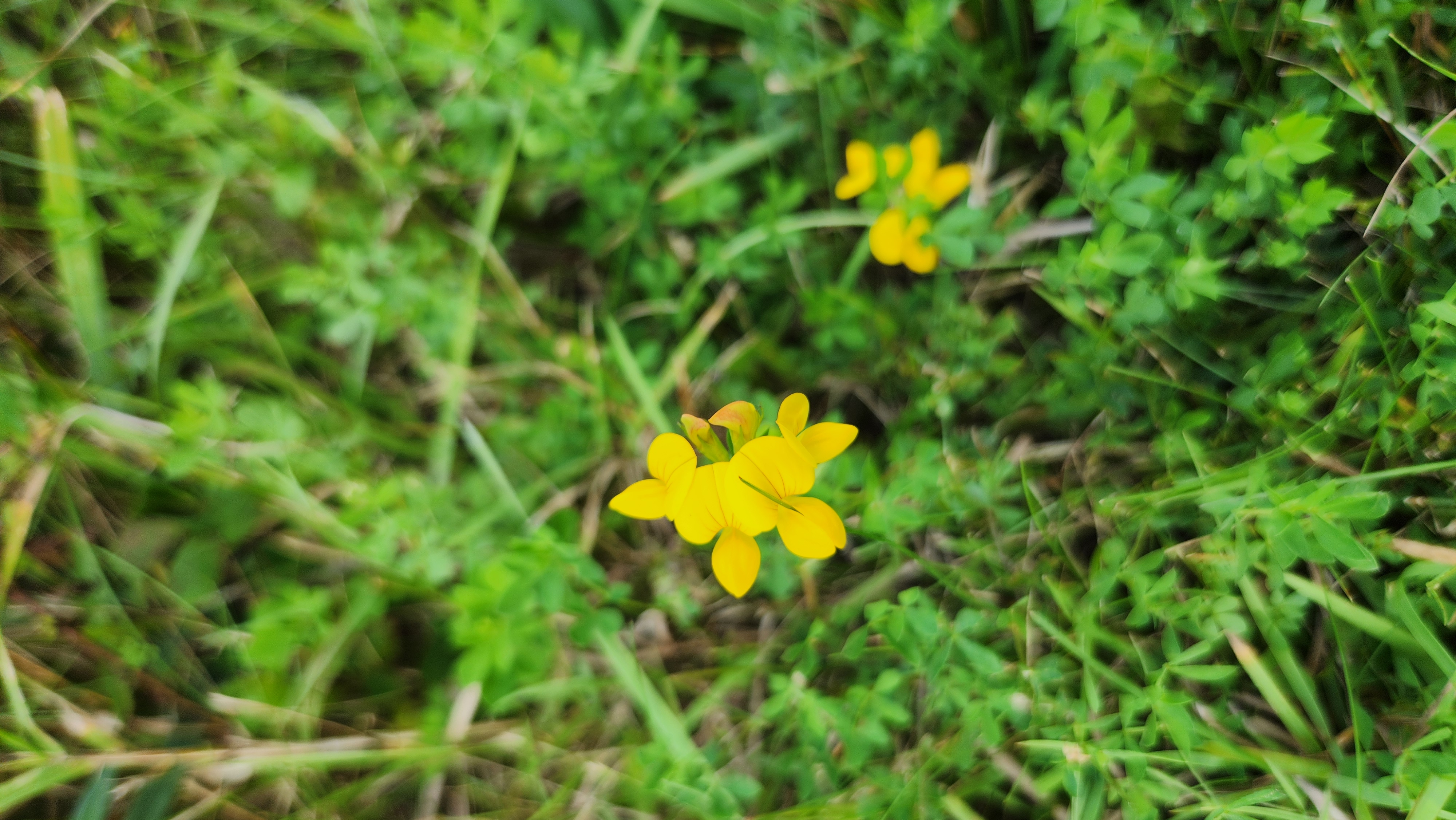
Pea Family 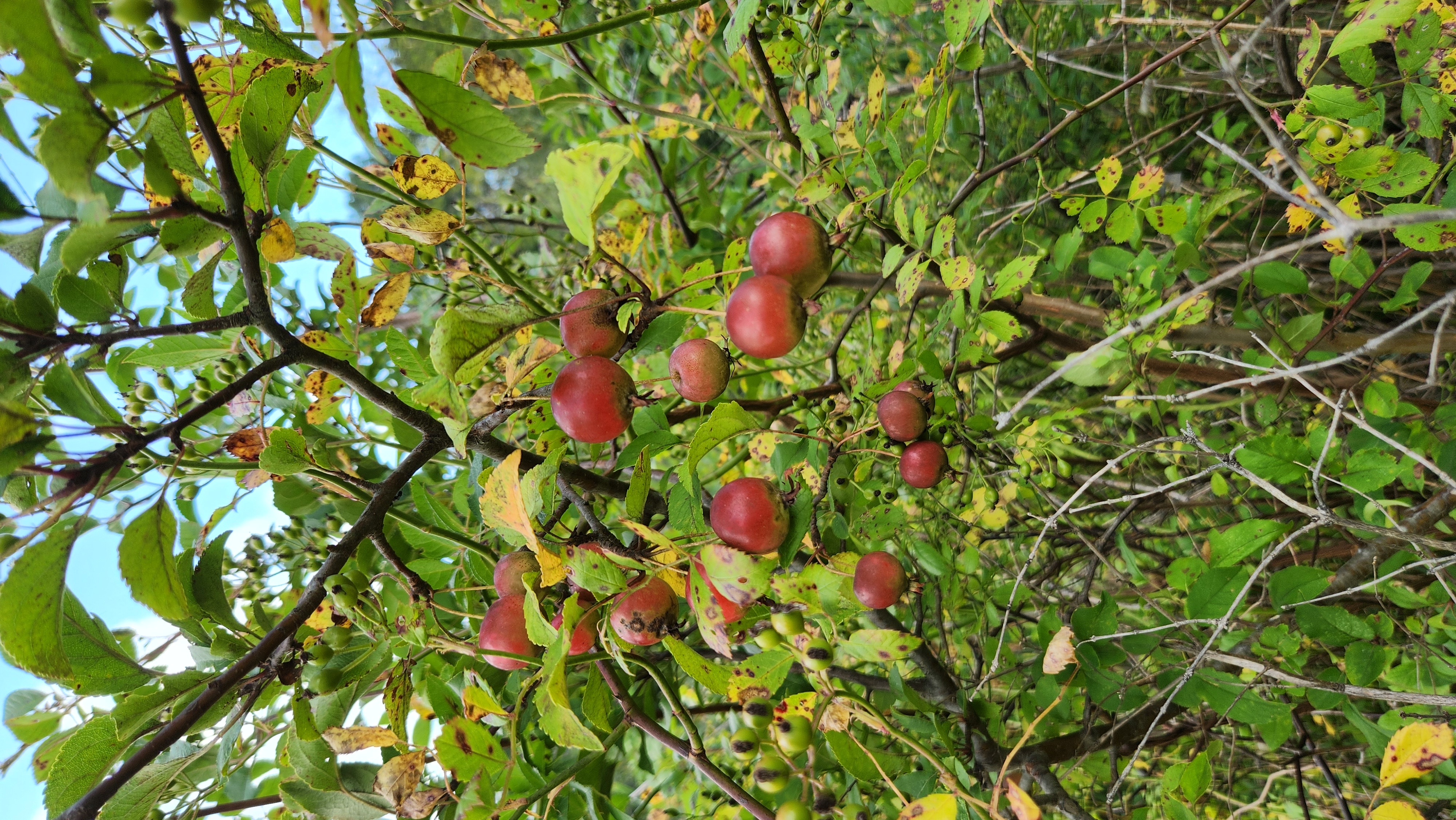
Crabapple 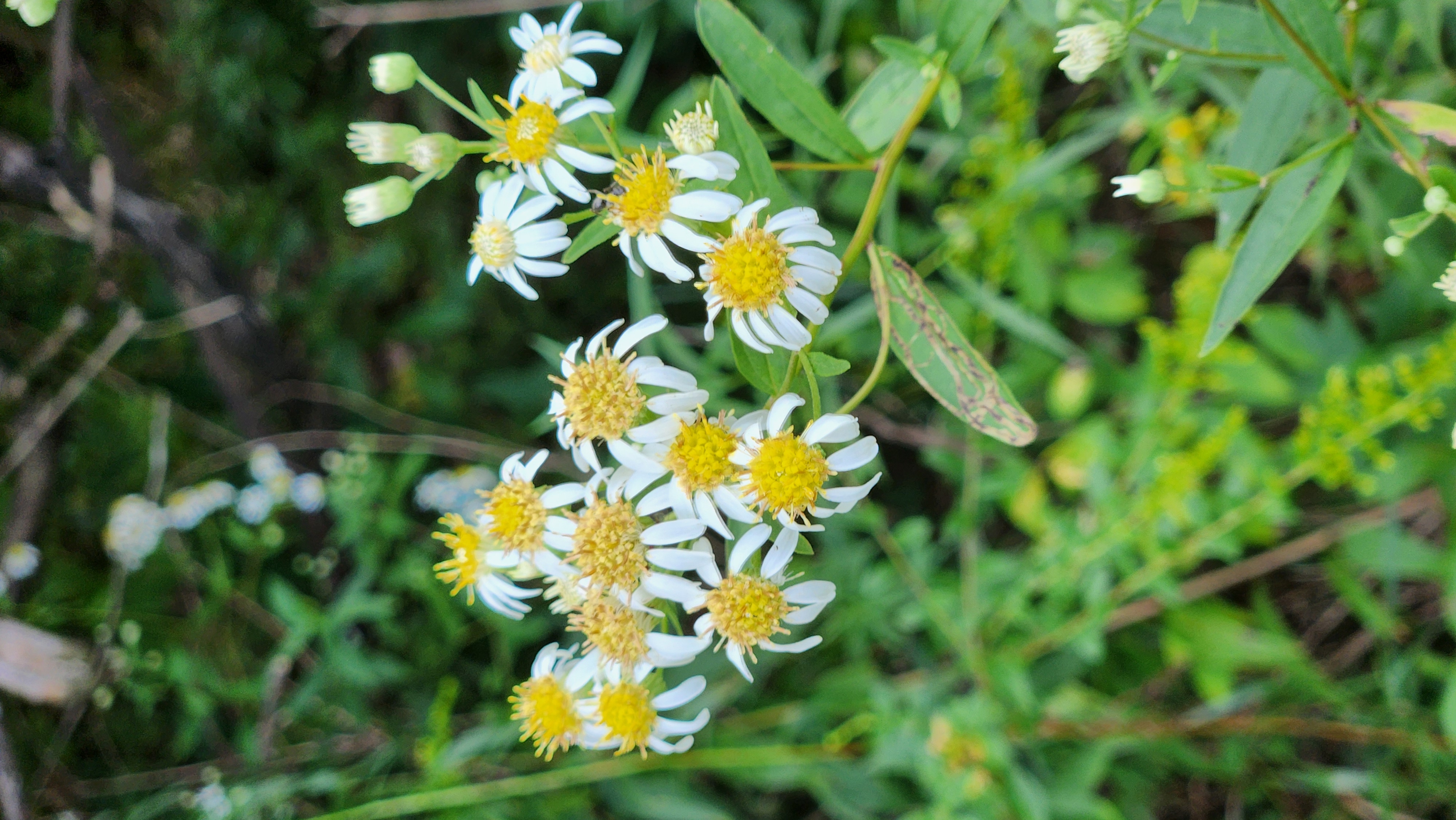
Flat-topped white aster (?) 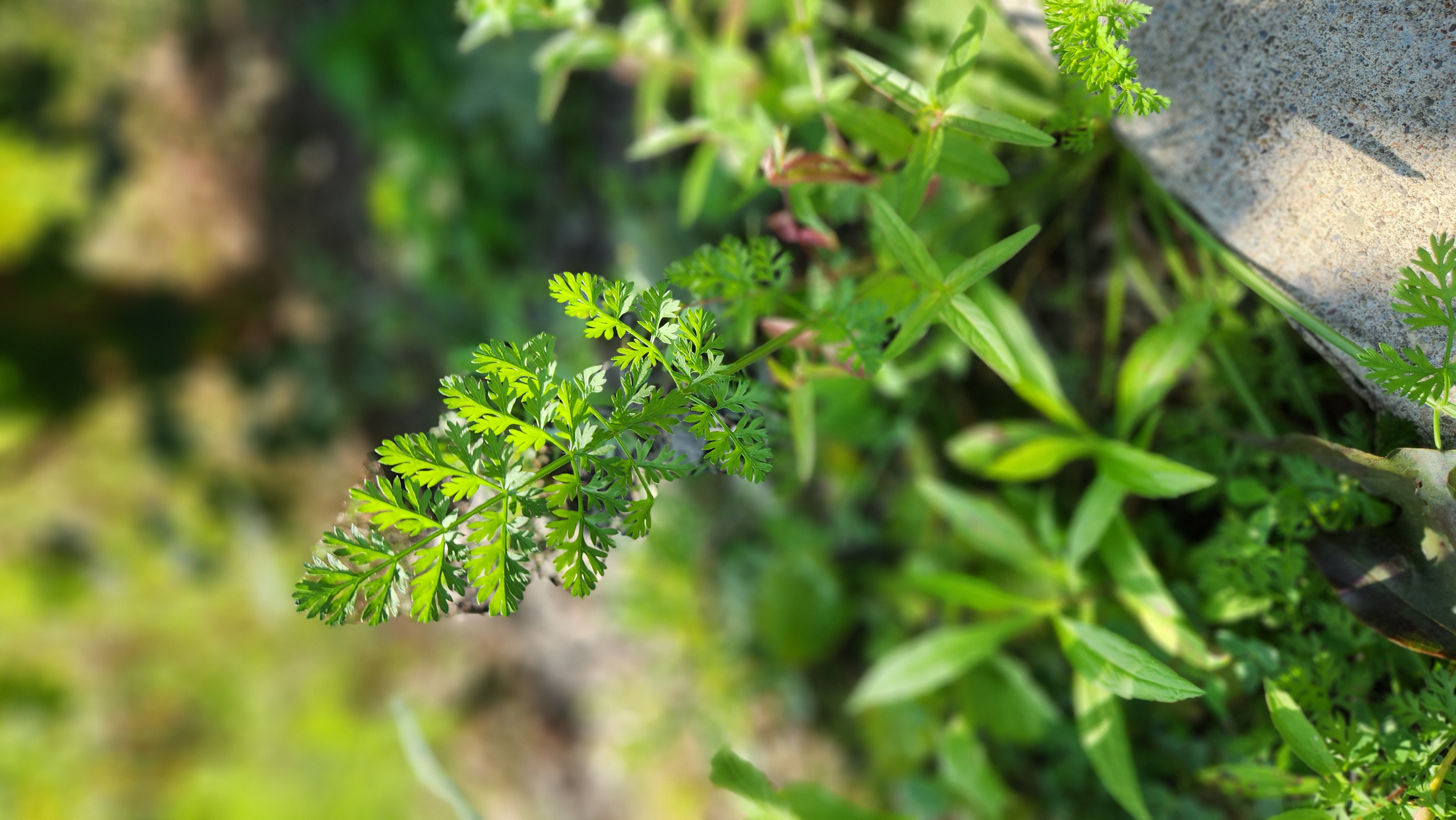
Wild carrot/Queen Anne’s lace (?) 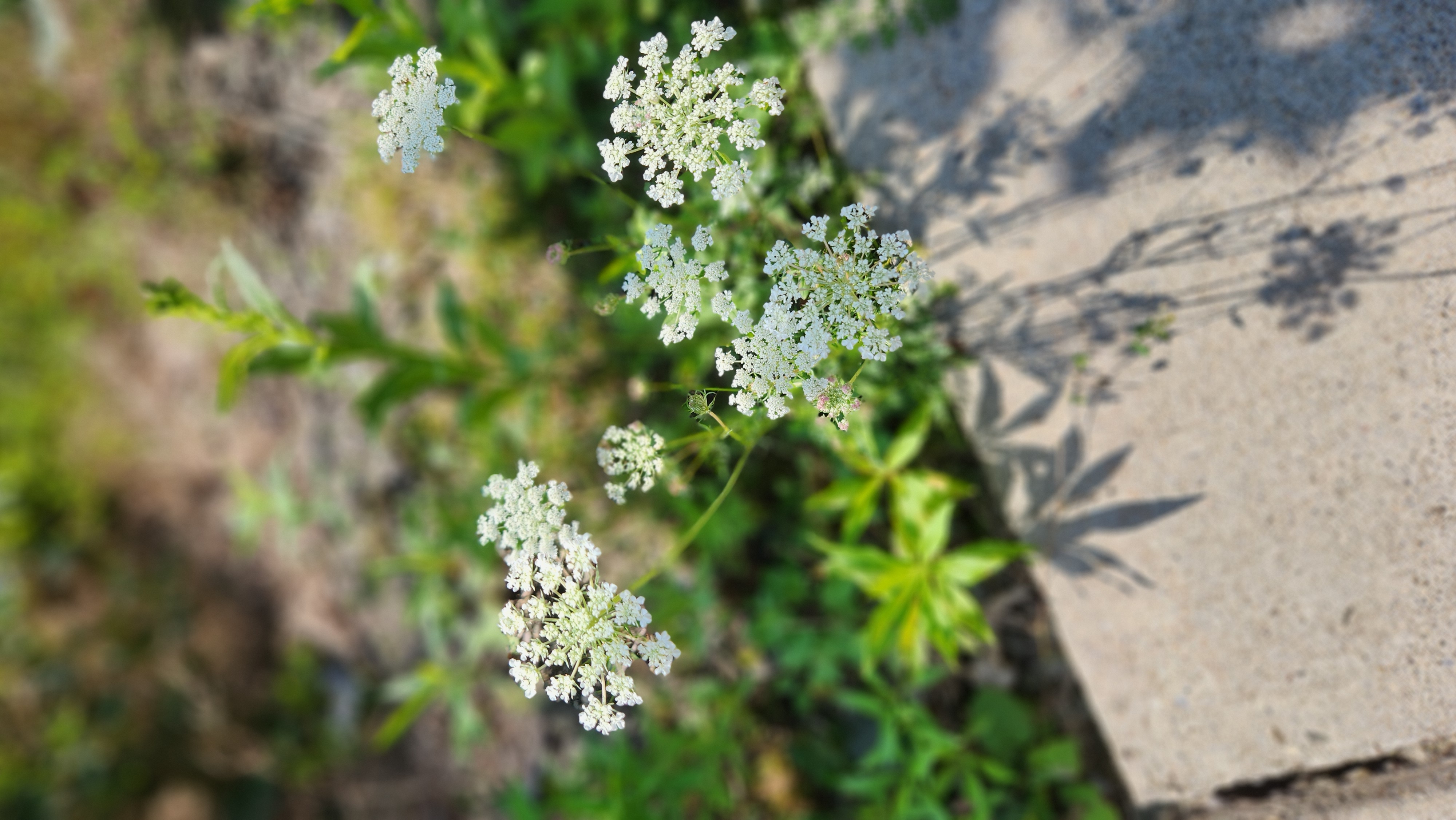
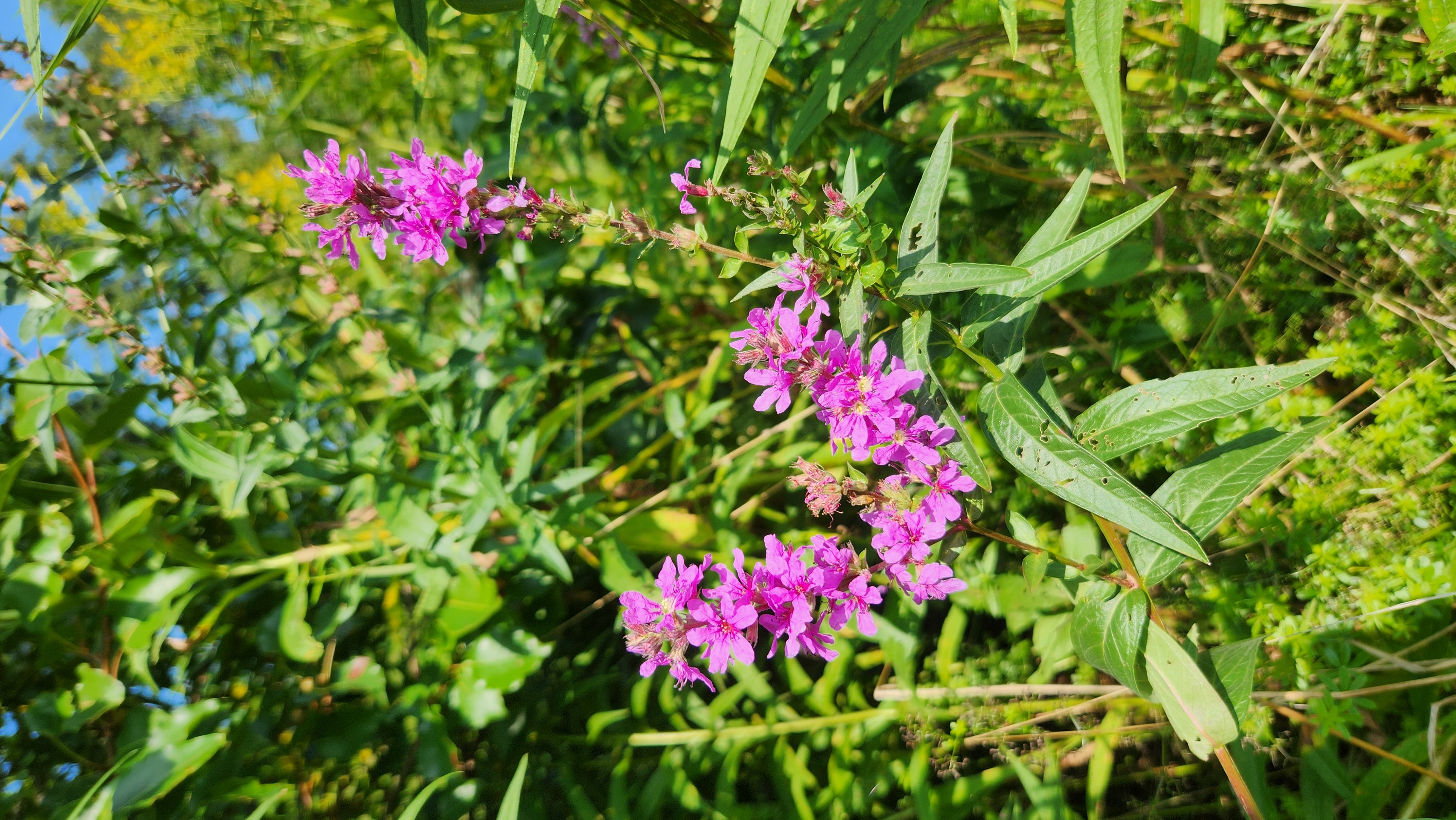
Rose vervain (?) 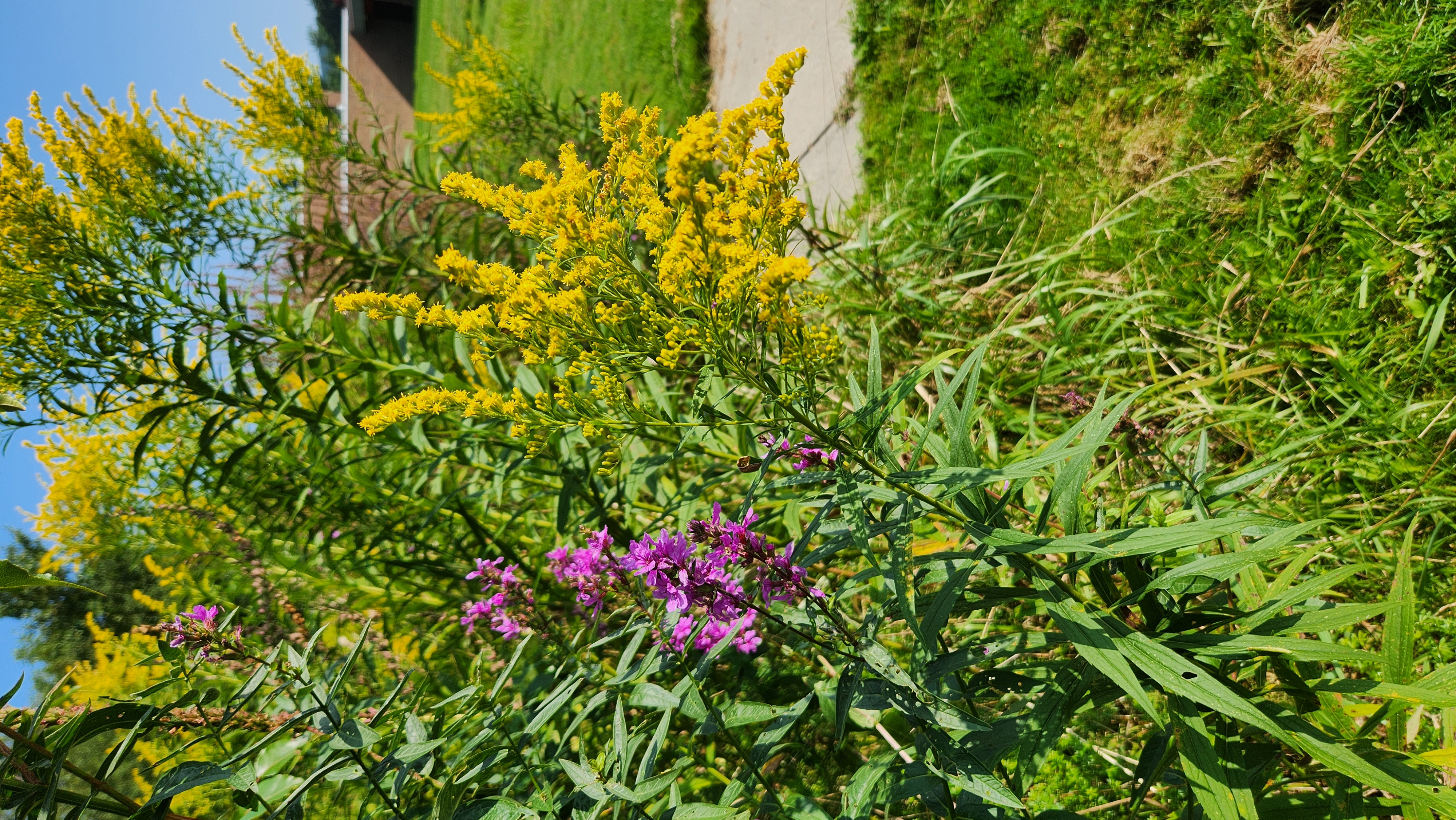
Goldenrod 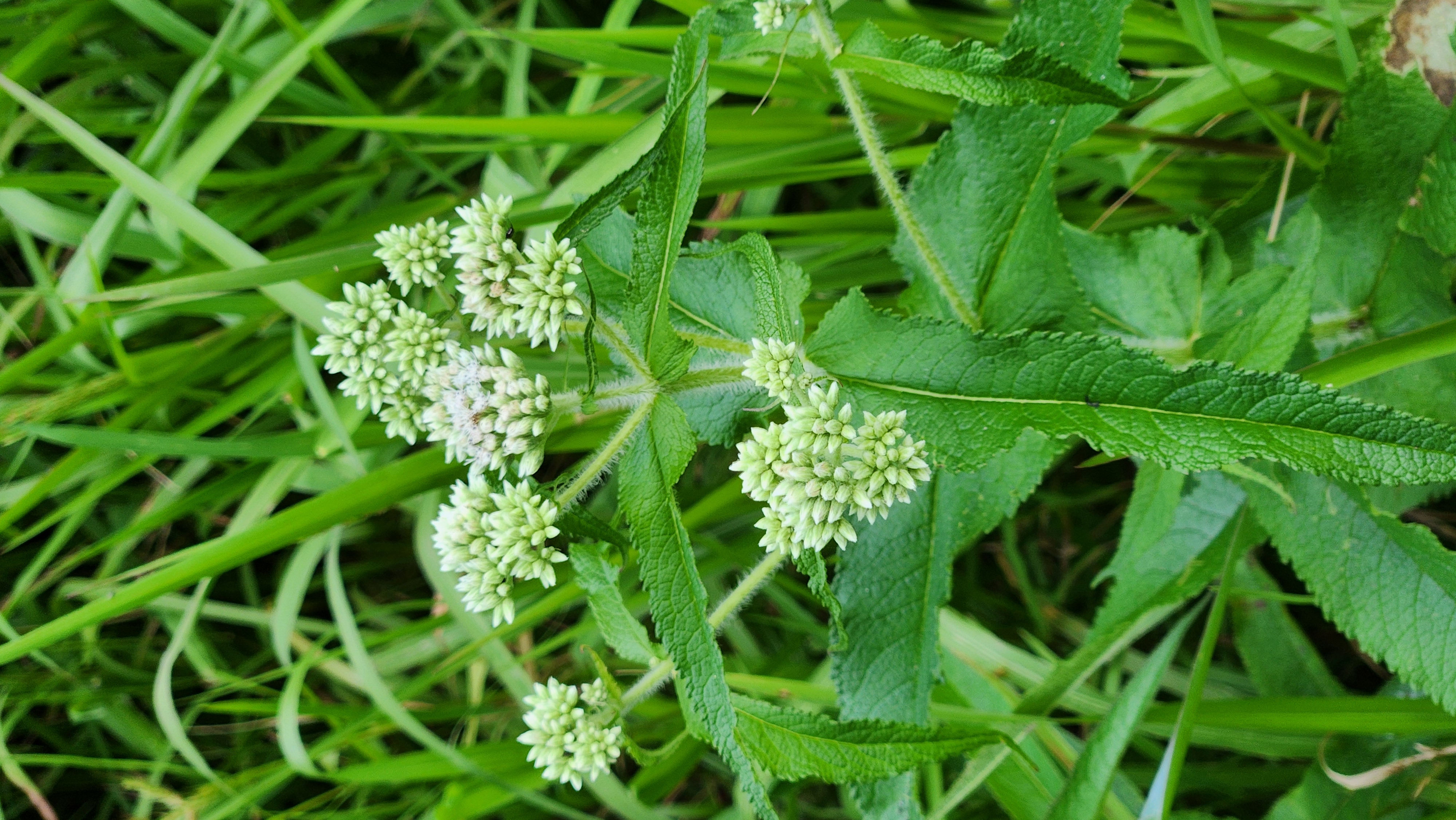
Joe-pye weed 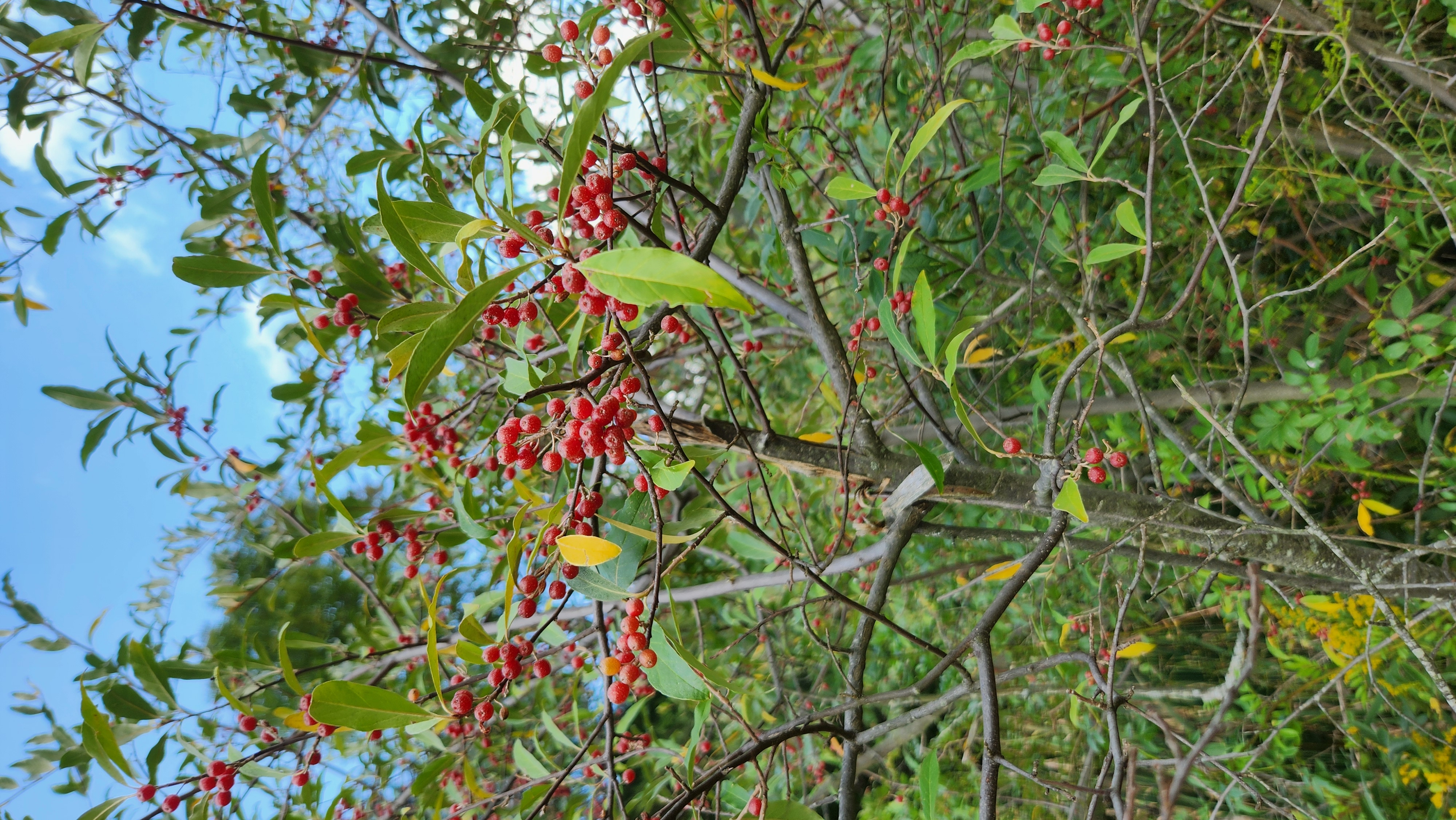
Chokecherry -
Field Notes: Tiger Swallowtail
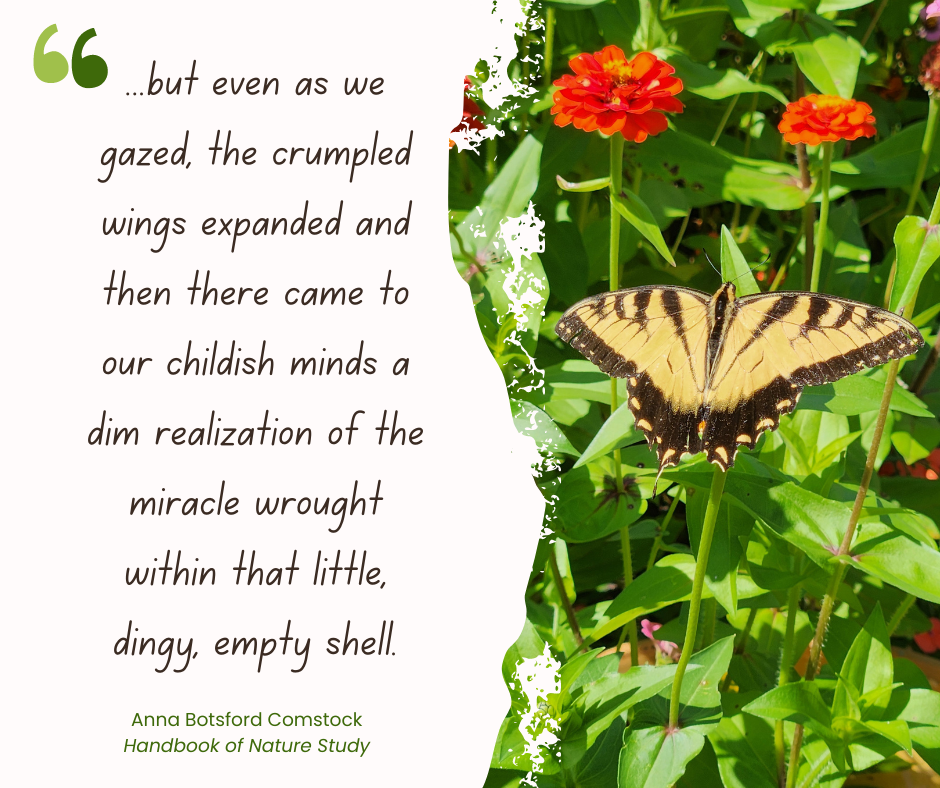
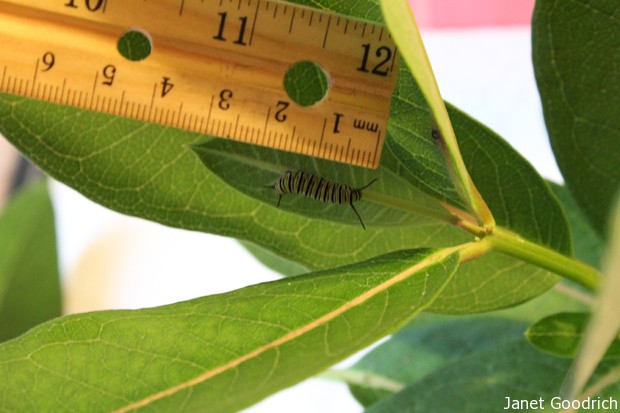
Comstock’s memory of a black swallowtail’s hatching affirms that watching a caterpillar’s transformation into a butterfly can be one of the most captivating and memorable experiences a child has.
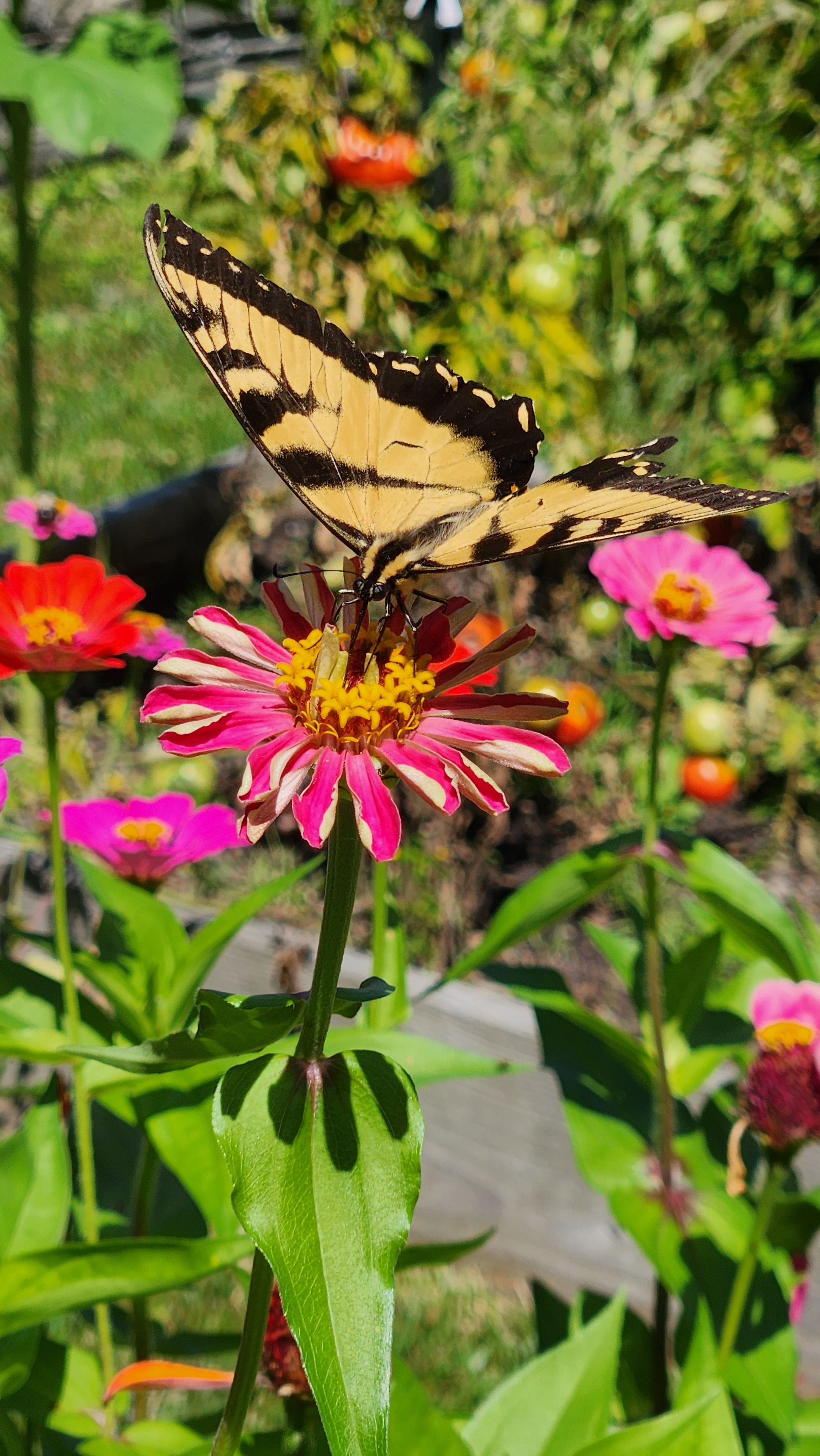
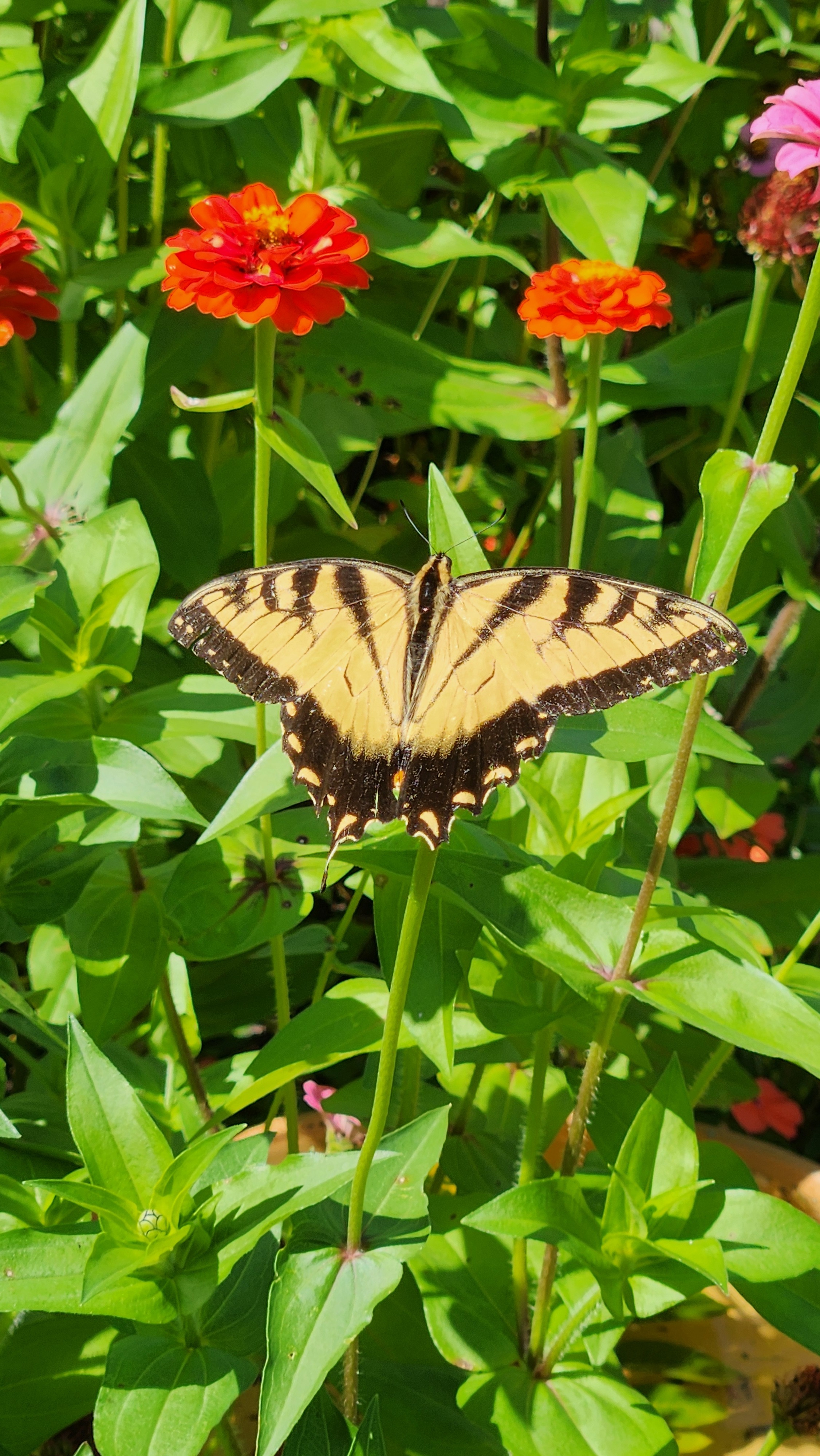
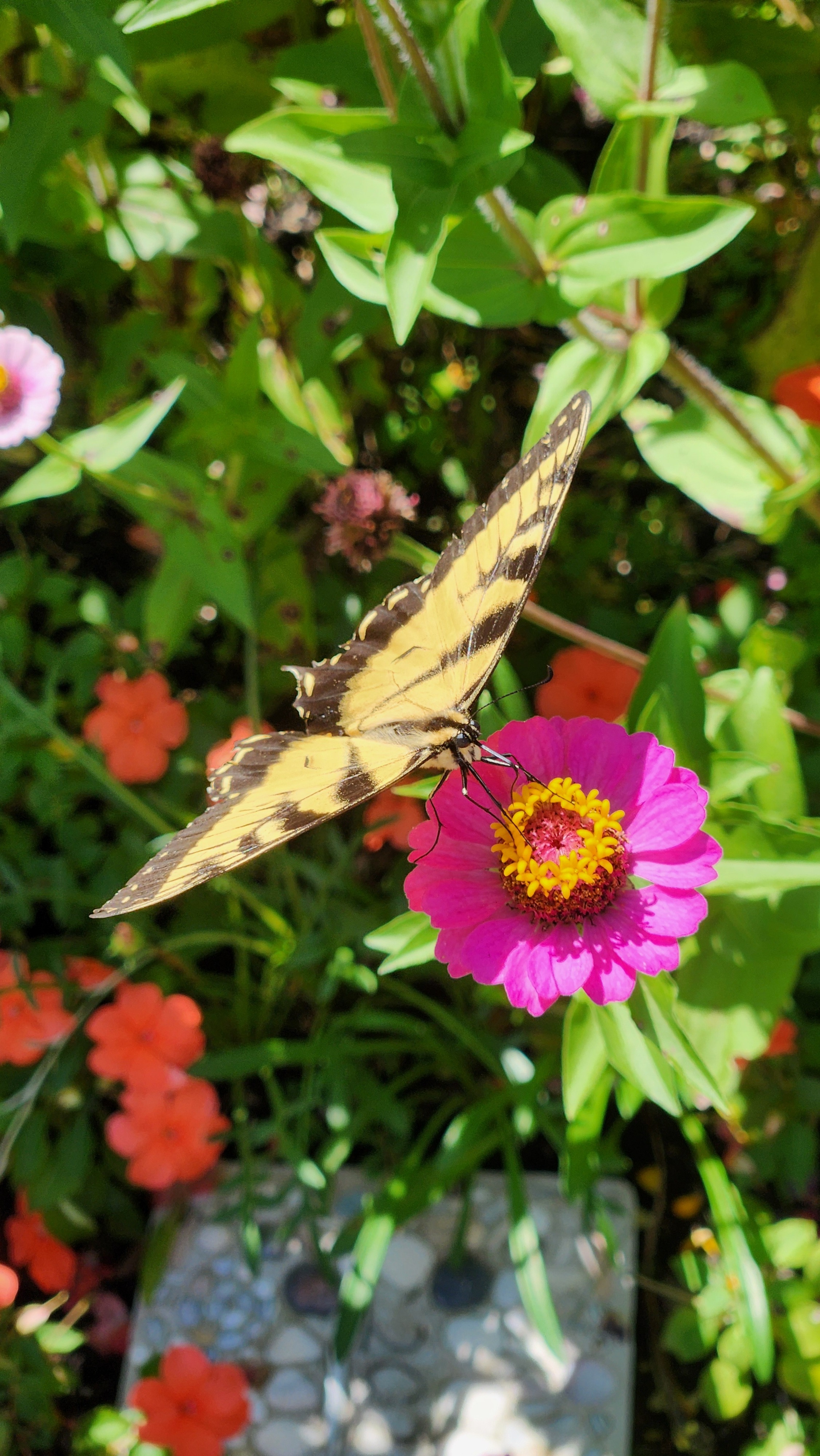
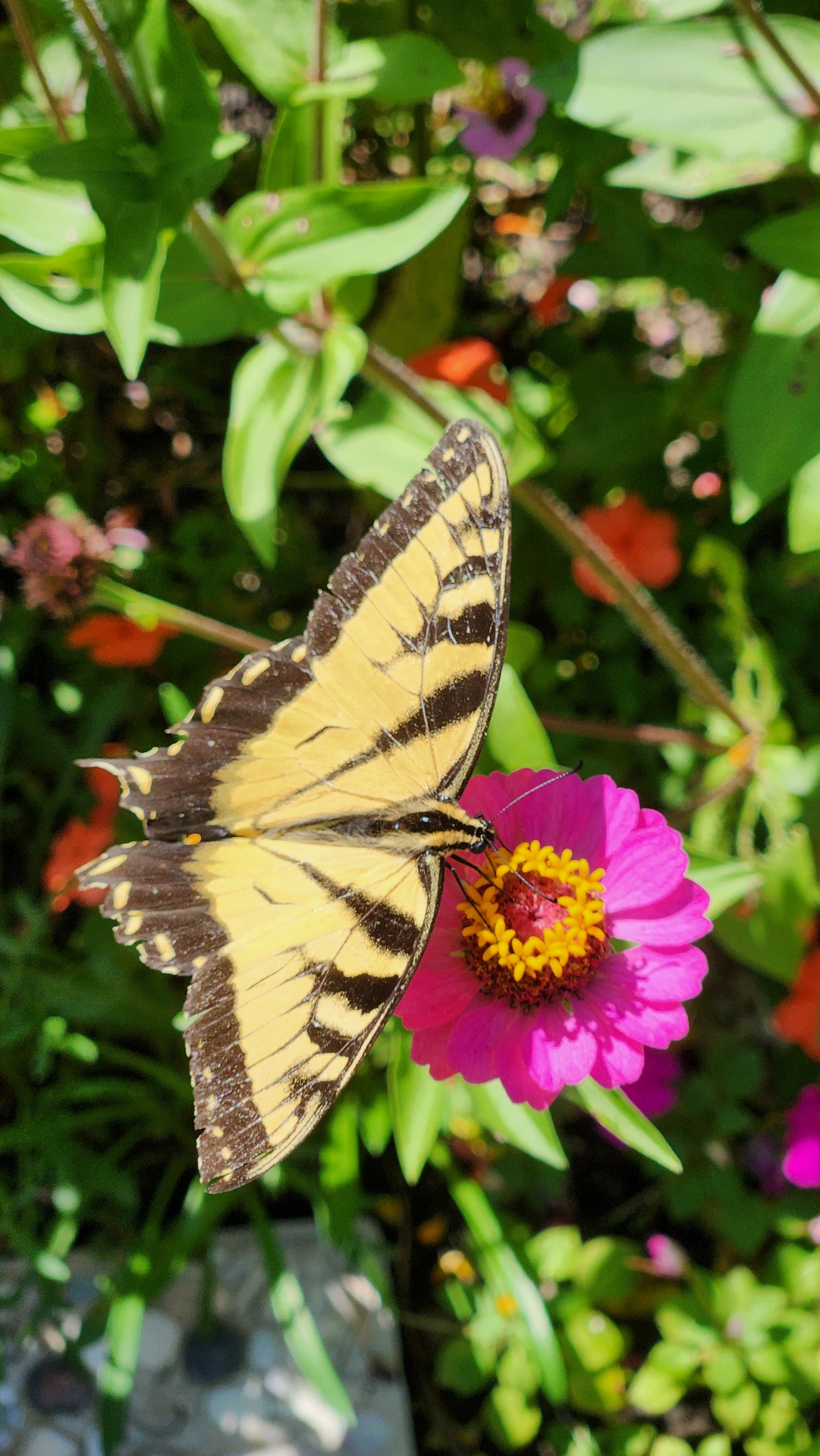
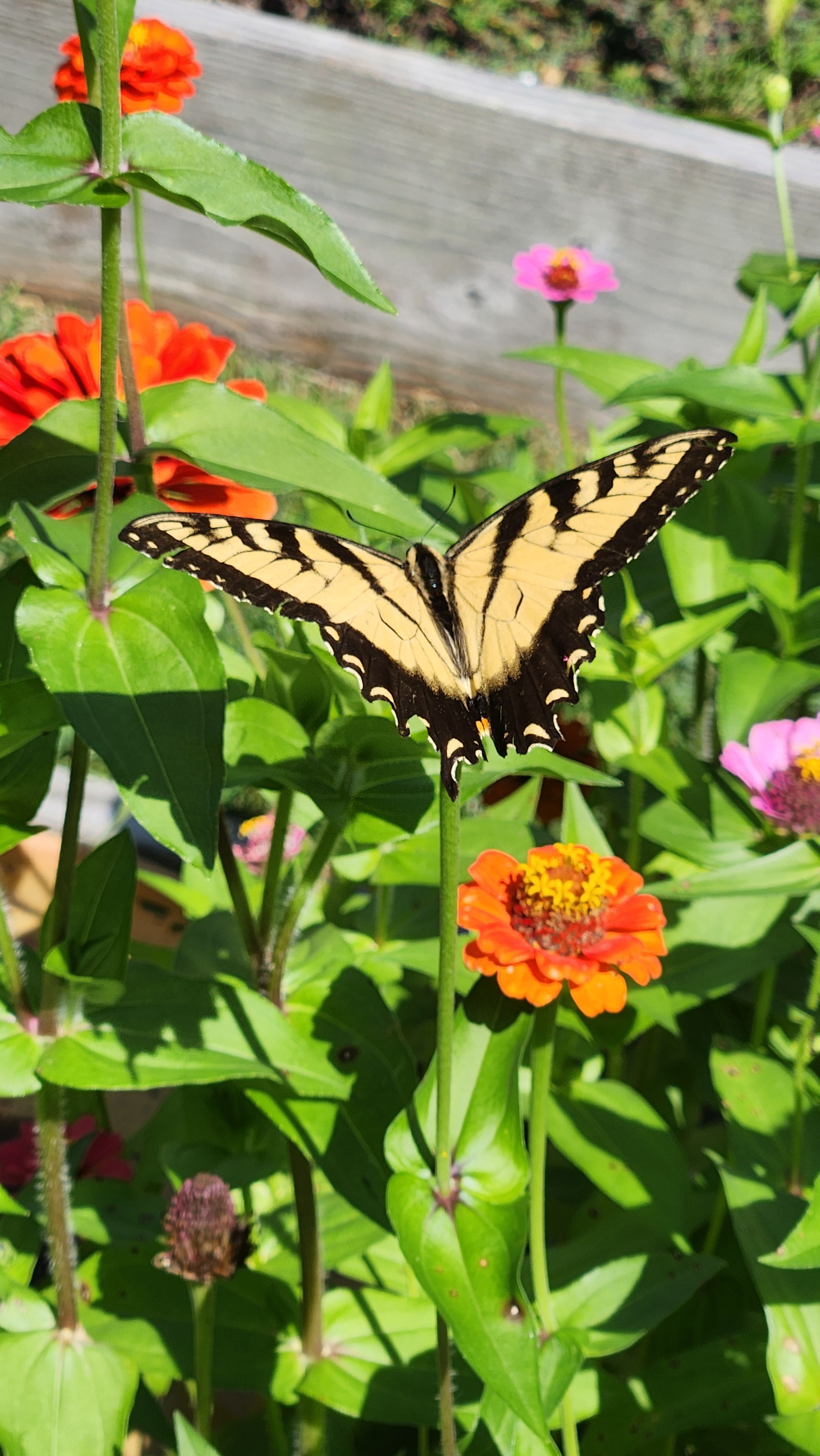
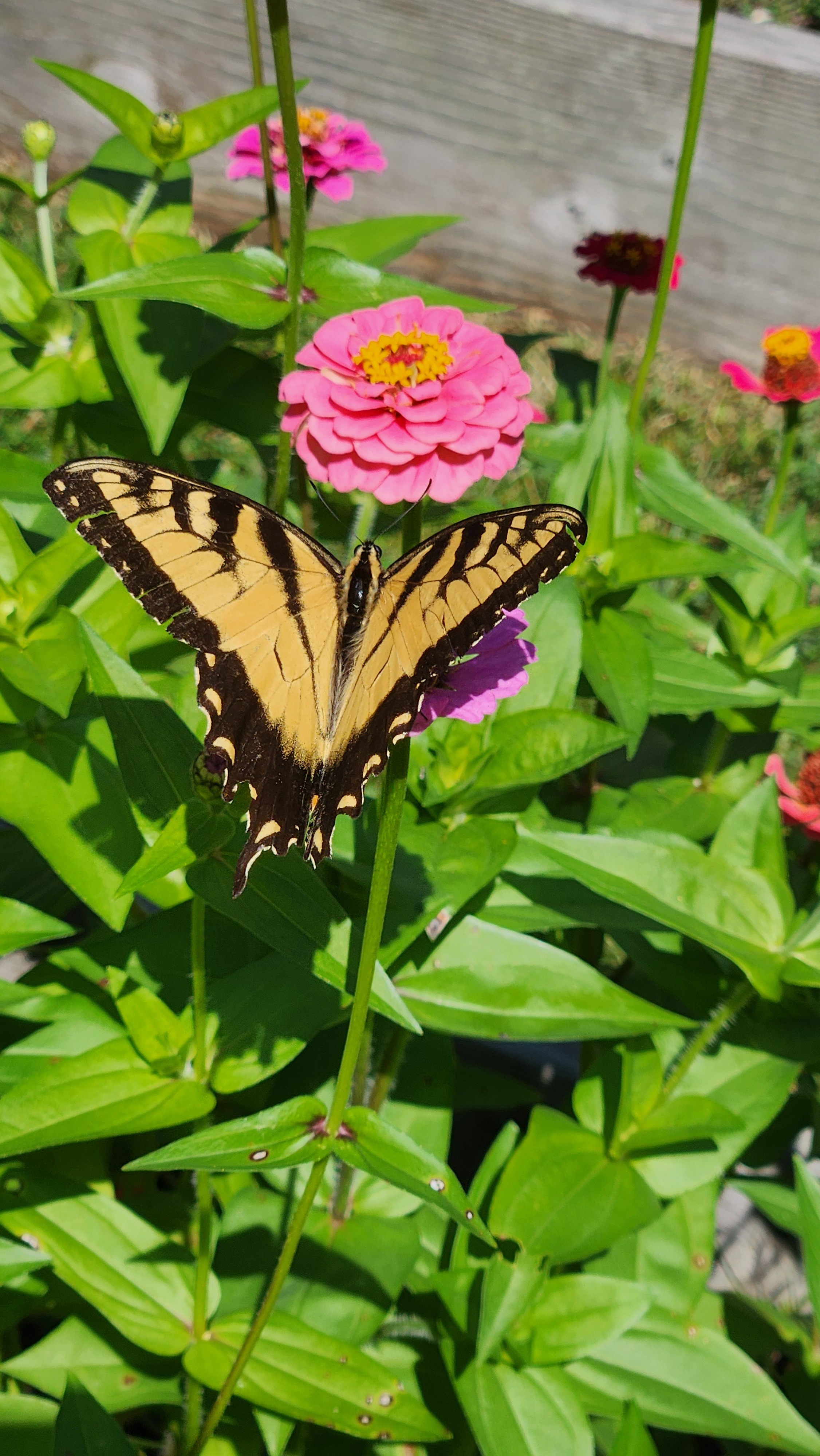
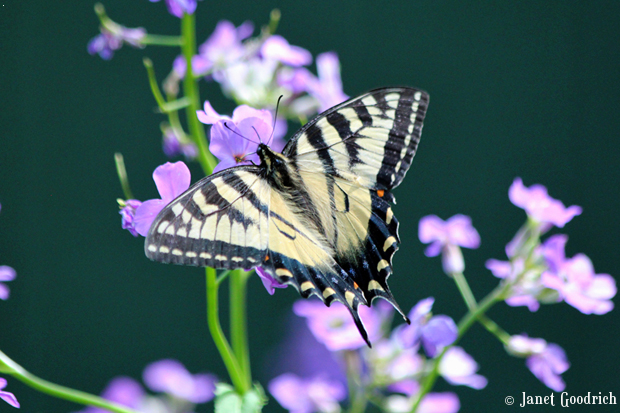
What struck me first about the tiger swallowtail I watched in the garden was its fearlessness. It was no more concerned to be fluttering around a giant than if I were another flower. My phone was sufficient to capture some pictures.
The second thing I noticed was its broken tail. It’s very unusual to find a perfect butterfly! They seem fragile, yet sometimes they can sustain much more damage than this one had and still last. I wonder how the broken tail happened.
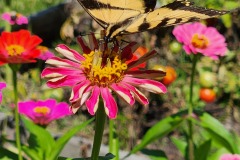
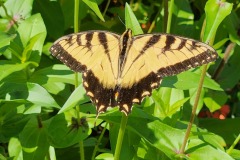
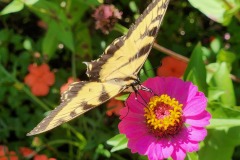
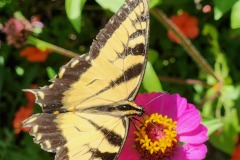
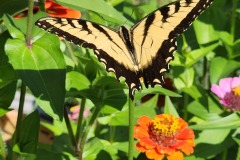
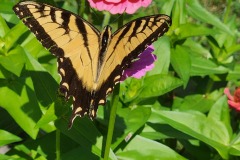
The Handbook of Nature Study didn’t have a section devoted to the tiger swallowtail, but it did have a photo of one in the section on the black swallowtail. Comstock is a wonderfully descriptive writer, and it was fun to read her account of two caterpillars meeting on a caraway stem. Each of them
drew back the head and butted each other like billy goats, whack! whack! Then both turned laboriously around and hurried off in a panic.
But I had to go to this butterfly identification site to learn that
- Female swallowtails lay their green eggs on plants in Magnolia and rose families;
- Males can be seen sometimes “puddling” — drinking from puddles together in damp places, and ingesting sodium ions that help them live longer;
- While the young caterpillars resemble brown and white bird droppings, older ones are a magnificent green with false eyespots that give them a protective resemblance to a snake head; and
- When poked, they project a pair of bright orange glands and secrete a stinky substance that can be wiped on the offending animal
All of that is pretty amazing! Caterpillars and butterflies are some of the best subjects for triggering children’s interest and sense of investment in the natural world because they’re easily seen and approachable. I’ve been an admirer and protector of monarch butterflies since we watched a caterpillar undergo its metamorphosis in kindergarten, but clearly there are other species worth being on the lookout for!
Have you seen or learned about something outdoors this week? Feel free to share it in the comments!
-
Field Notes: Cooper’s Hawk
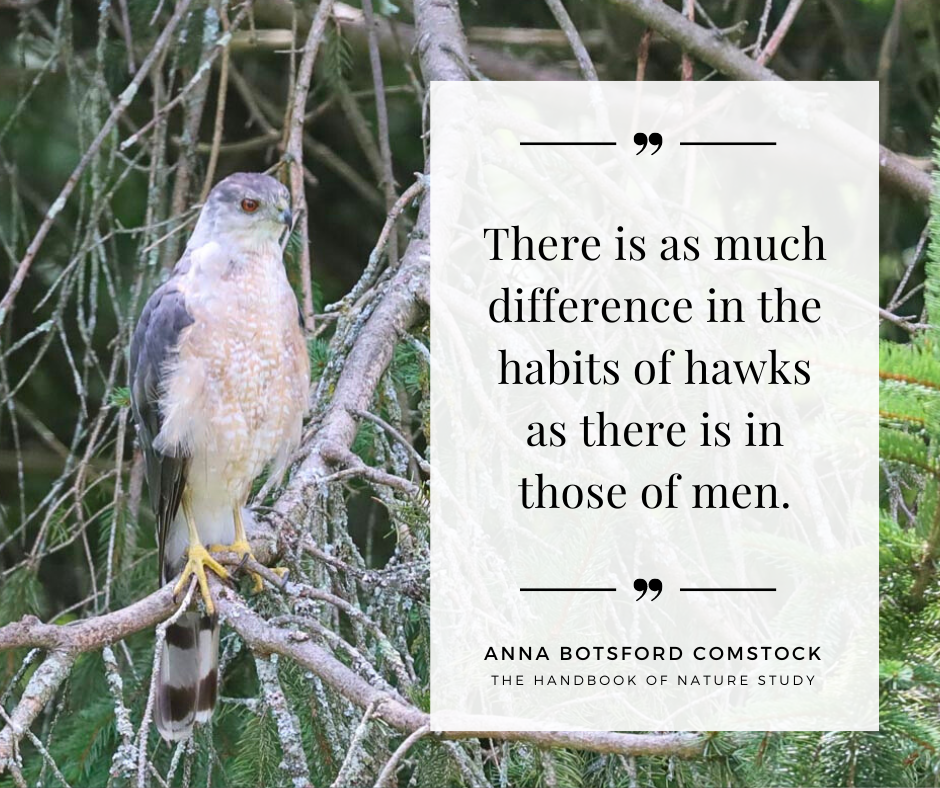
According to Anna Botsford Comstock, “It is the teacher’s duty and privilege to try to revolutionize some popular misconceptions about. . . hawks.” They are, she argues, “most unjustly treated, largely because most farmers consider that a ‘hawk is a hawk,’ and should always be shot to save the poultry, although there is as much difference in the habits of hawks as there is in those of men” (104).
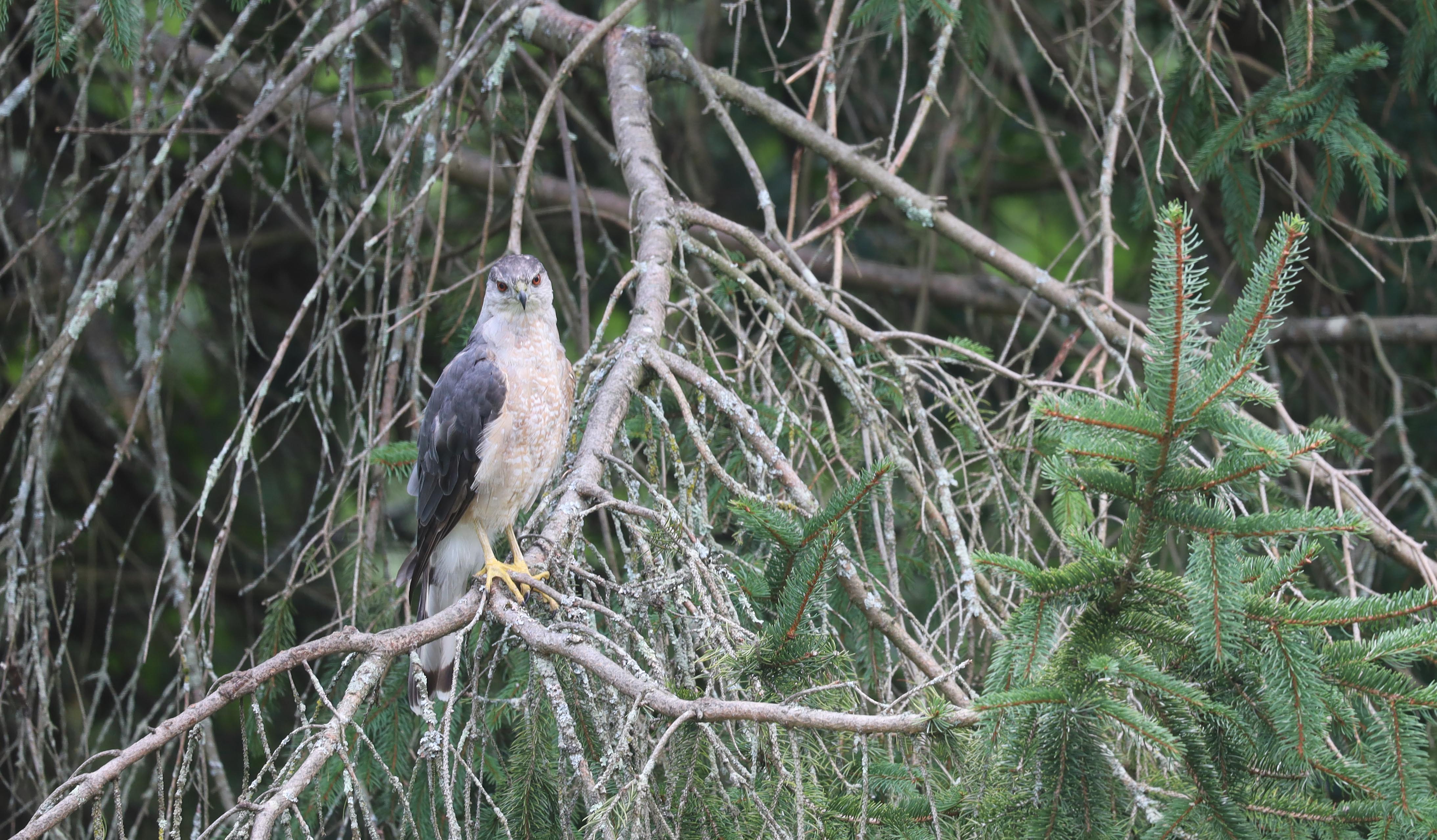
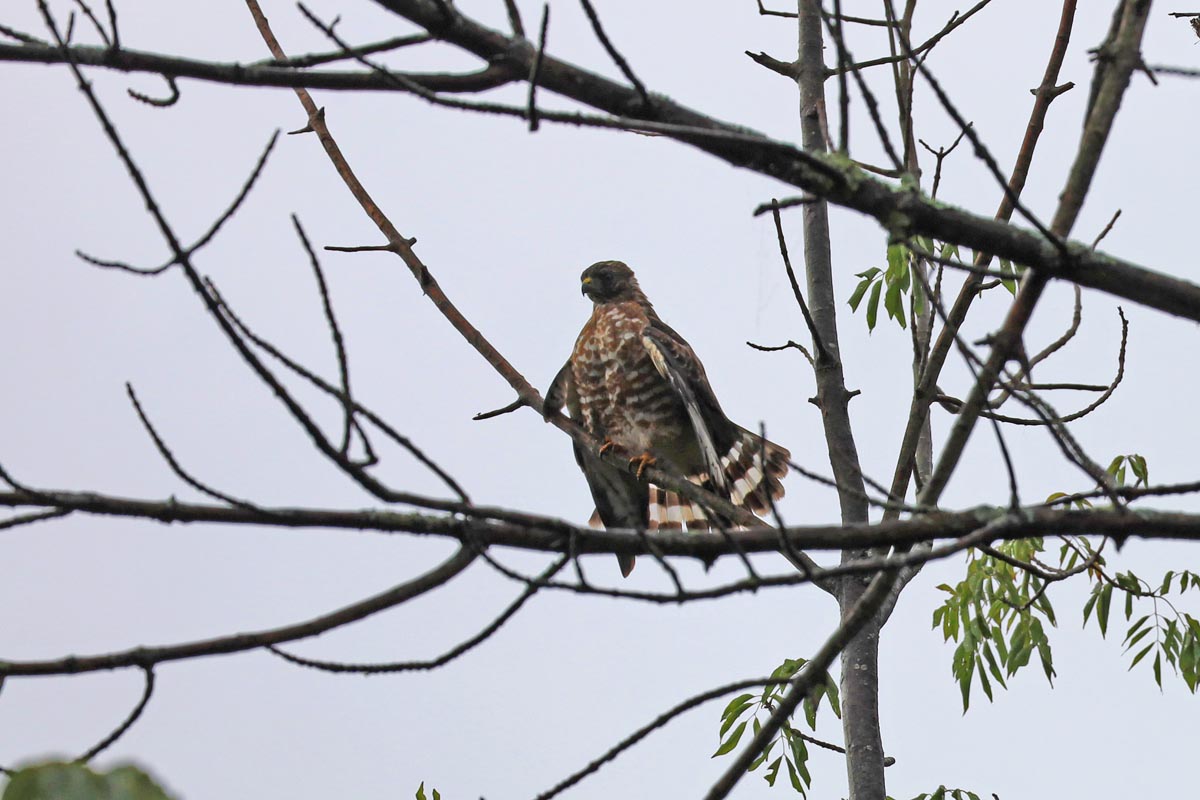
Click to enlarge image She’s writing in defense of the Red-tailed and Red-shouldered hawks. Unfortunately for the Cooper’s hawk, she considers it “to be feared” because it is “very destructive to poultry.”
Admittedly this hawk is intimidating to look at. Its red eyes, lowered brow and habit of hunting other birds athletically through even dense foliage make it a cause for dread among songbird lovers. Mature hawks have blue-gray backs and long, striped tails. From our dining room window, we’ve seen a few birds expertly snatched in the Cooper’s hawk’s strong talons. Its habit is to squeeze its prey to death before consuming it, often mantling over it on the ground or in a tree to fend off other distressed birds. This post from a few years ago shows a Cooper’s hawk mantling — till another predator scares it away.
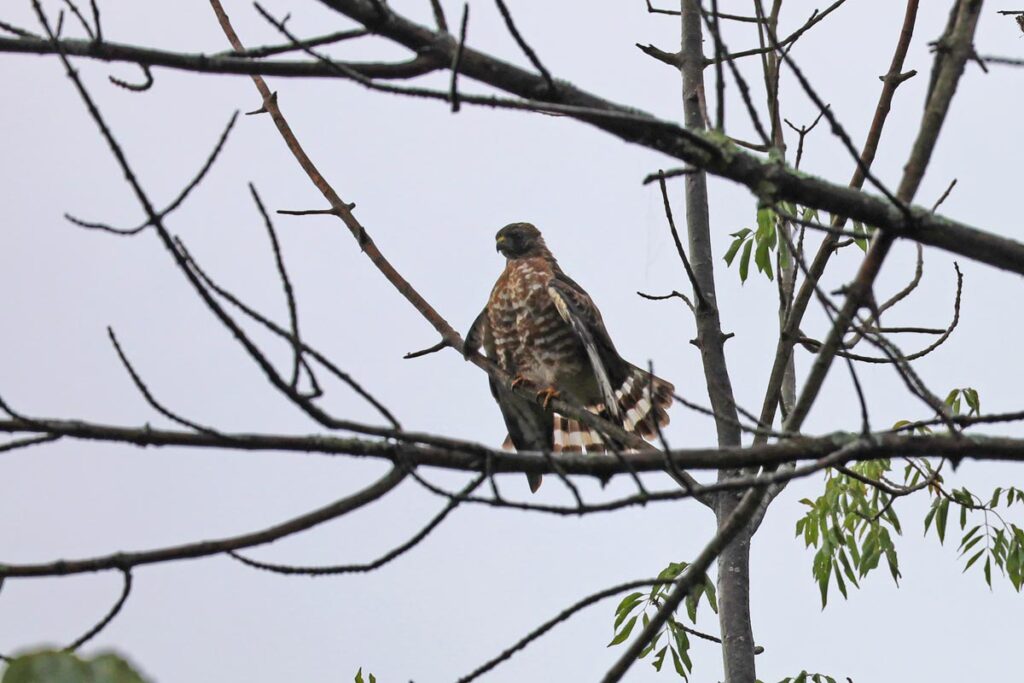
Cooper’s hawk drying out after rain I don’t keep poultry, so I’ve never seen a Cooper attack a chicken. But I love the songbirds and hate to see it take one.
Comstock points out the distinctive flight of these hawks, noting that they “flap their wings for a time and then glide a distance. They do not soar on motionless outspread pinions by the hour” (105). All About Birds adds some fascinating facts, including the discovery that almost a quarter of the Cooper’s hawk skeletons in one study showed healed-over chest fractures. When we see the speed and agility of their flight, it’s not hard to understand how a collision with a tree might happen.
If a Cooper’s hawk targets birds at your feeders, you can take them down for a few days and it will move on. However, if you have a pair that have long regarded your neighborhood as their territory for nesting and hunting, that solution doesn’t work too well. You can remove the feeder permanently if you don’t want to aid and abet the Cooper. But if this predator is only an occasional visitor, you can consider whether it does more good to the birds to leave the feeder up or take it down.

On the feeder – image from 2015 What have you been seeing in your yard or nature walks this week?
-
Nature Study as a Discipline
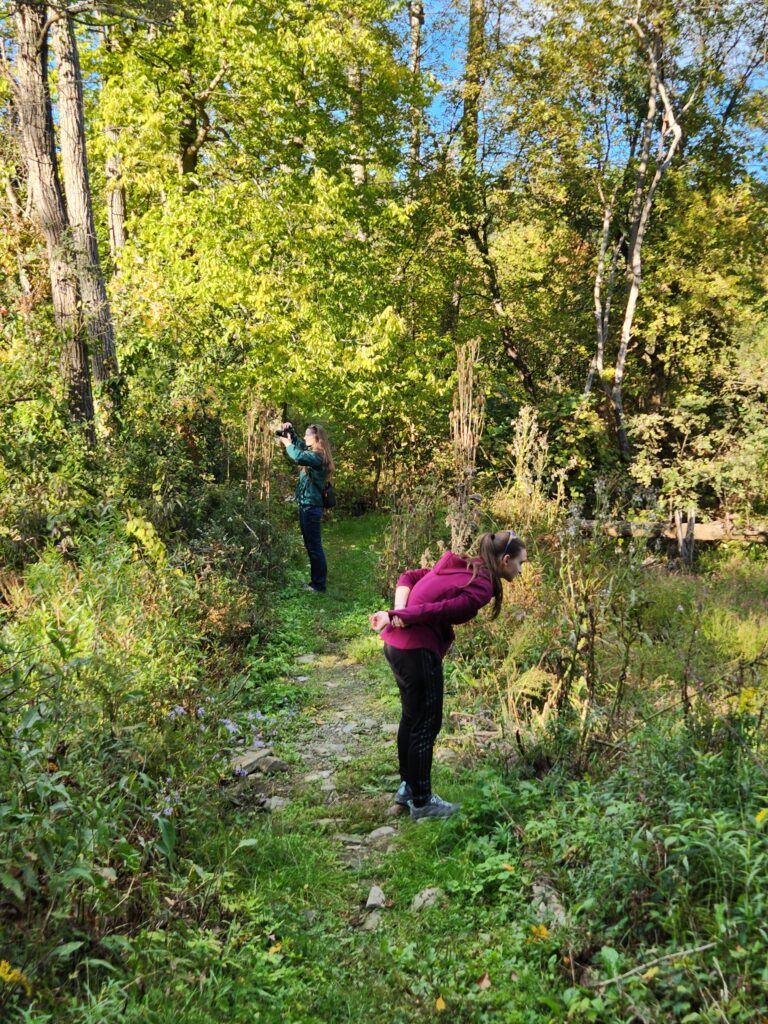
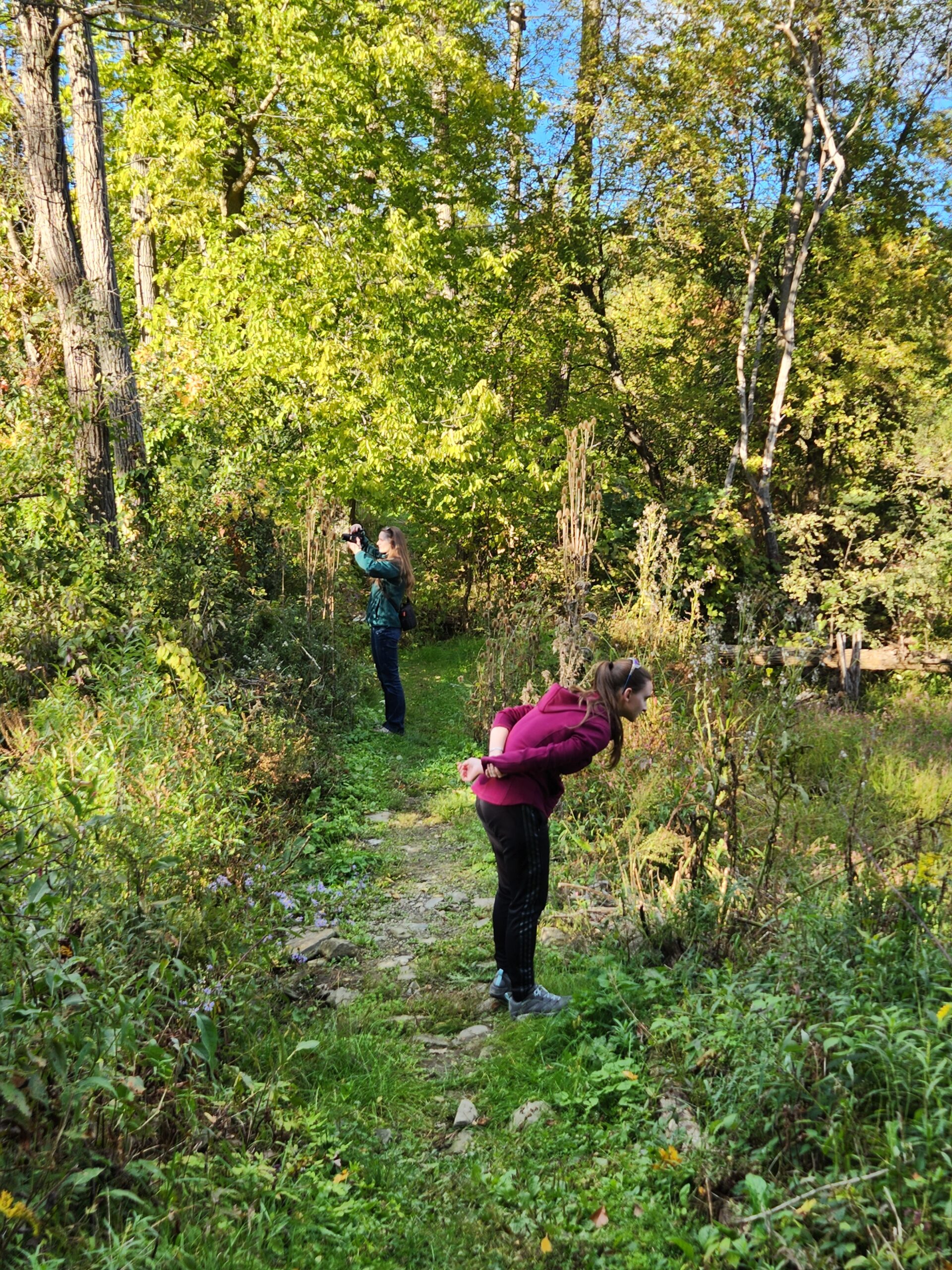
2022 This is a shot of my two daughters. We were on a nature walk. But since both were in college, I didn’t think of what we were doing as “nature study.” Nature study, I thought, was a homeschool subject.
Yet what else would you call it? Both are clearly students of nature in the photo. Once you have the habit, it pretty much sticks with you.
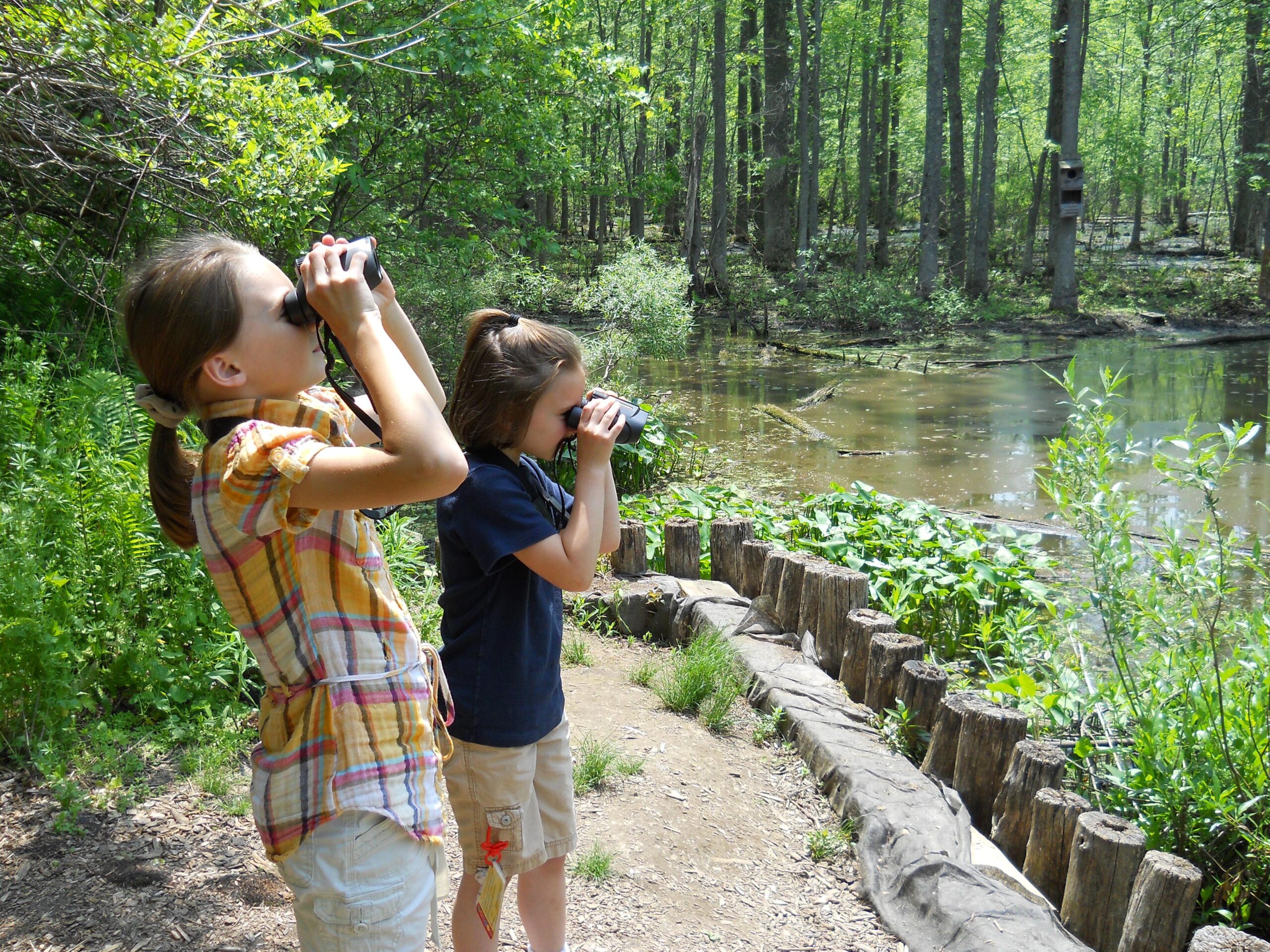
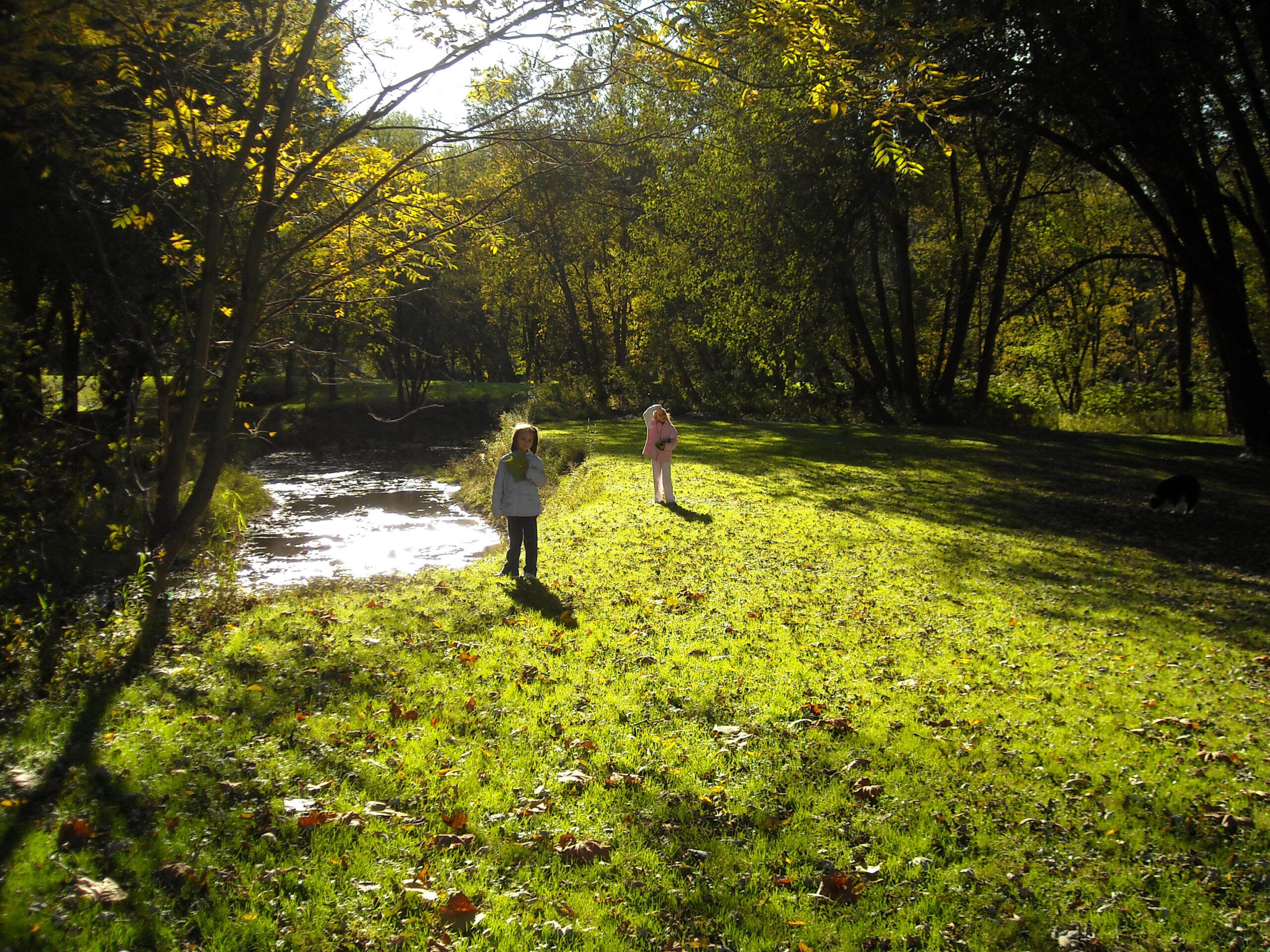
2010 Looking back, I’m reminded that we’ve been doing this a long time — setting out, looking around, and learning more about what we noticed when we get back home.
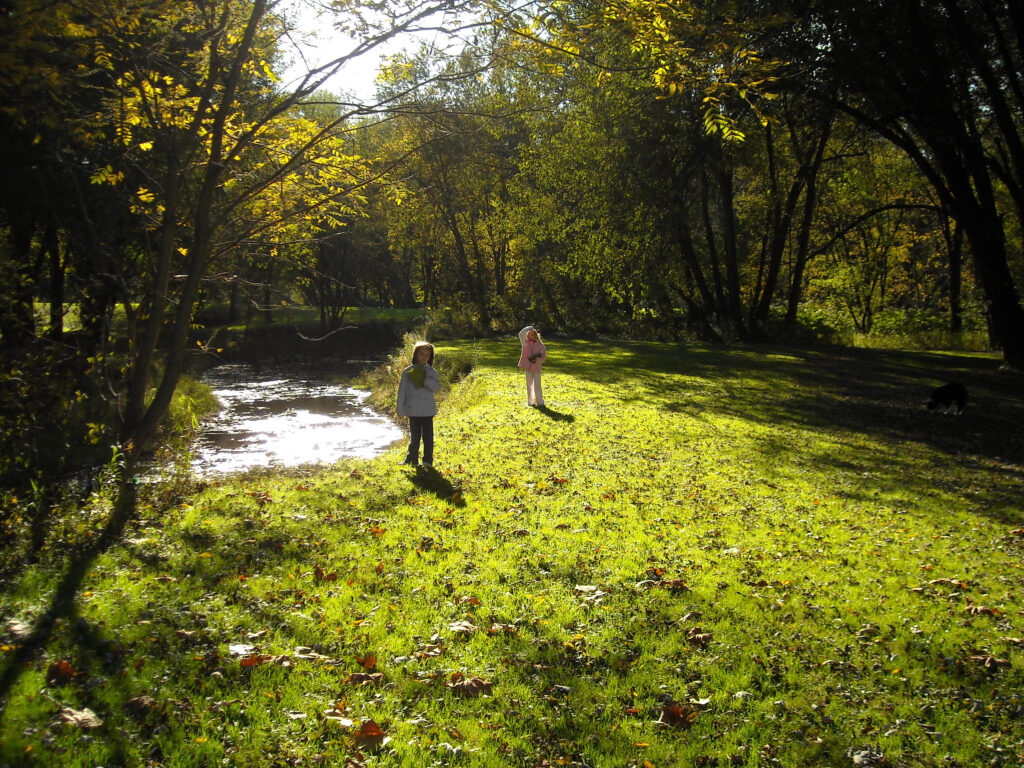
2009 Much of the joy of nature study was doing it together, and sharing so many discoveries. I feel less confident about going into the woods alone these days. Still, I’d like to return to a more intentional approach to nature study. The world is going crazy, but that only makes it more worthwhile to look outward at the amazing order and complexity and beauty in the network of life all around us.